Bright Mediterranean Orzo Salad (The One That Holds Up All Week)
A Mediterranean-inspired pasta salad built on whole grain orzo, halved cherry tomatoes, two bell peppers, kalamata olives, and crumbled feta, pulled together with a garlic-lemon vinaigrette. We worked through every common pasta salad failure to produce a version that's genuinely flavorful straight from the fridge — not just room temperature.

“Most orzo salads fail before they reach the table. The pasta is bloated and sticky, the dressing pools at the bottom, the vegetables weep into a watery mess, and the whole thing tastes like it was seasoned by someone who has never eaten food they enjoyed. The fix is not a secret ingredient. It is basic pasta discipline, an emulsified dressing, and the patience to let the salad rest before you serve it.”
Why This Recipe Works
Orzo salad is the most misunderstood dish at every potluck in the English-speaking world. It shows up bloated, underdressed, and aggressively mediocre — a dish that somehow manages to be both too much and not enough at the same time. The raw ingredients are correct. The technique is what fails.
The Pasta Problem
Orzo is rice-shaped pasta, which means it behaves like rice in one important way: it keeps absorbing liquid long after you drain it. Most recipes do not account for this. They instruct you to cook the pasta, drain it, and immediately toss everything together — at which point the warm orzo begins drinking the dressing before the vegetables and cheese ever meet it. By the time the salad reaches the table, the pasta is fat and sticky, the dressing is gone, and the whole bowl tastes like someone made a choice and then gave up.
The fix is two steps. First, rinse the drained orzo under cold running water in a fine-mesh sieve until it is completely cool — not warm, not room temperature, cold. This stops the cooking and, more importantly, washes the surface starch off each grain. Surface starch is what makes pasta clump. Cold, starch-free orzo holds its texture through dressing, refrigeration, and the next day's lunch. Second, dress the salad only when the orzo is completely cold, and refrigerate for 30 minutes before serving. This is not optional patience. It is the difference between a salad and a mistake.
The Dressing Architecture
The vinaigrette in this recipe does three things simultaneously: it tenderizes the raw garlic through acid contact, it pulls the flavors of the oregano out of their dried state, and it coats every piece of orzo in a thin, uniform film of flavor. None of that works if the dressing is not properly emulsified.
Oil and lemon juice separate the moment you stop moving them. Pour them directly onto the salad and you get patches of acid, patches of oil, and large sections of pasta that are dressed with neither. Whisk them together in a small bowl for a full 30-60 seconds — or shake them in a sealed jar — until the mixture turns slightly opaque and thick. That emulsified dressing clings. It distributes. It still does its job when you pull the salad out of the fridge the next morning.
The garlic quantity matters too. Two cloves, minced as fine as possible or grated on a Microplane, provides a background warmth without the raw aggression of large pieces. Cold garlic that hasn't been cooked needs to be small enough that it essentially dissolves into the dressing rather than announcing itself in every bite.
The Vegetable Load
Eight cups of cherry tomatoes is a lot of tomatoes — by design. This is a vegetable-forward pasta salad, not a pasta salad with vegetables in it. The distinction matters: in a vegetable-forward version, the orzo exists to carry and transport the flavor of the produce, not the other way around. The cherry tomatoes, bell peppers, cucumber, and olives are the dish. The orzo is the vehicle.
The kalamata olives are doing more work than they appear. They provide the single hit of briny, fermented depth that keeps this salad from tasting one-dimensional. Without them, the lemon-feta combination reads as bright but thin. With them, there is a low note underneath everything that makes the salad taste complete.
The Herb Timing
Basil bruises. This is a fact of biology that recipe writers routinely ignore. Roughly torn basil added to a lemony dressing turns black in under an hour. The flavor dissipates at roughly the same rate. If you add the herbs when you assemble the salad, you are decorating a dish that will be refrigerated for 30 minutes — which means by the time anyone eats it, the basil looks like it was harvested during a different administration.
The correct move: add the basil and mint immediately before serving. Use the rest period to let the orzo, vegetables, and dressing develop flavor together, and treat the herbs as a finishing element rather than a structural one. The mint especially needs this treatment — chopped mint left in an acidic environment loses its menthol brightness within minutes.
A large mixing bowl with enough room to toss without losing half the tomatoes over the side is the only other equipment decision that matters here. Everything else is pantry work and patience.
Where Beginners Mess This Up
Before we start, read this. These are the 4 reasons your bright mediterranean orzo salad (the one that holds up all week) will fail:
- 1
Not salting the pasta water: Orzo cooked in unsalted water is insipid at its core — no amount of dressing applied afterward can fix it. The pasta absorbs water as it cooks. That water needs to be as salty as the sea. Bland pasta means a bland salad, full stop.
- 2
Overcooking the orzo: Orzo has a narrow window between al dente and mush. The moment it goes past slightly firm, it begins absorbing everything around it — water, dressing, vegetable liquid — and turns gluey. Cook it exactly to the low end of the package time, drain immediately, and rinse under cold water to halt the cooking.
- 3
Dressing a warm salad and serving immediately: Hot orzo dressed with an oil-based vinaigrette absorbs that dressing before the vegetables and cheese even have a chance to meet it. Then the whole thing dries out. Let the orzo cool completely, dress everything together, and refrigerate for at least 30 minutes. This is not optional — it is the step that makes the salad taste like a dish rather than an assembly.
- 4
Under-seasoning at every stage: This salad has a lot of ingredients, which gives the illusion that seasoning will take care of itself. It will not. Season the pasta water aggressively. Taste the dressing before it goes on. Taste the assembled salad. Add more lemon or salt at the end. Most bland orzo salads are the result of someone tasting once and stopping.
The Video Reference Library
Want to see it in action? Here are the exact videos we analyzed and combined to build this foolproof recipe translation:
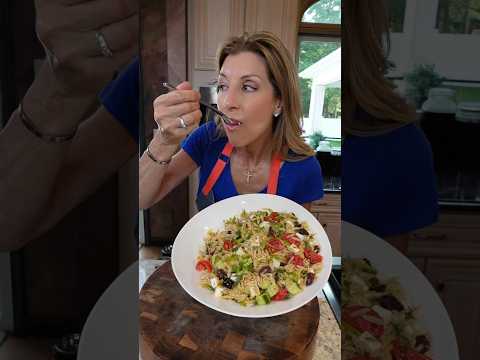
The source video for this recipe. Clear demonstration of the rinsing technique and the dressing emulsification step that most home cooks skip.
2. How to Make a Proper Vinaigrette
A focused breakdown of vinaigrette ratios and emulsification technique. Directly applicable to the lemon-garlic dressing in this recipe.
3. Mediterranean Pasta Salad VariationsCovers swaps and additions that work within the Mediterranean flavor framework — useful for riffing on this base once you've made it once.
🛠️ Core Equipment
- Large heavy-bottomed pot ↗You need enough volume to cook orzo in abundant salted water without the pasta crowding and sticking together. A wide base also brings the water back to a boil faster after you add the pasta.
- Fine-mesh sieve ↗Orzo grains are small enough to fall through a standard colander. A fine-mesh sieve catches everything and lets you rinse under cold water quickly and evenly to stop the cooking.
- Large mixing bowl ↗You need real estate to toss everything without the cherry tomatoes and olives falling over the sides. A cramped bowl leads to uneven coating and ingredients that never make contact with the dressing.
- Small whisk ↗For emulsifying the vinaigrette. Olive oil and lemon juice separate immediately without mechanical action. A whisked dressing coats every piece of pasta; a poured dressing pools at the bottom.
Bright Mediterranean Orzo Salad (The One That Holds Up All Week)
🛒 Ingredients
- ✦2 cups whole grain orzo pasta
- ✦8 cups cherry tomatoes, halved
- ✦1 large English cucumber, diced into half-inch pieces
- ✦1 red bell pepper, diced
- ✦1 yellow bell pepper, diced
- ✦1/2 cup fresh basil leaves, roughly torn
- ✦1/3 cup fresh mint leaves, finely chopped
- ✦1/2 cup kalamata olives, pitted and halved
- ✦3/4 cup crumbled feta cheese
- ✦4 scallions, sliced thin on the bias
- ✦1/4 cup extra virgin olive oil
- ✦3 tablespoons fresh lemon juice
- ✦2 tablespoons red wine vinegar
- ✦2 cloves garlic, minced very fine
- ✦1 teaspoon dried oregano
- ✦1/2 teaspoon sea salt
- ✦1/4 teaspoon freshly cracked black pepper
- ✦1/4 teaspoon red pepper flakes
👨🍳 Instructions
01Step 1
Bring a large pot of heavily salted water to a rolling boil over high heat.
02Step 2
Add the orzo and cook according to package directions until just tender but still slightly firm, about 9-10 minutes. Do not walk away.
03Step 3
Drain immediately through a fine-mesh sieve and rinse under cold running water until completely cool, shaking gently to shed excess moisture.
04Step 4
Transfer the cooled orzo to a large mixing bowl.
05Step 5
Whisk together the olive oil, lemon juice, red wine vinegar, minced garlic, dried oregano, sea salt, black pepper, and red pepper flakes in a small bowl until fully emulsified.
06Step 6
Add the cherry tomatoes, cucumber, red and yellow bell peppers, kalamata olives, and scallions to the orzo.
07Step 7
Pour the dressing over the pasta and vegetables and toss with a wooden spoon or salad tongs until every component is evenly coated, about 2-3 minutes.
08Step 8
Fold in the crumbled feta gently, keeping the pieces as intact as possible.
09Step 9
Add the torn basil and chopped mint and toss once more, lightly.
10Step 10
Taste and adjust with additional salt, pepper, or lemon juice as needed.
11Step 11
Cover and refrigerate for at least 30 minutes before serving.
12Step 12
Before serving, give the salad a gentle stir. If it looks dry, add a splash of olive oil and toss briefly.
Nutrition Per Serving
Estimates based on standard preparation. Adjustments alter macros.
🔄 Substitutions
Instead of Regular semolina orzo...
Use Whole grain or chickpea orzo
Whole grain adds fiber and a nuttier flavor. Chickpea orzo adds protein and holds its texture better over multiple days. Both work in this recipe without any technique adjustment.
Instead of Feta cheese (3/4 cup)...
Use Feta (1/2 cup) plus 1/4 cup chickpeas
Reduces saturated fat while adding fiber and plant-based protein. The chickpeas take on the dressing well and add a satisfying bite.
Instead of Red wine vinegar...
Use Apple cider vinegar
Slightly softer tang, marginally different flavor. Works in the dressing without any ratio change.
Instead of Cherry tomatoes (8 cups)...
Use 5 cups cherry tomatoes plus 3 cups fresh spinach or arugula
Reduces the tomato-forward flavor and adds a green, slightly bitter note that works well against the feta and olives. Add the greens right before serving, not during the rest period.
🧊 Storage & Reheating
In the Fridge
Store covered in an airtight container for up to 4 days. Stir before each serving and add a splash of olive oil if it looks dry.
In the Freezer
Do not freeze. The vegetables lose their texture completely and the feta breaks down. This salad is fridge-only.
Reheating Rules
This salad is served cold. No reheating required or recommended.
❓ Frequently Asked Questions
Why is my orzo salad watery after refrigerating?
The cherry tomatoes are releasing liquid as they sit. Next time, halve them the night before and drain them in a sieve for 30 minutes before adding. You can also lightly salt them and let them drain. The cucumber can contribute moisture too — dice it, salt it briefly, and pat it dry before using.
Can I make this a day ahead?
Yes, and you should. The salad improves significantly overnight. Hold the fresh basil and mint until right before serving — they discolor in acid over time. Add a splash of olive oil and a squeeze of lemon before serving to freshen everything up.
Can I add protein to make this a main course?
Grilled chicken, seared shrimp, or canned chickpeas all work. If adding chicken or shrimp, let them cool to room temperature before folding in so they don't steam the vegetables.
My dressing separated in the bowl. What went wrong?
The dressing was not properly emulsified before going on, or it sat too long before tossing. Whisk the oil and acid together vigorously for 30-60 seconds immediately before pouring. If the dressed salad separates in the fridge, just toss again before serving.
Can I use bottled lemon juice?
Technically yes. In practice, fresh lemon juice is noticeably brighter and more aromatic. This dressing is simple enough that the quality of each component shows. Use fresh.
Is this recipe gluten-free?
Standard and whole grain orzo contain gluten. Chickpea orzo is gluten-free and works well here. Verify the package labeling if this is a hard dietary requirement, as cross-contamination varies by brand.

The Science of
Bright Mediterranean Orzo Salad (The One That Holds Up All Week)
We turned everything on this page into a beautiful, flour-proof PDF cheat sheet. Print it out, stick it to your fridge, and never mess up your bright mediterranean orzo salad (the one that holds up all week) again.
*We'll email you the high-res PDF instantly. No spam, just perfectly cooked meals.
AlmostChefs Editorial Team
We translate the internet's most popular cooking videos into foolproof, beginner-friendly written recipes. We analyze multiple methods, test them in our kitchen, and engineer a single "Master Recipe" that gives you the best possible result with the least possible stress.