Crispy Orange Chicken (Skip the Takeout Forever)
Crispy baked chicken coated in a glossy fresh-citrus sauce with garlic, ginger, and a clean hit of heat. We reverse-engineered the most popular YouTube methods to build a 45-minute weeknight version that beats the box every time — without the deep fryer or the mystery oil.
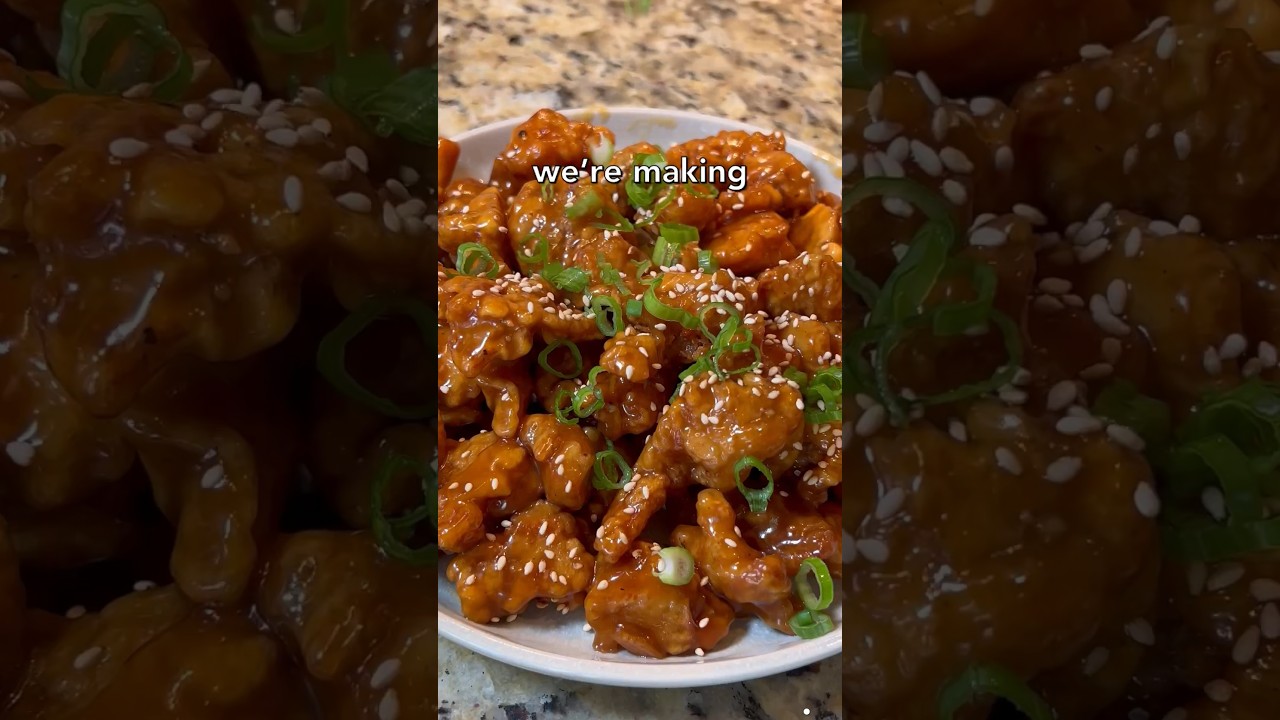
“Orange chicken has a reputation problem. Most homemade versions are either soggy (oven-baked without the right coating technique) or a project (full deep-fry setup for a Tuesday night). The actual fix is simpler than either camp admits: dry the chicken properly, use a cornstarch-forward coating, and build your sauce while the oven does the work. Fresh orange juice and zest instead of bottled syrup is the difference between a sauce that tastes alive and one that tastes like candy. You can do this in 45 minutes and it will not taste like a compromise.”
Why This Recipe Works
Orange chicken exists in a strange culinary purgatory. It's not Chinese. It's not American. It's a 1987 invention by a chef at Panda Express who wanted to adapt a Hunanese dish for American palates, and it became one of the most ordered fast food items in the country. The original is deep-fried twice, coated in a high-fructose-corn-syrup-forward sauce, and has roughly 800mg of sodium per serving. The homemade versions people make to "fix" it usually go too far in the other direction — dry baked chicken with watery sauce that tastes like diet food. Neither extreme is what you actually want.
The Coating Problem
The reason restaurant orange chicken tastes better than most homemade versions has nothing to do with the sauce and everything to do with the coating. Deep frying at 375°F creates a crust so fast that the interior barely has time to register the heat — the exterior is fully set and crispy before the inside finishes cooking. When you bake instead, the heat is slower and more diffuse, which means the coating has time to absorb moisture from the chicken before it can crisp.
The fix is cornstarch. Cornstarch contains no gluten, so it forms a thin, rigid, glass-like crust at high heat rather than the thick, chewy crust that flour produces. A 50/50 flour-to-cornstarch ratio gives you enough structure to coat the chicken while delivering the crispiness that makes the dish worth making. Pure cornstarch coatings are brittle and fall off — the flour provides adhesion.
The other half of the coating equation is surface moisture. Wet chicken under any coating produces steam during cooking, and steam is the opposite of crispy. Patting the chicken dry with paper towels is not a suggestion. It is the step that makes every other step work.
Fresh Citrus Is Non-Negotiable
Bottled orange juice is dead juice. The volatile aromatic compounds — the ones that make your kitchen smell like you're actually cooking something — evaporate during pasteurization. What's left is acidic sugar water. Fresh orange juice has those aromatics intact, but the zest is where they're most concentrated. The white layer directly under the orange skin contains the essential oils that define the flavor of the entire dish. Two tablespoons of fresh zest does more work here than the juice itself.
Use a microplane and zest aggressively. You want the bright orange outer layer only — the white pith underneath is bitter and will flatten the sauce. Zest before you juice; you cannot zest an already-juiced orange.
Sauce Architecture
The sauce has four components working together: citrus brightness (juice and zest), savory depth (soy sauce, garlic, ginger), acidity (rice vinegar), and heat (red pepper flakes). The cornstarch slurry transforms it from a thin liquid into a glossy coating that clings to every surface of the chicken. Sesame oil goes in at the end, not the beginning — its flavor compounds are volatile and degrade quickly at high heat. Adding it off or near heat preserves the toasted nutty aroma.
The sauce takes about 6 minutes total. Make it while the chicken bakes. By the time the chicken hits 165°F internal temperature on your meat thermometer, the sauce should be glossy, thickened, and waiting. The two-minute simmer together at the end is purely for flavor integration — the cooking work is already done on both sides. This sequence is what separates a dinner that's ready in 45 minutes from one that requires managing two hot processes simultaneously.
Why Baking Works Here
High-heat baking at 400°F combined with a cornstarch coating and adequate spacing on the pan can get you 80-85% of the way to deep-fried texture with a fraction of the oil and none of the mess. That remaining 15% — the shatteringly crispy, almost translucent exterior of a properly deep-fried piece — requires submersion in oil at precise temperature. If you want that, an air fryer at 380°F comes closest without the full deep-fry setup. But for a weeknight dinner that doesn't require draining a quart of hot oil at 10pm, baked is the right call.
The trade-off is worth it. The dish is still crispy, still glossy, still deeply flavored — and it's on the table in 45 minutes.
Where Beginners Mess This Up
Before we start, read this. These are the 4 reasons your crispy orange chicken (skip the takeout forever) will fail:
- 1
Wet chicken going into the oven: If you skip patting the chicken dry, steam builds under the coating during baking instead of allowing the surface to crisp. The result is a pale, gummy crust that slides off the moment you add sauce. Dry chicken is non-negotiable — paper towels, thoroughly, before any coating.
- 2
All-purpose flour with no cornstarch: Flour alone produces a thick, bready crust that absorbs sauce and turns soft within minutes. Cornstarch has no gluten, so it forms a thinner, glass-like crust that holds its structure even after being tossed in the sauce. A 50/50 split is the sweet spot.
- 3
Adding the sauce too early: If you toss the chicken in sauce before it's fully baked and crisped, the coating never sets. Bake first, sauce second. The two-minute simmer together at the end is enough for the flavors to marry without destroying the crust.
- 4
Bottled orange juice: Bottled juice has been pasteurized and concentrated, which drives off the volatile aromatic compounds that make fresh orange smell like an orange. The zest is where most of those aromatics live. Skipping the zest, or using bottled juice, produces a sauce that tastes sweet and vaguely citrusy — not orange chicken.
The Video Reference Library
Want to see it in action? Here are the exact videos we analyzed and combined to build this foolproof recipe translation:
The source video for this method. Covers the baking technique, sauce consistency targets, and the exact moment to pull the chicken from the oven before tossing.
🛠️ Core Equipment
- Large rimmed baking sheetRimmed edges prevent oil from dripping to the oven floor. The large surface area ensures the chicken pieces aren't crowded — spacing is what allows moisture to escape and the crust to crisp rather than steam.
- Meat thermometerChicken breast is unforgiving. Pull it at exactly 165°F internal temperature. At 170°F it starts drying out. A thermometer takes the guesswork out and prevents the most common chicken failure.
- Heavy-bottomed saucepanThe cornstarch slurry thickens quickly and scorches easily in thin pans. A [heavy-bottomed saucepan](/kitchen-gear/review/saucepan) distributes heat evenly so you can control the reduction without hot spots burning the sugars in the orange juice.
- Microplane or fine zesterOrange zest is where the essential oils live — it's the most flavor-dense ingredient in the entire sauce. A [microplane](/kitchen-gear/review/microplane) gets you fine, dry zest without the bitter white pith underneath. A box grater is a poor substitute.
Crispy Orange Chicken (Skip the Takeout Forever)
🛒 Ingredients
- ✦1.5 pounds boneless, skinless chicken breasts, cut into 1.5-inch cubes
- ✦1/2 cup all-purpose flour
- ✦1/2 cup cornstarch
- ✦2 large eggs
- ✦1/2 cup fresh orange juice (about 2 large oranges)
- ✦2 tablespoons fresh orange zest
- ✦3 tablespoons soy sauce
- ✦2 tablespoons rice vinegar
- ✦1 tablespoon honey or maple syrup
- ✦2 teaspoons sesame oil
- ✦4 cloves garlic, minced
- ✦1 tablespoon fresh ginger, grated
- ✦1/2 teaspoon red pepper flakes
- ✦3 tablespoons olive oil, divided
- ✦1/2 cup low-sodium vegetable broth
- ✦2 green onions, sliced thin
- ✦1 tablespoon cornstarch
- ✦2 tablespoons water
- ✦1 teaspoon salt
- ✦1/2 teaspoon black pepper
👨🍳 Instructions
01Step 1
Preheat your oven to 400°F and line a large rimmed baking sheet with parchment paper.
02Step 2
Pat the chicken cubes thoroughly dry with paper towels. This step cannot be skipped.
03Step 3
Whisk together the flour, cornstarch, salt, and black pepper in a shallow bowl.
04Step 4
Beat the eggs in a second shallow bowl until fully combined.
05Step 5
Dip each chicken piece in the egg, then dredge in the flour-cornstarch mixture, pressing gently to adhere. Shake off excess and arrange on the prepared baking sheet with space between each piece.
06Step 6
Drizzle 1.5 tablespoons of olive oil over the coated chicken and toss gently to coat.
07Step 7
Bake for 20-25 minutes until golden and the internal temperature reads 165°F on a meat thermometer.
08Step 8
While the chicken bakes, heat the remaining 1.5 tablespoons of olive oil in a heavy-bottomed saucepan over medium-high heat. Sauté the garlic and ginger for 1 minute, stirring constantly, until fragrant.
09Step 9
Stir in the orange juice, orange zest, soy sauce, rice vinegar, honey, and red pepper flakes. Bring to a gentle simmer.
10Step 10
Mix the cornstarch and water in a small bowl to form a slurry. Pour into the simmering sauce while stirring constantly.
11Step 11
Cook for 2-3 minutes, stirring frequently, until the sauce thickens and coats the back of a spoon.
12Step 12
Stir in the sesame oil and vegetable broth. Adjust seasoning.
13Step 13
Remove the baked chicken from the oven and transfer directly to the saucepan. Fold gently to coat.
14Step 14
Simmer together for 2-3 minutes, then remove from heat. Garnish with sliced green onions and serve immediately over steamed rice.
Nutrition Per Serving
Estimates based on standard preparation. Adjustments alter macros.
🔄 Substitutions
Instead of All-purpose flour coating...
Use Half all-purpose flour, half cornstarch
Already built into this recipe — the coating is 50/50 by design. If you want even more crispiness, go 25% flour and 75% cornstarch. The crust will be thinner and glass-like.
Instead of Honey or maple syrup...
Use Monk fruit sweetener or allulose
Minimal glycemic impact and the sauce behaves identically when thickening. Allulose in particular browns similarly to sugar, which matters for the sauce's glossy finish.
Instead of Regular soy sauce...
Use Tamari or low-sodium soy sauce
Reduces sodium by roughly 40%. Tamari is also gluten-free. The flavor is slightly less sharp but equally savory — most people cannot tell the difference in a sauce this complex.
Instead of Baking method...
Use Air fryer at 380°F for 12-15 minutes
Produces results closer to deep-frying — crispier exterior, faster cook time. Work in batches; overcrowding an air fryer has the same effect as overcrowding a baking sheet.
🧊 Storage & Reheating
In the Fridge
Store sauce and chicken separately if possible — the coating stays crispier. Combined, it keeps for up to 3 days in an airtight container.
In the Freezer
Freeze the baked, unsauced chicken for up to 2 months. Make fresh sauce when reheating. Sauced and frozen chicken loses its coating texture almost entirely.
Reheating Rules
Reheat in a dry skillet over medium heat for 3-4 minutes to restore crispiness. Add a splash of broth to loosen the sauce if needed. Avoid the microwave.
❓ Frequently Asked Questions
Why is my baked orange chicken soggy?
Three likely causes: the chicken wasn't dried before coating, the pieces were crowded on the pan and steamed each other, or the oven wasn't fully preheated. All three prevent the cornstarch crust from setting. Fix all three and the problem disappears.
Can I use chicken thighs instead of breasts?
Yes, and many cooks prefer it. Thighs have more fat, which keeps them juicy even if you slightly overshoot the oven time. Cut them into similar 1.5-inch pieces and add 3-5 minutes to the bake time. Pull at 165°F internal.
My sauce isn't thickening. What's wrong?
Either the cornstarch slurry wasn't fully mixed before adding (lumps don't dissolve), or the sauce isn't hot enough for the starch to activate. Cornstarch needs to reach near-boiling temperature to thicken. Turn up the heat slightly and keep stirring.
Can I make the sauce ahead of time?
Yes. The sauce keeps refrigerated for up to 5 days and freezes well for 2 months. Reheat gently and add a splash of broth if it's too thick — cornstarch-thickened sauces tighten significantly when cold.
How do I keep the chicken crispy after saucing?
You have a roughly 10-minute window. Sauce the chicken right before serving, not before. If you're feeding a crowd, keep the sauced chicken in a low oven (200°F) uncovered for up to 15 minutes — the dry heat slows the softening.
Is this actually healthier than restaurant orange chicken?
By most measures, yes. Panda Express orange chicken runs approximately 490 calories per serving with over 23g fat and 800mg+ sodium. This version at 435 calories, 14g fat, and 420mg sodium is a meaningful difference for a dish you might eat weekly.
The Science of
Crispy Orange Chicken (Skip the Takeout Forever)
We turned everything on this page into a beautiful, flour-proof PDF cheat sheet. Print it out, stick it to your fridge, and never mess up your crispy orange chicken (skip the takeout forever) again.
*We'll email you the high-res PDF instantly. No spam, just perfectly cooked meals.
AlmostChefs Editorial Team
We translate the internet's most popular cooking videos into foolproof, beginner-friendly written recipes. We analyze multiple methods, test them in our kitchen, and engineer a single "Master Recipe" that gives you the best possible result with the least possible stress.