Flawless Opera Cake (The French Layered Dessert Worth the Effort)
A sophisticated French layered dessert with delicate almond-cocoa sponge soaked in coffee syrup, silky chocolate ganache, and a rich coffee buttercream. We broke down the most intimidating steps so home bakers can nail the layers, the soak, and the gloss without a pastry degree.

“Opera cake has a reputation for being untouchable — the kind of thing you order at a patisserie and never attempt at home. That reputation is wrong. The components are individually simple: a one-pan sponge, a coffee syrup, a basic buttercream, and a ganache that sets itself. The challenge is sequencing them correctly and giving the cake time to become what it's supposed to be. Rush the chill time and you get a sloppy mess. Nail the soak and the layers, and you get one of the most impressive desserts in the French canon.”
Why This Recipe Works
Opera cake is the dessert equivalent of a three-part harmony: coffee, chocolate, and almond-cocoa sponge in proportions so precise that if one component is off, the whole thing collapses into muddy confusion. The French invented it in the 1950s at Maison Dalloyau in Paris, and the recipe has barely changed because it doesn't need to. The architecture is already correct. The home baker's job is not to improve it — it's to execute it with enough care that the design can work as intended.
The Sponge Has One Job
This is a génoise-style sponge, which means its entire structure comes from air whipped into the egg whites. There is no baking powder, no baking soda, no chemical safety net. When you fold the whites in, you are simultaneously building the cake's rise and destroying it — every fold deflates some of the air you worked four minutes to create. The technique is to use as few folds as possible while still incorporating the whites fully. Ten to twelve strokes per addition, stop when no white streaks remain, and move immediately to the pan.
The cocoa and flour mixture is folded into the yolks first, which produces a thick base batter. This density is intentional — it slows the collapse of the egg whites when they're added, giving you a slightly wider folding window than a plain génoise. Use it. Don't panic-fold faster just because the batter looks heavy.
The Soak Is Not Optional
Coffee syrup does two things: it adds the primary coffee flavor to the cake, and it provides the moisture that keeps the sponge from being dry after refrigeration. A thin, polite brush pass does neither. You want the sponge visibly wet after soaking — not disintegrating, but clearly saturated. Give each layer a full minute to absorb before proceeding. The syrup will continue distributing through the crumb during the two-hour chill, which is why the cake tastes more cohesive the next day than the day it's assembled.
The coffee-to-liqueur ratio matters. Pure espresso alone is sharp and slightly bitter when concentrated this heavily. The coffee liqueur softens and sweetens the soak, pulling it toward aromatic rather than aggressive. If you're avoiding alcohol, compensate with a small pinch of sugar and a drop of vanilla in the espresso.
Ganache Is Temperature-Dependent
The ganache step produces more anxiety than it deserves, and almost all of that anxiety comes from pouring at the wrong temperature. Too hot — over 100°F — and it runs off the sides and pools. Too cold — under 80°F — and it starts to thicken on contact with the spatula and drag the surface. The target is around 88-92°F: still fluid enough to self-level, cool enough to begin setting once it's spread.
You can pour without a thermometer. Let the ganache cool after stirring until it's warm but not hot against your wrist — the same test used for infant formula. Pour it in the center, tilt the cake gently to encourage flow toward the edges, then finish with one pass of an offset spatula. One pass. Resist every subsequent impulse to smooth it further. Each additional touch leaves a mark.
Why the Layers Need Pressure
When you place the second sponge layer on top of the buttercream, press it gently but firmly with the flat of your hand. The buttercream needs to make complete contact with the sponge above it — air pockets between layers expand during refrigeration and create structural weakness that shows up as gaps when you slice. Firm, even pressure for ten seconds eliminates this before it starts.
The refrigerator does the rest. Two hours is the minimum; overnight is better. The ganache firms to a clean-slicing consistency, the buttercream stabilizes, and the coffee syrup equalizes throughout both sponge layers until you can no longer tell where the soak stopped and the crumb began. That point of seamlessness is what separates an opera cake from a layered cake that happens to have coffee in it.
Where Beginners Mess This Up
Before we start, read this. These are the 4 reasons your flawless opera cake (the french layered dessert worth the effort) will fail:
- 1
Under-soaking the sponge layers: Coffee syrup isn't decoration — it's the moisture source for the entire cake. A dry brush pass does nothing. Each layer needs to be generously saturated and given a full minute to absorb before you add the next component. If the sponge looks wet when you're done, you're probably right on target.
- 2
Making the ganache too hot or too cold: Pour ganache that's too hot and it slides off the cake and pools at the base. Let it cool too long and it seizes into a lumpy paste. The target is just above body temperature — warm to the touch, fluid but not running. Pour it, spread it once with an offset spatula, and do not touch it again.
- 3
Skipping the chill time: Two hours in the refrigerator is not optional. The ganache needs to set, the buttercream needs to firm, and the coffee syrup needs to finish migrating through the sponge. Slice before that and the layers slide apart. This cake does its best work while you're doing something else.
- 4
Over-folding the egg whites: The sponge relies entirely on whipped egg whites for lift — there's no chemical leavening. Fold them in two additions with a light hand. You're looking for no visible white streaks, not a perfectly homogeneous batter. Ten extra folds deflates the structure that took four minutes to build.
The Video Reference Library
Want to see it in action? Here are the exact videos we analyzed and combined to build this foolproof recipe translation:
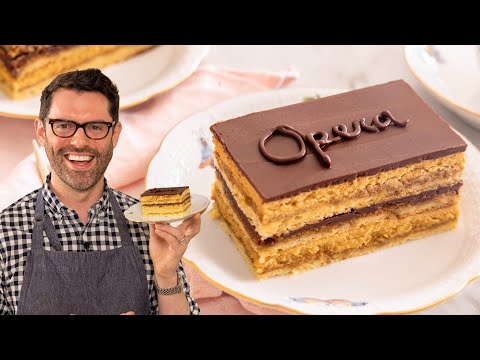
The foundational walkthrough for the full French method. Clear technique on the sponge fold, the syrup soak, and the ganache pour temperature — the three steps most home bakers get wrong.
2. Mastering Chocolate Ganache
Deep dive into ganache ratios and temperature control. Covers exactly when to pour for a smooth, level finish — applicable to any ganache-topped dessert.
3. French Buttercream for Home BakersDemystifies the coffee buttercream layer. Covers the creaming technique and how to adjust consistency if the buttercream breaks or becomes too soft.
🛠️ Core Equipment
- 9x13-inch baking pan with parchment paper ↗Opera cake is assembled flat and sliced into layers — you need a wide, shallow pan that produces a thin, even sponge. A deep cake pan gives you the wrong geometry entirely.
- Offset spatula ↗Essential for spreading ganache and buttercream in even, thin layers without tearing the sponge. A regular knife drags and creates ridges. A good [offset spatula](/kitchen-gear/review/offset-spatula) is the single most useful pastry tool you can own.
- Fine-mesh sieve ↗For the powdered sugar and cocoa dusting that finishes the cake. A sieve gives you an even, controlled veil of powder. Spooning directly produces clumps and uneven coverage that undercuts an otherwise beautiful presentation.
- Serrated knife ↗The only tool that can slice a thin sponge horizontally without compression. A straight blade presses down and tears. Gentle, long sawing strokes with a serrated knife give you clean, even layers every time.
Flawless Opera Cake (The French Layered Dessert Worth the Effort)
🛒 Ingredients
- ✦3/4 cup granulated sugar, divided
- ✦4 large eggs, separated
- ✦1/3 cup all-purpose flour
- ✦3 tablespoons unsweetened cocoa powder
- ✦1/4 teaspoon salt
- ✦1 teaspoon vanilla extract
- ✦1/2 cup whole milk
- ✦2 tablespoons instant coffee powder
- ✦2 tablespoons hot water
- ✦6 tablespoons unsalted butter, softened
- ✦1/2 cup heavy whipping cream
- ✦6 ounces semi-sweet chocolate, chopped
- ✦2 tablespoons coffee liqueur or brewed espresso
- ✦1 tablespoon powdered sugar, for dusting
- ✦1 tablespoon unsweetened cocoa powder, for garnish
- ✦2 ounces dark chocolate, for shavings
👨🍳 Instructions
01Step 1
Preheat your oven to 350°F. Line a 9x13-inch baking pan with parchment paper, leaving overhang on the long edges for easy removal.
02Step 2
Dissolve 2 tablespoons instant coffee powder in 2 tablespoons hot water. Stir until completely clear and fragrant. Set aside to cool completely.
03Step 3
Whisk egg yolks with 1/2 cup granulated sugar in a large bowl until pale and ribbony, about 3 minutes. The mixture should fall from the whisk in a thick, continuous stream.
04Step 4
Fold in the flour and cocoa powder with a spatula until no dry streaks remain. The batter will be thick.
05Step 5
In a separate clean bowl, beat egg whites with salt until stiff peaks form, about 4 minutes. Add the remaining 1/4 cup sugar and beat for 30 more seconds.
06Step 6
Fold the egg whites into the chocolate batter in two additions. Work gently — ten to twelve folds per addition. Stop when no white streaks are visible.
07Step 7
Spread the batter evenly into the prepared pan. Bake 12-15 minutes until a toothpick inserted in the center comes out clean.
08Step 8
Cool in the pan for 10 minutes, then invert onto a wire rack and peel off the parchment. Cool completely before slicing.
09Step 9
Make the coffee syrup: combine the cooled coffee mixture with 2 tablespoons coffee liqueur or brewed espresso. Whisk briefly.
10Step 10
Once the sponge is fully cool, slice it horizontally into two even layers using a serrated knife with long, gentle strokes.
11Step 11
Brush both sponge layers generously with coffee syrup. Let each layer absorb for a full minute. The sponge should look visibly saturated.
12Step 12
Beat 6 tablespoons softened butter with 1/4 cup granulated sugar until light and fluffy, about 2 minutes. Blend in 2 tablespoons brewed espresso and whisk until smooth.
13Step 13
Spread the coffee buttercream evenly over the bottom sponge layer with an offset spatula. Place the second sponge layer on top.
14Step 14
Heat heavy cream until steaming — not boiling. Pour over chopped semi-sweet chocolate. Let sit 1 minute, then stir from the center outward until completely smooth and glossy.
15Step 15
When the ganache is warm but no longer hot — about 90°F if you're using a thermometer — pour it over the assembled cake. Spread once with an offset spatula and leave it.
16Step 16
Refrigerate for at least 2 hours, uncovered, until the ganache is fully set.
17Step 17
To serve, dust with powdered sugar and cocoa through a fine-mesh sieve. Add dark chocolate shavings. Slice with a sharp knife wiped clean between each cut.
Nutrition Per Serving
Estimates based on standard preparation. Adjustments alter macros.
🔄 Substitutions
Instead of Semi-sweet chocolate...
Use Dark chocolate (70% cacao)
Slightly more intense, less sweet ganache. Better depth of flavor and pairs more aggressively with the coffee notes. Use the same quantity.
Instead of Granulated sugar...
Use Coconut sugar
Slightly caramel undertone that actually complements the coffee flavors well. Lower glycemic impact. The buttercream will be slightly darker in color.
Instead of Heavy whipping cream...
Use Greek yogurt mixed with a small amount of cream (3:1 ratio)
Tangier ganache with a slightly denser set. Adds protein. Works well but changes the finish from glossy to matte — factor that into presentation.
Instead of Coffee liqueur...
Use Brewed espresso with a drop of vanilla extract
Removes alcohol and added sugar while keeping the coffee intensity. The vanilla rounds out what the liqueur's sweetness was contributing.
🧊 Storage & Reheating
In the Fridge
Cover loosely with plastic wrap and store for up to 4 days. The flavor peaks at day 2.
In the Freezer
Freeze whole or in slices, wrapped tightly, for up to 6 weeks. Thaw overnight in the refrigerator — never at room temperature, which causes the ganache to sweat and the layers to shift.
Reheating Rules
This cake is served cold or at cool room temperature. Do not reheat. Remove from the refrigerator 15 minutes before serving to take the chill off the ganache.
❓ Frequently Asked Questions
Why did my sponge come out flat and dense?
The egg whites were either under-whipped or over-folded — or both. Stiff peaks mean the whites hold their shape when you remove the whisk. Fold in two additions with as few strokes as possible. The sponge has no baking powder; the air in the whites is the only thing making it rise.
My ganache poured on fine but now it has cracks. What happened?
The cake was too cold when you poured the ganache. A refrigerator-cold surface causes the outer layer of ganache to set immediately while the interior stays liquid, and the contraction creates hairline cracks. Assemble at room temperature, then chill.
Can I make this without coffee liqueur?
Yes — brewed espresso works equally well and keeps the cake alcohol-free. The liqueur adds mild sweetness and a slightly syrupy texture to the soak, so if you substitute espresso, consider adding half a teaspoon of sugar to the syrup.
How thin should the buttercream layer be?
Thin. Two to three millimeters — enough to taste distinctly but not enough to overpower. Opera cake is about balance between coffee and chocolate, not a thick frosting layer. If your buttercream layer is visible from the side as the thickest component, it's too thick.
Can I make this ahead for a dinner party?
Opera cake is an ideal make-ahead dessert. Assemble it fully 24 hours before serving, keep it refrigerated, and add the powdered sugar and chocolate garnish 30 minutes before the meal. The layers improve overnight and slicing gets cleaner as the cake firms.
Why do I need to slice the sponge horizontally? Can't I just bake two thinner layers?
You can, but it requires precise batter division and two baking cycles that are hard to keep consistent. The horizontal slice from a single bake ensures both layers are identical in texture and thickness. Slight variations from two separate bakes create an uneven layer structure that affects both assembly and slicing.
The Science of
Flawless Opera Cake (The French Layered Dessert Worth the Effort)
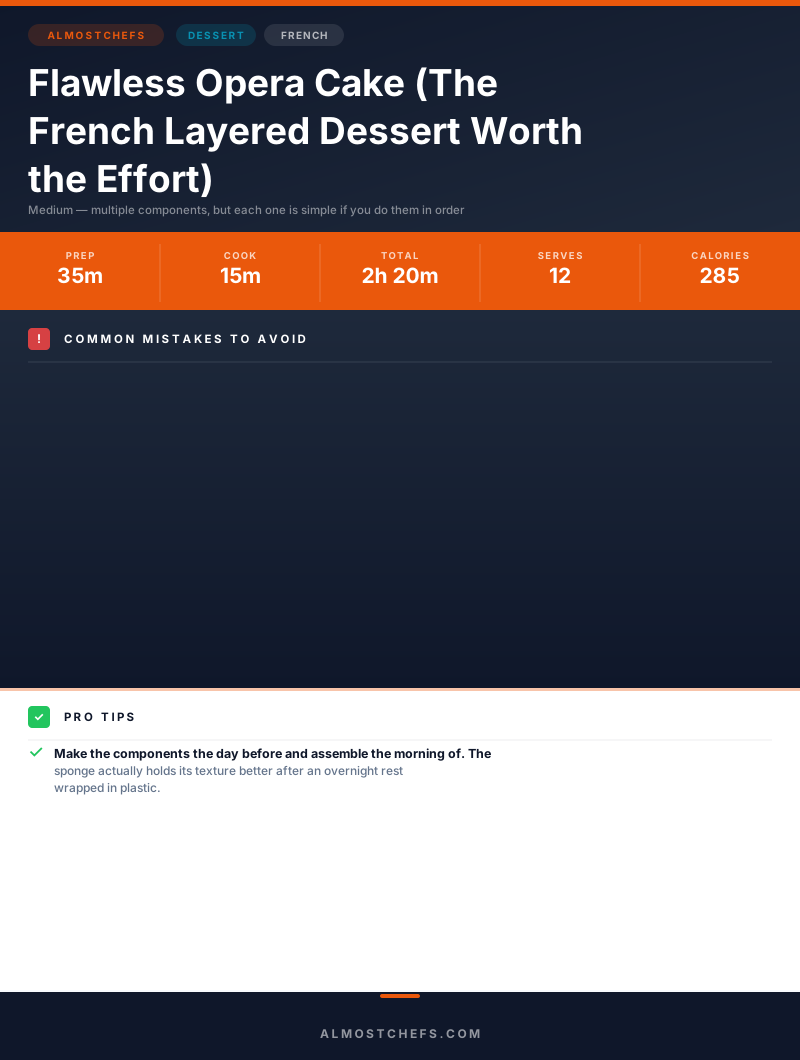
We turned everything on this page into a beautiful, flour-proof PDF cheat sheet. Print it out, stick it to your fridge, and never mess up your flawless opera cake (the french layered dessert worth the effort) again.
*We'll email you the high-res PDF instantly. No spam, just perfectly cooked meals.
AlmostChefs Editorial Team
We translate the internet's most popular cooking videos into foolproof, beginner-friendly written recipes. We analyze multiple methods, test them in our kitchen, and engineer a single "Master Recipe" that gives you the best possible result with the least possible stress.