Crispy Homemade Onion Rings (The Batter Makes the Difference)
Thick-cut yellow onion rings in a sparkling water batter with cornstarch for maximum crunch. We broke down the frying technique to eliminate soggy rings, uneven coating, and oil-logged middles — so yours come out crispy every time.
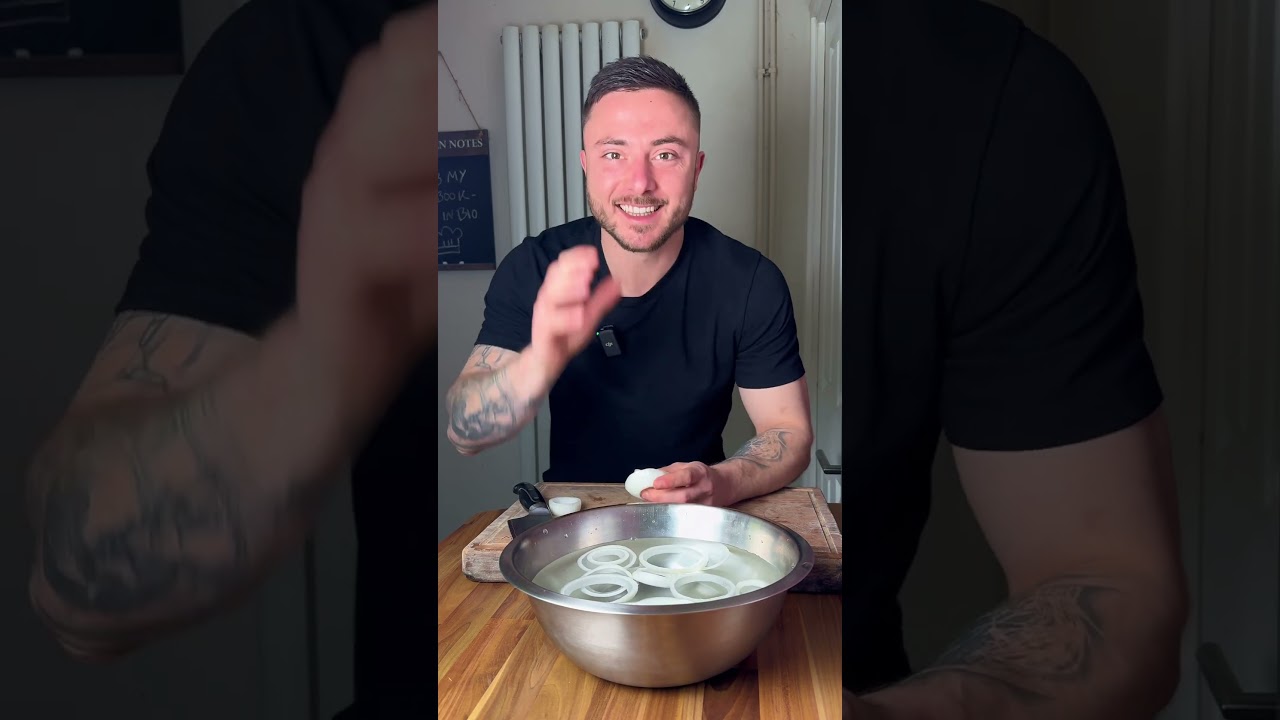
“Most homemade onion rings are a disappointment: thick, greasy batter that slides off the onion, a middle that steams itself soggy before it hits the plate, and a coating that peaked somewhere between the fryer and the paper towel. The fix isn't a secret ingredient — it's understanding why the batter fails in the first place. Cold sparkling water, cornstarch, and oil at exactly 350°F are the only three variables that matter.”
Why This Recipe Works
Onion rings are one of the most misunderstood fried foods in the home kitchen. They look simple — onion, batter, oil — and they are simple, but only if you understand the three physics problems they're asking you to solve simultaneously: how to get a coating to stick to a wet, round, slippery surface; how to create a crust that crisps before the onion steams it from the inside; and how to maintain oil temperature across multiple batches without a commercial fryer. Get those three things right and the rest is assembly.
The Batter Architecture
The ratio of flour to cornstarch is the foundation of this recipe. Flour provides structure and flavor but, on its own, produces a soft, bready coating — the kind that goes limp within two minutes of leaving the oil. Cornstarch is the crunchy variable. At frying temperatures, cornstarch molecules bond into a rigid, glassy network that stays hard even as the interior of the ring produces steam. The 2:1 flour-to-cornstarch ratio in this recipe is calibrated to give you a coating that's substantial enough to taste like something without being so thick it turns into a doughnut.
Cold sparkling water is not a gimmick. The cold temperature slows gluten development, keeping the batter loose enough to cling without becoming elastic and thick. The carbonation creates tiny gas bubbles throughout the batter that expand rapidly in hot oil, producing a lighter, craggier crust with more surface area — more surface area means more crunch. Use flat or warm water and you lose both effects simultaneously.
Temperature Is the Whole Game
A kitchen thermometer is the only piece of equipment in this recipe that is genuinely irreplaceable. Not because 350°F is a magic number, but because it's the threshold at which the surface moisture in the batter vaporizes faster than oil can penetrate. Below 350°F — even 325°F — that vaporization slows down, the steam barrier collapses, and the oil floods in. You end up with rings that taste like they were cooked in the oil rather than by it.
The other temperature problem is recovery. Every batch of cold, battered onion rings drops the oil temperature by 20-40 degrees. If you add a second batch immediately after the first, you're frying at 310°F and don't know it. Wait for the oil to return to 350°F between batches. It takes 60-90 seconds. That pause is what separates consistently crispy rings from a greasy plate.
The Wire Rack Rule
Paper towels are the standard advice, and paper towels are wrong. A paper towel absorbs oil, yes — but it also traps the steam coming off the hot rings underneath them, creating a humid microclimate that softens the bottom crust within seconds. A wire rack set over a sheet pan lets that steam escape in every direction. The rings drain and air-dry simultaneously. It's a minor equipment change that produces a meaningfully different result.
A Dutch oven also matters more than most recipes acknowledge. Its thick walls and heavy base retain heat far more effectively than a thin skillet, which means smaller temperature drops between batches and faster recovery times. You spend less time waiting and more time frying — and the rings that come out of a Dutch oven are consistently better than the ones from a thin pan over the same burner.
Finishing Matters
Lemon juice and fleur de sel applied immediately after frying are not optional garnish. The acid from the lemon cuts through the richness of the frying oil and brightens the smoked paprika, pulling the flavor of the coating into sharper focus. The fleur de sel provides textural contrast — a few bright, crunchy crystals against the smooth batter crust. Both need to go on while the rings are hot, before the surface sets. Cold rings don't absorb seasoning the same way.
Serve them immediately. There is no version of onion rings that improves with five minutes of sitting on a plate.
Where Beginners Mess This Up
Before we start, read this. These are the 4 reasons your crispy homemade onion rings (the batter makes the difference) will fail:
- 1
Oil that isn't hot enough: Frying below 350°F means the batter absorbs oil instead of instantly crisping. The coating becomes a sponge. Use a thermometer — guessing the temperature is the single most common reason homemade rings are greasy.
- 2
Warm batter: Warm batter spreads and thins on the onion before it hits the oil. Cold batter clings, sets faster on contact with heat, and creates a thicker, crunchier shell. Keep your sparkling water refrigerated until the moment you mix it.
- 3
Overcrowding the pan: Adding too many rings at once drops the oil temperature dramatically. The rings then stew in each other's steam rather than frying. Four to five rings per batch is the maximum — any more and you're braising, not frying.
- 4
Skipping the cornstarch: Flour alone creates a soft, bready coating. Cornstarch is what delivers the audible crunch — it forms a rigid, glassy crust at frying temperatures. The 2:1 flour-to-cornstarch ratio here is not decorative.
The Video Reference Library
Want to see it in action? Here are the exact videos we analyzed and combined to build this foolproof recipe translation:
The source video for this recipe. Covers batter consistency, oil temperature management, and the exact visual cues for pulling rings at peak crispness.
🛠️ Core Equipment
- Deep skillet or Dutch ovenDepth matters for frying. A shallow pan means constant flipping and uneven crisping. A [Dutch oven](/kitchen-gear/review/dutch-oven) retains heat far better than a thin skillet, which means oil temperature recovers faster between batches.
- Instant-read thermometerThere is no reliable visual cue for 350°F oil. A [kitchen thermometer](/kitchen-gear/review/instant-read-thermometer) is the only way to confirm temperature before each batch. Without it, you're guessing.
- Wire rack over a sheet panPaper towels trap steam under the rings and create soft bottoms. A wire rack lets air circulate under the rings as they drain, keeping the entire surface crispy — not just the top.
- Long tongsYou need to place rings into hot oil and flip them without splashing. Long-handled tongs keep your hands away from 350°F oil and give you control during the flip.
Crispy Homemade Onion Rings (The Batter Makes the Difference)
🛒 Ingredients
- ✦4 large yellow onions, cut into 1/2-inch thick rings
- ✦1 cup all-purpose flour
- ✦1/2 cup cornstarch
- ✦2 teaspoons kosher salt
- ✦1 teaspoon black pepper
- ✦1 teaspoon garlic powder
- ✦1 teaspoon smoked paprika
- ✦1/2 teaspoon cayenne pepper
- ✦1 large egg
- ✦1 cup cold sparkling water or club soda
- ✦2 cups neutral oil for frying, such as vegetable or canola
- ✦2 tablespoons fresh lemon juice
- ✦Fleur de sel or sea salt for finishing
👨🍳 Instructions
01Step 1
Separate the onion rings by hand, keeping the larger outer rings intact and reserving smaller inner pieces for another use.
02Step 2
Combine all-purpose flour, cornstarch, kosher salt, black pepper, garlic powder, smoked paprika, and cayenne in a large shallow bowl. Stir well to distribute the spices evenly.
03Step 3
Whisk together the egg and cold sparkling water in a separate bowl until slightly frothy and combined.
04Step 4
Heat neutral oil in a deep skillet or Dutch oven to 350°F. Use a thermometer to verify before adding the first batch.
05Step 5
Working with 4-5 rings at a time, dip each ring into the wet batter to coat thoroughly, then immediately dredge in the flour mixture, shaking off excess.
06Step 6
Carefully place the battered rings into the hot oil. Fry undisturbed for 2-3 minutes until the undersides are deep golden brown.
07Step 7
Flip each ring with tongs and fry another 1-2 minutes until the second side matches the first.
08Step 8
Transfer to a wire rack set over a sheet pan. Do not stack the rings.
09Step 9
Check oil temperature and let it return to 350°F before starting the next batch.
10Step 10
Squeeze fresh lemon juice over the warm rings and finish with a generous pinch of fleur de sel while still hot.
11Step 11
Serve immediately.
Nutrition Per Serving
Estimates based on standard preparation. Adjustments alter macros.
🔄 Substitutions
Instead of All-purpose flour...
Use Whole wheat pastry flour or 1:1 gluten-free flour blend
Slight decrease in crispness but functional. Gluten-free blends work especially well if they contain rice flour, which fries similarly to cornstarch.
Instead of Sparkling water...
Use Beer or unsweetened almond milk
Beer creates extra crispness through carbonation and fermentation byproducts — the better choice if you have it. Almond milk produces a lighter, more delicate coating.
Instead of Neutral vegetable oil...
Use Avocado oil
Higher smoke point than most vegetable oils and a cleaner flavor. More expensive but worth it if you fry regularly.
Instead of Cornstarch...
Use Arrowroot powder or tapioca starch
Comparable crunch with slightly different texture. Tapioca starch produces a marginally chewier crust; arrowroot is the closest match to cornstarch.
🧊 Storage & Reheating
In the Fridge
Store in an airtight container for up to 2 days. They will soften — that's unavoidable.
In the Freezer
Freeze in a single layer on a sheet pan until solid, then transfer to a freezer bag. Keeps up to 1 month.
Reheating Rules
Re-crisp in a 400°F oven or air fryer for 5-7 minutes. Microwaving produces soft, steamed rings — avoid it entirely.
❓ Frequently Asked Questions
Why does my batter keep sliding off the onion?
Two likely causes: the onions are wet, or the batter is too thin. Pat the onion rings completely dry before battering. If the batter is loose and watery, whisk in an extra tablespoon of flour and reduce the sparkling water slightly next time.
Can I make onion rings in an air fryer?
Yes, with caveats. Spray the battered rings generously with oil and cook at 400°F for 10-12 minutes, flipping once. The result is crispier than oven-baked but won't match the uniform crunch of deep frying. The batter coating is thinner and less dramatic.
What dipping sauce works best?
Chipotle mayo (mayonnaise plus chipotle in adobo plus lime juice) is the standard. Ranch is the crowd-pleaser. A sharp sriracha-honey mix works well against the smoked paprika in the batter.
My rings came out greasy — what went wrong?
The oil was below 350°F when the rings went in. At the correct temperature, the surface moisture of the batter instantly vaporizes and creates a steam barrier that prevents oil absorption. Below 350°F, that barrier never forms and the oil soaks in.
Can I use sweet onions instead of yellow onions?
Yes. Vidalia or Walla Walla onions are milder and slightly sweeter — they caramelize faster under the batter. The rings will taste sweeter and less sharp. A fine swap, especially if you're serving these alongside something acidic or spicy.
How do I keep the first batch warm while I fry the rest?
Hold them on a wire rack in a 250°F oven. Do not cover them — covering traps steam and kills the crust. They'll hold for 15-20 minutes without significant texture loss.
The Science of
Crispy Homemade Onion Rings (The Batter Makes the Difference)
We turned everything on this page into a beautiful, flour-proof PDF cheat sheet. Print it out, stick it to your fridge, and never mess up your crispy homemade onion rings (the batter makes the difference) again.
*We'll email you the high-res PDF instantly. No spam, just perfectly cooked meals.
AlmostChefs Editorial Team
We translate the internet's most popular cooking videos into foolproof, beginner-friendly written recipes. We analyze multiple methods, test them in our kitchen, and engineer a single "Master Recipe" that gives you the best possible result with the least possible stress.