One-Pot Ground Beef Pasta (The Weeknight Dinner That Actually Works)
A rich, savory pasta cooked entirely in one pot with ground beef, crushed tomatoes, and bold aromatics — no separate boiling, no draining, no second sink load. We dissected the most-watched YouTube methods to build the technique that gets the starch balance exactly right so the sauce clings instead of slides.
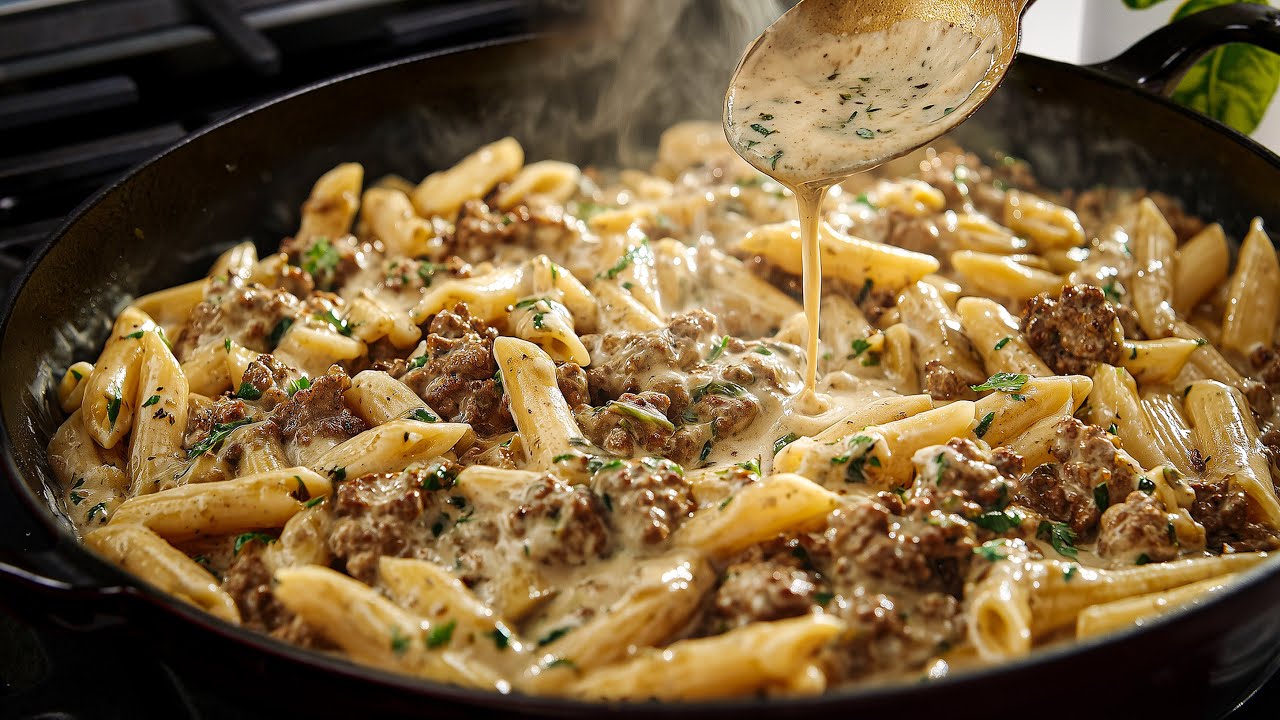
“Most one-pot pasta recipes are a lie. You dump everything in together and end up with either waterlogged mush or half-cooked pasta swimming in thin sauce. The technique that actually works requires one non-negotiable step: browning the beef properly first, then building the sauce before the pasta ever touches the pot. We watched every major YouTube method and found the exact liquid ratio and timing that makes the sauce finish thick and glossy right as the pasta hits al dente.”
Why This Recipe Works
One-pot pasta is one of the most misunderstood categories in weeknight cooking. It promises the efficiency of a single vessel but routinely delivers one of two failure modes: pasta swimming in thin, flavorless liquid, or an overcooked, starchy paste that clings to itself more than to any sauce. The reason most recipes fail has nothing to do with the concept — it has everything to do with sequence and ratio.
The Browning Imperative
The single most important thing you can do for this dish happens before any liquid, any tomato, any broth enters the equation. You need to brown the beef properly, and that means treating it like a steak, not like a taco filling. A wide, preheated Dutch oven set over high heat, beef in a single layer, no stirring for three full minutes. What forms on the bottom of the pan during those three minutes is called fond — a concentrated layer of caramelized proteins and sugars that contains more beef flavor than the meat itself. When you deglaze with Worcestershire sauce and eventually the broth, that fond dissolves into the liquid and becomes the backbone of the entire sauce. Chefs spend years learning to value fond. Home cooks rinse it off and wonder why restaurant food tastes different.
The mistake that kills this step is moisture. Wet beef steams instead of sears. Ground beef straight from a cold package releases moisture as it warms — if the pan isn't hot enough to immediately evaporate that moisture, the meat stews in its own liquid and turns gray. Gray beef is not bad beef; it's just missed-opportunity beef. Gray means no fond. No fond means flat sauce.
The Tomato Paste Bloom
Canned tomato paste is one of the highest-concentration flavor ingredients available in a home kitchen — nearly 30% solids compared to the 7-8% in crushed tomatoes. But it has a distinct problem: straight from the can, it tastes raw, metallic, and slightly bitter. The fix is a 90-second bloom in hot fat directly on the beef-and-onion mixture before any liquid enters the pot. During those 90 seconds, the paste's natural sugars caramelize, its acid mellows, and its color shifts from bright red to a deeper rust. The payoff is a sauce base that tastes like it simmered for an hour — from a step that takes less time than reading this paragraph.
Liquid Ratio Is Not Approximate
One-pot pasta lives and dies by the ratio of liquid to pasta, and this is where most recipes fail their readers by being vague. The 2.5 cups of broth in this recipe is not a suggestion or a starting point — it's the calibrated amount that allows the pasta to cook through while the sauce reduces to the right consistency simultaneously. Add more and the sauce never concentrates. Add less and the pasta can't finish cooking before the liquid is gone. The first time you make this, measure everything precisely. Once you've seen what the pot looks like at each stage, you can adjust by feel. But that calibration comes from experience, not guesswork.
A wooden spoon is the right tool for this cook because you'll be stirring continuously and scraping the bottom every few minutes. The starch the pasta releases creates a sauce that wants to stick to the bottom of the pot and scorch. Consistent, thorough stirring keeps it moving, distributes heat, and prevents any single spot from burning while ensuring the starch integrates evenly throughout the sauce rather than clumping.
The Parmesan Finish
Finishing a pasta dish with cheese seems obvious. The technique matters more than people realize. Parmesan added to a boiling pot seizes almost immediately — the proteins tighten under direct heat and the cheese clumps into rubbery strings instead of melting into the sauce. Pulling the pot off the heat before adding the cheese, then stirring it in in two separate additions, gives the residual heat enough energy to melt the cheese fully without enough intensity to make it seize. The result is a sauce that's glossy, cohesive, and coats every piece of pasta evenly rather than sitting in a puddle at the bottom.
Freshly grated parmesan — not the pre-shredded bag variety — is essential here. Anti-caking agents coat pre-shredded cheese to keep it from clumping in the bag. Those same agents prevent it from melting smoothly in a sauce. A microplane or box grater takes 45 seconds. The difference in the final dish is significant.
This recipe is efficient by design, not by accident. Every step exists for a reason, and every component is doing structural work. Follow the sequence and you get a sauce that's thick, beefy, and deeply flavored — produced in one pot in under 40 minutes on a Tuesday.
Where Beginners Mess This Up
Before we start, read this. These are the 4 reasons your one-pot ground beef pasta (the weeknight dinner that actually works) will fail:
- 1
Not browning the beef — steaming it instead: Overcrowding the pan or adding liquid too early traps steam and prevents the Maillard reaction. The beef turns gray instead of brown and you lose the fond — the caramelized crust stuck to the bottom that flavors the entire dish. Brown in batches if needed. This step is not optional.
- 2
Using too much liquid: One-pot pasta is a calibration exercise. Too much broth and the sauce never thickens because the pasta absorbs what it needs and the rest dilutes the flavor. The ratio in this recipe is tuned so the liquid is nearly gone right as the pasta reaches al dente. Resist the urge to add more liquid mid-cook.
- 3
Walking away from the pot: Once the pasta goes in, the starch it releases is what thickens the sauce. If you're not stirring every 2-3 minutes, the bottom scorches and the top stays soupy. This is an active 12-minute cook. Put your phone down.
- 4
Skipping the tomato paste bloom: Tomato paste dumped directly into liquid tastes raw and tinny. Cooking it in the rendered beef fat for 90 seconds caramelizes its natural sugars and kills the metallic edge. This single step adds a full layer of depth to the final sauce.
The Video Reference Library
Want to see it in action? Here are the exact videos we analyzed and combined to build this foolproof recipe translation:
The source method for this recipe. Watch for the fond-scraping technique after adding the broth — this is the moment where the sauce base comes together.
Covers the liquid-to-pasta ratio science in detail and explains why starch release is what thickens the sauce. Essential watching for understanding why the timing in this recipe is so specific.
Deep dive into the Maillard reaction applied to ground beef. Demonstrates the visual difference between properly browned and steamed meat and why it changes the entire flavor profile of a dish.
🛠️ Core Equipment
- Heavy-bottomed, wide Dutch oven or deep skillet (at least 12-inch)Surface area is everything for browning beef without steaming. A narrow pot traps moisture. A wide, heavy base also distributes heat evenly once the pasta goes in, preventing hot spots that scorch the bottom layer.
- Wooden spoon or silicone spatulaYou'll be scraping fond off the bottom of the pot continuously. Metal utensils can scratch enamel coatings; wood works on everything and holds up to the vigorous stirring this dish requires.
- Ladle or liquid measuring cupPrecision matters here. The difference between 2.5 and 3 cups of broth is the difference between glossy sauce and thin soup. Measure the first time you make this until you know the feel.
- Microplane or box graterPre-shredded parmesan contains cellulose anti-caking agents that prevent it from melting smoothly. Freshly grated parmesan melts into the sauce in seconds and creates a glossy, cohesive finish.
One-Pot Ground Beef Pasta (The Weeknight Dinner That Actually Works)
🛒 Ingredients
- ✦1 pound 80/20 ground beef
- ✦12 ounces (340g) penne or rigatoni pasta, uncooked
- ✦1 medium yellow onion, finely diced
- ✦5 cloves garlic, minced
- ✦2 tablespoons tomato paste
- ✦1 can (14.5 oz) crushed tomatoes
- ✦2.5 cups low-sodium beef broth
- ✦1 teaspoon dried Italian seasoning
- ✦1/2 teaspoon smoked paprika
- ✦1/4 teaspoon red pepper flakes
- ✦1 tablespoon olive oil
- ✦3/4 cup freshly grated parmesan cheese, plus more for serving
- ✦2 tablespoons fresh flat-leaf parsley, chopped
- ✦1 teaspoon Worcestershire sauce
- ✦Kosher salt and freshly cracked black pepper to taste
👨🍳 Instructions
01Step 1
Heat olive oil in a wide, heavy-bottomed Dutch oven or deep 12-inch skillet over medium-high heat until shimmering.
02Step 2
Add ground beef in a single layer. Do not stir for 3 minutes. Let it form a deep brown crust on the bottom, then break it apart and continue cooking for another 3-4 minutes until no pink remains.
03Step 3
Push the beef to the sides of the pan. Add the diced onion to the center and cook for 3-4 minutes until softened and translucent, stirring frequently.
04Step 4
Add the minced garlic and cook for 60 seconds until fragrant. Add the tomato paste directly on top of the beef and vegetable mixture and stir to coat everything. Cook for 90 seconds, letting the paste darken slightly.
05Step 5
Pour in the Worcestershire sauce and stir to deglaze, scraping up all the fond from the bottom of the pot with your wooden spoon. Every browned bit is flavor.
06Step 6
Add the crushed tomatoes, beef broth, Italian seasoning, smoked paprika, and red pepper flakes. Stir to combine. Bring to a rolling boil.
07Step 7
Add the dry pasta, stir to submerge, and reduce heat to medium. Cook uncovered, stirring every 2-3 minutes, for 11-14 minutes until the pasta is al dente and the sauce has thickened.
08Step 8
Remove from heat. Stir in the grated parmesan cheese in two additions, letting each addition melt fully before adding the next.
09Step 9
Let the pot sit uncovered for 2 minutes. The sauce will continue to thicken as it cools slightly and the starch sets. Finish with fresh parsley, a crack of black pepper, and additional parmesan at the table.
Nutrition Per Serving
Estimates based on standard preparation. Adjustments alter macros.
🔄 Substitutions
Instead of Ground beef...
Use Italian sausage (casings removed)
Adds fennel and spice notes that complement the tomato base well. Fattier than beef, so consider draining some fat before adding the onion.
Instead of Penne or rigatoni...
Use Rotini or medium shells
Both hold sauce in their ridges or curves. Avoid thin pasta like spaghetti or angel hair — they overcook before the sauce thickens and produce a different texture profile.
Instead of Beef broth...
Use Chicken broth plus 1 tablespoon soy sauce
The soy sauce replaces the savory depth that beef broth provides. Vegetable broth alone tastes flat in this dish — add the soy sauce regardless of which base you use.
Instead of Parmesan cheese...
Use Pecorino Romano
Saltier and sharper than parmesan. Reduce added salt by half if substituting, and use slightly less cheese — pecorino's intensity goes further.
🧊 Storage & Reheating
In the Fridge
Store in an airtight container for up to 3 days. The pasta continues to absorb sauce as it sits, so the leftovers will be thicker than when first made.
In the Freezer
Freeze in portioned containers for up to 2 months. The pasta softens slightly after freezing but the flavor is intact. Thaw overnight in the fridge before reheating.
Reheating Rules
Add 2-3 tablespoons of water or broth per serving, cover, and reheat over medium-low for 5-7 minutes, stirring once halfway through. Microwave on 70% power in 90-second intervals with the same added liquid.
❓ Frequently Asked Questions
Why is my sauce watery and thin?
One of two things: too much broth, or you covered the pot during cooking. This recipe requires an uncovered cook so the liquid reduces as the pasta cooks. A covered pot traps steam and you end up with more liquid at the end than you started with.
Can I use pre-cooked pasta?
No. The starch released by dry pasta cooking directly in the sauce is what thickens it. Pre-cooked pasta has already released its starch into the cooking water you discarded. You'd end up with thin sauce and mushy pasta.
My pasta cooked but the sauce is still thin — what happened?
The heat was too low. This dish needs a steady medium boil to reduce the liquid at the right rate. If you cooked at a low simmer, the pasta absorbed liquid without the surface evaporation that concentrates the sauce. Raise the heat for the last 3 minutes and stir constantly to fix it.
Can I make this ahead of time?
Yes, but don't add the parmesan until reheating. The cheese can break or turn grainy when stored and reheated from cold. Reheat the base with added liquid, then stir in fresh cheese at the end.
Do I need to drain the fat after browning the beef?
With 80/20 beef, yes — drain off all but about 1 tablespoon of fat before adding the onion. That tablespoon is flavor; the rest will make the final dish greasy. If using leaner beef, keep all the fat.
What pasta shapes work best and which should I avoid?
Short, sturdy shapes with ridges or tubes work best: penne, rigatoni, rotini, medium shells. Avoid thin pasta (spaghetti, linguine) — it overcooks before the sauce reduces. Avoid fresh or egg pasta — it doesn't release the right starch and turns mushy.

The Science of
One-Pot Ground Beef Pasta (The Weeknight Dinner That Actually Works)
We turned everything on this page into a beautiful, flour-proof PDF cheat sheet. Print it out, stick it to your fridge, and never mess up your one-pot ground beef pasta (the weeknight dinner that actually works) again.
*We'll email you the high-res PDF instantly. No spam, just perfectly cooked meals.
AlmostChefs Editorial Team
We translate the internet's most popular cooking videos into foolproof, beginner-friendly written recipes. We analyze multiple methods, test them in our kitchen, and engineer a single "Master Recipe" that gives you the best possible result with the least possible stress.