Copycat Olive Garden Breadsticks (Better Than the Basket)
Soft, pillowy garlic-buttered breadsticks made from scratch — no restaurant required. We reverse-engineered the dough hydration, garlic butter ratio, and bake temperature to nail the exact texture that makes people clear the basket before the entree arrives.
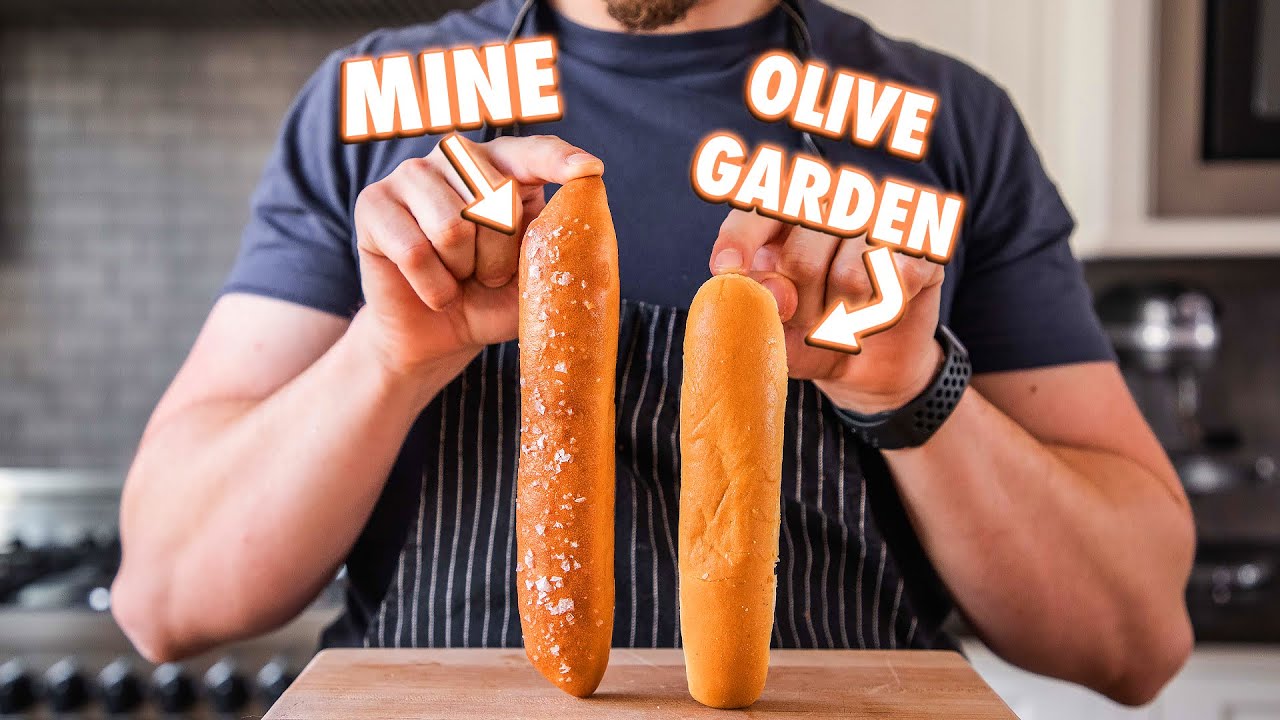
“Olive Garden breadsticks have no business being this good. They're not artisan. They're not complex. They're soft, garlicky, buttery rolls that arrive warm and free, and somehow that combination short-circuits every intention you had about saving room for dinner. The secret isn't a proprietary blend of anything — it's dough hydration, garlic butter applied at the right moment, and a bake temperature that sets the crust without drying the crumb. We built this recipe to deliver that exact result from a home oven.”
Why This Recipe Works
There is exactly one thing Olive Garden breadsticks have going for them — and it's not complexity. It's texture. That specific combination of pillowy interior, thin golden crust, and garlic butter that soaks in rather than sitting on top is the entire product. Nail the texture and you've reproduced the thing people actually drive to a mall restaurant for. Miss it and you have mediocre dinner rolls.
The Dough Architecture
This is a low-yeast, slow-rise dough, and that's intentional. Half a teaspoon of instant yeast sounds like not enough. It is exactly enough. Less yeast means slower fermentation, which means more time for the gluten network to develop before the dough starts expanding. The result is a more extensible, elastic structure that traps CO₂ bubbles evenly — producing that characteristic open, tender crumb instead of a tight, bready one.
Milk is non-negotiable. The fat in whole milk coats the developing gluten strands, inhibiting some cross-linking and keeping the final texture soft. Water-based doughs are chewier by nature — fine for baguettes, wrong for breadsticks that are supposed to yield immediately under pressure. The milk fat is also what gives the interior that slightly rich quality that makes you reach for a second one before you've finished the first.
Shaping and the Second Rise
Most home bakers rush the shaping and skip the second rise. Both are errors. Rolling inconsistent ropes means uneven baking — the thin ends finish 3-4 minutes before the thick center, and you can't fix that in the oven once it's underway. Take the extra 2 minutes to roll each piece from center to end with consistent pressure.
The 30-minute second rise is structural, not optional. During the first rise, the dough develops flavor and gluten extensibility. During the second rise — after shaping — the dough builds the air pockets that will expand in the oven's heat. Skip it and the interior bakes tight. The visual cue you're looking for: the ropes should look visibly puffy, not dramatically larger, but noticeably lighter and more pillowed than when you set them down.
The Garlic Butter Timing Problem
This is where most copycat versions fail. They either mix garlic directly into the dough (turns bitter, flavors muddy) or brush garlic butter on before baking (garlic burns at 400°F). The correct answer is aggressive post-bake application — the moment the baking sheet comes out of the oven, brush immediately and generously.
Here's the physics: the crust of a fresh-baked breadstick is in its most porous state while still hot. The surface starches are set but the interior is still releasing steam. Garlic butter applied in this window gets wicked into the bread rather than sitting as a greasy film on top. Wait five minutes and the window closes — the crust contracts slightly as it cools, and the butter stays surface-level. Timing the brush is the single biggest difference between a good result and a great one.
What You're Actually Building
These breadsticks sit at the intersection of dinner roll and garlic bread — soft enough to pull apart without a knife, flavorful enough to eat alone, structured enough to scoop sauce. The recipe is not technically demanding. It requires only that you respect the rises, roll evenly, and brush the garlic butter while the crust is still hot. Follow those three rules and the rest is just baking.
Where Beginners Mess This Up
Before we start, read this. These are the 4 reasons your copycat olive garden breadsticks (better than the basket) will fail:
- 1
Using water instead of milk in the dough: Milk fat and protein create the soft, pillowy crumb that defines these breadsticks. Water-based doughs produce a chewier, more bready texture that reads as homemade in the wrong direction. Whole milk is the standard; low-fat works. Water does not.
- 2
Skipping or rushing the second rise: After shaping the breadstick ropes, they need 30 minutes to puff before baking. Put them in the oven early and they bake dense and tight. The second rise is what creates the interior air structure — the thing that makes them feel light instead of bready.
- 3
Applying garlic butter before the oven: Raw garlic burns at 400°F. If you brush garlic butter on before baking, the garlic scorches to bitter before the dough finishes cooking. Brush the garlic butter on the moment the breadsticks come out of the oven — the residual heat blooms the aromatics without burning them.
- 4
Rolling the ropes unevenly: Thin spots bake faster than thick spots. A 0.75-inch rope needs to be consistent from end to end or you get overdone tips and underdone middles. Roll from the center outward with even pressure.
The Video Reference Library
Want to see it in action? Here are the exact videos we analyzed and combined to build this foolproof recipe translation:
The primary reference for this recipe. Clear technique on dough consistency, rope shaping, and the all-important post-bake garlic butter application. Watch the crumb structure on the pull-apart shot.
🛠️ Core Equipment
- Stand mixer with dough hookEight to ten minutes of hand kneading is achievable but punishing. A stand mixer develops the gluten structure in 6 minutes without wearing you out. If kneading by hand, use the windowpane test — stretch a small piece; it should be thin enough to see light through without tearing.
- Large rimmed baking sheetRimless sheets let breadsticks slide off. Rimmed sheets keep them contained and conduct heat more evenly across the surface. Line with parchment to prevent sticking.
- Pastry brushFor applying the egg wash evenly before baking and the garlic butter generously after. A brush gives even coverage that a spoon can't match. Don't use the same brush for both — or at least wipe it clean between applications.
- Kitchen scaleDividing dough into 12 equal pieces by eye produces inconsistent sizing. Even a 20% size difference changes the bake time enough to matter. Weigh the total dough, divide by 12, portion accordingly.
Copycat Olive Garden Breadsticks (Better Than the Basket)
🛒 Ingredients
- ✦3 cups all-purpose flour
- ✦1 tablespoon granulated sugar
- ✦1.5 teaspoons salt
- ✦0.5 teaspoon instant yeast
- ✦1 cup warm whole milk
- ✦2 tablespoons unsalted butter, melted
- ✦6 tablespoons unsalted butter, softened
- ✦4 cloves garlic, minced
- ✦1 teaspoon dried Italian seasoning
- ✦0.5 teaspoon dried parsley
- ✦0.25 teaspoon garlic powder
- ✦0.25 teaspoon black pepper
- ✦1 egg yolk
- ✦1 tablespoon water
- ✦2 tablespoons grated Parmesan cheese
- ✦Fresh parsley for garnish
👨🍳 Instructions
01Step 1
In a large mixing bowl, combine 3 cups all-purpose flour, 1 tablespoon sugar, 1.5 teaspoons salt, and 0.5 teaspoon instant yeast. Whisk to distribute evenly.
02Step 2
Pour 1 cup warm whole milk and 2 tablespoons melted butter into the dry ingredients. Mix until a shaggy dough forms.
03Step 3
Knead the dough on a lightly floured surface for 8-10 minutes until smooth, elastic, and slightly tacky. It should not stick to your hands but should not feel dry.
04Step 4
Place the dough in a lightly greased bowl, cover with a damp kitchen towel, and let rise in a warm spot for 1 hour until doubled in size.
05Step 5
While the dough rises, prepare the garlic butter: mix 6 tablespoons softened butter with 4 minced garlic cloves, 1 teaspoon Italian seasoning, 0.5 teaspoon dried parsley, 0.25 teaspoon garlic powder, and 0.25 teaspoon black pepper. Set aside.
06Step 6
Preheat the oven to 400°F. Lightly grease a large rimmed baking sheet or line with parchment.
07Step 7
Punch down the risen dough and turn it out onto a lightly floured surface. Divide into 12 equal pieces by weight if possible.
08Step 8
Roll each piece into a rope approximately 8 inches long and 0.75 inches thick. Roll from the center outward with even pressure to maintain consistent thickness end to end.
09Step 9
Place the ropes on the prepared baking sheet, spacing about 2 inches apart. Cover with a damp towel and let rise for 30 minutes until visibly puffed.
10Step 10
Whisk 1 egg yolk with 1 tablespoon water. Brush lightly over each breadstick just before baking.
11Step 11
Bake for 12-15 minutes until golden brown. They should sound hollow when tapped on the bottom.
12Step 12
Remove from the oven. Immediately and generously brush each breadstick with the prepared garlic butter mixture.
13Step 13
Sprinkle with 2 tablespoons grated Parmesan and fresh parsley. Serve within 10 minutes.
Nutrition Per Serving
Estimates based on standard preparation. Adjustments alter macros.
🔄 Substitutions
Instead of All-purpose flour...
Use 2 cups all-purpose + 1 cup whole wheat flour
Adds fiber and a subtle nuttiness. The texture stays tender but slightly denser. Whole wheat absorbs more liquid — add 1-2 tablespoons extra milk if the dough feels stiff.
Instead of Whole milk...
Use Low-fat milk or unsweetened oat milk
Minimal texture difference. Oat milk adds a faint creaminess. Skim milk produces a slightly less tender crumb — acceptable, not ideal.
Instead of Butter in garlic coating...
Use 4 tablespoons unsalted butter + 2 tablespoons extra virgin olive oil
Slightly more Mediterranean flavor, less richness. The olive oil lowers the smoke point of the mixture, so still apply post-bake rather than before.
Instead of Granulated sugar...
Use 1 tablespoon honey
Slightly darker color from fructose browning faster than sucrose. Add to the warm milk before combining with flour since honey is liquid.
🧊 Storage & Reheating
In the Fridge
Store in an airtight container or zip bag for up to 3 days. They firm up in the fridge — that's expected.
In the Freezer
Freeze baked breadsticks for up to 2 months. Wrap individually in plastic wrap then place in a freezer bag. Thaw at room temperature for 30 minutes before reheating.
Reheating Rules
Wrap in foil and reheat at 350°F for 5-6 minutes. Add a small pat of fresh garlic butter before wrapping for best results. Avoid the microwave — it introduces moisture that makes the exterior gummy.
❓ Frequently Asked Questions
Can I make the dough ahead of time?
Yes. After the first rise, punch down the dough, shape into ropes, place on the baking sheet, cover tightly with plastic wrap, and refrigerate overnight. Pull them out 45 minutes before baking to come to room temperature and complete the second rise. Bake as directed.
Why is my dough sticky and hard to roll?
Either the flour ratio is slightly off or the dough is too warm. Lightly flour your hands and surface — not heavily, which makes the dough dry. If it's unworkably sticky, refrigerate for 15 minutes. Cold dough is much easier to handle.
Can I use garlic powder instead of fresh garlic in the butter?
You can. Use 1 teaspoon garlic powder total in place of 4 minced cloves. The flavor is flatter and less pungent — closer to the restaurant version, actually, which uses a garlic powder-heavy blend. Fresh garlic is more assertive and slightly sharper.
Why did my breadsticks come out dense?
One of three things: the yeast was old or killed by liquid that was too hot, the dough didn't rise long enough during one of the two rise periods, or the breadsticks were rolled too thick. Check your yeast by dissolving a small amount in warm water with a pinch of sugar — it should foam within 10 minutes. If it doesn't, the yeast is dead.
Do I have to use an egg wash?
No, but the color suffers without it. Plain milk brushed on top gives some browning. Skipping entirely leaves the exterior pale and matte. The egg wash is a two-minute step with a visible payoff.
Can I make these without a stand mixer?
Absolutely. Hand kneading for 8-10 minutes on a floured surface works. The dough will feel shaggy and sticky at first and smooth out as the gluten develops. Use the windowpane test to confirm it's ready rather than relying on time alone.
The Science of
Copycat Olive Garden Breadsticks (Better Than the Basket)
We turned everything on this page into a beautiful, flour-proof PDF cheat sheet. Print it out, stick it to your fridge, and never mess up your copycat olive garden breadsticks (better than the basket) again.
*We'll email you the high-res PDF instantly. No spam, just perfectly cooked meals.
AlmostChefs Editorial Team
We translate the internet's most popular cooking videos into foolproof, beginner-friendly written recipes. We analyze multiple methods, test them in our kitchen, and engineer a single "Master Recipe" that gives you the best possible result with the least possible stress.