Fermented Squid Banchan (Ojingeo Jeot Done Right)
A deeply briny Korean fermented squid condiment made with fresh squid, coarse sea salt, gochugaru, garlic, and ginger. This jeotgal staple takes three days to develop its signature funk and heat — and rewards every hour of patience with complex, layered umami that store-bought versions cannot touch.

“Most people buy ojingeo jeot in a jar from H-Mart and never think twice about it. That version is fine. But once you make it fresh — with squid you cleaned yourself, salt you weighed precisely, and gochugaru you chose deliberately — you understand what the jar is a pale imitation of. The funk is cleaner. The heat has direction. The texture has tension. Three days is all it takes.”
Why This Recipe Works
Fermentation is preservation with ambition. Salt alone keeps food from spoiling. Salt plus time plus the right microbial environment turns squid into something you cannot explain to someone who has never tasted it — only feed them a spoonful over rice and watch their expression recalibrate.
The Salt Ratio Is Food Safety
Ojingeo jeot operates on a precise principle: a salt concentration of 15–18% by weight relative to the squid creates an environment where Lactobacillus bacteria thrive and harmful pathogens cannot. Drop below 12% and you are gambling. Exceed 25% and you kill the beneficial bacteria alongside the bad ones, producing something preserved but lifeless.
This is why a kitchen scale is not optional. A tablespoon of Korean cheonilyeom and a tablespoon of Diamond Crystal kosher salt weigh entirely different amounts despite occupying the same volume. Volume measurement in fermentation is imprecision dressed up as convenience. Weigh your salt. Calculate your ratio. Trust the math.
Korean cheonilyeom — sun-dried sea salt harvested from tidal flats along the Yellow Sea — is the traditional choice for a reason beyond tradition. Its mineral profile (magnesium, calcium, trace iodine in natural form) contributes to flavor in ways that commercially processed salts do not. More importantly, it is never iodized. Iodine, added to prevent deficiency in landlocked populations, actively suppresses the microbial fermentation you are trying to cultivate.
The Two-Stage Process
Most recipes collapse the salting and seasoning into one step. They are wrong. The two-hour initial salt cure is not procedural fussiness — it is the mechanism by which the squid transforms from raw seafood into something that can ferment correctly.
Squid is roughly 80% water. Salt draws that water out through osmosis, concentrating the proteins, tightening the texture, and creating the dense, mineral brine that becomes the fermentation medium. When you drain that liquid after two hours and discard it, you are not throwing away flavor — you are removing the diluted, protein-cloudy water that would otherwise make your jeot murky and slow to develop.
Only after this initial cure does the gochugaru go in. The squid is now dry enough to take the seasoning evenly, and the salt concentration in the remaining tissue is high enough to direct fermentation rather than simply marinate.
Temperature Is Not a Preference
A cool room — 60–68°F — is where ojingeo jeot wants to spend its first 24 hours. At this temperature, the Lactobacillus organisms that produce lactic acid (and with it, the dish's tangy, complex depth) outcompete spoilage bacteria. Above 72°F, that balance shifts. The fermentation accelerates but in the wrong direction, and you get off-flavors at best, actual spoilage at worst.
In a modern American kitchen in spring or summer, "cool room" may not exist. Use the refrigerator from the start and extend your fermentation to four or five days to compensate for the lower temperature. Slow fermentation at cold temperatures produces cleaner, more nuanced flavor anyway — what you lose in speed you gain in quality.
Gochugaru Is Structural, Not Decorative
The vivid red color of ojingeo jeot is not about appearance. Gochugaru contributes capsaicin (mild heat), carotenoids (color), and a suite of aromatic compounds that interact with the fermentation process itself. The pepper's natural sugars provide additional substrate for the beneficial bacteria. The oils coat the squid and slow moisture loss during the later stages of fermentation.
Using cayenne or chili flakes in place of gochugaru produces something red and spicy that tastes nothing like ojingeo jeot. Gochugaru's specific cultivar, drying method, and grind size are part of the flavor architecture. Source it properly — Korean or Asian grocery stores carry it, and it freezes indefinitely.
What You're Eating When You Eat Ojingeo Jeot
Korean jeotgal is one of the oldest preserved food traditions in East Asia — documented back to the Three Kingdoms period (57 BCE–668 CE). Ojingeo jeot is a relative latecomer in that tradition; squid became more widely available along Korea's southern coast as fishing expanded. What it represents is the same logic that runs through all jeotgal: protein and salt and time, producing something worth waiting for.
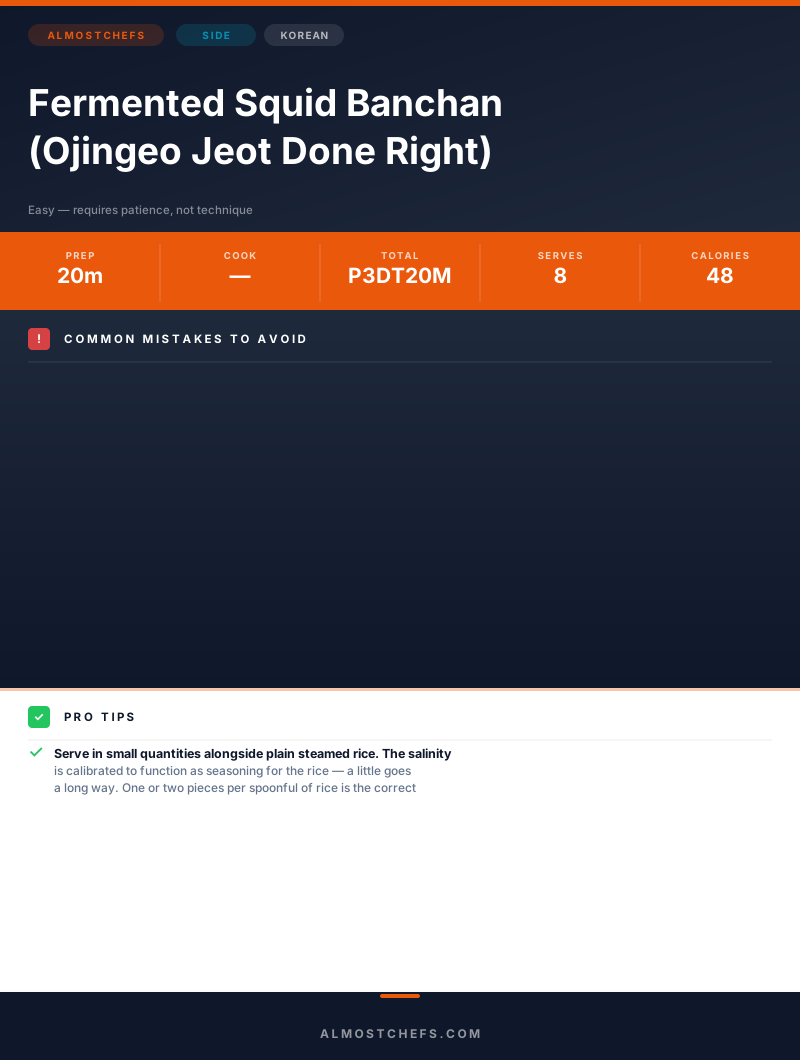
Serve it small. One or two pieces over a spoonful of plain steamed rice. The salinity is calibrated to season the grain, not to eat on its own. The brine left in the jar is worth as much as the squid — add it to doenjang jjigae, use it to salt kimchi, or drizzle a few drops over sliced tofu. Nothing fermented with care should be wasted.
Where Beginners Mess This Up
Before we start, read this. These are the 4 reasons your fermented squid banchan (ojingeo jeot done right) will fail:
- 1
Using the wrong salt: Table salt or iodized salt will ruin ojingeo jeot. Iodine inhibits the microbial fermentation that creates the dish's depth. You need non-iodized coarse sea salt or Korean cheonilyeom (천일염 — sun-dried sea salt). This is non-negotiable. The wrong salt produces an acrid, metallic brine that no amount of gochugaru can fix.
- 2
Skipping the initial salting rest: The squid must sit in salt alone for at least 2 hours before the spice mixture is added. This initial cure draws out excess moisture, firms the texture, and begins the osmotic process that allows the fermentation to develop evenly. Add the gochugaru too early and it dilutes before the salt can do its job.
- 3
Fermenting at the wrong temperature: Ojingeo jeot ferments at cool room temperature — ideally 60–68°F (15–20°C). Too warm and harmful bacteria outcompete the beneficial ones, producing off-flavors or spoilage. Too cold and fermentation stalls entirely. In summer, use the refrigerator from day one. In winter, a cool counter is fine.
- 4
Using frozen squid without thawing correctly: Frozen squid releases enormous amounts of water as it thaws. If you thaw it in the package or in water, the excess moisture dilutes your salt ratio and throws off the entire fermentation. Thaw on a wire rack over a tray, uncovered, in the refrigerator overnight.
🛠️ Core Equipment
- Kitchen scaleSalt ratios in fermentation are not a preference — they are food safety. A 15–18% salt-to-squid ratio is the threshold that suppresses spoilage bacteria. Measuring by volume is imprecise enough to fail. Use a [kitchen scale](/kitchen-gear/review/kitchen-scales) every time.
- Glass jar or ceramic crock with lidFermented seafood off-gasses during the process and can absorb plastic flavors from containers. Glass or traditional Korean onggi ceramic are the only appropriate vessels. A 1-quart wide-mouth jar works well for this batch size.
- Fine-mesh sieveFor draining the squid after the initial salt cure. You want to remove the drawn-out liquid efficiently without losing any of the seasoning you've added.
Fermented Squid Banchan (Ojingeo Jeot Done Right)
🛒 Ingredients
- ✦1 pound fresh whole squid (or cleaned squid tubes and tentacles)
- ✦3 tablespoons coarse non-iodized sea salt (Korean cheonilyeom preferred), divided
- ✦3 tablespoons gochugaru (Korean red pepper flakes)
- ✦1 tablespoon fine gochugaru (for color and even heat distribution)
- ✦4 cloves garlic, minced
- ✦1 teaspoon fresh ginger, grated
- ✦1 tablespoon fish sauce
- ✦1 teaspoon sesame oil
- ✦1 teaspoon toasted sesame seeds
- ✦2 scallions, cut into 1-inch pieces
👨🍳 Instructions
01Step 1
If using whole squid, clean them: pull the head and tentacles from the body, remove the clear quill from inside the tube, peel the purple skin, and rinse under cold water. Separate the tentacles from the head just below the eyes. Discard the head and innards.
02Step 2
Slice the squid tubes into 1/2-inch rings. Leave tentacles whole or halve them if large. Pat everything very dry with paper towels.
03Step 3
Toss the squid with 2 tablespoons of the coarse sea salt in a bowl until thoroughly coated. Transfer to your glass jar, press down firmly, cover loosely, and refrigerate for 2 hours.
04Step 4
After 2 hours, drain the squid through a fine-mesh sieve. You will see a significant amount of liquid — discard it. Do not rinse the squid.
05Step 5
Combine the drained squid with the remaining 1 tablespoon coarse salt, both gochugaras, garlic, ginger, and fish sauce. Mix well until every piece is evenly coated in the red seasoning mixture.
06Step 6
Add the scallion pieces and fold gently to distribute. Transfer the seasoned mixture back into the glass jar, pressing firmly to eliminate air pockets.
07Step 7
Seal the jar and leave at cool room temperature (60–68°F / 15–20°C) for 24 hours. If your kitchen is warmer than 68°F, refrigerate immediately.
08Step 8
After 24 hours, open the jar and press the mixture down again with a clean spoon to keep everything submerged under its own brine. Reseal and continue fermenting.
09Step 9
After 48–72 hours total, taste. The squid should be tender but not mushy, intensely savory, funky, and spicy. The color should be deeply red-orange. Once fermentation reaches your preferred intensity, transfer to the refrigerator.
10Step 10
Before serving, drizzle with sesame oil and scatter toasted sesame seeds over the top.
Nutrition Per Serving
Estimates based on standard preparation. Adjustments alter macros.
🔄 Substitutions
Instead of Fresh squid...
Use Thawed frozen squid
Completely acceptable — the fermentation process works identically. Critical: thaw on a rack in the refrigerator overnight, never in water. Pat extremely dry before salting.
Instead of Coarse Korean sea salt (cheonilyeom)...
Use Diamond Crystal kosher salt
Non-iodized and works for fermentation. Use the same weight, not volume — Diamond Crystal is much less dense than Korean sea salt. Flavor will be slightly less mineral.
Instead of Fish sauce...
Use Soy sauce or omit entirely
Fish sauce adds depth and additional fermentation complexity. Soy sauce is milder and lacks the same funk. Omitting entirely produces a cleaner, less layered result — still correct, just different.
Instead of Gochugaru...
Use No direct substitute
Gochugaru's mild fruitiness is essential to ojingeo jeot's flavor profile. Cayenne, paprika, or chili flakes are chemically different enough that the dish becomes unrecognizable. If unavailable, source online — it's worth it.
🧊 Storage & Reheating
In the Fridge
Store in a sealed glass jar for up to 4 weeks. Flavor continues to develop over the first two weeks. Press the mixture down before resealing each time.
In the Freezer
Not recommended — freezing destroys the texture of fermented squid and halts the live fermentation cultures. Eat within the refrigerator window.
Reheating Rules
Never reheated. Served cold, directly from the jar, as a banchan alongside steamed rice.
❓ Frequently Asked Questions
How do I know if my ojingeo jeot has gone bad?
Trust your nose first. Properly fermented ojingeo jeot smells funky, briny, and pungent — intentionally so. Spoiled jeot smells like ammonia, sulfur, or rotten fish in an entirely different way. Color should be vibrant red-orange. If you see grey or black discoloration, or if the smell makes you recoil rather than lean in curiously, discard it.
Is ojingeo jeot safe to eat? It's raw squid.
Yes — when made correctly. The high salt concentration (15–18% by weight) creates an environment where harmful bacteria cannot survive. This is the same principle behind all jeotgal and the reason Koreans have been eating fermented seafood safely for thousands of years. Iodized salt, incorrect ratios, or contaminated equipment are the failure points, not the fermentation process itself.
Can I eat it after just 24 hours?
Yes, but it will taste like heavily seasoned raw squid rather than fermented jeot. The characteristic funk and depth require a minimum of 48 hours at cool temperature. Most people find the 72-hour mark to be the minimum for a properly developed flavor.
Why is my squid rubbery?
Either the squid was not dried sufficiently before salting, or it fermented too quickly at too-high a temperature. Excess moisture prevents proper textural transformation. Fermentation at warm temperatures accelerates spoilage bacteria over beneficial ones and produces unpleasant textures. Start over with drier squid and a cooler environment.
What do I serve ojingeo jeot with?
Plain white rice is the canonical pairing — the salinity is calibrated for it. It also pairs with barley rice (boribap), congee (juk), and as a component in kimchi recipes. Koreans often serve it as part of a larger banchan spread alongside pickled vegetables, braised dishes, and soup.
Is this the same as the squid in kimchi?
Related but not identical. Kimchi sometimes calls for minced raw squid (ojingeo) or a small amount of jeotgal added for fermentation support. Ojingeo jeot is a finished dish served on its own. The squid in some regional kimchi recipes is added raw and ferments inside the kimchi itself — a different process from making standalone jeot.
The Science of
Fermented Squid Banchan (Ojingeo Jeot Done Right)
We turned everything on this page into a beautiful, flour-proof PDF cheat sheet. Print it out, stick it to your fridge, and never mess up your fermented squid banchan (ojingeo jeot done right) again.
*We'll email you the high-res PDF instantly. No spam, just perfectly cooked meals.
AlmostChefs Editorial Team
We translate the internet's most popular cooking videos into foolproof, beginner-friendly written recipes. We analyze multiple methods, test them in our kitchen, and engineer a single "Master Recipe" that gives you the best possible result with the least possible stress.