Scorched Korean Rice (Nurungji Is the Crispy Bottom You Always Threw Away)
Nurungji is the golden, crackling crust of scorched rice that forms at the bottom of the pot — intentionally made, not scraped off and discarded. Eaten as a crunchy snack or dissolved in hot water into a restorative rice porridge called sungnyung, it is one of the oldest and most practical dishes in Korean cooking.

“Every culture has a version of the rice crust. The Spanish call it socarrat. Persians call it tahdig. Koreans call it nurungji, and they don't treat it as an accident. They make it deliberately, eat it crackling-hot as a snack, or dissolve it into hot water for sungnyung — a smoky, toasted rice drink that Koreans have been sipping after meals for centuries. This is the dish built from what everyone else throws away.”
Why This Recipe Works
Nurungji is not a recipe born from culinary creativity. It was born from scarcity — from the Korean principle that nothing from the rice pot gets wasted, not even the part that adhered to the bottom. What started as pragmatism became, over centuries, a deliberately cultivated flavor. The scorched layer is now made on purpose, eaten as a snack, and dissolved into a drink. It is one of the clearest examples in any cuisine of necessity becoming tradition becoming craft.
The Chemistry of Scorched Starch
When cooked rice presses against a hot dry surface, two reactions happen simultaneously. The residual moisture in the rice evaporates from the contact layer, concentrating the starch. Then the Maillard reaction kicks in — the same browning reaction responsible for seared meat, toasted bread, and roasted coffee — converting simple carbohydrates into hundreds of complex flavor compounds. These compounds are what give nurungji its characteristic toasty, slightly smoky flavor that plain steamed rice never achieves.
The starch also undergoes a structural transformation. Heat converts some of the digestible starch into resistant starch — a form that the human gut cannot fully break down, which is why sungnyung has a long reputation in Korean medicine as a post-meal digestive. This isn't folk superstition with no mechanism — it's starch chemistry that modern nutritional science has since confirmed.
Why the Pan Matters
Non-stick pans are the enemy of nurungji. The entire point is controlled adhesion: the rice bonds to a hot surface, forms a crust, and then releases cleanly when that crust is structurally complete. Non-stick coatings prevent the bonding phase, which means you get dry rice sitting on a surface rather than a fused crust. A heavy stainless steel pan or cast iron skillet is the correct tool. The weight ensures even heat distribution. The surface allows the adhesion that makes the crust possible.
The heat sequence matters as much as the pan. Starting on medium-high sets the bottom quickly and establishes the Maillard reaction before moisture from the rice can steam the pan surface and drop the temperature. Dropping to medium-low after the initial set prevents char. There is a narrow window — roughly two minutes — between deep golden and burnt. The smell tells you. Toasted grain is where you want to stop.
Sungnyung: The Second Dish
Most recipes treat sungnyung as an afterthought. It isn't. Pouring boiling water over the remaining crust and simmering it into a rice tea produces a drink that tastes nothing like plain rice water. The scorched starch dissolves unevenly into the water, creating a pale gold liquid with a roasted, faintly sweet flavor profile closer to houjicha or lightly roasted barley tea than anything grain-based. It is dry, clean, and specifically good after a heavy meal — the Korean answer to the Italian amaro, without the alcohol and without the bitterness.
The ratio of crust to water determines intensity. More crust produces a deeper, smokier sungnyung. A thinner crust makes something closer to lightly scented rice water. Neither is wrong — it depends entirely on how aggressively you let the crust develop.
The Broader Point
Nurungji is a lesson in attention. You cannot multitask this dish. You cannot walk away. You have to stand at the stove, listen to the crackle change register, lift a corner with a spatula and look at what the color tells you. In an era of rice cookers and instant everything, this is a deliberate act of paying attention to a pot. That's why it still exists. Not because it's irreplaceable — it isn't — but because making it correctly requires you to be present in the kitchen for twenty minutes, which turns out to be its own reward.
Where Beginners Mess This Up
Before we start, read this. These are the 4 reasons your scorched korean rice (nurungji is the crispy bottom you always threw away) will fail:
- 1
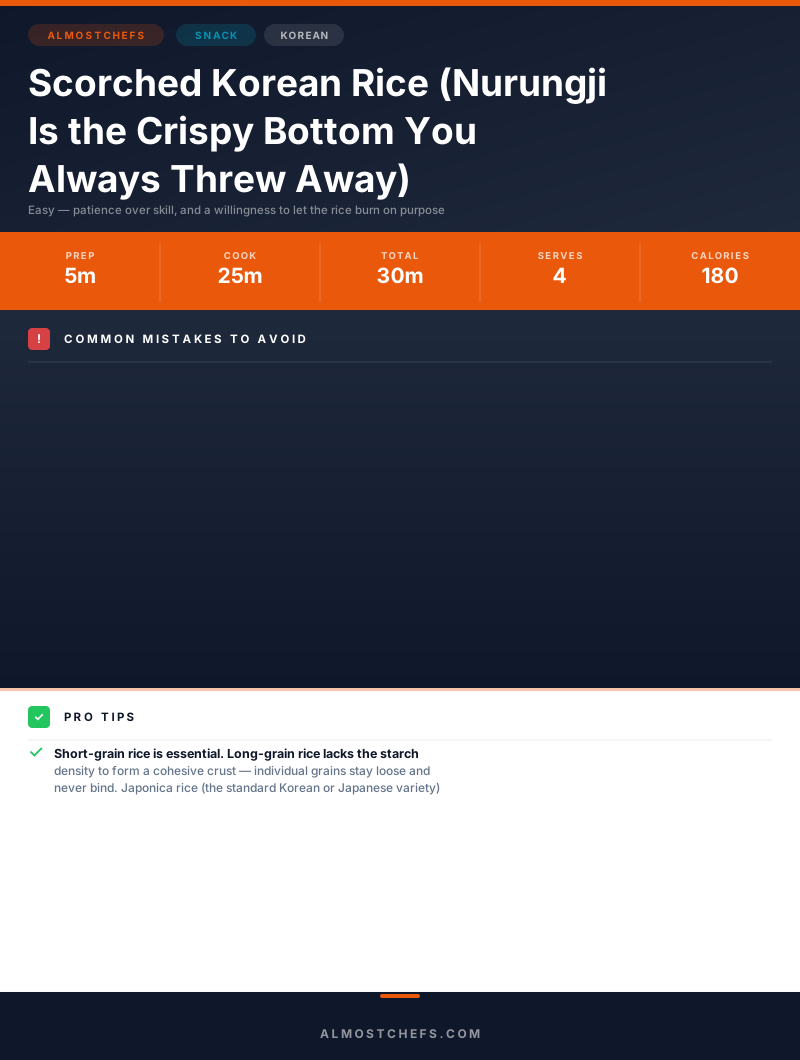
Using freshly cooked wet rice: Nurungji requires rice with as little surface moisture as possible. Freshly steamed rice is too wet — it steams against the pan instead of crisping. Day-old cooked rice that has dried slightly in the fridge produces a far more even, crackling crust. If using fresh rice, spread it thin and let it steam off for 10 minutes before pressing.
- 2
Too much oil or too little: Too much oil fries the rice unevenly and leaves it greasy rather than crispy. Too little causes sticking and uneven browning. One teaspoon of neutral oil per cup of cooked rice, spread evenly across the pan before adding the rice, is the ratio. No more, no less.
- 3
High heat throughout: Starting on medium-high heat to set the crust is correct. Keeping it there burns the bottom before the interior can dry out. Once you hear consistent light crackling, drop to medium-low and hold. The goal is a deep golden crust, not black char — there is a two-minute window between perfect and ruined.
- 4
Not pressing the rice flat: Nurungji crust thickness determines how it eats. A thick, uneven layer produces some parts that are crispy and some parts that are still doughy in the center. Press the cooked rice into a uniform layer no thicker than half a centimeter using the back of a spoon or a flat spatula. Even thickness means even crisping.
🛠️ Core Equipment
- Heavy-bottomed stainless steel or cast iron panEven heat distribution is the entire point. Non-stick pans prevent the adhesion needed to form a proper crust. Thin pans create hot spots that burn patches before the rest is done. A [cast iron skillet](/kitchen-gear/review/cast-iron-skillet) or heavy stainless is non-negotiable.
- Flat spatulaFor pressing the rice into an even layer before cooking begins. An offset spatula gives you more control. Even compression is what separates a uniform crust from a patchy one.
- Kettle or small saucepanIf making sungnyung (the rice tea version), you'll pour boiling water directly over the crust still in the pan. A kettle with a pour spout gives you control. A saucepan works but splashes.
Scorched Korean Rice (Nurungji Is the Crispy Bottom You Always Threw Away)
🛒 Ingredients
- ✦2 cups cooked short-grain white rice, preferably day-old
- ✦2 teaspoons neutral oil (avocado or grapeseed)
- ✦1/4 teaspoon fine sea salt
- ✦3 cups water (for sungnyung, optional)
👨🍳 Instructions
01Step 1
If using freshly cooked rice, spread it on a plate and let it air-dry for 10 minutes until the surface looks matte, not glossy.
02Step 2
Heat a heavy-bottomed stainless or cast iron pan over medium-high heat for 2 minutes until fully hot.
03Step 3
Add the oil and swirl to coat the entire pan base evenly. Let it heat for 30 seconds.
04Step 4
Add the cooked rice in a single layer. Using a flat spatula, press it firmly and evenly to no more than 1/2 cm thickness across the entire pan surface.
05Step 5
Cook undisturbed on medium-high for 3-4 minutes. You should hear active crackling. Do not stir, press, or move the rice.
06Step 6
Reduce heat to medium-low. Continue cooking for 12-15 minutes until the edges are deep golden and you can see the crust pulling slightly away from the sides of the pan.
07Step 7
Sprinkle with sea salt. Remove from heat and let sit in the pan for 2 minutes — the residual heat finishes the crust without risk of burning.
08Step 8
To eat as a snack: slide the crust onto a cutting board and break into irregular shards. Serve immediately while still crackling.
09Step 9
To make sungnyung: leave the crust in the pan after eating the top pieces. Return to medium heat, pour in 3 cups of water, and simmer for 5-8 minutes until the water turns pale gold and tastes smoky and toasty. Pour into bowls and drink hot.
Nutrition Per Serving
Estimates based on standard preparation. Adjustments alter macros.
🔄 Substitutions
Instead of Short-grain white rice...
Use Short-grain brown rice
Takes 5-8 minutes longer to crisp due to the bran layer. The crust is slightly chewier and more robust, with a nuttier flavor. Increase medium-low cook time accordingly.
Instead of Neutral oil...
Use Unsalted butter
Produces a richer, more European-tasting crust. Browned butter solids contribute additional Maillard flavor. Watch carefully — butter burns faster than oil. Not traditional but genuinely delicious.
Instead of Plain water for sungnyung...
Use Barley tea (boricha)
Deepens the roasted grain flavor of the drink significantly. A popular combination in Korean households. Boricha is widely available at Korean grocery stores.
🧊 Storage & Reheating
In the Fridge
Nurungji does not store well — it softens within an hour as it absorbs moisture. Make only what you plan to eat immediately. Sungnyung can be refrigerated for up to 2 days and reheated.
In the Freezer
Not recommended. The crust structure collapses on freezing and thawing.
Reheating Rules
If you must revive softened nurungji, place shards on a dry baking sheet at 350°F for 5-8 minutes. It won't return to peak crunch but will crisp significantly.
❓ Frequently Asked Questions
What does nurungji taste like?
Toasted, slightly smoky, faintly sweet — the Maillard products of scorched starch. Think popcorn crossed with rice crackers, but lighter and less aggressively flavored. The salt brings it into focus. Sungnyung tastes like mild roasted grain tea, similar in concept to barley tea or houjicha.
Is nurungji the same as the crispy rice at the bottom of a bibimbap dolsot?
Related but different. Dolsot bibimbap crust forms from plain rice steaming directly against a seasoned stone bowl, often without added oil. Nurungji is made deliberately in a pan with oil, giving you more control over thickness and even browning. The flavor profile is similar — both are toasted short-grain rice — but the texture of pan-made nurungji is more consistent.
Why does my nurungji stick and tear when I try to lift it?
Two possible causes: the pan wasn't hot enough before you added the rice (so the rice bonded to the surface rather than forming a crust on top of it), or you lifted too early. Let it go the full cooking time — a properly formed crust releases cleanly. If you're using a stainless pan, this is normal behavior at first; the crust will release when it's ready.
Is nurungji actually good for gut health?
The scorching process modifies the starch structure of the rice into a form called resistant starch, which resists digestion in the small intestine and behaves more like dietary fiber in the gut. Resistant starch feeds beneficial gut bacteria. The effect is real but modest — nurungji isn't medicine, but it's not nothing either. Sungnyung has been used in Korean traditional medicine as a digestive aid for centuries for this reason.
Can I make nurungji in a rice cooker?
Some Korean rice cookers have a dedicated nurungji setting that runs a second heating cycle after cooking. The result is reliable but produces a thinner, more fragile crust than the pan method. If your cooker has the setting, use it. If not, the pan method produces superior results.
What do I serve with nurungji?
As a snack, nothing — eat it plain and hot. As part of a meal, it plays the role sungnyung traditionally fills: a closing digestive drink. In some Korean home cooking traditions, the sungnyung is served in the same bowls that held the soup, rinsing them naturally and providing a final course with minimal waste.
The Science of
Scorched Korean Rice (Nurungji Is the Crispy Bottom You Always Threw Away)
We turned everything on this page into a beautiful, flour-proof PDF cheat sheet. Print it out, stick it to your fridge, and never mess up your scorched korean rice (nurungji is the crispy bottom you always threw away) again.
*We'll email you the high-res PDF instantly. No spam, just perfectly cooked meals.
AlmostChefs Editorial Team
We translate the internet's most popular cooking videos into foolproof, beginner-friendly written recipes. We analyze multiple methods, test them in our kitchen, and engineer a single "Master Recipe" that gives you the best possible result with the least possible stress.