No-Bake Energy Balls (The High-Protein Snack You'll Actually Make)
Chewy, satisfying oat-and-nut butter balls packed with protein, fiber, and natural sweetness — no oven required. We analyzed the most-watched YouTube methods to build one foolproof ratio that holds together without being dry, sticky, or chalky.
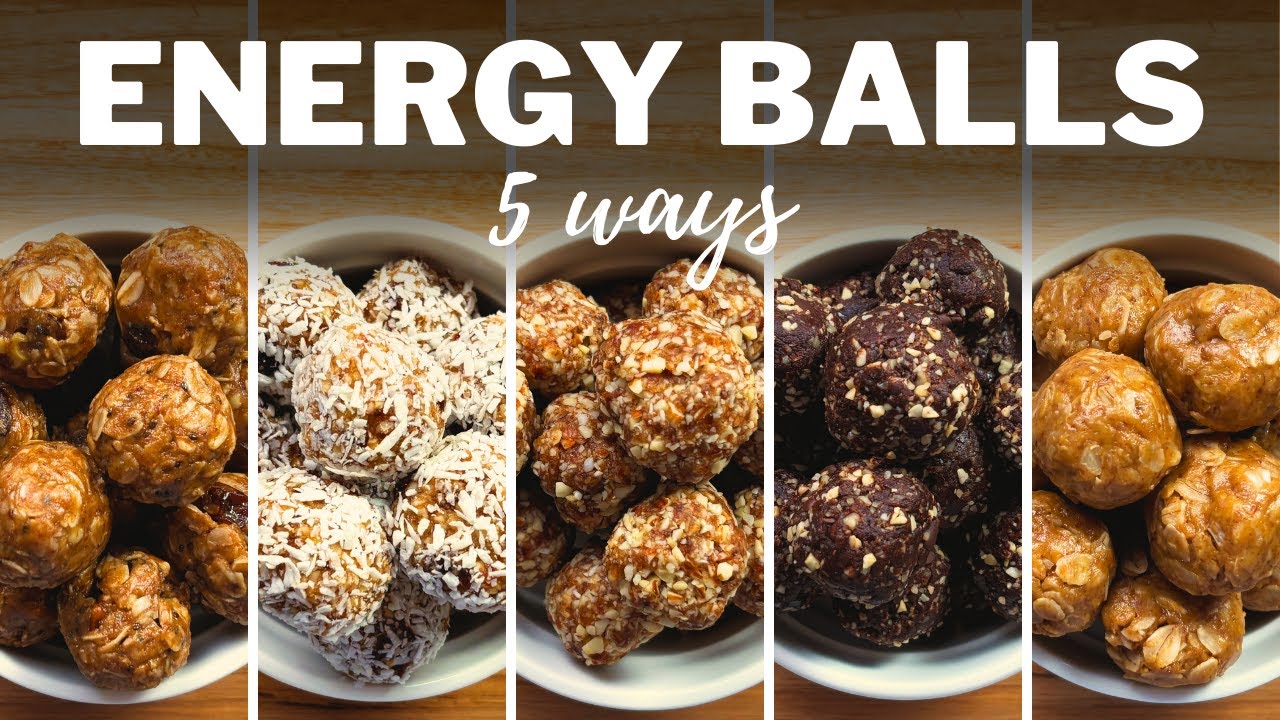
“Every fitness account on the internet has posted these. Half of them produce crumbly sand-pucks that fall apart in your hand. The other half produce sticky globs that weld themselves to the parchment paper. The secret to energy balls that actually hold their shape, have the right chew, and don't taste like compressed sawdust is a single number: the oat-to-binder ratio. Get that right and everything else is detail.”
Why This Recipe Works
No-bake energy balls exist at the intersection of convenience food and actual nutrition — which is a crowded space full of recipes that deliver on one of those promises and completely fail the other. The typical online recipe produces something that either falls apart the moment you pick it up, or holds together through sheer stickiness in a way that makes it unpleasant to eat. Understanding why requires thinking about what you're actually building: a room-temperature-stable matrix of bound oat particles held together by a semi-solid fat-sugar network. That sounds more complicated than it is. It means the ratio of your binder to your filler determines everything.
The Oat Question
Quick oats are the correct choice for energy balls, and most recipes don't explain why. The distinction is physical: quick oats are rolled oats that have been sliced into smaller pieces before rolling, which dramatically increases their surface area. More surface area means faster, more uniform moisture absorption. When you mix quick oats with peanut butter and honey, every particle is coated and bound within 90 seconds of mixing. Rolled oats — the old-fashioned variety — have lower surface area and absorb moisture more slowly, which means the dough can seem appropriately moist when you first mix it but turn out crumbly after chilling because the oats never fully hydrated. Steel-cut oats have no place in this recipe whatsoever.
The total oat volume relative to the binder is the controlling variable. Two cups of quick oats to two-thirds cup of peanut butter plus one-third cup of honey is the structurally sound ratio. Deviate from this — add extra mix-ins without adjusting the binder, or use a runnier nut butter without compensating — and the structure fails. Every adjustment to this recipe should be made by replacing one ingredient with an equivalent-volume substitute, not by simply adding more of something.
The Role of Flaxseed
Ground flaxseed pulls double duty. First, it contributes a secondary binding function — flaxseed contains mucilage, a soluble fiber that becomes gel-like when it contacts moisture. This gel coats the oats and adds cohesion beyond what honey alone provides. Second, it's one of the most efficient omega-3 delivery mechanisms available in whole food form, with roughly 1.6 grams of ALA per tablespoon. But only ground flaxseed delivers this benefit. Whole flaxseed seeds have a hard outer hull that human digestion cannot break down — they pass through intact, omega-3s untouched.
If you've been adding whole flaxseed to smoothies, yogurt, or energy balls thinking you're getting the nutritional benefit, you're not. A spice grinder handles fresh grinding in under 30 seconds, and freshly ground flaxseed has a noticeably cleaner, nuttier flavor than the pre-ground variety that's been sitting in a bag.
Why the Chill Step Is Non-Negotiable
Peanut butter at room temperature is a semi-solid fat. At refrigerator temperature, it becomes a firm solid. Honey at room temperature flows readily. Chilled, it thickens into something closer to a structural adhesive. The chill step isn't about food safety — these ingredients are all shelf stable. It's about phase change. You are waiting for the fat-sugar network to solidify around the oat particles, locking everything into a matrix that holds its shape under the mechanical stress of being picked up, bitten, and chewed.
Thirty minutes is the minimum. Forty-five is better. Balls rolled and eaten immediately at room temperature will always be structurally compromised — the binder is still too mobile to hold the shape. This is also why the second chill after rolling matters: the rolling process applies mechanical pressure that slightly disrupts the set surface. A second 15-minute chill re-firms the exterior and produces a cleaner, more consistent texture in the finished product.
The Mixing Imperative
A large mixing bowl is not optional. The dough needs room to be worked aggressively, and timid stirring produces uneven distribution. Peanut butter sinks to the bottom of a bowl when it's added to dry ingredients — it doesn't self-incorporate. You need to fold from the bottom up, press against the sides, and continue until you see a completely uniform mixture with no visible streaks. This takes genuine effort for 60-90 seconds. If your arm isn't tired afterward, you didn't mix long enough.
The payoff for getting every step right is a snack that's genuinely good: dense, chewy, moderately sweet, with a faint nutty depth from the toasted oats and the floral undertone of raw honey. Make a double batch on Sunday and you have two weeks of mid-afternoon snacks that are cheaper, more nutritious, and structurally superior to anything you'll find in a foil wrapper at the checkout counter.
Where Beginners Mess This Up
Before we start, read this. These are the 4 reasons your no-bake energy balls (the high-protein snack you'll actually make) will fail:
- 1
Skipping the chill time: Room-temperature energy balls are a structural disaster waiting to happen. The nut butter and honey need at least 30 minutes in the refrigerator to firm up and bind the oats into a cohesive mass. Rolling them and eating immediately means they'll fall apart mid-bite. The chill step isn't optional — it's the setting phase that makes or breaks the texture.
- 2
Using the wrong oat type: Quick oats and rolled oats are not interchangeable here. Quick oats, which are pre-cut into smaller pieces, absorb moisture faster and create a denser, more uniform texture that holds together better. Rolled oats produce a chewier bite but need more binder to compensate. Old-fashioned rolled oats are fine; steel-cut oats are completely wrong and will feel like gravel.
- 3
Too much honey, not enough oats: Excess sweetener makes the mixture sticky and wet — it won't hold a ball shape and will adhere to everything. The ratio is 1 cup oats to 1/3 cup honey. More than that and you're making candy. The honey's job is binding, not sweetening. If you want more sweetness, add mini chocolate chips or a tablespoon of maple syrup in place of, not in addition to, honey.
- 4
Under-mixing the dough: Every ingredient needs to be evenly distributed before you refrigerate. Nut butter clumps at the bottom of the bowl if you stir lazily. The result is balls that are rich in one spot and dry in another. Mix aggressively for at least 90 seconds until the mixture has a uniform color and texture with no streaks of nut butter visible.
The Video Reference Library
Want to see it in action? Here are the exact videos we analyzed and combined to build this foolproof recipe translation:
The most viewed walkthrough on the topic — clear ratio guidance and a close-up of what properly mixed dough should look like before refrigerating.
Covers a range of add-in options including protein powder incorporation and how to adjust the binder ratio when adding dry mix-ins like coconut flakes or chia seeds.
Practical batch-cooking approach with freezer storage guidance. Useful for understanding how flavor profiles shift between peanut butter, almond butter, and tahini bases.
🛠️ Core Equipment
- Large mixing bowlEnergy ball dough expands as you fold it. A too-small bowl means ingredients spill over the sides during mixing. You need room to stir aggressively without making a mess.
- Cookie scoop or tablespoon measurePortioning consistently means every ball chills and sets at the same rate. Uneven balls have uneven texture — the larger ones stay soft in the center while the smaller ones go dry.
- Parchment-lined baking sheetEnergy balls stick aggressively to metal and plastic. Parchment paper is the only surface that releases cleanly after chilling without tearing or deforming the balls.
- Airtight containerOats absorb ambient moisture and odors rapidly. Within 24 hours in an open bowl, refrigerated energy balls start tasting like whatever else is in your fridge. An airtight seal keeps them fresh and structurally sound for up to a week.
No-Bake Energy Balls (The High-Protein Snack You'll Actually Make)
🛒 Ingredients
- ✦2 cups quick oats
- ✦2/3 cup creamy natural peanut butter
- ✦1/3 cup raw honey
- ✦1/2 cup semi-sweet mini chocolate chips
- ✦1/3 cup ground flaxseed
- ✦1 teaspoon pure vanilla extract
- ✦1/4 teaspoon fine sea salt
- ✦2 tablespoons chia seeds (optional)
👨🍳 Instructions
01Step 1
Combine the oats, ground flaxseed, chia seeds (if using), mini chocolate chips, and sea salt in a large mixing bowl. Stir until the dry ingredients are evenly distributed.
02Step 2
Add the peanut butter, honey, and vanilla extract to the dry mixture.
03Step 3
Mix aggressively with a sturdy spatula or your hands for 90 seconds until no streaks of peanut butter remain and the mixture has a uniform, slightly sticky texture.
04Step 4
Cover the bowl with plastic wrap and refrigerate for 30 minutes. Do not skip this step.
05Step 5
Line a baking sheet with parchment paper. Using a cookie scoop or tablespoon measure, portion the dough into equal amounts (about 1.5 tablespoons each). Roll each portion firmly between your palms into a smooth ball.
06Step 6
Place the rolled balls on the prepared parchment-lined sheet, spacing them so they don't touch.
07Step 7
Return the sheet to the refrigerator for another 15 minutes to set the shape fully before transferring to an airtight container.
08Step 8
Store in an airtight container in the refrigerator. The balls are best eaten cold or at room temperature for no longer than 30 minutes.
Nutrition Per Serving
Estimates based on standard preparation. Adjustments alter macros.
🔄 Substitutions
Instead of Peanut butter...
Use Almond butter, sunflower seed butter, or tahini
Almond butter produces a milder flavor and slightly firmer texture. Sunflower seed butter is the nut-free option for school-safe snacks. Tahini makes a more savory, Middle Eastern-leaning ball — pair it with honey and sesame seeds rather than chocolate chips.
Instead of Honey...
Use Maple syrup or brown rice syrup
Maple syrup is thinner than honey and produces a slightly softer ball — chill time becomes more critical. Brown rice syrup is thicker and stickier, resulting in a firmer set. Both work; adjust expectations accordingly.
Instead of Mini chocolate chips...
Use Dried cranberries, raisins, chopped dates, or cacao nibs
Dried fruit adds more natural sugar and chewiness. Cacao nibs add a bitter, intense chocolate flavor with less sugar. Mix and match based on your target flavor profile.
Instead of Ground flaxseed...
Use Hemp hearts or protein powder
Hemp hearts add omega-3s without the binding effect of flaxseed — the dough will be slightly looser. Protein powder absorbs moisture aggressively; if substituting, reduce oats by 2 tablespoons and add an extra teaspoon of honey to compensate.
🧊 Storage & Reheating
In the Fridge
Store in an airtight container for up to 7 days. Separate layers with parchment paper to prevent sticking.
In the Freezer
Freeze in a single layer on a parchment-lined sheet until solid, then transfer to a zip-lock bag for up to 3 months. Thaw at room temperature for 10 minutes before eating.
Reheating Rules
No reheating needed. If frozen, simply remove from the freezer 10-15 minutes before eating. Do not microwave — the chocolate chips will melt and the structure will collapse.
❓ Frequently Asked Questions
Why do my energy balls fall apart when I roll them?
The binder ratio is off — not enough peanut butter or honey to hold the oats together. Test your dough before refrigerating by squeezing a tablespoon in your fist. If it crumbles when released, add peanut butter one teaspoon at a time and re-test. Also confirm you used quick oats, not rolled or steel-cut, which absorb moisture differently.
Can I use protein powder in this recipe?
Yes, but with caution. Protein powder absorbs moisture aggressively and can make the mixture too dry to roll. If adding 2 tablespoons of protein powder, reduce oats by 2 tablespoons and add an extra teaspoon of honey or peanut butter to compensate. Whey absorbs more than plant-based protein — adjust accordingly.
Do these actually need to be refrigerated?
Yes. Natural peanut butter (with no stabilizers) softens at room temperature, and honey becomes less viscous. At ambient temperature, the balls will gradually lose their shape over 30-45 minutes. They're fine as a packed snack for a few hours in a cool bag, but they're not shelf-stable.
Can I make these vegan?
Yes. Substitute maple syrup for honey in a 1:1 ratio and use dairy-free chocolate chips. Every other ingredient in the base recipe is already plant-based. The maple syrup produces a slightly softer ball, so extend the chill time to 45 minutes.
Why does my dough seem too wet right after mixing?
It's supposed to. The mixture looks wet and sticky at room temperature — that's correct. The refrigeration step firms everything up significantly. Trust the process: mix until uniform, chill for 30 minutes, then roll. Trying to roll warm dough is the single most common mistake.
How do I know if I've mixed it enough?
No visible streaks of peanut butter, uniform brown color throughout, and the mixture holds together when pressed. If you can still see distinct clumps of peanut butter in the dough, keep mixing. Undermixed dough produces balls with inconsistent texture — some bites are dense and rich, others are dry and crumbly.

The Science of
No-Bake Energy Balls (The High-Protein Snack You'll Actually Make)
We turned everything on this page into a beautiful, flour-proof PDF cheat sheet. Print it out, stick it to your fridge, and never mess up your no-bake energy balls (the high-protein snack you'll actually make) again.
*We'll email you the high-res PDF instantly. No spam, just perfectly cooked meals.
AlmostChefs Editorial Team
We translate the internet's most popular cooking videos into foolproof, beginner-friendly written recipes. We analyze multiple methods, test them in our kitchen, and engineer a single "Master Recipe" that gives you the best possible result with the least possible stress.