Authentic Nasi Goreng (The Indonesian Fried Rice You're Doing Wrong)
Indonesia's beloved stir-fried rice dish — cooked rice tossed with savory soy sauce, fish sauce, aromatic garlic, and your choice of protein in a ripping-hot wok. We analyzed the technique behind this Southeast Asian staple to give you restaurant-quality results in 35 minutes flat.

“Nasi goreng is deceptively simple and brutally unforgiving. Most home versions produce soggy, steamed rice that tastes like a sad stir-fry. The original — served at Indonesian street stalls at 2am from a wok that hasn't cooled down since Tuesday — has charred edges, layered umami, and rice grains that stay separate. The difference is heat, day-old rice, and the order you add things to the pan. Get those three things right and the rest takes care of itself.”
Why This Recipe Works
Nasi goreng is a dish that reveals exactly how much heat your home kitchen is capable of — and for most people, the answer is "not enough." The Indonesian original is cooked in a carbon steel wok over a flame that would be illegal in a residential building. That level of heat is what creates the slightly charred, smoky rice grains with crispy edges and the Maillard-browned vegetables that make the dish taste like something other than leftover rice with soy sauce poured over it.
You can close that gap at home if you understand what the heat is actually doing.
The Rice Foundation
Cold, dry rice is the ingredient that makes or breaks this dish before you've turned on the stove. Freshly cooked rice contains residual surface moisture from the steaming process — moisture that, when it hits a hot pan, immediately converts to steam. That steam does two things: it prevents the Maillard browning that gives fried rice its character, and it clumps the grains together into a gummy mass that no amount of stirring will fix.
Day-old refrigerated rice has lost most of that surface moisture. Each grain is dry, slightly firm, and structurally intact. When it hits a hot pan, it toasts rather than steams. The exterior develops color. The interior stays fluffy. This is the textural difference between restaurant fried rice and home fried rice, and it's entirely about moisture management, not technique.
If you don't have day-old rice, spread freshly cooked rice across a sheet pan and refrigerate it uncovered for a minimum of 60 minutes. It's not perfect, but it closes 80% of the gap.
The Umami Stack
Nasi goreng builds flavor through layering, and each condiment in the sauce mixture does a distinct job. Low-sodium soy sauce provides saltiness and foundational savory depth. Fish sauce adds fermented umami — the kind of deep, lingering flavor that makes you want another bite without being able to identify why. Sesame oil goes in last because its volatile aromatic compounds burn off quickly; it's a finishing flavor, not a cooking medium.
These three together create the flavor signature of the dish. Removing any one of them shifts the result in a measurable direction. The fish sauce especially: it smells aggressive in the bottle and transforms completely under heat. One tablespoon in a four-serving dish is below the threshold where most people can identify it as fishy. What they taste instead is umami they can't explain. That's the point.
High Heat Is Not Optional
A wok or large cast iron skillet preheated over maximum heat for two full minutes before any oil goes in is the hardware side of this equation. The temperature you're aiming for is above 400°F — high enough that rice grains sizzle and jump on contact, not sit and sweat. At that temperature, the sugars in the onion and the proteins in the rice crust slightly before the interior moisture can escape, creating texture rather than porridge.
Work in batches if your pan is small. A crowded pan is a cold pan — too much cold food drops the surface temperature below the threshold for browning, and you're back to steaming. Better to cook the protein separately and fold it back in than to try to rush everything through at once.
The Egg Technique
Eggs are scrambled first in this dish — and intentionally undercooked. They go onto a plate while the rest of the dish develops and return at the very end, folded in gently for about 30 seconds. This two-stage approach keeps the eggs tender and visible rather than atomized throughout the rice. Folding instead of stirring preserves the curds rather than breaking them down into protein dust.
The lime wedge served alongside is not decoration. Acid is the final flavor adjustment this dish needs — it cuts through the salt, lifts the sesame oil, and brightens the cilantro. Squeeze it over everything before the first bite. It changes the dish the way salt changes food: you don't taste the lime, you just taste everything else more clearly.
Where Beginners Mess This Up
Before we start, read this. These are the 4 reasons your authentic nasi goreng (the indonesian fried rice you're doing wrong) will fail:
- 1
Using fresh-cooked rice: Freshly cooked rice is loaded with surface moisture. The second it hits a hot pan, that moisture steams everything around it — including itself. You end up with gluey clumps instead of individual grains with toasted edges. Day-old rice that's been refrigerated overnight has dried out significantly, which is exactly what you want. If you're cooking same-day, spread the rice on a sheet pan and refrigerate it uncovered for at least an hour.
- 2
Cooking over too-low heat: Nasi goreng is a high-heat dish. The Maillard reaction that gives the rice its slightly charred, nutty flavor only happens above 300°F. A medium-heat home burner barely clears that threshold. Crank the burner to its highest setting, let the pan heat for 2 full minutes before anything goes in, and work in batches if your pan is crowded. A packed pan drops temperature immediately and you're back to steaming.
- 3
Adding the sauce too early: Soy sauce and fish sauce are mostly water. Add them before the rice has developed any toasted edges and you've just introduced steam back into the equation. The rice should have some golden color and a slightly crispy texture before the sauce goes in. Then add it fast, toss hard, and let it absorb — about 60 seconds total.
- 4
Skipping the fish sauce: Fish sauce is the umami backbone of this dish. It smells alarming straight from the bottle and tastes like everything once it hits the heat. Substituting only soy sauce produces something that's generically Asian rather than specifically Indonesian. One tablespoon is all it takes. The funk cooks off. What remains is depth you cannot replicate any other way.
The Video Reference Library
Want to see it in action? Here are the exact videos we analyzed and combined to build this foolproof recipe translation:
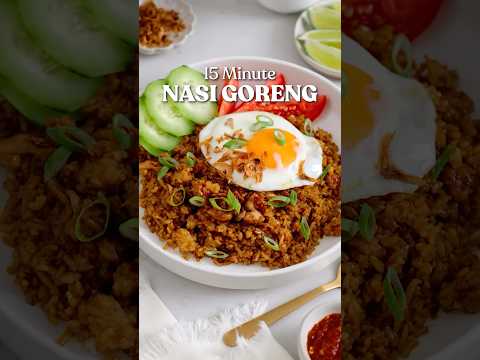
The primary reference video for this recipe. Shows the heat level and wok technique behind traditional Indonesian fried rice, including how to read the smoke and color cues that tell you when to add each ingredient.
2. Wok Technique Fundamentals
A deep dive into high-heat wok cooking applicable to any stir-fried rice dish. Essential viewing if your stovetop runs cool or you're working with a flat-bottomed pan instead of a true wok.
3. Southeast Asian Pantry EssentialsCovers the foundational condiments — fish sauce, sambal oelek, kecap manis — that separate Southeast Asian cooking from generic stir-fry. Helps you understand what each ingredient is actually doing in the flavor stack.
🛠️ Core Equipment
- Large wok or 12-inch cast iron skillet ↗Surface area is everything in fried rice. A crowded pan traps steam. You need enough room to toss the rice aggressively without half of it ending up on the stovetop. A [wok](/kitchen-gear/review/wok) or large [cast iron skillet](/kitchen-gear/review/cast-iron-skillet) also retains high heat better than thin non-stick pans, which is the entire point.
- Wooden spoon or wok spatula ↗You need something flat enough to scrape the bottom of the pan and dislodge any stuck rice before it burns. A [wok spatula](/kitchen-gear/review/wok-spatula) is purpose-built for this. A regular wooden spoon works as a backup but gives you less surface contact.
- Small bowl for pre-measured sauces ↗When everything is moving fast over high heat, you cannot be reaching for bottles and measuring. Pre-measure your soy sauce, fish sauce, and sesame oil into one small bowl before you turn on the stove. The window between 'perfectly charred' and 'burnt' is about 30 seconds.
Authentic Nasi Goreng (The Indonesian Fried Rice You're Doing Wrong)
🛒 Ingredients
- ✦3 cups cooked brown rice, cooled and separated (day-old preferred)
- ✦3 tablespoons vegetable oil, divided
- ✦3 medium cloves garlic, minced
- ✦1 medium yellow onion, finely diced
- ✦2 large eggs, lightly beaten
- ✦8 ounces lean protein (chicken breast, shrimp, or tofu), cut into bite-sized pieces
- ✦1 medium red bell pepper, diced
- ✦1 cup fresh broccoli florets, chopped small
- ✦1 cup shredded carrots
- ✦3 tablespoons low-sodium soy sauce
- ✦1 tablespoon fish sauce
- ✦1 teaspoon sesame oil
- ✦1 teaspoon sambal oelek or sriracha (optional)
- ✦2 scallions, thinly sliced
- ✦3 tablespoons fresh cilantro, roughly chopped
- ✦1 lime, cut into wedges
- ✦1 teaspoon white pepper
- ✦Salt to taste
👨🍳 Instructions
01Step 1
Pre-measure soy sauce, fish sauce, and sesame oil into a small bowl and set aside. Heat your wok or skillet over high heat for 2 full minutes until it begins to smoke.
02Step 2
Add 1 tablespoon of oil and swirl to coat. Pour in the beaten eggs and scramble quickly, breaking them into small curds, about 2 minutes. Transfer to a clean plate.
03Step 3
Add the remaining 2 tablespoons of oil to the same pan. Add minced garlic and diced onion and sauté until fragrant and the onion is translucent, about 3 minutes.
04Step 4
Add your protein and cook, stirring occasionally, until mostly cooked through — about 4 minutes for chicken or tofu, 3 minutes for shrimp.
05Step 5
Add the bell pepper, broccoli, and carrots. Toss constantly for 2 minutes until the vegetables begin to soften but still have bite.
06Step 6
Add the cooled rice, breaking up any clumps with your spatula. Stir-fry over high heat for 3-4 minutes, pressing the rice against the pan occasionally to encourage browning.
07Step 7
Pour the pre-measured sauce mixture (soy sauce, fish sauce, sesame oil) over the rice. Toss hard for about 60 seconds until every grain is coated and the liquid has absorbed.
08Step 8
Return the scrambled eggs to the pan and fold them in gently, about 30 seconds.
09Step 9
Add sambal oelek if using. Season with white pepper and salt to taste.
10Step 10
Remove from heat. Scatter scallions and cilantro over the top. Serve immediately with lime wedges.
Nutrition Per Serving
Estimates based on standard preparation. Adjustments alter macros.
🔄 Substitutions
Instead of White rice...
Use Brown rice or cauliflower rice
Brown rice adds fiber and a slightly nuttier flavor — the texture is chewier and holds up better in the wok. Cauliflower rice drops carbs dramatically but doesn't char the same way. Both work; neither is identical.
Instead of Regular soy sauce...
Use Low-sodium soy sauce or tamari
Tamari is gluten-free and slightly richer. Low-sodium versions reduce salt by about 40%. Either way, taste and adjust — different brands vary significantly in saltiness.
Instead of Fish sauce...
Use Soy sauce or miso paste dissolved in water
Loses the specific funk that makes this dish Indonesian rather than generic. Miso comes closer to the umami depth than soy sauce alone. If you're vegetarian, miso is the better call.
Instead of Vegetable oil...
Use Avocado oil
Higher smoke point than vegetable oil, which matters when you're cooking at full blast. Neutral flavor. Better fat profile. Worth the switch if you already have it on hand.
🧊 Storage & Reheating
In the Fridge
Store in an airtight container for up to 3 days. The flavors meld and actually improve by day two.
In the Freezer
Freeze in individual portions for up to 2 months. Thaw overnight in the refrigerator before reheating.
Reheating Rules
Reheat in a hot skillet with a splash of water or a few drops of soy sauce, tossing constantly. Microwave reheating steams the rice and reverses all the work you did to dry it out.
❓ Frequently Asked Questions
Why is my fried rice soggy?
Two causes: wet rice or low heat. Fresh rice has too much surface moisture — it steams everything in the pan. Day-old rice that's been refrigerated overnight is the fix. If the heat is too low, the same thing happens — moisture can't evaporate fast enough and you get steam instead of sear. Crank the burner and give the pan 2 full minutes to preheat before anything goes in.
Can I use freshly cooked rice?
Technically yes, but the results will be inferior. Spread it on a baking sheet and refrigerate uncovered for at least an hour to drive off surface moisture. It's not as good as true day-old rice but it's significantly better than using it straight from the pot.
What protein works best?
Shrimp cooks fastest and adds a subtle sweetness that works well with the fish sauce. Chicken breast stays lean but dries out if you overcook it — pull it at just-cooked and it'll finish in the final toss. Tofu needs to be pressed and dried first or it will release water into the pan. All three work; the technique stays the same.
Do I really need fish sauce?
If you want it to taste like nasi goreng specifically, yes. Fish sauce has a fermented umami depth that soy sauce alone doesn't replicate. The smell straight from the bottle is deceptive — it cooks into something savory and complex, not fishy. One tablespoon is the threshold where it works without announcing itself.
What's sambal oelek and where do I find it?
Sambal oelek is a simple Indonesian chili paste — ground fresh chilies, salt, and sometimes a touch of vinegar. No sweeteners, no garlic. Most Asian grocery stores carry it. Huy Fong (same brand as Sriracha) makes a widely available version. If you can't find it, sriracha works as a substitute but adds more sweetness than the original.
Can I make this vegetarian?
Yes. Replace the fish sauce with miso paste thinned with a little water (1 teaspoon miso to 1 tablespoon water). Use tofu as your protein — press it for 20 minutes first to remove excess moisture, then cube and pan-fry it separately until golden before adding to the wok. Everything else in the recipe is already vegetarian.
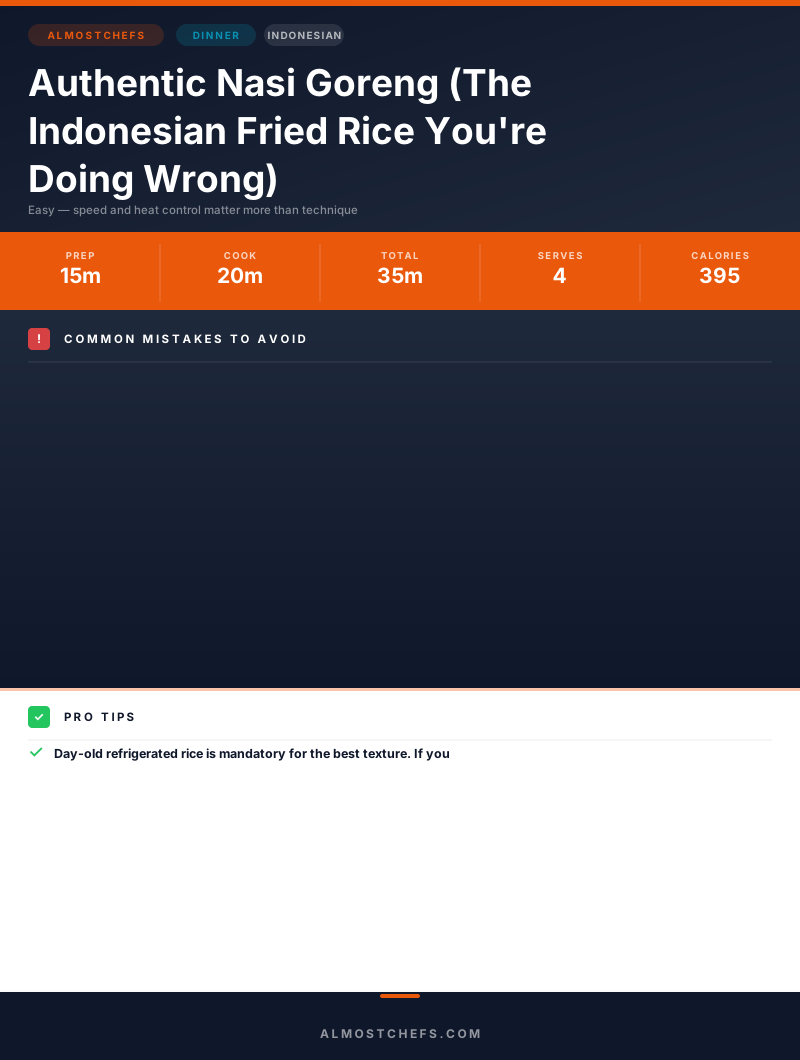
The Science of
Authentic Nasi Goreng (The Indonesian Fried Rice You're Doing Wrong)
We turned everything on this page into a beautiful, flour-proof PDF cheat sheet. Print it out, stick it to your fridge, and never mess up your authentic nasi goreng (the indonesian fried rice you're doing wrong) again.
*We'll email you the high-res PDF instantly. No spam, just perfectly cooked meals.
AlmostChefs Editorial Team
We translate the internet's most popular cooking videos into foolproof, beginner-friendly written recipes. We analyze multiple methods, test them in our kitchen, and engineer a single "Master Recipe" that gives you the best possible result with the least possible stress.