Creamy Mushroom Risotto (No Cream Required)
A velvety, umami-loaded Italian classic built on arborio rice, golden sautéed mushrooms, white wine, and Parmesan. We broke down the most common home cook mistakes to give you one technique that delivers restaurant texture every time — no cream, no shortcuts, no disappointment.
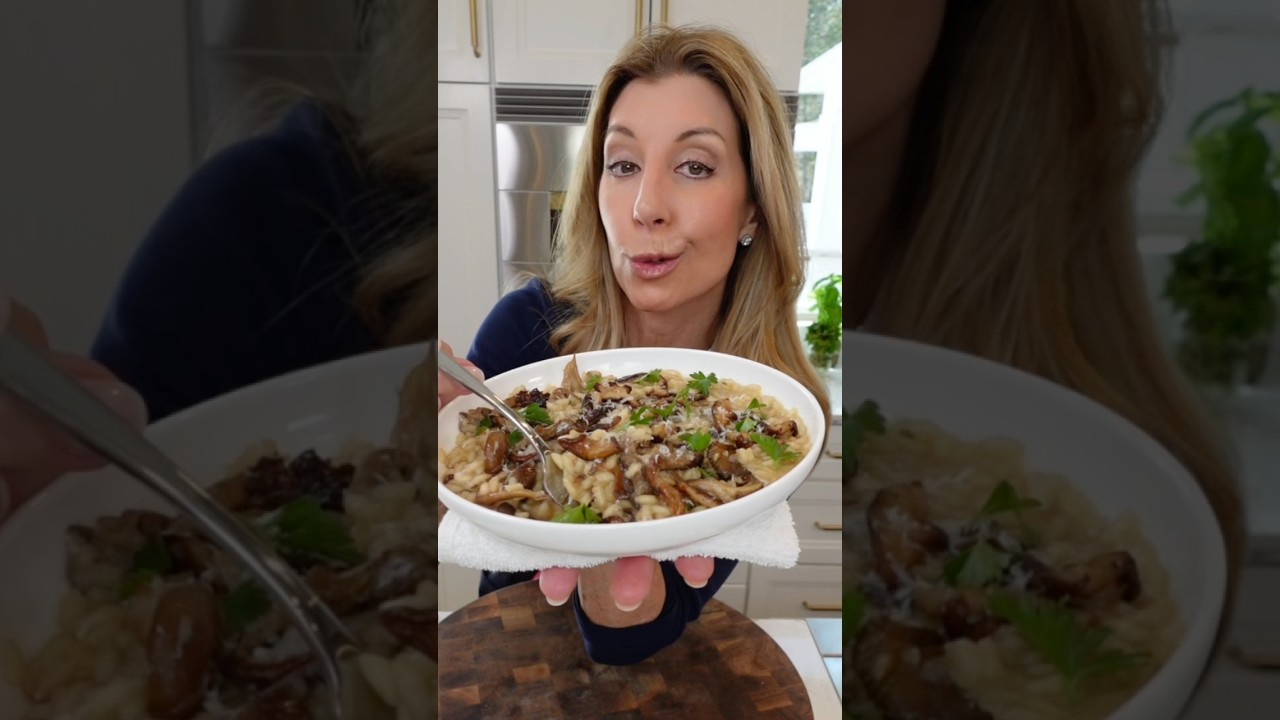
“Risotto has a reputation for being fussy. That reputation is largely undeserved — but it exists for a reason. The technique requires attention, not skill. Most failed risottos come down to three bad habits: cold broth, skipping the toast, and walking away. Fix those three things and the dish practically makes itself.”
Why This Recipe Works
Risotto is not a difficult dish. It is an attentive one. The difference between a bowl that flows and a bowl that sits there like wet concrete comes down to understanding what you're actually doing: coaxing starch out of rice, one ladle at a time, until it forms a smooth, self-made cream that holds the entire dish together. No cream required. The rice is the cream.
The Starch Architecture
Arborio rice contains an unusually high concentration of amylopectin — a highly branched starch molecule that hydrates slowly and creates a thick, fluid gel when agitated in warm liquid. This is not a happy accident. It is why risotto rice exists as a distinct category. Long-grain rice doesn't work because its starch composition is entirely different. Basmati cooks dry and separate by design. Arborio cooks wet and binding by design.
Toasting the dry rice in oil before adding liquid is the step most home cooks skip because it seems cosmetic. It isn't. The oil coats each grain and creates a thin hydrophobic barrier that slows initial absorption, giving you control over the pace of starch release. Without it, the exterior of each grain saturates immediately, releasing starch in an uncontrolled flood that turns the pot gluey before the rice is cooked through.
Why the Mushrooms Go in Last
Mushrooms are approximately 90% water by weight. Apply high heat to a large surface and that water evaporates rapidly, leaving behind concentrated flavor and a Maillard-browned crust. Apply medium heat, or crowd the pan, and the water releases faster than it can evaporate — the mushrooms boil in their own liquid instead of sear, and you get pale, rubbery results with none of the umami depth the dish needs.
Sear them first, separately, in a screaming hot pan. Remove them before building the risotto. Return them only in the last five minutes so they warm through and integrate without overcooking. This sequencing is the difference between mushrooms that taste like the main event and mushrooms that taste like filler.
A wide, heavy-bottomed skillet is essential for both stages. Surface area lets the mushrooms cook in a single layer. Even heat distribution prevents the rice from scorching while you stir.
The Broth Temperature Rule
This is the rule nobody tells you but everyone who makes good risotto knows: the broth must be warm. Not scalding, not lukewarm — a gentle, maintained simmer in a separate pot sitting on a low burner next to your main pan. When you add cold liquid to hot rice, you shock the starch granules and create textural inconsistency — parts of the grain absorb too fast, parts seize up entirely. Warm broth absorbs smoothly, giving you the even, flowing consistency you're after.
Keep a small saucepan on the back burner from the moment you start cooking. This is a two-burner dish. Accept that and the technique becomes straightforward.
The Finish — Mantecatura
The Italian technique of finishing risotto off-heat with cold butter and grated Parmesan is called mantecatura, and it is not decorative. The butter's fat emulsifies into the hot, starchy liquid and creates a glossy, fluid sauce that coats every grain. The Parmesan adds salt, umami, and additional proteins that contribute to the emulsion. Done correctly, the risotto flows when you tilt the pan — what Italian cooks call all'onda, the wave.
The single mistake here: adding butter to rice that's still on full heat. The fat breaks instead of emulsifying, and you get a greasy, separated pool at the bottom of the bowl. Pull the pan off the heat. Wait sixty seconds. Then add the butter and cheese and stir with conviction.
Get the technique right once and you'll understand why this dish has survived unchanged for centuries. It works.
Where Beginners Mess This Up
Before we start, read this. These are the 4 reasons your creamy mushroom risotto (no cream required) will fail:
- 1
Adding cold broth: Cold broth dropped into hot rice seizes the starches and creates an uneven, gluey texture instead of the smooth, flowing consistency that defines good risotto. Warm your broth in a separate saucepan and keep it at a gentle simmer the entire time you're cooking. This is the single easiest fix with the biggest payoff.
- 2
Skipping the rice toast: Toasting the dry arborio rice in oil for two minutes before adding any liquid coats each grain with a thin barrier of fat. This controls how fast the rice absorbs liquid, giving you time to stir and develop the starch gradually. Without it, the rice absorbs unevenly — creamy on the outside, chalky in the center.
- 3
Flooding the pan with broth: Adding all the broth at once turns risotto into soup. Each ladle of broth must be almost fully absorbed before the next goes in. The friction of stirring against a partially hydrated grain is what coaxes the starch out and creates the cream. Patience is the ingredient most recipes forget to list.
- 4
Overcooking the mushrooms: Mushrooms are mostly water. Crowd them in the pan and they steam instead of sear, turning pale and rubbery. They need a hot, uncrowded pan and uninterrupted contact time to go golden and develop the Maillard crust that gives this dish its depth. Cook them separately, first, always.
The Video Reference Library
Want to see it in action? Here are the exact videos we analyzed and combined to build this foolproof recipe translation:
The primary video reference for this recipe. Covers the full technique including mushroom searing, rice toasting, and broth addition cadence.
🛠️ Core Equipment
- Wide, heavy-bottomed skillet or sauté panSurface area matters. A wide pan lets mushrooms sear instead of steam, and gives you more contact between the rice and pan for even starch development. A thin pan creates hot spots that scorch the bottom before the center cooks.
- Small saucepan for warming brothCold broth is the silent killer of risotto texture. Keep a dedicated small pot next to your main pan on a low burner. This is a two-burner dish — plan accordingly.
- Wooden spoon or silicone spatulaYou're stirring for 18 minutes. A long-handled wooden spoon gives your wrist leverage and keeps your hand away from the heat. Metal utensils can break the rice grains and release too much starch too quickly.
- LadleConsistent pour size per addition. Eyeballing from a large pot leads to dumping too much broth at once. A standard 4-ounce ladle keeps each addition controlled.
Creamy Mushroom Risotto (No Cream Required)
🛒 Ingredients
- ✦2 tablespoons extra virgin olive oil, divided
- ✦3 cups mixed mushrooms, sliced
- ✦1 medium yellow onion, finely diced
- ✦3 cloves garlic, minced
- ✦1.5 cups arborio rice
- ✦0.5 cup dry white wine
- ✦4 cups vegetable broth, warmed
- ✦0.25 cup grated Parmesan cheese
- ✦2 tablespoons unsalted butter
- ✦1 teaspoon fresh thyme leaves
- ✦0.5 teaspoon sea salt
- ✦0.25 teaspoon black pepper
- ✦2 green onions, sliced thin
- ✦1 tablespoon fresh parsley, chopped
👨🍳 Instructions
01Step 1
Warm the vegetable broth in a small saucepan over low heat. Keep it at a bare simmer throughout cooking.
02Step 2
Heat 1 tablespoon olive oil in a large wide skillet over medium-high heat until shimmering. Add mushrooms in a single layer and cook undisturbed for 4 minutes, then stir and cook another 4 minutes until deeply golden.
03Step 3
Transfer the seared mushrooms to a plate and set aside.
04Step 4
Reduce heat to medium. Add the remaining tablespoon of olive oil to the same skillet. Add diced onion and cook until soft and translucent, about 4 minutes.
05Step 5
Add minced garlic and fresh thyme. Stir constantly for 1 minute until fragrant.
06Step 6
Add the arborio rice and toast, stirring continuously, for 2 minutes. Every grain should look slightly translucent at the edges.
07Step 7
Pour in the white wine and stir until almost completely absorbed, about 2 minutes.
08Step 8
Add the warm broth one ladle at a time, stirring frequently and waiting until each addition is mostly absorbed before adding the next. Continue for 18 minutes total.
09Step 9
With 5 minutes left, return the seared mushrooms to the skillet and fold them into the rice.
10Step 10
When the rice is creamy and al dente — tender but with a slight bite at the center — remove from heat.
11Step 11
Stir in the butter and grated Parmesan until fully melted and incorporated. This is called mantecatura — the final enrichment that creates the glossy, fluid texture.
12Step 12
Season with sea salt and black pepper. The risotto should flow and spread when spooned onto a plate — not sit in a mound.
13Step 13
Divide into bowls and garnish with sliced green onions and fresh parsley. Serve immediately.
Nutrition Per Serving
Estimates based on standard preparation. Adjustments alter macros.
🔄 Substitutions
Instead of Arborio rice...
Use Carnaroli rice
The professional's choice. Carnaroli has a firmer grain structure and higher starch content, making it more forgiving during the stirring phase. Harder to overcook. If you can find it, use it.
Instead of White wine...
Use Vegetable broth plus 1 teaspoon lemon juice
Eliminates the alcohol while preserving the acidity that balances the starch. The depth won't be quite the same, but it's a legitimate substitution — not a compromise.
Instead of Parmesan cheese...
Use Nutritional yeast (3 tablespoons)
Provides umami and the B-vitamins Parmesan lacks. The flavor is nuttier and less sharp. Works well if you're making this fully dairy-free alongside an olive oil butter substitution.
Instead of Unsalted butter...
Use Extra virgin olive oil (1.5 tablespoons)
Lighter mouthfeel and a more herbaceous finish. The mantecatura won't be quite as glossy — butter's dairy fat creates a richer emulsion — but the dish is still deeply satisfying.
🧊 Storage & Reheating
In the Fridge
Store in an airtight container for up to 3 days. It will thicken significantly as it cools — that's normal.
In the Freezer
Risotto does not freeze well. The starch structure breaks down on thawing and you get a grainy, separated texture. Eat fresh or repurpose leftovers into arancini instead.
Reheating Rules
Add 2-3 tablespoons of warm broth or water per serving and reheat gently over low heat, stirring to re-emulsify. Do not microwave without adding liquid — it will dry into a dense mass.
❓ Frequently Asked Questions
Why is my risotto gluey instead of creamy?
You either stirred too aggressively, used cold broth, or cooked the rice past al dente. Gluey risotto means too much starch was released too quickly. Warm broth and moderate stirring — frequent but not frantic — give the starch time to hydrate gradually into a smooth, flowing cream rather than a paste.
Do I have to stand at the stove the whole time?
For the 18 minutes of broth addition, yes. Risotto is not a dish you can multitask during the main cook. The upside: it's only 18 minutes, the prep is minimal, and you're done in under 45 minutes total. Clear your schedule for one focused stretch.
Can I use pre-sliced mushrooms from the grocery store?
You can, but they're often thicker and wetter than hand-sliced mushrooms. Pat them very dry with paper towels before searing. Excess surface moisture causes them to steam instead of brown, and you lose the golden crust that gives the dish its depth.
What does 'al dente' mean for risotto?
Tender all the way through but with a tiny, almost imperceptible resistance at the very center of each grain — like biting into a grape. Not hard, not mushy. If you have to chew hard, underdone. If there's no texture at all, overdone. Taste constantly in the last few minutes.
Can I make risotto without wine?
Yes. Replace the wine with an equal volume of warm vegetable broth plus a teaspoon of fresh lemon juice. The wine's role is acidity and deglazing — both achievable without alcohol. The flavor will be slightly flatter but still very good.
Why does my risotto thicken immediately after I plate it?
Starch. The amylopectin starch released from arborio rice during cooking continues to set as temperature drops. This is why you serve immediately and why you loosen with a splash of warm broth right before plating if the consistency has tightened. Risotto is alive until the moment it hits the bowl.
The Science of
Creamy Mushroom Risotto (No Cream Required)
We turned everything on this page into a beautiful, flour-proof PDF cheat sheet. Print it out, stick it to your fridge, and never mess up your creamy mushroom risotto (no cream required) again.
*We'll email you the high-res PDF instantly. No spam, just perfectly cooked meals.
AlmostChefs Editorial Team
We translate the internet's most popular cooking videos into foolproof, beginner-friendly written recipes. We analyze multiple methods, test them in our kitchen, and engineer a single "Master Recipe" that gives you the best possible result with the least possible stress.