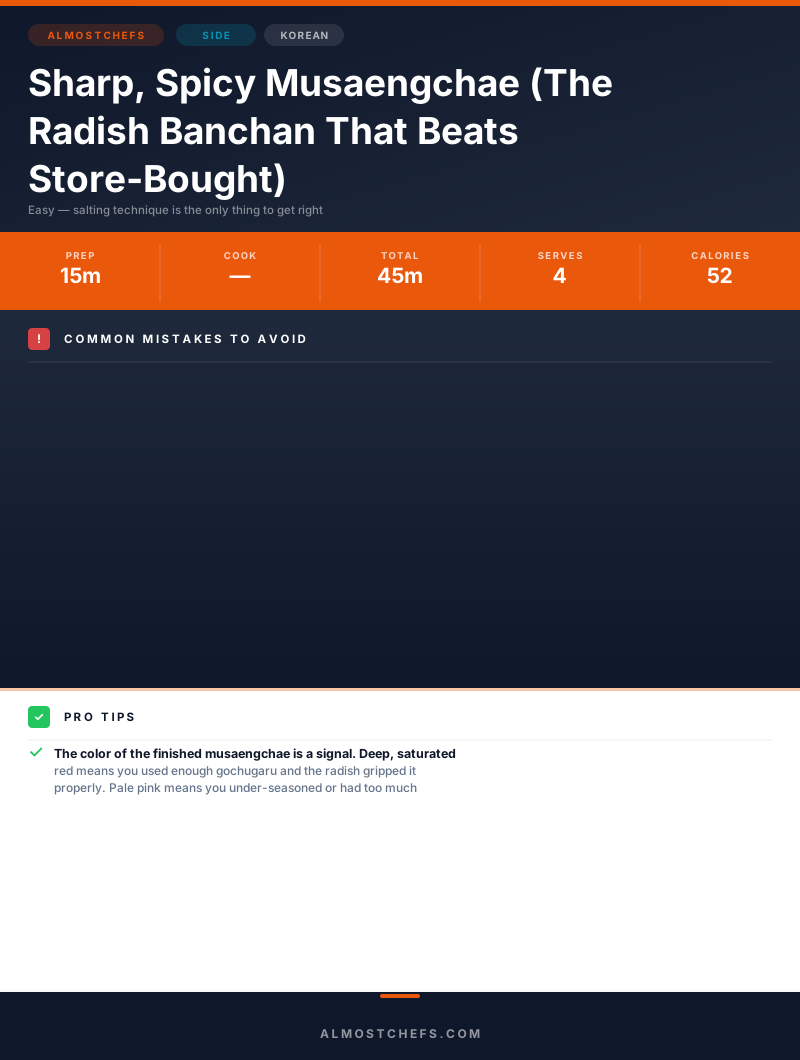
Sharp, Spicy Musaengchae (The Radish Banchan That Beats Store-Bought)
A raw Korean radish salad julienned thin, salted to draw moisture, then tossed with gochugaru, vinegar, garlic, and sesame oil. No heat required. Bright, crunchy, aggressively seasoned — the banchan that cuts through every rich dish on the table.

“Most people buy musaengchae in a plastic tub at the Korean grocery store and accept that slightly limp, faintly sour version as the baseline. It is not the baseline. Freshly made musaengchae — radish salted correctly, rinsed at the right moment, dressed with good gochugaru and real sesame oil — has a crunch that factory-made product cannot replicate and a flavor that hits bright, spicy, and clean all at once. Twenty minutes of active work, zero cooking.”
Why This Recipe Works
Musaengchae is not complicated. It is unforgiving. Every component is visible, every flavor is exposed, and there is nowhere for a mistake to hide. Which means the cooks who understand why each step exists make musaengchae that tastes alive. Everyone else makes watery pink radish.
The Salt Architecture
Korean radish — mu — contains roughly 93% water by weight. This is a problem and an opportunity. The problem: that water will dilute any dressing you apply. The opportunity: salt applied at the right concentration and time will draw that water out before the dressing ever touches the radish, concentrating the natural sweetness and starches that give musaengchae its density.
The mechanics are osmosis. Salt on the radish surface creates a concentration gradient, pulling moisture from inside the cells outward. After 15-20 minutes, the radish strips have sweated enough liquid to pool visibly at the bottom of the bowl. You rinse, squeeze once, and what remains is radish with its structure intact but its excess moisture removed. The gochugaru now coats the surface cleanly rather than dissolving into diluted dressing.
The squeeze matters as much as the salt. Squeeze too gently and you've removed 30% of the moisture. Squeeze too hard and you've crushed the cell walls — the crunch that makes musaengchae worth eating is gone. One firm, decisive press with both hands, like wringing a wet cloth halfway. Stop there.
The Gochugaru Problem
Most recipes tell you the amount of gochugaru to add. None of them tell you that gochugaru quality varies more dramatically than almost any other Korean pantry ingredient. Fresh gochugaru from a Korean grocery store — bright red, slightly fruity smell, coarse and slightly sticky — produces musaengchae that is vivid and complex. Gochugaru that has been sitting in a sealed jar for eight months is orange-brown, dusty-smelling, and produces musaengchae that tastes like spiced cardboard regardless of how much you use.
Buy gochugaru in smaller quantities and keep it in the freezer. The cold preserves the volatile compounds responsible for its fruity, slightly sweet aroma. Take it straight from freezer to bowl — no thawing needed.
Add the gochugaru to the dry radish before any liquids. This is counterintuitive but correct. The dry pepper flakes grip the radish surface directly; when you add vinegar and sesame oil afterward, they carry the flavor further in rather than rinsing it off.
The Vinegar Balance
Musaengchae should taste bright. Not sour — bright. The distinction is the sugar. One teaspoon of sugar does not make musaengchae sweet; it rounds the sharp edge of the rice vinegar and allows the radish's natural sweetness to come forward. Without it, the acidity reads as harsh and one-dimensional.
Rice vinegar is the correct choice here because its mild acidity complements the raw radish rather than dominating it. Stronger vinegars — white distilled, sherry — overpower the delicate flavor of mu in a way that rice vinegar does not. If rice vinegar is unavailable, apple cider vinegar diluted slightly with water is the better substitute.
Why This Banchan Matters
Musaengchae exists because Korean table composition demands contrast. A proper banchan spread includes rich braised proteins, fermented depth from kimchi, nutty vegetable namul — and it needs something sharp and clean to cut through all of it. Musaengchae is that cut. Its combination of raw crunch, gochugaru heat, vinegar brightness, and sesame warmth resets the palate in a way that richer banchan cannot.
A sharp chef's knife or mandoline handles the julienne; a large ceramic or stainless mixing bowl gives you room to toss without disaster. Twenty minutes of active work. No stove required. The kind of dish that separates a Korean meal from just Korean food on plates.
Where Beginners Mess This Up
Before we start, read this. These are the 4 reasons your sharp, spicy musaengchae (the radish banchan that beats store-bought) will fail:
- 1
Skipping the salt-and-squeeze step: Raw Korean radish holds an enormous amount of water. If you skip salting and pressing, the gochugaru dressing immediately dilutes into a watery pink puddle. Salt draws out that moisture before you dress the salad, leaving you with concentrated, crunchy radish that grips the seasoning instead of drowning it.
- 2
Using the wrong radish: Korean mu (무) is distinct from daikon and from the small red radishes sold in Western supermarkets. Mu is starchier, less pungent, and denser — it holds its crunch after salting in a way daikon does not. If you substitute daikon, use it cold and reduce the salting time by half to compensate for its higher water content.
- 3
Over-squeezing after salting: Pressing the radish is good. Wringing it like a dish towel is not. Over-squeezed radish loses its structural integrity and turns the texture from crisp to limp. Squeeze firmly once, then stop. You want moisture removed, not the radish collapsed.
- 4
Using cheap gochugaru: Musaengchae has almost no ingredients. The gochugaru is not a background note — it is the dish. Coarse-ground Korean gochugaru with bright red color and a faintly fruity smell is essential. Old, faded gochugaru makes musaengchae taste dusty rather than vivid.
🛠️ Core Equipment
- Mandoline or sharp chef's knifeJulienning a full Korean radish by hand is tedious and produces uneven strips. A mandoline with a julienne attachment cuts uniform 2mm matchsticks in under two minutes. Uniform size means even salting and consistent crunch.
- Large mixing bowlYou need room to toss the radish aggressively without flinging gochugaru across your kitchen. A bowl significantly larger than you think you need is correct.
- Fine-mesh sieve or colanderAfter salting, you need to rinse the radish quickly and drain it completely. A fine-mesh sieve catches every thin strip and lets you press it efficiently.
Sharp, Spicy Musaengchae (The Radish Banchan That Beats Store-Bought)
🛒 Ingredients
- ✦1 medium Korean radish (mu), about 1.5 pounds, peeled
- ✦1.5 teaspoons fine sea salt
- ✦2.5 tablespoons gochugaru (coarse Korean red pepper flakes)
- ✦1.5 tablespoons rice vinegar
- ✦1 teaspoon sugar
- ✦3 garlic cloves, finely grated
- ✦3 green onions, cut into 1.5-inch pieces
- ✦1.5 teaspoons sesame oil
- ✦1 teaspoon toasted sesame seeds
- ✦1/2 teaspoon freshly ground black pepper
👨🍳 Instructions
01Step 1
Julienne the peeled radish into matchsticks approximately 2mm wide and 2 inches long. A mandoline with a julienne attachment is fastest; a sharp knife works if you're patient.
02Step 2
Place the julienned radish in a large bowl. Add the salt, toss well to coat, and let sit for 15-20 minutes until the radish has released significant liquid and softened slightly.
03Step 3
Transfer the salted radish to a fine-mesh sieve. Rinse briefly under cold water to remove excess salt, then squeeze firmly once with both hands over the sink to remove moisture. Do not over-squeeze.
04Step 4
Return the radish to the dry bowl. Add gochugaru and toss to coat evenly before adding any wet ingredients.
05Step 5
Add the rice vinegar, sugar, and grated garlic. Toss again until the sugar dissolves and everything is evenly distributed.
06Step 6
Add the green onions, sesame oil, black pepper, and sesame seeds. Toss gently to combine.
07Step 7
Taste and adjust: more gochugaru for heat, more vinegar for brightness, a pinch more sugar if the radish tastes too sharp.
08Step 8
Serve immediately for maximum crunch, or refrigerate for up to 2 days.
Nutrition Per Serving
Estimates based on standard preparation. Adjustments alter macros.
🔄 Substitutions
Instead of Korean radish (mu)...
Use Daikon radish
Daikon is less starchy and releases water faster. Reduce salting time to 10 minutes and salt sparingly. The finished texture will be slightly less dense but the flavor is comparable.
Instead of Rice vinegar...
Use Apple cider vinegar
Slightly more assertive and fruity. Use 10% less than the recipe calls for and taste before adding more. Works well but changes the flavor profile toward something less traditionally Korean.
Instead of Gochugaru...
Use Gochujang thinned with water (1:1)
Different texture — mushier coating on the radish rather than a dry pepper cling. Flavor is deeper and more fermented. Only use if you genuinely cannot source gochugaru.
Instead of Sesame oil...
Use Toasted perilla oil
Less common but authentically Korean. Nuttier and slightly more herbaceous. Excellent if you can find it.
🧊 Storage & Reheating
In the Fridge
Store in an airtight container for up to 2 days. The radish will soften slightly and the flavors deepen. Drain any accumulated liquid before serving leftovers.
In the Freezer
Do not freeze. The radish texture collapses completely upon thawing.
Reheating Rules
Musaengchae is served cold or at room temperature. No reheating needed or recommended.
❓ Frequently Asked Questions
Why is my musaengchae watery?
You either skipped the salting step, didn't salt long enough, or didn't squeeze firmly enough after rinsing. The radish must release its internal moisture before dressing. Water trapped inside the radish will always migrate out into the dressing once you start tossing.
Can I make musaengchae with regular red radishes?
Technically yes, but the result will be significantly different. Western red radishes are much smaller, sharper in flavor, and less starchy. You'd need about 20-25 radishes to match the volume, and the peppery bitterness of red radishes will dominate the gochugaru. Use daikon as the substitute if Korean radish isn't available.
How spicy is musaengchae supposed to be?
Moderately spicy — you should feel heat building after a few bites, but it shouldn't overwhelm the natural sweetness of the radish or the tang of the vinegar. If 2.5 tablespoons of gochugaru is too much, start with 1.5 and taste. You can always add more.
Is musaengchae the same as kkakdugi?
No. Kkakdugi is fermented radish kimchi cut into cubes, seasoned with gochugaru and fermented with fish sauce and saeujeot over several days. Musaengchae is a fresh, non-fermented radish salad dressed and served immediately. They use the same vegetable but the process and flavor profile are completely different.
Why does my musaengchae taste flat the next day?
The vinegar and sesame oil mellow significantly after 24 hours. Before serving leftovers, add a small splash of rice vinegar and a drop of sesame oil to revive the flavor. Taste and adjust rather than just adding the same amounts as the original recipe.
Does musaengchae have to be vegetarian?
The traditional version often includes saeujeot (salted fermented shrimp) or fish sauce for depth. This recipe is fully vegetarian. If you eat seafood and want more umami complexity, add 1 teaspoon of fish sauce with the other seasonings — it adds a savory backbone without making the dish taste fishy.
The Science of
Sharp, Spicy Musaengchae (The Radish Banchan That Beats Store-Bought)
We turned everything on this page into a beautiful, flour-proof PDF cheat sheet. Print it out, stick it to your fridge, and never mess up your sharp, spicy musaengchae (the radish banchan that beats store-bought) again.
*We'll email you the high-res PDF instantly. No spam, just perfectly cooked meals.
AlmostChefs Editorial Team
We translate the internet's most popular cooking videos into foolproof, beginner-friendly written recipes. We analyze multiple methods, test them in our kitchen, and engineer a single "Master Recipe" that gives you the best possible result with the least possible stress.