Perfect Mul Naengmyeon (The Cold Noodle Technique Most Recipes Get Wrong)
Icy cold buckwheat noodles in a crystal-clear, deeply savory beef and dongchimi broth — Korea's most refreshing summer dish done right. We break down why the broth temperature, noodle texture, and garnish order all matter more than you think.

“Mul naengmyeon is the dish that separates people who understand Korean food from people who've merely eaten it. The entire experience hinges on one thing: temperature. The broth must be borderline slushy. The noodles must be rinsed in ice water until your hands go numb. The bowl should be so cold it fogs when it hits air. Most home recipes produce a lukewarm approximation. This one doesn't.”
Why This Recipe Works
Mul naengmyeon is a dish built entirely around a single physical property: cold. Not cool. Not refreshing. Cold in the way that makes you pause mid-bite, the way that makes the bowl sweat in summer humidity and the broth taste like something pulled from a mountain spring. Everything in this recipe — the bone broth ratio, the aggressive noodle rinse, the frozen serving bowls — exists to serve that temperature objective.
The Broth Architecture
The defining characteristic of mul naengmyeon broth is its clarity. You should be able to read text through a bowl of it. This is not decorative — the clarity signals that the fat has been properly skimmed and the broth properly strained, which means the flavor profile is clean and precise rather than muddy and heavy.
The classic base is beef bone broth combined with dongchimi liquid in a 2:1 ratio. The bone broth contributes deep savory backbone and body. The dongchimi — water from slow-fermented radish kimchi — contributes clean sourness, gentle funk, and a brightness that cuts through the richness. Neither works alone. Pure bone broth sits heavy on the palate. Pure dongchimi liquid tastes thin and single-note. The blend is the recipe.
Season the broth cold, taste it cold, and adjust cold. Flavors that seem balanced at room temperature often taste flat or over-salted once chilled. The target: lightly tart, clearly savory, with a whisper of sweetness. If it tastes great warm, it will taste wrong frozen.
The Noodle Problem
Buckwheat naengmyeon noodles are among the most technically demanding noodles in Korean cooking because they are simultaneously delicate and forgiving — delicate in that overcooking by even 60 seconds produces a mushy, collapsing texture, and forgiving in that the ice bath arrests cooking instantly and locks in exactly the right chew.
The starch rinse is the step most home cooks skip or rush. Buckwheat releases a thick starch coating during cooking that, if left on the noodle surface, creates a gummy, adhesive texture that clumps the strands and dulls the flavor. You remove it by scrubbing — physically working the noodles between your palms under cold running water until the water runs clear. Then the ice bath. A large mixing bowl packed with ice is the right tool. A bowl of tap water is not.
Temperature Is the Technique
This is worth stating plainly: mul naengmyeon is not a recipe that succeeds at half-measures on temperature. The broth needs to be near-slushy. The bowls need to come from the freezer. The noodles need to come from an ice bath directly into service. The entire dish is engineered to be consumed within five minutes of plating — after that, the broth warms, the noodles soften, and you are eating a completely different dish.
Freeze your serving bowls for at least 30 minutes. Pull them immediately before plating. Add ice chips directly to the broth. This is not dramatic — it is the literal spec of the dish as it has been served in Pyongyang-style naengmyeon restaurants for generations.
Why Mul Naengmyeon and Blood Sugar
Buckwheat is botanically unrelated to wheat and has a glycemic index roughly 20-25 points lower than standard wheat noodles. Its fiber content — including resistant starch that survives cooking — slows glucose absorption in a way that regular pasta does not. The cold temperature further slows gastric emptying, which flattens the post-meal glucose curve meaningfully.
This is not health food in the performative sense. It is a dish that happens to be genuinely good for blood sugar management because the traditional ingredients are what they are. The buckwheat, the vinegar, the cold temperature, the lean protein topping — none of it was engineered for a health claim. It just works.
The Mustard Finish
Korean hot mustard (gyeoja) served alongside is not optional accompaniment. A small amount stirred into the cold broth just before eating creates a volatile heat reaction — the mustard compounds bloom on contact with the acidic broth and cut through the cold in a way that opens up the palate. It does not make the dish spicy. It makes the broth taste more of itself.
This is the dish at its best: the bowl so cold the spoon fogs, the noodles firm and clean, the broth tart and resonant, a thread of mustard heat underneath it all. It is the most underrated thing in Korean food and one of the most technically precise bowls you can make at home.
Where Beginners Mess This Up
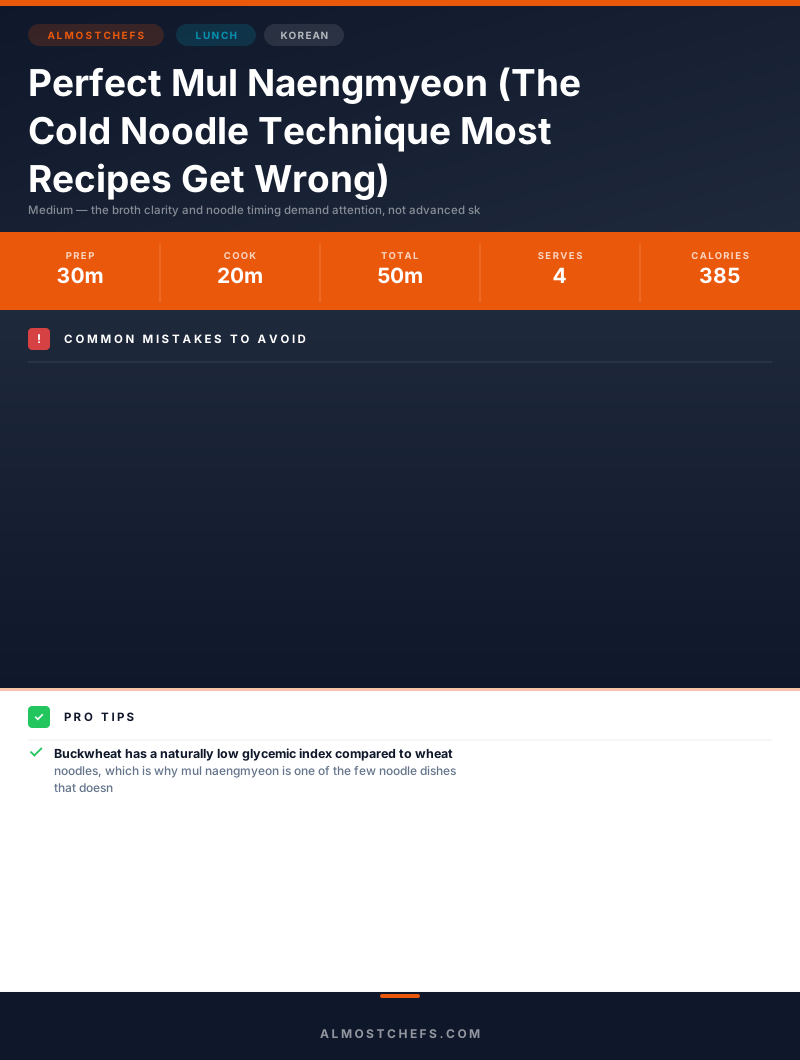
Before we start, read this. These are the 4 reasons your perfect mul naengmyeon (the cold noodle technique most recipes get wrong) will fail:
- 1
Serving the broth at refrigerator temperature instead of near-freezing: Naengmyeon broth is meant to be consumed just above freezing — ideally with chips of ice floating in it. A broth that's merely cold tastes flat and fatty. The near-freezing temperature suppresses the fat and sharpens the savory notes dramatically. Freeze the bowls and chill the broth until ice crystals begin forming at the edges before serving.
- 2
Not rinsing the noodles aggressively enough after cooking: Buckwheat noodles release a heavy starch coating during cooking that turns the surface gummy and makes the strands clump into a dense, unpleasant mass. You must rinse under cold running water for a full 60 seconds, scrubbing the noodles between your palms, then transfer immediately to an ice bath. This step is not optional.
- 3
Using the wrong broth ratio: The ideal mul naengmyeon broth is a blend of chilled beef bone broth and dongchimi (radish water kimchi) liquid. Pure beef broth is too heavy and opaque. Pure dongchimi liquid is too sour and thin. The 2:1 ratio — two parts broth to one part dongchimi liquid — creates the complex, lightly tangy, crystal-clear profile that defines the dish.
- 4
Skipping the Asian pear: Asian pear is not a garnish. It is an enzyme delivery system. The pear contains bromelain-like proteases that tenderize the beef brisket topping in the minutes between plating and eating. It also provides the gentle sweetness that balances the sour-salt of the broth. Leaving it out makes the dish taste incomplete and one-note.
🛠️ Core Equipment
- Large stockpotFor building the beef bone broth base if making from scratch. Volume matters — a 6-quart minimum allows full extraction of collagen and flavor from the bones without the broth reducing too aggressively.
- Fine-mesh sieve or cheeseclothStraining the broth through cheesecloth twice produces the visually striking clarity that defines mul naengmyeon. A cloudy broth is a technical failure, not a stylistic choice.
- Large mixing bowl with iceThe ice bath for the noodles is non-negotiable. You need enough ice to actually drop the noodle temperature to near-zero instantly. A half-filled bowl of ice water does the job in 90 seconds. A bowl of 'cold' tap water takes 10 minutes and produces inferior texture.
- Freezer-safe serving bowlsFreeze the bowls for at least 30 minutes before service. A frozen bowl keeps the broth at temperature through the entire meal. A room-temperature bowl warms the broth within 3 minutes and undermines everything you worked for.
Perfect Mul Naengmyeon (The Cold Noodle Technique Most Recipes Get Wrong)
🛒 Ingredients
- ✦14 oz dried buckwheat naengmyeon noodles
- ✦4 cups beef bone broth, chilled until nearly frozen
- ✦2 cups dongchimi liquid (from radish water kimchi)
- ✦8 oz beef brisket, boiled until tender and thinly sliced
- ✦1 small Asian pear, peeled and julienned
- ✦1 medium Korean radish (mu), julienned
- ✦2 Persian cucumbers, thinly sliced on the bias
- ✦4 hard-boiled eggs, halved
- ✦2 tablespoons rice vinegar
- ✦1.5 tablespoons soy sauce
- ✦1 teaspoon sesame oil
- ✦1 teaspoon fine sea salt, plus more to taste
- ✦1 teaspoon sugar
- ✦Korean hot mustard (gyeoja), to serve
- ✦Ice chips or crushed ice, for serving
👨🍳 Instructions
01Step 1
Combine the chilled beef bone broth and dongchimi liquid in a large container. Season with soy sauce, rice vinegar, salt, and sugar. Taste — the broth should be lightly tart, savory, and faintly sweet. Refrigerate until ice crystals begin forming at the edges, at least 2 hours.
02Step 2
Place serving bowls in the freezer for at least 30 minutes before service.
03Step 3
Bring a large pot of unsalted water to a rolling boil. Add the buckwheat noodles and cook for exactly 3-4 minutes — they should be just tender with slight resistance at the center.
04Step 4
Drain the noodles immediately and rinse under cold running water for 60 seconds, scrubbing them firmly between your palms to remove all surface starch. Transfer to a large bowl of ice water and soak for 2 minutes.
05Step 5
Drain the noodles thoroughly and divide into 4 portions. Use tongs or chopsticks to coil each portion into a neat nest and place in a frozen serving bowl.
06Step 6
Arrange the beef brisket slices, Asian pear, radish, and cucumber around and on top of the noodles. Place one halved egg on each bowl.
07Step 7
Ladle the near-frozen broth over the noodles — enough to partially submerge them. Add a few chips of ice directly to each bowl.
08Step 8
Drizzle sesame oil over each bowl. Serve immediately with Korean hot mustard on the side.
Nutrition Per Serving
Estimates based on standard preparation. Adjustments alter macros.
🔄 Substitutions
Instead of Dried buckwheat naengmyeon noodles...
Use Sweet potato starch noodles (dangmyeon)
Produces a chewier, more translucent noodle with a slightly neutral flavor. The texture holds up better if the broth sits for a few minutes before eating.
Instead of Beef bone broth...
Use High-quality store-bought beef stock, well-chilled
Acceptable shortcut. Look for stock with no added sugar or heavy seasoning so you can control the final flavor balance yourself.
Instead of Dongchimi liquid...
Use Cold dashi with 1 teaspoon white wine vinegar per cup
Loses the fermented depth but preserves the light, clean acidity. Add a pinch of sugar to compensate.
Instead of Asian pear...
Use Bosc pear or Granny Smith apple
Bosc pear is the better choice — similar crunch and mild sweetness. Apple introduces too much tartness that competes with the broth.
🧊 Storage & Reheating
In the Fridge
Store noodles, broth, and toppings separately. Assembled bowls do not keep — the noodles absorb the broth and become mushy within 20 minutes.
In the Freezer
The broth freezes well for up to 2 months. Noodles do not freeze after cooking. Freeze only the broth.
Reheating Rules
Do not reheat. This is a cold dish. If the broth has fully frozen, thaw in the refrigerator overnight or in a cold water bath until just slushy.
❓ Frequently Asked Questions
What is the difference between mul naengmyeon and bibim naengmyeon?
Mul naengmyeon is served in cold broth — mul means water. Bibim naengmyeon is served dry, tossed in a spicy gochujang sauce. Same noodle, completely different eating experience. Mul is subtle and cooling. Bibim is assertive and fiery.
Can I make this without dongchimi liquid?
Yes, but the broth loses its characteristic clean-sour complexity. The best substitute is a cold, lightly seasoned dashi with a small amount of white wine vinegar added carefully to taste. It approximates the acidity but not the fermented depth.
Why are my noodles gummy even after rinsing?
You didn't scrub hard enough or rinse long enough. Buckwheat releases a heavy starch coating that requires active mechanical scrubbing — not just running water over the noodles. Sixty seconds of firm palm-scrubbing under cold running water, followed by an ice bath, should eliminate all gumminess.
Is mul naengmyeon actually good for blood sugar?
Yes — buckwheat has a glycemic index of roughly 54 compared to 70+ for wheat noodles, and the high fiber content (4g per serving) further slows glucose absorption. The cold temperature additionally slows gastric emptying, which flattens the blood sugar response. It is one of the few noodle dishes that holds up well for people managing blood sugar.
What cut of beef should I use for the topping?
Brisket or shank, simmered until tender in lightly seasoned water. These cuts have enough connective tissue to stay moist after chilling. Lean cuts like sirloin turn dry and fibrous when cold. If using the cooking liquid, strain it and incorporate it into the broth for extra depth.
Can I use the broth warm?
Technically yes, but you would be making a different dish. Warm buckwheat noodle soup exists and is called onmyeon or 온면. Mul naengmyeon depends on near-freezing temperature for its flavor profile — the cold suppresses fat and amplifies the tart-savory notes in a way that simply doesn't work at room temperature.
The Science of
Perfect Mul Naengmyeon (The Cold Noodle Technique Most Recipes Get Wrong)
We turned everything on this page into a beautiful, flour-proof PDF cheat sheet. Print it out, stick it to your fridge, and never mess up your perfect mul naengmyeon (the cold noodle technique most recipes get wrong) again.
*We'll email you the high-res PDF instantly. No spam, just perfectly cooked meals.
AlmostChefs Editorial Team
We translate the internet's most popular cooking videos into foolproof, beginner-friendly written recipes. We analyze multiple methods, test them in our kitchen, and engineer a single "Master Recipe" that gives you the best possible result with the least possible stress.