Better Than Takeout Moo Shu Pork (30-Minute Weeknight Fix)
A classic Mandarin-style stir-fry of tender pork strips, mushrooms, napa cabbage, and bamboo shoots tossed in a savory hoisin-sesame sauce and wrapped in thin pancakes at the table. We broke down every popular technique to give you one fast, foolproof method that beats the takeout box every time.

“Most homemade moo shu pork ends up as a soggy, grey pile of vegetables swimming in thin sauce. The problem isn't the recipe — it's three specific technique failures that every home cook makes before they know better: a crowded wok, underheated oil, and a sauce added too early. Fix those three things and the rest takes care of itself in under 30 minutes.”
Why This Recipe Works
Moo shu pork is one of those dishes that reads as simple and delivers as complex — twenty-seven minutes from cold pan to table, but with a flavor architecture that feels like it took all afternoon. That gap between effort and outcome is not an accident. It's the result of a technique that Chinese cooks refined over centuries and that most home kitchens dismantle in three predictable ways.
Heat Is the Entire Argument
A wok works because it gets hotter than any other pan in your kitchen and stays hot even when cold ingredients hit it. That immediate, violent heat is what separates stir-fry from sauté. When properly hot oil meets dry pork strips, you get the Maillard reaction: a rapid browning of surface proteins that creates hundreds of new flavor compounds and a crust that seals in moisture. When lukewarm oil meets wet pork in a crowded skillet, you get grey braised meat in a puddle.
Get the oil shimmering. Then get it to the edge of smoking. Then add the pork — in batches, with space between each strip — and don't touch it for two full minutes. That discipline is the entire recipe.
The Sauce Timing Problem
The cornstarch in the sauce is a thickening agent that activates at approximately 203°F. Below that temperature, it does nothing and you end up with thin, watery liquid pooling at the bottom of the wok. Above that temperature, with continuous movement, it gelatinizes into a glossy coating that clings to every strip of pork and every piece of vegetable.
This means the sauce goes in last, with the heat high, and you toss continuously for the full two minutes it takes to activate. If your sauce still isn't thickening, raise the heat. Don't wait. Don't add more cornstarch. Raise the heat and keep tossing.
Vegetable Sequencing
The vegetables in moo shu are not interchangeable or arbitrary. Mushrooms go in first because they release the most water and need the longest time to cook down. Cabbage and carrots follow because they need heat but hold their structure. Bamboo shoots and green onions go in last because they only need warmth — they're already at the right texture and you're just incorporating them, not cooking them.
This sequencing matters because every vegetable has a different moisture content and structural integrity. Cook them all together and you get mush. Cook them in order and you get a finished dish where every component is at its correct texture simultaneously.
The Wrap Is Not Optional
This is the part most home cooks mentally downgrade to "serving suggestion." It is not a serving suggestion. The thin wrapper captures the sauce that would otherwise pool in the bowl, adds a neutral starchy note that balances the hoisin's sweetness, and changes the eating experience from "stir-fry on rice" to something interactive and specific. The second drizzle of hoisin at the table — after the filling is already sauced — is equally non-negotiable. It reads as redundant until you try the dish without it.
Use a carbon steel wok if you have one. If you don't, a large stainless skillet on the highest burner your stove offers is the next best option. Non-stick pans cannot reach the required temperature without damaging the coating. This is the one piece of equipment that actually matters.
Moo shu pork at its best is fast, loud, and smells extraordinary. It is not a slow dish. Don't treat it like one.
Where Beginners Mess This Up
Before we start, read this. These are the 4 reasons your better than takeout moo shu pork (30-minute weeknight fix) will fail:
- 1
Crowding the wok: Pork releases moisture as it cooks. Pack too many strips into the pan at once and that moisture can't evaporate — instead of searing, the meat steams in its own liquid and turns grey and rubbery. Cook in two batches with space between each strip. A proper sear takes 2-3 minutes per side at high heat.
- 2
Adding sauce too early: The cornstarch in the sauce needs concentrated heat to thicken properly. If you pour it in before the vegetables have cooked down and the wok is screaming hot, it turns watery and never binds. Wait until everything is back in the wok and the heat is ripping before the sauce goes in.
- 3
Undercooking the aromatics: Thirty seconds of garlic and ginger in hot oil sounds short — and it is — but at medium-high heat that's all it takes. Go longer and the garlic burns, turning bitter and killing the entire flavor base. Watch it, not the clock.
- 4
Skipping the pat-dry step: Surface moisture on the pork strips prevents the Maillard reaction that creates the golden-brown sear. Paper towels cost nothing. The difference in crust between wet and dry pork is dramatic and immediate.
The Video Reference Library
Want to see it in action? Here are the exact videos we analyzed and combined to build this foolproof recipe translation:
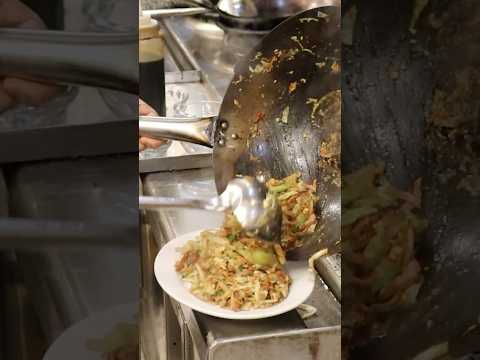
The source video for this recipe — demonstrates the two-batch searing method and the exact moment to add the sauce for proper cornstarch thickening. Watch the wok temperature section carefully.
2. Wok Technique for Stir-Fry Beginners
A foundational breakdown of wok heat management, tossing technique, and the difference between steaming and searing at home. Essential viewing before attempting any high-heat Chinese stir-fry.
3. Homemade Moo Shu PancakesIf you want to make the thin pancakes from scratch instead of using store-bought wraps, this walkthrough covers the dough, the double-layer steam technique, and how to pull them apart without tearing.
🛠️ Core Equipment
- Wok or large carbon steel skillet ↗The curved high walls and thin base of a wok are engineered for this exact cooking style — high heat, fast tossing, and moisture evaporation. A standard non-stick pan holds too much heat unevenly and the low walls trap steam. A [carbon steel wok](/kitchen-gear/review/carbon-steel-wok) is the correct tool.
- Thin-bladed slicing knife ↗Cutting pork tenderloin into uniform 2-inch strips requires a sharp, thin blade. Thick-bladed knives compress and tear the meat rather than slicing cleanly, which creates uneven pieces that cook at different rates.
- Small whisk or fork ↗Cornstarch clumps aggressively in liquid. A whisk dissolves it completely before the sauce hits the heat. A spoon leaves pockets of raw starch that appear as white lumps in the finished dish.
- Serving platter with stacked wraps ↗Moo shu is a table-assembly dish. A [cast iron skillet](/kitchen-gear/review/cast-iron-skillet) or oven-warmed plate keeps the wraps pliable. Cold wraps crack when rolled and ruin the interactive element that makes this dish worth making.
Better Than Takeout Moo Shu Pork (30-Minute Weeknight Fix)
🛒 Ingredients
- ✦1.5 pounds pork tenderloin, sliced thin into 2-inch strips
- ✦3 tablespoons low-sodium soy sauce
- ✦2 tablespoons hoisin sauce
- ✦1 tablespoon rice vinegar
- ✦1 tablespoon sesame oil
- ✦2 teaspoons cornstarch
- ✦3 tablespoons vegetable oil, divided
- ✦4 cloves garlic, minced
- ✦1 tablespoon fresh ginger, finely minced
- ✦8 ounces cremini mushrooms, thinly sliced
- ✦4 cups shredded napa cabbage
- ✦1 cup shredded carrots
- ✦1 can (8 ounces) sliced bamboo shoots, drained
- ✦4 green onions, cut into 1-inch pieces
- ✦1/4 teaspoon white pepper
- ✦12 to 16 thin crepes or whole wheat wraps for serving
- ✦2 tablespoons fresh cilantro, chopped (optional garnish)
- ✦1/4 cup hoisin sauce for serving on the side
👨🍳 Instructions
01Step 1
Whisk together soy sauce, hoisin sauce, rice vinegar, sesame oil, and cornstarch in a small bowl until the cornstarch is fully dissolved and the sauce is smooth.
02Step 2
Pat the pork strips completely dry with paper towels, then season generously with white pepper on both sides.
03Step 3
Heat 1.5 tablespoons of vegetable oil in a large wok or skillet over medium-high heat until the oil shimmers and just begins to smoke.
04Step 4
Working in two batches to avoid overcrowding, add the pork strips in a single layer and sear for 2 to 3 minutes per side until golden brown and cooked through. Transfer to a clean plate.
05Step 5
Add the remaining 1.5 tablespoons of oil to the wok and reduce heat to medium. Add the minced garlic and ginger, stirring constantly for 30 seconds until fragrant.
06Step 6
Add the sliced mushrooms and sauté for 3 to 4 minutes until they begin to soften and release their moisture.
07Step 7
Add the shredded cabbage and carrots, tossing frequently for 2 to 3 minutes until slightly tender but still with a noticeable crunch.
08Step 8
Add the drained bamboo shoots and green onions, stirring everything together for about 1 minute to combine.
09Step 9
Return the cooked pork and any accumulated juices to the wok.
10Step 10
Pour the prepared sauce over the mixture and toss continuously for 1 to 2 minutes until the sauce coats everything evenly and thickens to a glossy consistency.
11Step 11
Taste and adjust seasoning with additional soy sauce or sesame oil if desired.
12Step 12
Warm the crepes or wraps according to package directions and stack on a serving platter.
13Step 13
Transfer the moo shu mixture to a serving bowl and scatter with fresh cilantro if using.
14Step 14
Serve family-style: spoon a portion of the pork mixture onto a warm wrap, drizzle with extra hoisin sauce, and roll tightly before eating.
Nutrition Per Serving
Estimates based on standard preparation. Adjustments alter macros.
🔄 Substitutions
Instead of Pork tenderloin...
Use Chicken breast or shrimp
Both work well. Chicken breast should be sliced and treated identically. Shrimp cooks faster — 90 seconds per side maximum, or it turns rubbery. Adjust batch timing accordingly.
Instead of Regular crepes...
Use Whole wheat wraps or butter lettuce leaves
Whole wheat wraps add fiber and hold up better to overfilling. Butter lettuce works as a low-carb option but is more delicate — don't overfill or they tear at the seam.
Instead of Vegetable oil...
Use Avocado oil
Higher smoke point than vegetable oil, which means it handles the high heat of wok cooking without breaking down. Neutral flavor — no functional difference in the finished dish.
Instead of Hoisin sauce (full amount)...
Use 1 tablespoon hoisin plus 1 tablespoon low-sodium chicken broth
Cuts sodium and sugar without losing the fundamental flavor structure. The broth maintains moisture and the reduced hoisin still delivers the sauce's signature depth.
🧊 Storage & Reheating
In the Fridge
Store the filling separately from the wraps in an airtight container for up to 3 days. The filling actually improves overnight as the flavors meld.
In the Freezer
Freeze the filling only (not the wraps) for up to 2 months. Thaw overnight in the fridge and reheat in a hot wok with a splash of soy sauce to revive the glaze.
Reheating Rules
Reheat the filling in a wok or skillet over medium-high heat for 3-4 minutes, tossing continuously. Microwave works but softens the vegetables and kills the texture — use it only if you have no other option.
❓ Frequently Asked Questions
Why is my moo shu pork so watery?
Two causes: wet pork strips that weren't patted dry before searing, or an overcrowded wok that steamed the vegetables instead of stir-frying them. Both release excess moisture that the sauce can't absorb. Pat the pork dry, cook in batches, and make sure your wok is genuinely hot before anything goes in.
Can I make the thin pancakes at home?
Yes — they're a simple hot water dough (flour, boiling water, sesame oil) rolled thin and cooked in pairs so they pull apart into two translucent sheets. It takes about 45 minutes and the results are noticeably better than store-bought. For a weeknight, whole wheat wraps warmed in a dry skillet are a perfectly legitimate substitute.
What's the difference between moo shu pork and a regular pork stir-fry?
The wrapping element and the specific vegetable profile — mushrooms, cabbage, bamboo shoots, and green onions — are what define moo shu as its own dish. The hoisin sauce as a condiment at the table (not just in the filling) is also essential. Without the wrap, it's just a stir-fry. The interactive assembly is part of the dish's identity.
My sauce isn't thickening. What went wrong?
Either the cornstarch wasn't fully dissolved before the sauce hit the heat (it clumps on contact with high temperature), or the wok wasn't hot enough when you added it. Cornstarch needs sustained heat above 203°F to gelatinize. Raise the heat, keep tossing, and give it a full 2 minutes.
Can I make this ahead of time for a dinner party?
Make the filling up to the point just before adding the sauce, then refrigerate. When guests arrive, reheat the filling in a screaming hot wok, add the sauce, and serve in under 5 minutes. The wraps can be stacked and kept warm in a 200°F oven covered with foil.
Is moo shu pork actually traditional Chinese cooking?
It originated in northern Chinese cuisine — specifically Mandarin and Shandong cooking — where thin wheat pancakes (similar to Peking duck wrappers) are a staple. The American-Chinese takeout version simplified the egg element and adjusted the sauce for Western palates, but the wrapping technique and core vegetable combination are authentically northern Chinese in origin.
The Science of
Better Than Takeout Moo Shu Pork (30-Minute Weeknight Fix)
We turned everything on this page into a beautiful, flour-proof PDF cheat sheet. Print it out, stick it to your fridge, and never mess up your better than takeout moo shu pork (30-minute weeknight fix) again.
*We'll email you the high-res PDF instantly. No spam, just perfectly cooked meals.
AlmostChefs Editorial Team
We translate the internet's most popular cooking videos into foolproof, beginner-friendly written recipes. We analyze multiple methods, test them in our kitchen, and engineer a single "Master Recipe" that gives you the best possible result with the least possible stress.