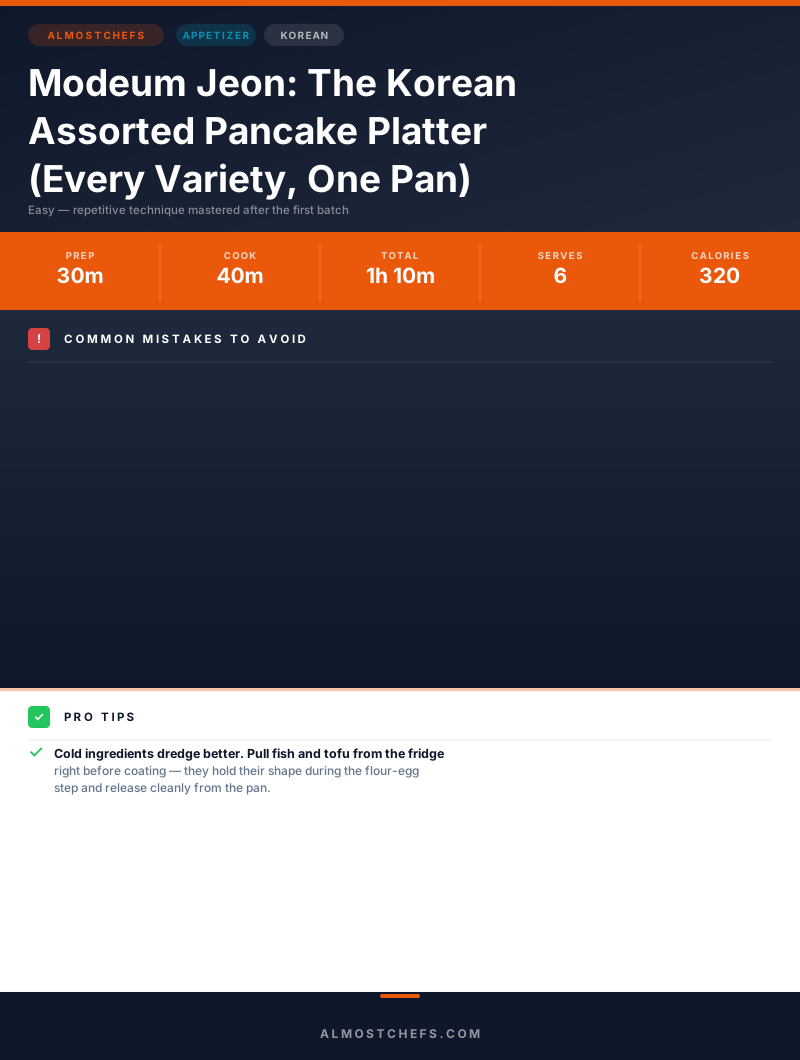
Modeum Jeon: The Korean Assorted Pancake Platter (Every Variety, One Pan)
A traditional Korean platter of assorted pan-fried jeon — zucchini, fish, beef, and tofu — each dipped in egg batter and cooked golden in a hot skillet. The dish that anchors every holiday table and proves that Korean home cooking is built on technique, not complexity.

“Modeum jeon is not one recipe. It is five recipes operating under one principle: coat, dip in egg, press flat, fry until golden. The Koreans have been doing this for centuries at every major holiday and gathering, and the reason it never gets old is that each variety — zucchini, fish, beef, tofu — carries the same crispy shell but a completely different interior. If you can fry one, you can fry all of them. The only thing between you and a full platter is patience and a good non-stick pan.”
Why This Recipe Works
Modeum jeon is one of the clearest examples in all of Korean cooking of a technique doing more work than the ingredients. The same two steps — dust with flour, coat in egg — transform zucchini, fish, beef, and tofu into a unified platter that somehow makes each variety taste like it was designed specifically to be eaten this way. That's not an accident. The technique is the recipe.
The Flour-Egg System
Everything in jeon lives or dies on the dredging sequence. The flour layer goes first because it creates a dry, slightly rough surface for the egg to grip. Beaten egg won't adhere to the smooth, moist surface of raw fish or pressed tofu — it slides off and pools in the pan. The flour primer solves this. It also absorbs any residual moisture on the surface of the ingredient, which prevents steam pockets from forming under the egg crust during frying.
The egg layer is where the flavor and texture come from. As the egg hits the hot pan, the proteins denature and set almost instantly into a thin, lacy shell that seals in the moisture of whatever's inside. This is why jeon is so much more interesting than simple fried food — the inside steams gently inside its egg shell while the outside crisps up in the oil. Two cooking methods happening simultaneously in a pan thin enough to use on a camping stove.
Shake off the excess flour before dipping. Thick flour patches don't absorb egg — they stay dry inside, turn gummy as steam hits them, and create uneven browning. A light, even coat is what you're after. Think primer coat, not spackling.
Pan Temperature Is Everything
A cold or warm pan ruins jeon before you've started. The egg needs to set the instant it touches the surface. If the pan is at the wrong temperature, the egg coating sits in the oil and absorbs it rather than crisping against the hot metal. The result is greasy, flabby jeon that sticks to the pan and tears when you try to flip it.
Heat the non-stick skillet dry for 90 seconds over medium-high before adding the oil. When a drop of water flicked into the pan bounces and evaporates immediately, it's ready. Add enough oil to coat the bottom completely — thin-coated jeon fries unevenly. Place each piece, press firmly once with the back of a spatula to ensure full contact, and don't touch it again until the edge turns opaque halfway up the side.
Between batches, the pan needs to return to temperature. Don't just add oil and go. Wait 30 seconds. The 10th piece of jeon should look identical to the first.
Why the Order of Varieties Matters
Tofu goes first — it's neutral and seasons the oil gently. Zucchini goes second, adding vegetable sweetness. Fish third, with a more delicate flavor that benefits from the seasoned oil. Beef last, because its fat enriches whatever residual oil remains and creates the most flavorful frying environment.
This isn't superstition. Each variety leaves flavor compounds in the oil. Frying in order from mild to rich means every variety benefits from what came before it. Reverse the order and the beef fat overwhelms the tofu and zucchini with heaviness they weren't designed to carry.
The Platter Logic
Modeum jeon exists because Korean holiday cooking is designed for sharing. Chuseok and Seollal tables center around dishes that can feed many people without requiring individual plating — and a platter of four jeon varieties accomplishes exactly that. The wire rack approach keeps everything crispy through the meal without reheating. The dipping sauce, shared and set in the middle, is the element that unifies four different flavors into one coherent dish.
The genius is in the restraint. Same coating, same technique, same sauce — four completely different results. This is what Korean home cooking does better than almost any other cuisine: find the one right technique and apply it everywhere it works.
Where Beginners Mess This Up
Before we start, read this. These are the 4 reasons your modeum jeon: the korean assorted pancake platter (every variety, one pan) will fail:
- 1
Pan not hot enough before adding oil: Jeon needs a hot surface the moment the batter hits the pan. A warm-but-not-hot pan causes the egg coating to absorb oil instead of crisping immediately. Heat the pan dry for 90 seconds over medium-high, then add the oil. The jeon should sizzle aggressively on contact.
- 2
Pressing too hard or not at all: Each piece needs a firm press with the back of a spatula immediately after placing it in the pan. This ensures full contact between the batter and the hot surface. Not pressing means uneven browning with pale patches. But pressing repeatedly as it cooks tears the egg coating — one firm press, then leave it alone.
- 3
Skipping the flour coat before the egg: The flour layer is not optional. It acts as a primer that helps the egg batter adhere to the surface of the ingredient. Without it, the egg slides off slippery fish or zucchini mid-fry. Dust everything lightly, shake off the excess, then dip in egg. This two-step is the structural foundation of every jeon.
- 4
Overcrowding the pan: Modeum jeon is a platter dish, which tempts cooks into treating it like a batch-fry operation. But crowding drops the pan temperature and traps steam, turning the jeon soft instead of crispy. Fry in small batches with space between each piece. Rest finished pieces on a wire rack, not paper towels — paper traps steam underneath.
🛠️ Core Equipment
- Large non-stick or well-seasoned cast iron skilletThe egg coating is delicate. Stainless steel or carbon steel will tear the jeon when you try to flip. Non-stick gives you a clean release every time. Cast iron retains heat better for consistent browning across multiple batches.
- Wire rack set over a baking sheetResting finished jeon on a wire rack instead of paper towels keeps the bottom crispy. Paper towels trap steam underneath and soften the crust you just worked to build.
- Flat spatula with a wide, thin bladeA thick or slotted spatula will catch the edge of the jeon and tear the egg coating on the flip. A wide, thin-bladed spatula slides cleanly under each piece in one motion.
- Three shallow bowls for dredging stationSet up flour, beaten eggs, and a landing plate in a row. Working down the line keeps your hands organized and the process fast enough that each piece doesn't have time to absorb excess flour before hitting the egg.
Modeum Jeon: The Korean Assorted Pancake Platter (Every Variety, One Pan)
🛒 Ingredients
- ✦2 medium zucchini, sliced into 1/4-inch rounds (hobak jeon)
- ✦12 oz white fish fillet (cod or halibut), sliced into 1/4-inch pieces (saengseon jeon)
- ✦8 oz ground beef or thinly sliced beef, lightly seasoned (gogi jeon)
- ✦14 oz firm tofu, sliced into 1/2-inch rectangles, pressed dry (dubu jeon)
- ✦1 cup all-purpose flour, for dredging
- ✦6 large eggs, beaten well with a pinch of salt
- ✦1/2 teaspoon salt for seasoning vegetables
- ✦1 teaspoon sesame oil
- ✦1 teaspoon soy sauce
- ✦1/2 teaspoon garlic powder
- ✦Neutral oil for frying (vegetable or avocado oil)
- ✦For dipping sauce: 3 tablespoons soy sauce, 1 tablespoon rice vinegar, 1 teaspoon gochugaru, 1 teaspoon sesame oil, 1 teaspoon toasted sesame seeds
👨🍳 Instructions
01Step 1
Slice the zucchini into 1/4-inch rounds and lay them flat on a paper towel. Sprinkle lightly with salt and let sit for 10 minutes to draw out moisture, then pat thoroughly dry.
02Step 2
Slice the fish fillets into thin pieces roughly 2x3 inches. Pat completely dry with paper towels. Season lightly with salt and pepper.
03Step 3
Season the beef: mix ground beef or thin-sliced beef with soy sauce, sesame oil, garlic powder, and a pinch of pepper. If using ground beef, form into thin oval patties roughly 1/2 inch thick.
04Step 4
Press the tofu slices between paper towels under a heavy cutting board for 10 minutes. Season lightly with salt after pressing.
05Step 5
Set up your dredging station: one bowl of all-purpose flour, one bowl of well-beaten eggs seasoned with a pinch of salt.
06Step 6
Mix the dipping sauce: combine soy sauce, rice vinegar, gochugaru, sesame oil, and sesame seeds. Set aside.
07Step 7
Heat a large non-stick skillet over medium-high heat for 90 seconds until hot. Add enough neutral oil to coat the bottom generously.
08Step 8
Working in small batches, dredge each piece first in flour (shake off excess), then coat completely in beaten egg. Place immediately in the hot pan. Press firmly with the back of a spatula once. Cook 2-3 minutes until the bottom is golden.
09Step 9
Flip each piece once. Cook another 2 minutes on the second side until evenly golden. Transfer to a wire rack. Add fresh oil between batches and let the pan return to temperature.
10Step 10
Fry in this order: tofu first (neutral, seasons the oil), then zucchini, then fish, then beef last. Each variety benefits from the flavors the previous one left in the oil.
11Step 11
Arrange all varieties on a large platter. Serve immediately with the dipping sauce on the side.
Nutrition Per Serving
Estimates based on standard preparation. Adjustments alter macros.
🔄 Substitutions
Instead of White fish (cod/halibut)...
Use Shrimp or thin-sliced salmon
Shrimp must be butterflied and pressed flat for even cooking. Salmon is richer and pairs particularly well with the sesame-soy dipping sauce.
Instead of Ground beef...
Use Ground pork or finely minced mushrooms
Ground pork is traditional in many regional Korean variations. Mushrooms (king oyster or shiitake, sliced thick) make an excellent vegetarian gogi jeon with a meatier bite than tofu.
Instead of All-purpose flour...
Use Rice flour or a 50/50 blend
Rice flour produces a slightly crispier, lighter crust that holds up longer before softening. Slightly more fragile during flipping — use a wider spatula and flip with confidence.
Instead of Zucchini...
Use Korean squash (aehobak), eggplant, or kimchi
Aehobak is the traditional choice — sweeter and less watery than Italian zucchini. Kimchi jeon functions slightly differently (no flour-egg dredge, batter-based) but rounds out a full modeum platter beautifully.
🧊 Storage & Reheating
In the Fridge
Store in a single layer in an airtight container for up to 2 days. Stack between sheets of parchment paper to prevent sticking.
In the Freezer
Freeze cooked jeon in a single layer on a baking sheet, then transfer to a zip-lock bag for up to 1 month. Reheat directly from frozen in a non-stick pan.
Reheating Rules
Reheat in a dry non-stick pan over medium heat, 1-2 minutes per side. No oil needed — the existing fat in the jeon is enough to re-crisp the surface. Avoid the microwave entirely.
❓ Frequently Asked Questions
Why is my jeon soggy instead of crispy?
Three possible causes: the pan wasn't hot enough before adding oil, you crowded too many pieces in the pan at once, or you rested the jeon on paper towels (which trap steam underneath). Use a wire rack, work in small batches, and make sure the pan is properly preheated before the oil goes in.
Can I make jeon ahead of time for a party?
Yes — and it actually works well. Fry everything the day before, cool completely, and refrigerate in a single layer. Reheat in a dry non-stick pan right before serving. The texture recovers almost entirely. Do not reheat in the oven or microwave.
What does modeum mean in Korean?
Modeum (모듬) means 'assorted' or 'mixed.' Modeum jeon simply means a platter of various jeon — as opposed to a single-variety dish like pajeon (scallion pancakes only) or kimchi jeon. It's the format, not the specific ingredients, that defines the dish.
Is there a specific order to eat the jeon varieties?
No formal order, but lighter varieties (zucchini, tofu) are typically eaten first since they're more delicate. Fish and beef jeon are richer and hold up better as the platter sits. The dipping sauce goes with everything.
Why do Koreans eat jeon on rainy days?
The sound of jeon sizzling in the pan is widely said to resemble rain falling — haissori (빗소리). There's a cultural association between the two sounds that makes jeon feel like comfort food specifically on wet days. It's a real phenomenon backed by decades of Korean pop culture references.
Do I have to use all four varieties?
No. Modeum means assorted, but the minimum is two varieties to earn the name. Many home cooks pick three based on what's available. The fish and zucchini versions are the most traditional starting point if you're keeping it simple.
The Science of
Modeum Jeon: The Korean Assorted Pancake Platter (Every Variety, One Pan)
We turned everything on this page into a beautiful, flour-proof PDF cheat sheet. Print it out, stick it to your fridge, and never mess up your modeum jeon: the korean assorted pancake platter (every variety, one pan) again.
*We'll email you the high-res PDF instantly. No spam, just perfectly cooked meals.
AlmostChefs Editorial Team
We translate the internet's most popular cooking videos into foolproof, beginner-friendly written recipes. We analyze multiple methods, test them in our kitchen, and engineer a single "Master Recipe" that gives you the best possible result with the least possible stress.