Miyeok-guk (Korean Seaweed Soup)
Korea's celebratory seaweed soup — silky wakame in a rich beef broth, traditionally served on birthdays and to new mothers. Simple, nourishing, and deeply meaningful.
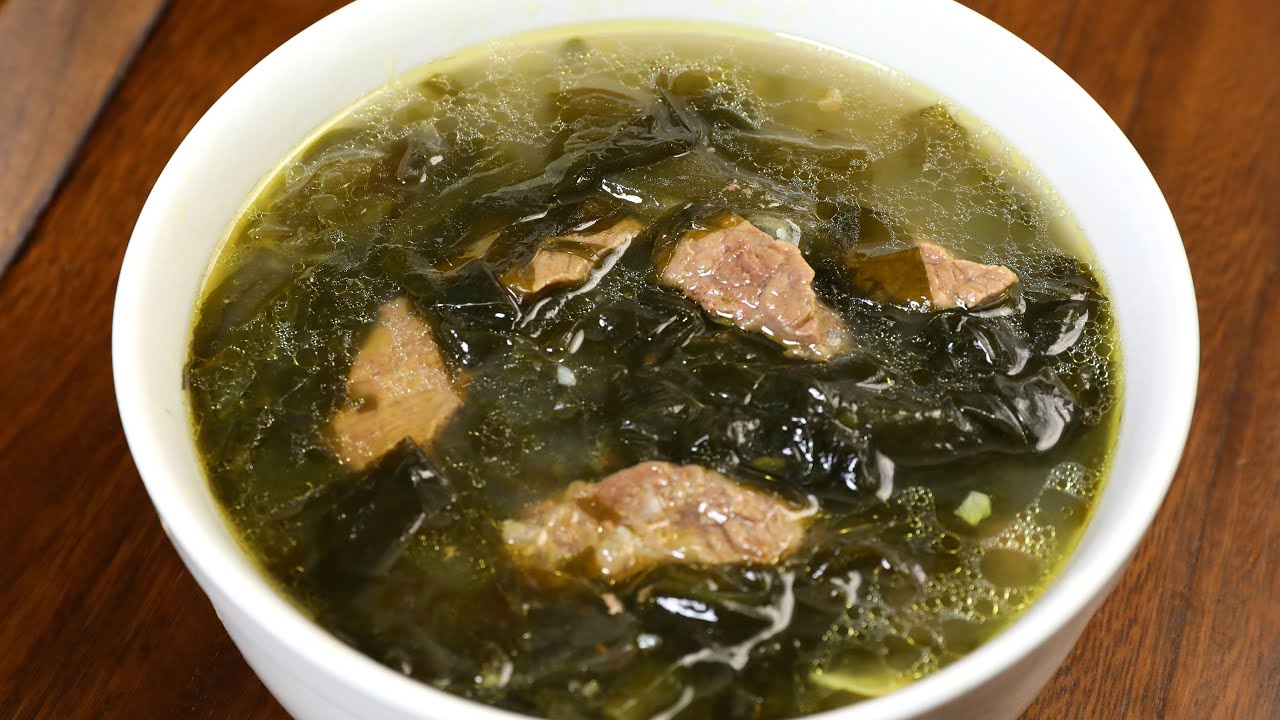
Why This Recipe Works
Most birthday soups around the world are performative. Cake-adjacent. Sugar-forward nonsense designed to feel festive while delivering nothing of nutritional consequence. Miyeok-guk is the opposite: a soup that was medicinal before it was ceremonial, a bowl built around biochemical necessity, and one that happens to be deeply, almost embarrassingly delicious if you execute it correctly.
Let's start with the seaweed, because that's where most Western cooks make their first mistake.
The Physics of Dried Miyeok
Dried wakame — miyeok — is desiccated down to roughly 20% of its rehydrated weight. One ounce of the dried stuff expands to somewhere between 5 and 6 times its volume in cold water over 30 minutes. This is not a suggestion in the instructions; it is a hydration curve. You are not "softening" the seaweed — you are restoring it to a state where its cellular structure can accept heat and fat without turning into a sulfuric bog of overcooked marine vegetation.
Cold water matters here. Hot water accelerates the rehydration and degrades the chlorophyll, which is why the color turns from deep olive-green to swamp brown before the cooking even begins. Use cold water. Wait the full 30 minutes. Squeeze the excess moisture out aggressively — you want the seaweed dry enough to take on sesame oil, not so wet that it immediately steams itself in the pan.
The Stir-Fry Step Nobody Skips Twice
This is the mechanism that separates a respectable miyeok-guk from a forgettable one. The instructions tell you to heat sesame oil in a pot, brown the beef, and then stir-fry the rehydrated miyeok together with the beef before a single drop of water enters the equation.
Here is the science: sesame oil contains roasted sesame volatiles — primarily pyrazines and furans — that are hydrophobic. They bind to fat, not water. By coating the seaweed's surface with those compounds before the broth stage, you are essentially laminating flavor into the miyeok itself. Once you add water, those aromatics don't leach out into the broth and disappear. They stay on the seaweed. Every bite carries the full layered profile rather than a diluted echo of it.
Skip this step and you get a soup that tastes like beef water with things floating in it. Don't skip this step.
Brisket as a Structural Decision
Beef brisket and chuck are not chosen here for flavor alone. They are chosen for collagen density. Both cuts come from muscles that bear significant load during the animal's life — the brisket particularly so, as it supports roughly 60% of the animal's resting weight. The result is connective tissue that is rich in collagen, which hydrolyzes into gelatin over sustained heat (above 160°F / 71°C for an extended period).
That gelatin is what gives a properly simmered miyeok-guk its characteristic mouthfeel: not thick, not starchy, but silky in a way that coats the tongue and creates the perception of richness even though the caloric load is relatively modest at 180 calories per serving. Short ribs will push this effect even further, as the marrow contributes phospholipids and additional fat-soluble compounds that deepen the broth color and body. The base recipe uses brisket or chuck because they are accessible and reliable. Swap in short ribs when you want to understand what the ceiling of this soup actually looks like.
The Simmer Window
Thirty minutes is the legal minimum for this broth. It is not the goal. At 30 minutes, the seaweed is tender and the beef is cooked through. At 45 minutes, the collagen conversion is meaningful and the broth has started to develop the faint sweetness that distinguishes good miyeok-guk from great. At 60 minutes, you are in the territory where the soup tastes like it came from a grandmother's kitchen and not from a recipe you found online an hour ago.
The soy sauce and fish sauce go in after the water comes to a boil, not before. Both contain proteins and sugars that will develop off-flavors under prolonged high heat if introduced too early. Added mid-simmer, they integrate cleanly into the broth without dominating it. Fish sauce in particular contains glutamates that amplify the savory depth of the beef without announcing themselves as fish — used correctly, it is invisible in the final flavor profile. Detectable only in its absence.
Why This Bowl Means What It Means
Korean mothers ate miyeok-guk postpartum for specific, practical reasons: wakame is one of the most bioavailable sources of iodine on the planet, essential for thyroid function during recovery; it contains calcium, iron, and folate in concentrations that are genuinely useful in a post-birth context. The tradition of eating it on birthdays is not superstition dressed as sentiment. It is an annual acknowledgment that the first person who needed this soup was the person who made you.
That context doesn't change how you cook it, but it is worth understanding. This is a soup with a documented purpose. It was nourishment before it was memory. Execute it with that in mind: long simmer, cold soak, stir-fry in sesame oil before the water, and don't rush the finish. The soup will tell you when it's ready.
Miyeok-guk (Korean Seaweed Soup)
🛒 Ingredients
- ✦1 oz dried miyeok (wakame seaweed)
- ✦6 oz beef brisket or chuck, cut into small pieces
- ✦1 tablespoon sesame oil
- ✦2 tablespoons soy sauce
- ✦2 cloves garlic, minced
- ✦6 cups water
- ✦1 teaspoon salt (adjust to taste)
- ✦1 teaspoon fish sauce (optional)
👨🍳 Instructions
01Step 1
Soak dried miyeok in cold water for 30 minutes. It will expand 5-6 times in size. Drain, squeeze out excess water, and cut into bite-size pieces.
02Step 2
Heat sesame oil in a pot over medium heat. Add beef pieces and stir-fry for 2-3 minutes until lightly browned.
03Step 3
Add the soaked miyeok to the pot. Stir-fry with the beef for 3-4 minutes. Add garlic and stir for 30 seconds.
04Step 4
Add 6 cups of water. Bring to a boil, then reduce to a simmer.
05Step 5
Add soy sauce and fish sauce. Simmer for 30-40 minutes until the broth is rich and the miyeok is silky soft.
06Step 6
Season with salt to taste. Serve hot with steamed rice.
Nutrition Per Serving
Estimates based on standard preparation. Adjustments alter macros.
🔄 Substitutions
Instead of Beef...
Use Mussels or clams
Seafood miyeok-guk (haemul miyeok-guk) is equally traditional — sauté shellfish first, then add seaweed
Instead of Beef...
Use Shiitake mushrooms
For a vegan version — use extra sesame oil and soy sauce for umami
Instead of Fish sauce...
Use Extra soy sauce
Fish sauce adds depth but isn't essential
🧊 Storage & Reheating
In the Fridge
Keeps for 4-5 days. Flavors deepen overnight.
In the Freezer
Freeze for up to 3 months. Reheats perfectly.
Reheating Rules
Heat in a pot over medium heat. Add a splash of water if it's thickened.
❓ Frequently Asked Questions
Why is miyeok-guk eaten on birthdays?
Korean mothers traditionally eat miyeok-guk after giving birth because seaweed is rich in iron, calcium, and iodine — nutrients essential for postpartum recovery. Eating it on your birthday is a way of honoring your mother and remembering the nourishment she gave you.
Can I use fresh seaweed instead of dried?
Yes, but the texture is different. Fresh miyeok is softer and cooks faster. Skip the soaking step and reduce the simmering time to 15-20 minutes.
Why is seaweed soup considered bad luck before exams?
In Korean culture, the slippery texture of seaweed symbolizes 'sliding down' or 'slipping' — so students avoid it before exams for fear of failing. This is a well-known Korean superstition.

The Science of
Miyeok-guk (Korean Seaweed Soup)
We turned everything on this page into a beautiful, flour-proof PDF cheat sheet. Print it out, stick it to your fridge, and never mess up your miyeok-guk (korean seaweed soup) again.
*We'll email you the high-res PDF instantly. No spam, just perfectly cooked meals.
AlmostChefs Editorial Team
We translate the internet's most popular cooking videos into foolproof, beginner-friendly written recipes. We analyze multiple methods, test them in our kitchen, and engineer a single "Master Recipe" that gives you the best possible result with the least possible stress.