Easy Homemade Miso Soup (The Enzyme-Preserving Method)
A traditional Japanese comfort soup built on savory dashi broth, fermented miso paste, silken tofu, and wakame seaweed. We analyzed the most common preparation mistakes to deliver one foolproof technique that protects the miso's beneficial enzymes and delivers authentic umami depth in under 30 minutes.
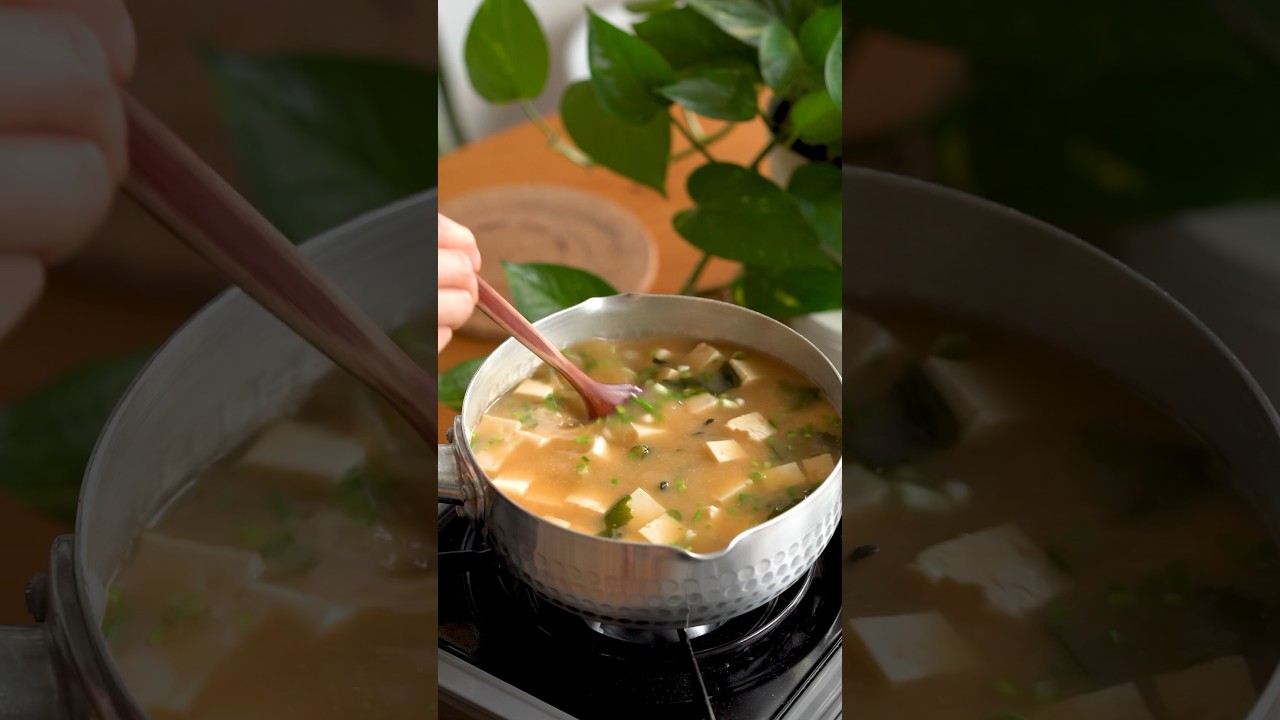
“Miso soup looks simple. It is. But there is one rule that most Western recipes casually violate: never boil the miso. The moment that broth hits a rolling boil after the paste goes in, you've killed the probiotics, muted the nuanced fermented flavor, and turned a living food into a salty broth. Everything else in this recipe is forgiving. That one step is not.”
Why This Recipe Works
Miso soup is one of the most misunderstood recipes in the Western kitchen. It looks like a bowl of hot broth with some cubes floating in it. People assume that means it's impossible to mess up. They're wrong — and the mistake they make is so universal that it has its own name: boiling the miso.
The Enzyme Problem
Miso paste is a fermented food. That means it's alive. It contains lactobacillus bacteria, naturally occurring enzymes, and heat-sensitive bioactive compounds that give it both its distinctive deep flavor and its gut-health reputation. The moment that broth hits a full boil after the miso goes in, you've created an expensive, salty, dead liquid. The complex fermented character flattens. The probiotics are gone. You've spent time building a careful dashi only to nuke its most interesting passenger.
The fix is not complicated: add miso only after reducing to medium-low heat, whisk it into warm water first so it dissolves cleanly, pour the slurry in slowly, and never let the pot return to a simmer. Watch the surface. The moment you see even small bubbles forming, pull the pot off the heat entirely. The soup will retain enough residual heat to warm the tofu and seaweed without destroying the miso.
The Dashi Foundation
Dashi is Japanese for "extracted" — it's a broth built by extracting flavor from two ingredients with surgical precision rather than simmering a stockpot of bones and vegetables for six hours. Kombu (dried kelp) contributes glutamates. Bonito flakes (dried, fermented, smoked tuna) contribute inosinate. Together, they create a synergistic umami effect where the combination is measurably more savory than either ingredient alone — the same principle behind why parmesan makes tomato sauce taste better.
The critical technique: kombu goes into cold water and comes out before the boil. Bonito flakes go in off-heat and steep like tea. Both of these rules exist to prevent bitter compounds from leaching into the broth. A properly made dashi is pale gold, nearly clear, with a clean oceanic aroma. It does not taste fishy. It tastes like the ocean smells after rain.
The Miso Dissolving Method
Direct-to-pot miso always creates clumps. The paste is thick and viscous — it doesn't disperse in hot liquid any more than tahini disperses in cold water. Two tablespoons of warm water and a small whisk solve this entirely. Work the paste against the bowl until you have a completely smooth slurry with no lumps, then pour it into the pot while stirring gently. This takes 30 additional seconds. The texture improvement is dramatic.
The Tofu Window
Silken tofu is 85% water held together by a delicate protein network. It will not withstand aggressive heat, aggressive stirring, or extended time in a hot pot. It goes in last, the heat is already at medium-low, and it gets exactly 90 seconds to 2 minutes of gentle warming. In that window, it heats through without losing structural integrity. Past that window, the curds begin disintegrating into the broth. The tofu cubes are not just texture — they're the visual signal that the soup was treated with care.
Use a ladle with a gentle pour when serving to keep the cubes intact in transit from pot to bowl. Once it's in the bowl, it's not going anywhere.
The Serving Imperative
Miso soup has a shelf life measured in minutes, not hours. The nori goes limp. The scallions wilt. The wakame continues softening and eventually turns to silk. The miso flavor, once it hits the heated broth, begins slowly losing its volatile aromatic compounds to evaporation. This is food that is designed to be consumed immediately, at the table, steaming.
Prepare your bowls before you make the soup. Have the garnishes sliced and waiting. The 13 minutes of active cooking time is real — honor it by having everything staged and everyone seated before you dissolve the miso.
Where Beginners Mess This Up
Before we start, read this. These are the 4 reasons your easy homemade miso soup (the enzyme-preserving method) will fail:
- 1
Boiling the miso: Miso paste contains live cultures and heat-sensitive enzymes that begin dying above 140°F and are completely destroyed at a boil. Add miso only after reducing to medium-low heat, and never let the soup return to a simmer afterward. This is the single most important rule in the recipe.
- 2
Skipping the miso dissolving step: Dropping miso paste directly into hot broth leaves clumps that never fully integrate. Whisk the paste into 2 tablespoons of warm water first until completely smooth, then pour the slurry into the pot. Undissolved miso creates uneven, aggressively salty pockets.
- 3
Overcooking the dashi: Dashi is not a long-simmer stock. Kombu should steep in cold water and be removed before the boil — boiling kombu releases bitter compounds. Bonito flakes need just 5 minutes off-heat before straining. Treat it like a delicate tea, not a Sunday roast stock.
- 4
Adding tofu too early: Silken tofu is structurally fragile. It goes in last, with the wakame, and warms through gently for 1-2 minutes. Any longer and the curds begin breaking apart into the broth, giving you cloudy soup with crumbled white bits instead of clean, intact cubes.
The Video Reference Library
Want to see it in action? Here are the exact videos we analyzed and combined to build this foolproof recipe translation:
The primary reference video for this recipe. Clear demonstration of the dashi preparation process and the critical miso-tempering technique.
🛠️ Core Equipment
- Fine-mesh sieveEssential for straining dashi cleanly. Bonito flakes and kombu fragments in the finished broth create a muddy, bitter soup. The sieve gives you crystal-clear stock.
- Small whisk or forkFor dissolving the miso paste into warm water before adding to the pot. Without this, you will always have clumps. A fork works in a pinch but a small balloon whisk is faster.
- Ladle with a pour spoutServing miso soup into bowls without disturbing the tofu requires a gentle pour. A standard ladle is fine, but one with a spout lets you control flow and keep the cubes intact.
- Instant-read thermometerOptional but useful for beginners. You want the broth at 130-140°F when you add the miso. A thermometer removes the guesswork until you can read it by sight.
Easy Homemade Miso Soup (The Enzyme-Preserving Method)
🛒 Ingredients
- ✦4 cups dashi stock (or 4 cups cold water steeped with 1 piece kombu and 1 handful bonito flakes)
- ✦3.5 tablespoons miso paste (white, red, or a blend)
- ✦150 grams silken tofu, cut into small cubes
- ✦2 tablespoons dried wakame seaweed
- ✦3 stalks fresh scallions, sliced thin on the bias
- ✦75 grams shiitake mushrooms, thinly sliced
- ✦50 grams daikon radish, julienned
- ✦1 sheet nori seaweed, torn into bite-sized pieces
- ✦2 tablespoons warm water (for dissolving miso)
- ✦1 teaspoon soy sauce (optional, for added depth)
- ✦Pinch of sea salt, to taste
- ✦1 small piece fresh ginger, minced (optional)
👨🍳 Instructions
01Step 1
If making dashi from scratch, steep 1 piece of kombu in 4 cups cold water for 5 minutes. Bring to just below a boil, remove the kombu, add a handful of bonito flakes, remove from heat, and let steep for 5 minutes. Strain through a fine-mesh sieve and discard solids. Alternatively, use prepared dashi broth.
02Step 2
Place dried wakame in a small bowl with cool water and soak for 2 minutes until softened. Drain and set aside.
03Step 3
Slice scallions on a sharp diagonal bias and set aside for garnish.
04Step 4
Heat the dashi in a pot over medium heat until it reaches a gentle simmer, about 3-4 minutes.
05Step 5
Add the sliced shiitake mushrooms and julienned daikon radish. Cook for 2 minutes until the vegetables just begin to soften.
06Step 6
In a small bowl, whisk the miso paste into 2 tablespoons of warm water until completely smooth with no lumps.
07Step 7
Reduce heat to medium-low. Slowly pour the dissolved miso slurry into the pot while stirring gently to distribute evenly.
08Step 8
Add the softened wakame and silken tofu cubes to the pot. Handle gently — do not stir aggressively.
09Step 9
Warm through for 1-2 minutes. Do not let the soup return to a boil at any point after the miso has been added.
10Step 10
Taste and adjust with a pinch of sea salt or soy sauce if needed. Remember that miso is already salty — adjust in small increments.
11Step 11
Ladle the soup into individual bowls, distributing the tofu, mushrooms, and seaweed evenly.
12Step 12
Top each bowl with sliced scallions, torn nori, and minced ginger if using. Serve immediately.
Nutrition Per Serving
Estimates based on standard preparation. Adjustments alter macros.
🔄 Substitutions
Instead of Silken tofu...
Use Firm tofu or tempeh
Creates chewier, more substantial bites. Protein increases slightly. Firm tofu holds its shape better if you accidentally let the soup get too hot — more forgiving for beginners.
Instead of White miso paste...
Use Red miso or barley miso blend
Red miso delivers a richer, more deeply fermented flavor and stronger probiotic content. Use about 20% less by volume — it is significantly saltier and more intense.
Instead of Dashi stock...
Use Kombu-only broth or vegetable stock
Kombu-only dashi removes the bonito entirely and makes the soup fully vegan. The oceanic depth is slightly reduced but umami remains strong. Vegetable stock works but lacks the characteristic Japanese flavor profile.
Instead of Wakame seaweed...
Use Arame or dulse seaweed
Arame is thicker and chewier with a milder flavor. Dulse is sweeter with stronger mineral notes and a deep burgundy color that tints the broth slightly. Both provide similar thyroid-supporting iodine content.
🧊 Storage & Reheating
In the Fridge
Store in an airtight container for up to 2 days. The miso will continue to ferment slowly — the flavor deepens but the sodium becomes more pronounced. Tofu will soften further.
In the Freezer
Not recommended. Silken tofu becomes grainy and crumbles after freezing and thawing. Seaweed loses all texture. If you need to freeze, strain out the solids and freeze the broth only.
Reheating Rules
Warm gently on the stovetop over low heat until steaming but not simmering. Never microwave — it boils the soup unevenly and destroys the miso's remaining active compounds.
❓ Frequently Asked Questions
Why can't I boil the soup after adding miso?
Miso contains live probiotic cultures and heat-sensitive enzymes that are destroyed above approximately 140°F. Boiling eliminates all the gut-health benefits and significantly mutes the complex fermented flavor — you're left with a flat, aggressively salty broth. The whole point of properly tempered miso is that it's alive.
What's the difference between white and red miso?
White miso (shiro miso) is fermented for a shorter period — typically a few weeks to a few months — which produces a milder, sweeter flavor. Red miso (aka miso) ferments for one to three years, developing a saltier, more robustly umami, deeply funky profile. Red miso also contains more active cultures due to longer fermentation.
Can I use regular chicken or vegetable broth instead of dashi?
You can, but it will taste noticeably different. Dashi has a clean, oceanic umami that doesn't compete with the miso. Chicken broth adds a savory richness that muddies the delicate miso flavor. Vegetable broth is a closer substitute than chicken. If dashi is unavailable, use vegetable broth and add a splash of soy sauce to approximate the depth.
Why is my miso soup cloudy?
Three possible causes: you boiled the dashi with the kombu still in (releases bitter, cloudy compounds), you didn't dissolve the miso fully before adding it, or you stirred too aggressively after adding the silken tofu and broke the curds into the broth. Strain your dashi properly, dissolve your miso in warm water first, and handle the tofu gently.
How do I know if my dashi is right?
Good dashi is pale golden, almost clear, with a clean oceanic aroma — subtle but unmistakable. It should smell like the ocean without smelling fishy. If it's dark or cloudy, you likely boiled the kombu or over-steeped the bonito flakes. It should taste gently savory with no bitterness.
Can I make miso soup ahead of time?
Make the dashi broth ahead of time — it stores well for up to a week in the fridge. But don't add the miso, tofu, or seaweed until you're ready to serve. The tofu deteriorates, the seaweed goes slimy, and the miso flavors flatten significantly over time. The last 10 minutes of this recipe are the part you can't batch.
The Science of
Easy Homemade Miso Soup (The Enzyme-Preserving Method)
We turned everything on this page into a beautiful, flour-proof PDF cheat sheet. Print it out, stick it to your fridge, and never mess up your easy homemade miso soup (the enzyme-preserving method) again.
*We'll email you the high-res PDF instantly. No spam, just perfectly cooked meals.
AlmostChefs Editorial Team
We translate the internet's most popular cooking videos into foolproof, beginner-friendly written recipes. We analyze multiple methods, test them in our kitchen, and engineer a single "Master Recipe" that gives you the best possible result with the least possible stress.