The Minestrone That Actually Tastes Like Something (One-Pot Italian Done Right)
A hearty vegan Italian vegetable soup loaded with cannellini beans, seasonal produce, and pasta in a rich tomato broth. We broke down the soffritto, the pasta timing problem, and why your minestrone tastes watery — and fixed all of it.

“Most minestrone tastes like hot water with vegetables floating in it. The problem isn't the ingredients — it's the order, the timing, and the fact that most recipes skip the one technique that separates Italian grandmother soup from cafeteria soup. The soffritto. The pasta discipline. And knowing when to stop cooking. We fixed all three.”
Why This Recipe Works
Minestrone means "big soup" in Italian. Not "big flavor" — just big. The name is an acknowledgment that this dish was historically assembled from whatever the garden produced, whatever the cellar held, and whatever ambition the cook brought to the pot. The ambition is the variable. Most home versions set it at zero: broth, vegetables, boil until soft, serve while questioning your choices. That is not minestrone. That is vegetable water with commitment issues. This version treats the recipe like the precision project it actually is — because even peasant food has technique behind it, and ignoring technique is how you end up with a soup that tastes like resignation.
The Soffritto: Eight Minutes You Cannot Skip
Every Italian soup with any self-respect begins here. Onion, celery, carrot — the holy trinity of aromatic base-building — cooked slowly in olive oil until the raw sharpness is gone and something fundamentally different has taken its place. This is not prep work. This is cooking. The French call the same combination mirepoix. The Italians call it soffritto. Both names describe the same chemical event: alliums and root vegetables releasing moisture, their sharp volatile compounds converting under low-to-medium heat into sweet, round, fat-soluble flavor molecules that then infuse the cooking fat itself. That fat carries those compounds into every ounce of liquid you add afterward. Skip this step and you are not making minestrone. You are making broth with vegetables added.
You need a Dutch oven for this — or at minimum a large heavy-bottomed pot with even heat distribution and genuine mass. Thin pots create hot spots. Hot spots mean the edge of the onion scorches while the center is still raw. Scorched alliums contribute bitterness that no amount of tomato or broth can correct. The Dutch oven retains heat evenly across the base, allows you to cook at medium without temperature spikes, and doubles as the ideal vessel for the long simmer that follows. It is not optional equipment dressed up as a recommendation. It is the right tool for the thermal physics of this specific dish.
Eight minutes. Medium heat. Occasional stirring. You are looking for full translucency in the onion, slight give in the carrot when pressed with the back of a spoon, and faint golden color at the edges of the celery. Anything shorter is a shortcut. Shortcuts here cost you the entire flavor foundation of the soup. There is no recovery mechanism downstream.
Knife Work Is Load-Bearing Infrastructure
Minestrone is a soup of small, uniform dice. This is not an aesthetic preference — it is a functional requirement. When vegetable pieces are cut to radically different sizes, they reach doneness at radically different times. You end up with disintegrated zucchini next to carrot that requires another ten minutes. The soup is uneven in texture, uneven in flavor, and cooked unevenly throughout. Uniform dice means everything finishes at approximately the same moment, giving you control over the outcome rather than just hoping the larger pieces catch up.
A sharp chef's knife is not a luxury here — it is the instrument of consistency. A dull blade does not cut vegetables; it crushes them. Crushed vegetables bruise at the cut edge, lose moisture unevenly, and take longer to soften in the soffritto phase because the cellular structure is compromised rather than cleanly divided. A sharp chef's knife produces clean cuts that cook predictably, behave consistently in hot fat, and hold their shape through a thirty-eight minute cook without turning to mush. The difference is immediate, visible, and measurable.
Tomatoes Before Broth: A Three-Minute Investment
The standard move is to add tomatoes and broth simultaneously, treating both as liquids that belong together. This is incorrect. Crushed tomatoes cooked for two to three minutes directly in the hot fat — before any liquid dilutes the environment — caramelize against the pot bottom, reduce slightly, and lose the tinny, sharp acidity that characterizes canned tomatoes at full concentration. The Maillard reaction contributes depth. The brief reduction concentrates flavor. The result is a tomato base that has already transformed before a drop of broth arrives.
Once you add seven cups of liquid on top of undeveloped tomatoes, you cannot go back. The heat that would have driven that caramelization is now occupied with bringing a substantial volume of cold broth to temperature. The tomatoes never get their moment. The soup tastes thin and acidic rather than round and complex. Three minutes of patience at this stage does more for the final flavor than any amount of additional seasoning later.
Bean Liquid Is Not Your Friend
Canned cannellini beans arrive in a cloudy, starchy, high-sodium packing liquid that you should remove entirely before adding them to the soup. Drain them through a fine-mesh sieve or colander and rinse with cold water until the water runs clear. This step removes excess sodium that would push the soup's salt level past your control, and it removes the excess starch that would cloud the broth and make it feel thick and murky rather than clear and clean. The beans themselves carry plenty of natural starch — you want what's inside the bean, not what's been leaching into the packing liquid since the can was sealed.
If you want a thicker broth, the correct approach is to mash roughly a quarter cup of the beans before adding them. The starch dissolves into the soup and builds body deliberately. That is a design choice. Dumping in the packing liquid is not a choice — it is an accident with consequences.
The Pasta Timing Problem Has a Simple Solution
Pasta in soup is one of the most reliably mishandled elements in home cooking. The problem is physics, not incompetence: pasta is a dense, porous carbohydrate that absorbs liquid aggressively and continuously. The moment it enters boiling broth, it begins absorbing. It does not stop when it reaches al dente. It does not stop when you turn off the heat. It stops when there is no more available liquid to absorb or when the cellular structure finally collapses. In a pot of soup left to sit for thirty minutes, pasta cooked to doneness becomes bloated, starchy, and texturally unrecognizable.
The fix requires nothing more than a timer and discipline: pull the pasta two minutes before package instructions indicate al dente doneness. It finishes in the residual heat as you serve. For meal prep, cook pasta completely separately and add per bowl at serving time. The soup base stores for four days in the refrigerator and the flavor actually improves. The pasta stores separately and gets cooked fresh each time. This is not extra work — it is the only workflow that produces acceptable results across multiple servings.
Spinach Has a Two-Minute Window
Spinach is sensitive to heat in a way that other vegetables in this recipe are not. The chlorophyll responsible for its bright green color degrades rapidly above cooking temperature. After two to three minutes in a simmering broth, bright green becomes army drab. After five, it looks like something recovered from a slow cooker. After ten, you have contributed a muddy, swampy visual to an otherwise appealing bowl of soup, plus the mineral brightness of fresh spinach has been cooked out entirely.
Two minutes before you pull the pot off heat. Not five minutes to be safe. Two minutes, because that is the number. Stir until fully wilted and still vivid. Ladle immediately. The red pepper flakes go in at the same moment — they bloom briefly in the hot broth and distribute heat evenly rather than concentrating in one corner of the pot.
Seasoning Is a Three-Stage Process
Salt added in a single dose at the end of cooking tastes flat and sharp simultaneously — flat because it hasn't had time to integrate into the broth, sharp because it sits on the surface of vegetables rather than inside them. Proper seasoning for this soup happens in three distinct moments: lightly at the soffritto stage, again when the tomatoes go in, and at the final tasting before serving. Each application serves a different function. Salt at the soffritto phase draws moisture from the vegetables and accelerates softening. Salt with the tomatoes integrates into the broth as it builds. Salt at the finish corrects and balances. A soup seasoned this way tastes like it was built with care, not adjusted at the table.
The soup will also taste noticeably better the following day. The broth thickens slightly as bean starch continues to release, the dried Italian seasoning blooms fully, and the tomato acidity mellows into something rounder and more integrated. This is the quiet reward for making it properly and having the restraint to refrigerate it overnight. It is one of very few soups that rewards patience without requiring it.
Where Beginners Mess This Up
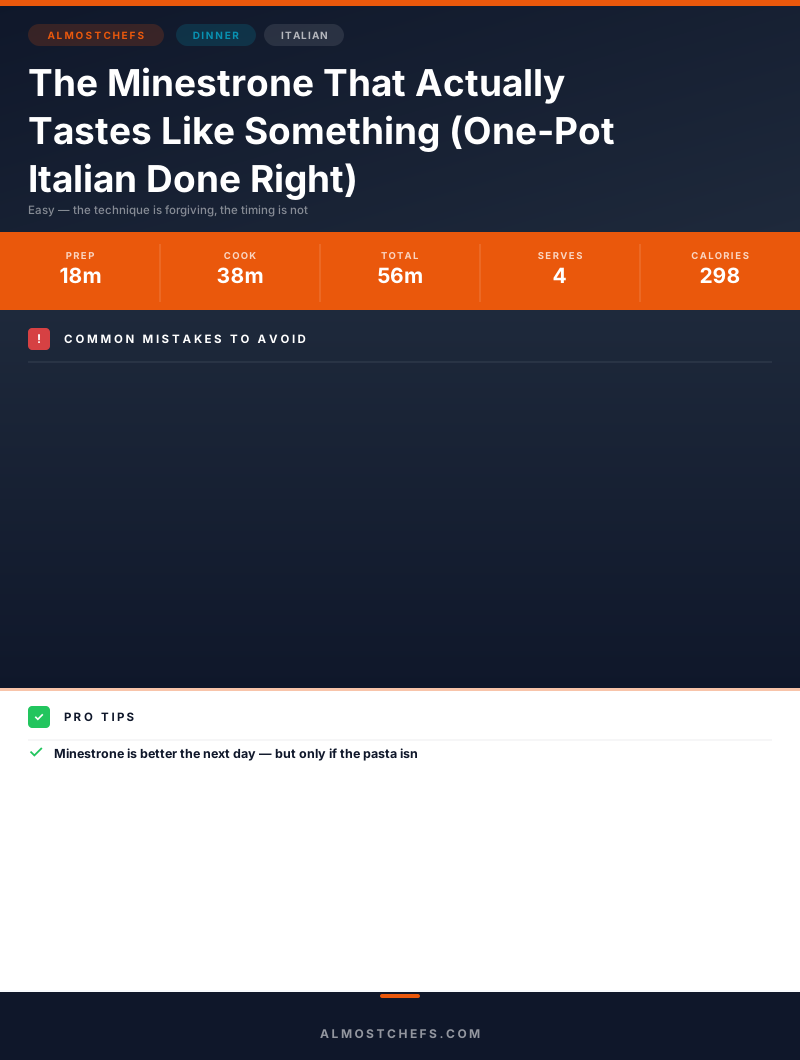
Before we start, read this. These are the 4 reasons your the minestrone that actually tastes like something (one-pot italian done right) will fail:
- 1
Skipping or rushing the soffritto: The onion, celery, and carrot base is not decoration — it's the flavor foundation of the entire soup. Eight minutes of medium heat transforms raw alliums into a sweet, savory base that no amount of broth can replicate after the fact. Rushing this step and adding the broth to half-cooked vegetables produces thin, sharp-tasting soup.
- 2
Cooking the pasta directly in the pot: Pasta absorbs liquid aggressively as it sits. If you cook ditalini to doneness in the soup, it will be bloated and mushy by the time you serve it — and by tomorrow it will have soaked up half the broth entirely. Cook pasta to two minutes shy of al dente, or cook it separately and add per bowl.
- 3
Under-seasoning at the wrong moment: Minestrone needs salt in layers — at the soffritto stage, when you add the tomatoes, and at the finish. One heavy dose at the end tastes flat and sharp. Seasoning in stages lets the salt integrate into the broth as it builds.
- 4
Adding spinach too early: Spinach goes in the last two minutes. Any earlier and it turns army green, loses its iron-forward mineral flavor, and contributes a muddy color to the broth. Two minutes. Not five. Not ten.
The Video Reference Library
Want to see it in action? Here are the exact videos we analyzed and combined to build this foolproof recipe translation:
The source video for this recipe's core technique. Excellent demonstration of soffritto depth and how to judge when the vegetable base is properly built before any liquid goes in.
🛠️ Core Equipment
- Large heavy-bottomed pot or Dutch ovenEven heat distribution is essential for the soffritto phase. A thin pot scorches the onions before they can properly soften and caramelize. A [Dutch oven](/kitchen-gear/review/dutch-oven) is the right tool — it also retains heat well for the long simmer.
- Sharp chef's knifeMinestrone depends on uniform vegetable dice. Unevenly cut vegetables cook at different rates — you end up with mushy zucchini next to raw carrot. A [sharp chef's knife](/kitchen-gear/review/chefs-knife) makes consistent small dice achievable without effort.
- Fine-mesh sieve or colanderFor draining and rinsing the cannellini beans. Canned bean liquid contains excess sodium and starch — rinsing reduces both, keeping the broth clean and light rather than cloudy.
The Minestrone That Actually Tastes Like Something (One-Pot Italian Done Right)
🛒 Ingredients
- ✦3 tablespoons extra-virgin olive oil
- ✦1 medium yellow onion, finely diced
- ✦3 cloves garlic, minced
- ✦2 stalks celery, cut into small dice
- ✦2 medium carrots, peeled and diced
- ✦1 can (28 ounces) crushed tomatoes
- ✦7 cups vegetable broth
- ✦1 medium zucchini, diced
- ✦1.5 cups fresh green beans, trimmed and cut into 1-inch pieces
- ✦1 can (15 ounces) cannellini beans, drained and rinsed
- ✦1 cup small pasta shapes (ditalini or elbow)
- ✦3 cups fresh spinach, roughly chopped
- ✦2 teaspoons dried Italian seasoning
- ✦1/4 teaspoon red pepper flakes
- ✦Sea salt and freshly ground black pepper, to taste
- ✦3 tablespoons fresh basil, torn
- ✦2 tablespoons nutritional yeast or vegan Parmesan (optional)
👨🍳 Instructions
01Step 1
Warm the olive oil in a large heavy-bottomed pot over medium heat until shimmering, about 1 minute.
02Step 2
Add the diced onion, celery, and carrots to build the soffritto base. Stir occasionally and cook until softened and the onion is fully translucent, about 8 minutes.
03Step 3
Stir in the minced garlic and cook for 60 seconds, stirring constantly, until fragrant.
04Step 4
Pour in the crushed tomatoes and stir well, scraping any browned bits off the bottom of the pot. Cook for 3 minutes before adding the broth.
05Step 5
Add the vegetable broth, stir to combine, and bring to a gentle boil.
06Step 6
Add the diced zucchini, green beans, and Italian seasoning. Reduce heat to medium-low and simmer for 10 minutes.
07Step 7
Stir in the drained cannellini beans and pasta. Simmer for 8-10 minutes, stirring occasionally, until the pasta is just shy of al dente — it will continue cooking off heat.
08Step 8
Add the chopped spinach and red pepper flakes in the final 2 minutes of cooking. Stir until fully wilted and vibrant green.
09Step 9
Taste and adjust seasoning generously with sea salt and black pepper.
10Step 10
Ladle into bowls and finish with torn fresh basil and nutritional yeast or vegan Parmesan if desired.
Nutrition Per Serving
Estimates based on standard preparation. Adjustments alter macros.
🔄 Substitutions
Instead of Cannellini beans...
Use Chickpeas or green lentils
Chickpeas hold their shape better and add a nuttier flavor. Green lentils go in with the broth and cook down slightly — they thicken the soup naturally. Both work, neither is a downgrade.
Instead of Wheat pasta...
Use Gluten-free pasta or cooked farro
Gluten-free pasta is the cleaner swap — maintain the same timing. Farro adds a chewy, nutty character and doesn't get mushy; cook it separately and add at serving.
Instead of Fresh spinach...
Use Kale, Swiss chard, or frozen spinach
Kale needs 5 minutes rather than 2 and delivers more texture. Frozen spinach goes in straight from frozen with no timing change. Chard splits the difference — add in the last 3 minutes.
Instead of Refined olive oil...
Use Cold-pressed extra-virgin olive oil
Use it for the soffritto and again as a finishing drizzle. The polyphenols that make EVOO taste peppery and grassy are heat-sensitive — a small pour raw at the end is where they matter most.
🧊 Storage & Reheating
In the Fridge
Store in an airtight container for up to 4 days. The soup thickens as it sits — add a splash of broth or water when reheating. If possible, store pasta separately.
In the Freezer
Freeze without pasta for up to 3 months. Thaw overnight in the fridge and bring to a simmer before adding freshly cooked pasta.
Reheating Rules
Reheat gently on the stovetop over medium-low heat with 1/4 cup added broth or water, stirring occasionally. Microwave works but tends to overcook the spinach and flatten the basil. Stovetop preferred.
❓ Frequently Asked Questions
Why does my minestrone taste watery?
Two likely causes: you rushed the soffritto, or you under-seasoned in layers. The soffritto — onion, celery, carrot cooked fully in olive oil — is the flavor base. If it's not properly softened and slightly caramelized before the liquid goes in, no amount of broth will compensate. Season at each stage, not just at the end.
Can I make this in a slow cooker?
Yes, with modifications. Build the soffritto on the stovetop first — slow cookers can't replicate the dry sauté. Transfer everything except the pasta and spinach to the slow cooker and cook on low for 6-8 hours. Add cooked pasta and spinach in the last 10 minutes on high.
Why is my pasta bloated and mushy?
Because it cooked to completion in the soup and kept absorbing liquid as it sat. Pasta cooked in broth goes from perfect to ruined in about four minutes. Pull it two minutes shy of al dente and account for residual cooking. Better yet, cook it separately and add per bowl.
Is this soup actually filling for a main course?
With the cannellini beans and pasta, yes — 13g protein and 12g fiber per serving means it holds. Serve with crusty bread or a side of [good olive oil](/kitchen-gear/review/olive-oil) for dipping and it's a complete meal, not an appetizer.
What vegetables can I swap in based on what I have?
Minestrone is historically a 'use what's in the garden' soup. Diced potato works in place of pasta (add with the broth, not the beans). Butternut squash replaces zucchini. Cabbage substitutes for spinach — add it with the green beans, not at the end. The soffritto and tomato base hold everything together regardless.
Can I add meat to this recipe?
Yes. Italian sausage is the most common addition — brown it in the pot before the soffritto, drain excess fat, then proceed with the recipe. The sausage fat renders into the soffritto and changes the entire character of the soup. Pancetta works similarly. Neither is traditional everywhere — minestrone varies by region and season.
The Science of
The Minestrone That Actually Tastes Like Something (One-Pot Italian Done Right)
We turned everything on this page into a beautiful, flour-proof PDF cheat sheet. Print it out, stick it to your fridge, and never mess up your the minestrone that actually tastes like something (one-pot italian done right) again.
*We'll email you the high-res PDF instantly. No spam, just perfectly cooked meals.
AlmostChefs Editorial Team
We translate the internet's most popular cooking videos into foolproof, beginner-friendly written recipes. We analyze multiple methods, test them in our kitchen, and engineer a single "Master Recipe" that gives you the best possible result with the least possible stress.