Easy Mediterranean Salad (No-Cook Weeknight Hero)
A vibrant, no-cook salad built on crisp cucumbers, cherry tomatoes, briny Kalamata olives, and creamy feta — all pulled together with a sharp lemon-olive oil vinaigrette. We broke down the most requested Mediterranean salad methods to give you one foolproof assembly that delivers restaurant flavor in 20 minutes flat.
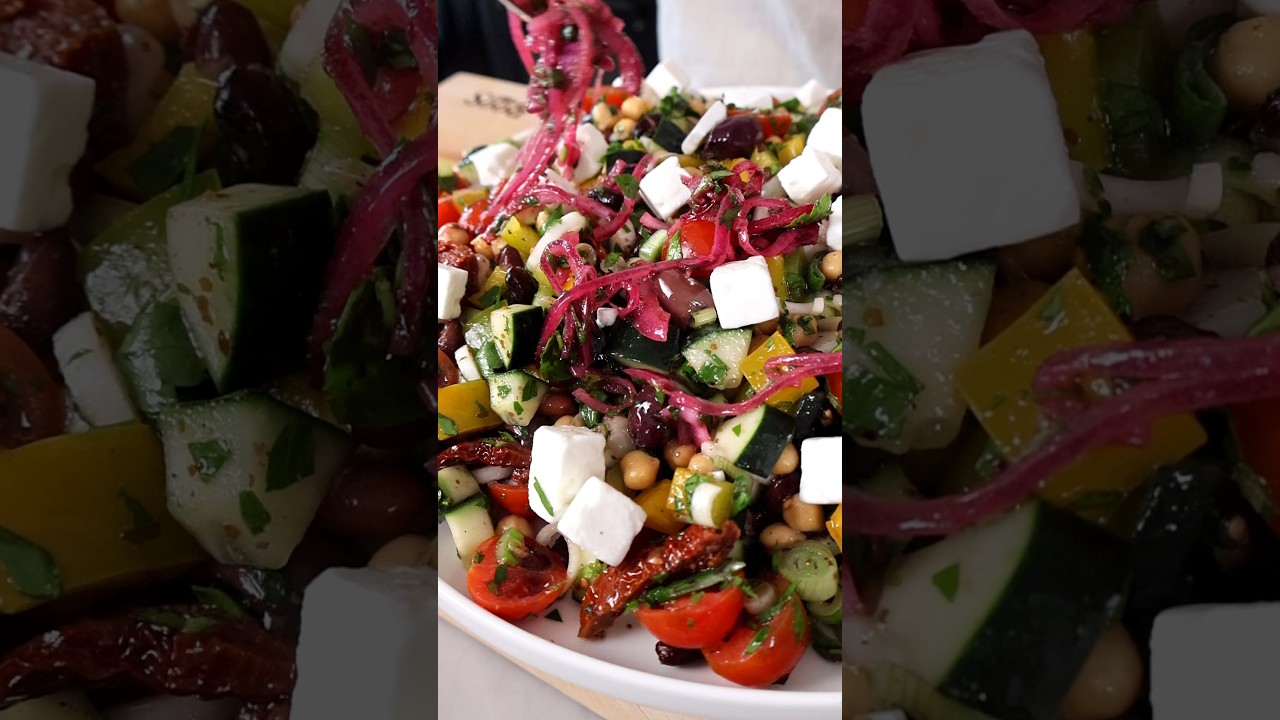
“Most Mediterranean salads disappoint because they're built backward — dressed too early, cut too unevenly, and assembled with whatever olives were on sale. The result is a watery bowl of indistinct vegetables that tastes like it's apologizing for existing. The fix is cheap and fast: uniform cuts so everything finishes in the same bite, a properly emulsified dressing that clings instead of pools, and a five-minute rest that transforms separate ingredients into an actual dish.”
Why This Recipe Works
A Mediterranean salad should not require a recipe. It is vegetables, cheese, olives, and a dressing — four categories of ingredients that have been combined in coastal Southern Europe for centuries. And yet most attempts at home produce something that tastes vaguely damp and indistinct, like someone described the salad to you over the phone and you tried to reconstruct it from memory.
The problem is almost never the ingredients. It's the execution of three small things that nobody thinks to explain.
The Cut Problem
Everything in this salad should be approximately the same size. Half an inch is the target. This is not a stylistic preference — it's a flavor delivery requirement. When your cucumber pieces are an inch wide and your tomato halves are the size of a marble and your onion slices are three inches long, you never get all three in the same bite. You get a cucumber bite, then an olive bite, then a feta crumble, then a chickpea. These are fine individually. They're remarkable together. A sharp chef's knife is the only tool standing between you and uniform cuts that actually make the salad work as a unified dish.
The Dressing Mistake
Most home cooks pour olive oil and lemon juice over the salad and call it dressed. What they've actually done is applied two immiscible liquids that will immediately separate and collect at the bottom of the bowl, coating the bottom vegetables in greasy acid while the top ingredients get nothing. A dressing requires an emulsifier — something that forces oil and water to stay suspended together. The Dijon mustard in this recipe is that emulsifier. Whisk the mustard into the lemon juice first until it's fully incorporated, then stream in the olive oil while whisking continuously. The result is a slightly thickened, cohesive dressing that clings to every vegetable surface instead of abandoning them.
The quality of the olive oil matters more here than in any application where it's cooked. Heat transforms flavor; it can cover flaws. Cold dressings expose everything. Use a genuine extra virgin oil in a dark bottle — the difference in the finished salad is not subtle.
The Rest
Five minutes at room temperature after tossing is the step most recipes omit because it sounds like waiting for no reason. It isn't. Raw garlic has an aggressive, acrid edge that softens noticeably after even brief contact with acid. The lemon juice is doing the work in those five minutes, rounding out the garlic and giving the dressing time to penetrate the chickpeas rather than just coat their surface. The herb flavor also deepens as the parsley and mint begin releasing their oils into the surrounding liquid.
Don't exceed five minutes. Past that window, the cucumbers and tomatoes start releasing their water into the dressing and diluting everything you just built.
The Pita Chip Rule
Crushed pita chips go on last. After plating. Every time. Mixed into the salad body even two minutes before serving, they absorb moisture and turn to wet starch. Their entire purpose is textural contrast — the brief crunch against the soft feta and yielding chickpeas. That contrast disappears within seconds if they're dressed. Treat them like croutons on a Caesar: they are a garnish, not an ingredient.
The chickpeas are non-negotiable in a different direction. They are the structural protein of this salad. Without them, you have a light vegetable side. With them, you have something that can function as a main course — 13 grams of protein per serving, substantial enough to eat for lunch without needing anything else. Swap the variety if you want (white beans and lentils both work), but don't remove the legume entirely unless you're explicitly serving this as a side dish.
Everything else is forgiving. The herb ratio can shift. The olive variety can change. The cheese can become goat cheese or ricotta salata. The architecture holds as long as you cut uniformly, emulsify the dressing, and dress at the last possible moment.
Where Beginners Mess This Up
Before we start, read this. These are the 4 reasons your easy mediterranean salad (no-cook weeknight hero) will fail:
- 1
Dressing the salad too early: Salt draws moisture out of tomatoes and cucumbers within minutes. A salad dressed 20 minutes before serving becomes a puddle. Dress immediately before eating, or keep components separate if prepping ahead. The five-minute rest in the recipe is intentional — any longer and the cucumbers start weeping.
- 2
Uneven cuts: When your cucumber is in half-inch dice but your tomatoes are whole and your onion is in thick rings, you never get all three in the same bite. Uniform sizing — everything roughly half an inch — means every forkful has the full flavor architecture. This is the difference between a salad that tastes complete and one that tastes like a parts list.
- 3
Under-emulsifying the dressing: Pouring olive oil and lemon juice over the salad separately is not a dressing — it's just oil and acid that slide off the vegetables and collect at the bottom of the bowl. Whisk the mustard into the lemon juice first, then stream in the oil. The Dijon is the emulsifier that keeps everything suspended and coating.
- 4
Using low-quality olive oil: This dressing has four ingredients. The olive oil is half the flavor. Grocery store 'light' olive oil or anything in a clear bottle that's been on a shelf in sunlight is already oxidized and tastes like nothing. Use extra virgin, dark bottle, and spend the extra three dollars. It is not optional here.
The Video Reference Library
Want to see it in action? Here are the exact videos we analyzed and combined to build this foolproof recipe translation:
The primary reference video for this recipe. Clear breakdown of the dressing emulsification technique and assembly order.
🛠️ Core Equipment
- Large mixing bowlYou need room to toss without launching ingredients across the counter. A too-small bowl is the reason half the salad ends up on the cutting board.
- Small whisk or forkFor emulsifying the dressing. The mustard needs to be worked into the lemon juice before oil is added, and you can't do that by shaking a jar without creating foam.
- Sharp chef's knifeDull knives crush tomatoes instead of cutting them, which releases their juice directly into the bowl before the salad is even assembled. A sharp blade gives you clean cuts that hold their shape.
- Salad servers or two forksFor tossing without bruising. Hands work but warm hands accelerate wilting. Two forks give you control without adding body heat to cold vegetables.
Easy Mediterranean Salad (No-Cook Weeknight Hero)
🛒 Ingredients
- ✦2 cups cherry tomatoes, halved
- ✦1 large English cucumber, diced into 1/2-inch pieces
- ✦1 red bell pepper, cored and chopped
- ✦1 cup Kalamata olives, pitted and halved
- ✦1 can chickpeas, drained and rinsed
- ✦1 cup crumbled feta cheese
- ✦1/2 medium red onion, thinly sliced
- ✦1/4 cup fresh parsley, finely chopped
- ✦2 tablespoons fresh mint leaves, torn
- ✦2 tablespoons fresh oregano, chopped
- ✦1/4 cup extra virgin olive oil
- ✦3 tablespoons fresh lemon juice
- ✦2 cloves garlic, minced very fine
- ✦1 teaspoon Dijon mustard
- ✦1/2 teaspoon sea salt
- ✦1/4 teaspoon black pepper
- ✦1/4 teaspoon red pepper flakes
- ✦2 tablespoons whole grain pita chips, crushed
👨🍳 Instructions
01Step 1
Combine the halved cherry tomatoes, diced cucumber, and chopped red bell pepper in a large mixing bowl.
02Step 2
Add the pitted Kalamata olives, drained chickpeas, crumbled feta, and thinly sliced red onion to the bowl.
03Step 3
In a small bowl, whisk the Dijon mustard into the fresh lemon juice until fully incorporated. Then stream in the extra virgin olive oil while whisking continuously until the dressing emulsifies and looks slightly thickened.
04Step 4
Season the dressing with sea salt, black pepper, and red pepper flakes. Taste it before it hits the salad — it should be bright, slightly sharp, and noticeably salty.
05Step 5
Add the minced garlic to the dressing and whisk once more to combine.
06Step 6
Pour the dressing over the vegetables and chickpeas. Fold in the chopped parsley, torn mint, and fresh oregano.
07Step 7
Toss everything together with two forks or salad servers until all ingredients are evenly coated, about 1 minute.
08Step 8
Let the salad rest uncovered at room temperature for 5 minutes.
09Step 9
Give the salad one final gentle toss to redistribute the dressing that has settled to the bottom.
10Step 10
Serve in bowls or on plates. Top each portion with a pinch of crushed pita chips immediately before serving so they retain their crunch.
Nutrition Per Serving
Estimates based on standard preparation. Adjustments alter macros.
🔄 Substitutions
Instead of Kalamata olives...
Use Castelvetrano olives
Sweeter, butterier, and significantly less salty. The brine flavor is much more subtle. Good choice if someone at the table finds Kalamatas too aggressive.
Instead of Crumbled feta cheese...
Use Crumbled goat cheese or ricotta salata
Goat cheese is tangier and creamier — it partially melts into the dressing and creates a richer texture. Ricotta salata is firmer and milder, closer to feta's crumble.
Instead of Canned chickpeas...
Use Cooked white beans or lentils
White beans are creamier and more neutral. Lentils add an earthier flavor. Both work — just ensure they're fully drained and patted dry so they don't water down the dressing.
Instead of Dijon mustard...
Use Tahini
Swapping Dijon for tahini shifts the dressing from sharp and bright to nutty and rich. Thin the tahini with a splash of water before whisking into the lemon juice, as it's thicker than mustard.
🧊 Storage & Reheating
In the Fridge
Store undressed components in separate airtight containers for up to 3 days. Once dressed, the salad is best eaten within 2 hours — cucumbers and tomatoes release water rapidly after that.
In the Freezer
Not suitable for freezing. The vegetables lose all texture when thawed.
Reheating Rules
This salad is not reheated. Serve cold or at room temperature. If pulled from the fridge, let it sit for 10 minutes before eating — cold dulls flavor perception and the dressing will have solidified slightly around the olive oil.
❓ Frequently Asked Questions
Why does my Mediterranean salad get watery?
Salt draws moisture out of tomatoes and cucumbers, and the dressing accelerates this. The fix is to dress the salad as close to serving time as possible. If prepping ahead, keep all components separate and combine only when ready to eat.
Can I make this ahead for meal prep?
Yes, but with a hard rule: keep the dressing separate until you're ready to eat. Store the chopped vegetables, chickpeas, olives, and feta together, and the dressing in a small jar. Combine at mealtime. Pre-dressed, it holds for about 2 hours before getting soggy.
Is this the same as a Greek salad?
Similar but not identical. Traditional Greek salad (Horiatiki) uses whole Kalamata olives, large tomato chunks, no chickpeas, and no herbs beyond oregano. This version adds chickpeas for protein, uses multiple fresh herbs, and includes a Dijon-emulsified vinaigrette instead of a plain oil-and-acid drizzle.
Can I add protein to make this a full meal?
Chickpeas already provide plant-based protein, but if you want animal protein, grilled chicken, seared shrimp, or canned tuna all work cleanly. Add after tossing so they sit on top rather than getting broken up during mixing.
What's the best olive oil for this dressing?
Extra virgin, dark bottle, recent harvest date if visible. The dressing is uncooked, which means every quality flaw in the oil is fully exposed. This is not the place for the cheap bottle. Greek, Spanish, or Italian EVOO are all solid. Avoid 'light' olive oil — it's refined, not nutritionally lighter, and it tastes like nothing.
How do I keep the red onion from being too harsh?
Soak the sliced onion in cold water for 10 minutes before adding it to the salad. This leaches out the sulfur compounds responsible for the sharp, lingering bite without removing the crunch or the onion flavor itself. Drain thoroughly before using.
The Science of
Easy Mediterranean Salad (No-Cook Weeknight Hero)
We turned everything on this page into a beautiful, flour-proof PDF cheat sheet. Print it out, stick it to your fridge, and never mess up your easy mediterranean salad (no-cook weeknight hero) again.
*We'll email you the high-res PDF instantly. No spam, just perfectly cooked meals.
AlmostChefs Editorial Team
We translate the internet's most popular cooking videos into foolproof, beginner-friendly written recipes. We analyze multiple methods, test them in our kitchen, and engineer a single "Master Recipe" that gives you the best possible result with the least possible stress.