Classic American Meatloaf (The Tender Crumb Formula)
A savory, deeply satisfying ground beef loaf with a milk-soaked breadcrumb panade for perfect moisture and a caramelized ketchup-brown sugar glaze. We broke down the most common home cook mistakes to deliver a foolproof weeknight dinner that holds together, slices clean, and tastes like it took all day.
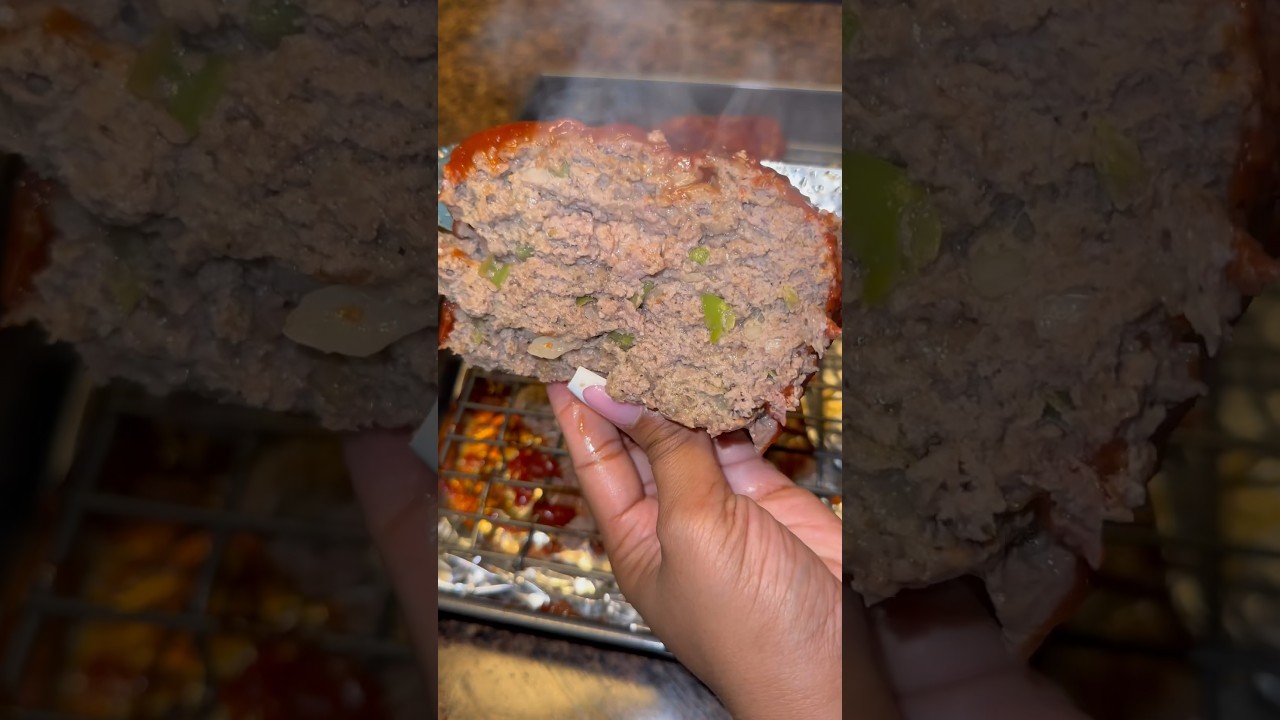
“Most meatloaf fails before it ever hits the oven. Overworked meat, wrong ratio of binder, no resting time — the result is a dense gray brick that crumbles on the plate and dries out by the second serving. This recipe fixes every one of those problems systematically. The panade keeps it moist. The gentle fold keeps it tender. The two-stage glaze keeps it from looking like cafeteria food.”
Why This Recipe Works
Meatloaf's reputation as bland, dry, cafeteria-grade food is not the dish's fault. It's the result of decades of people treating it like a casserole — dump everything in, hope for the best, serve from the pan. The actual technique behind a good meatloaf is specific, sequential, and grounded in real food science. Get it right and you have one of the most satisfying weeknight dinners in the American repertoire. Get it wrong and you get Tuesday night at a school gymnasium.
The Panade Is the Foundation
The term panade sounds like it belongs in a French cooking school, but the concept is brutally simple: breadcrumbs soaked in milk until they form a cohesive paste. This mixture does the work that ground beef cannot do alone — it holds moisture against the meat proteins during the long bake, preventing them from seizing and squeezing out all their liquid.
Without a panade, here is what happens: ground beef at 375°F contracts as it heats, the proteins tighten, and the internal moisture has nowhere to go but out. You get a firm, dry loaf with a puddle of gray liquid on the pan. With a properly hydrated panade, the breadcrumb starches absorb and retain that moisture, releasing it slowly back into the meat as the loaf rests. The breadcrumbs are not filler. They are structural.
Mixing Is a One-Way Street
Overworked ground beef cannot be fixed. Once you've kneaded the meat into a tight, homogeneous paste, you've activated the myosin proteins into a binding matrix that won't relax during baking. The result is a dense, rubbery loaf that bounces back when you press it.
The correct motion is a fold — press, turn, press, turn — for no more than 15-20 seconds total. The moment you can no longer see large dry streaks of egg or breadcrumb, stop. You will be tempted to keep going because it won't look perfectly uniform. Resist. Uniformity is the enemy of tenderness.
The Two-Stage Glaze
Ketchup and brown sugar applied at the start of baking will caramelize rapidly on the hot surface and then keep cooking for an hour until they approach something closer to carbon than caramel. The solution is timing: bake the loaf uncovered for the first 40 minutes to develop the crust structure, then apply the glaze for the final 15-20 minutes.
This gives the ketchup-sugar mixture exactly enough heat exposure to do its job — caramelizing into a sticky, glossy, sweet-tangy lacquer — without burning. The apple cider vinegar in the glaze is not optional seasoning. It provides the acid that balances the sweetness and prevents the glaze from tasting like candy applied to dinner.
The Shape Changes the Outcome
A rimmed baking sheet with parchment is the correct vessel. Loaf pans trap steam against the sides and bottom, producing a soft exterior and a top-crust-only loaf. Open-air baking lets heat circulate around the entire loaf, creating a proper crust on all four sides. This is not a small difference — it changes the texture gradient of every slice from edge to center.
Shape the loaf to roughly 8 by 5 inches. Too long and it dries before the center is cooked. Too short and thick and the center hits temperature after the outside is overdone. The dimensions matter. Use a meat thermometer and stop guessing.
Rest Is Not Optional
Pull the loaf at 160°F internal temperature and do not touch it for at least 5 minutes. The proteins are still contracting as they cool from their peak heat. During the rest, they relax and reabsorb the accumulated juices back into the loaf. Slice immediately and those juices run onto the cutting board. Slice after resting and they stay where they belong — inside every slice. This single step is the difference between a moist meatloaf and a dry one, and it costs you nothing but patience.
Where Beginners Mess This Up
Before we start, read this. These are the 4 reasons your classic american meatloaf (the tender crumb formula) will fail:
- 1
Overmixing the meat: Ground beef is not bread dough. The more you work it, the tighter the protein strands bind together, and the denser and tougher the final loaf. Mix for 15-20 seconds maximum — just until the ingredients are distributed. Visible streaks of egg or breadcrumb are fine. They'll disappear in the oven.
- 2
Skipping the panade: The milk-soaked breadcrumb mixture (called a panade) is not filler — it is the moisture architecture of the entire loaf. The breadcrumbs absorb liquid and hold it against the meat proteins during baking, preventing them from squeezing out all their moisture. Skipping it or adding dry breadcrumbs without soaking produces a loaf that shrinks, cracks, and dries out.
- 3
Not using a meat thermometer: Meatloaf doneness cannot be judged by color or timing alone. Every oven runs differently, every loaf is shaped slightly differently. The only reliable target is 160°F internal temperature in the thickest part. Pull it at 158°F and the carry-over heat will take it the rest of the way during rest.
- 4
Cutting too soon: Slicing immediately after pulling from the oven releases all the accumulated juices onto the cutting board. A 5-10 minute rest lets those juices redistribute back into the meat fibers. This is the difference between a moist slice and a dry slice sitting in a puddle.
The Video Reference Library
Want to see it in action? Here are the exact videos we analyzed and combined to build this foolproof recipe translation:
The source video for this recipe's core technique. Clear breakdown of the panade method and two-stage glazing approach that prevents the glaze from burning before the center is done.
🛠️ Core Equipment
- Rimmed baking sheet with parchmentBaking on a flat sheet (not a loaf pan) lets heat circulate around all four sides of the loaf, producing an even crust rather than a soft, steamed exterior. Parchment prevents sticking and makes cleanup effortless.
- Instant-read meat thermometerThe single most important tool for meatloaf. Internal temperature is the only reliable indicator of doneness. Aim for 160°F at the thickest point.
- Pastry brushFor applying the glaze evenly across the loaf surface in the final baking stage. A spoon works but tends to pool glaze unevenly and disrupts the surface crust.
- Large mixing bowlYou need room to fold without compressing the meat against the bowl sides. A bowl that's too small forces you to press and overwork.
Classic American Meatloaf (The Tender Crumb Formula)
🛒 Ingredients
- ✦2 pounds ground beef
- ✦3/4 cup breadcrumbs
- ✦1/4 cup whole milk
- ✦2 large eggs
- ✦1 medium yellow onion, finely diced
- ✦1/2 cup red bell pepper, finely diced
- ✦3 cloves garlic, minced
- ✦2 tablespoons Worcestershire sauce
- ✦1 tablespoon yellow mustard
- ✦1/4 cup grated Parmesan cheese
- ✦1 1/2 teaspoons kosher salt
- ✦1/2 teaspoon freshly ground black pepper
- ✦1/2 cup ketchup
- ✦2 tablespoons brown sugar
- ✦1 tablespoon apple cider vinegar
👨🍳 Instructions
01Step 1
Preheat your oven to 375°F and line a rimmed baking sheet with parchment paper.
02Step 2
Combine the breadcrumbs and milk in a small bowl, stirring until fully moistened and the mixture resembles wet sand, about 1 minute. Let sit for 2 minutes.
03Step 3
Place the ground beef in a large mixing bowl and gently break it apart with your fingers without pressing or kneading.
04Step 4
Add the soaked breadcrumb mixture, eggs, diced onion, diced bell pepper, minced garlic, Worcestershire sauce, mustard, Parmesan cheese, salt, and pepper to the bowl.
05Step 5
Fold the ingredients together with your hands using a gentle pressing motion until just combined, about 15-20 seconds. Stop before it looks fully uniform.
06Step 6
Transfer the meat mixture to the prepared baking sheet and shape into a compact loaf approximately 8 inches long and 5 inches wide. Don't pack it tightly — gentle shaping only.
07Step 7
Bake uncovered for 35-40 minutes until the top is lightly browned and beginning to firm.
08Step 8
While the meatloaf bakes, whisk together the ketchup, brown sugar, and apple cider vinegar in a small bowl until the sugar is mostly dissolved.
09Step 9
Remove the meatloaf from the oven after 40 minutes and spread the glaze evenly across the top surface using a pastry brush.
10Step 10
Return to the oven and bake for an additional 15-20 minutes until the glaze is caramelized and sticky, and the internal temperature reads 160°F in the thickest part.
11Step 11
Remove from the oven and rest on the baking sheet, untouched, for 5-10 minutes before slicing.
12Step 12
Slice into 1-inch portions with a sharp knife and serve warm.
Nutrition Per Serving
Estimates based on standard preparation. Adjustments alter macros.
🔄 Substitutions
Instead of Ground beef...
Use Ground beef and pork blend (1.5 lbs beef + 0.5 lbs pork)
Pork adds richness and fat content that keeps the loaf moist even if slightly overcooked. The most common restaurant trick for meatloaf that never dries out.
Instead of Breadcrumbs...
Use Old-fashioned rolled oats, pulsed briefly in a food processor
Use a 1:1 ratio. Oats create an equally moist crumb with a slightly nuttier flavor and add meaningful fiber. Works especially well if the loaf will be reheated the next day.
Instead of Whole milk...
Use Low-fat Greek yogurt (1/4 cup)
Adds a subtle tang that complements the Worcestershire and mustard. Increases protein slightly. Works identically in the panade — the acidity actually helps tenderize.
Instead of Ketchup and brown sugar glaze...
Use Tomato paste, 1 tablespoon maple syrup, 2 tablespoons balsamic vinegar
More complex, less sweet, with better depth. The balsamic provides acid and caramelizes beautifully. Use this if the standard glaze has always felt cloying to you.
🧊 Storage & Reheating
In the Fridge
Store slices in an airtight container for up to 4 days. Flavor deepens overnight as the spices continue to meld.
In the Freezer
Freeze individual slices wrapped tightly in plastic wrap, then foil, for up to 3 months. Label with date — meatloaf looks identical at every stage of freezer age.
Reheating Rules
Add a splash of beef broth or water to the container before reheating covered in the oven at 325°F for 15-20 minutes. The microwave works but dries the surface — cover with a damp paper towel if using it.
❓ Frequently Asked Questions
Why does my meatloaf always crack on top?
Cracking is caused by a combination of overmixing (which tightens the proteins) and insufficient binder. Make sure your panade is properly hydrated before mixing, and stop folding the moment the ingredients are distributed. A slightly domed, smooth top going into the oven will crack less than a flat one.
Can I make meatloaf in a loaf pan instead of on a baking sheet?
You can, but the result is fundamentally different. A loaf pan traps steam and produces soft sides and a top-crust only. A baking sheet lets heat circulate all the way around and creates a proper exterior crust on all four sides. The baking sheet method is superior for texture.
How do I know when the meatloaf is done without a thermometer?
You don't — not reliably. Color is misleading because the glaze darkens before the center is safe. Timing varies by oven. A meat thermometer is the only accurate tool here. 160°F internal temperature is the USDA-recommended safe endpoint for ground beef.
Why is my meatloaf falling apart when I slice it?
Two likely causes: not enough binder (the panade holds the loaf together) or slicing before resting. The loaf needs 5-10 minutes for the proteins to relax and the juices to redistribute. If it still falls apart after resting, increase the breadcrumb-to-meat ratio slightly next time.
Can I prep meatloaf the night before?
Yes, and it's one of the better make-ahead dinners. Shape the loaf, cover tightly in plastic wrap, and refrigerate overnight. Add 5-10 minutes to the initial baking time since it's going in cold. Make the glaze fresh the day of — it takes 2 minutes.
What sides actually work with meatloaf?
Mashed potatoes are the classic pairing for good reason — they absorb the pan drippings and glaze. Roasted green beans or braised cabbage provide necessary bitterness to cut through the richness. Avoid anything that competes with the glaze's sweetness, like sweet potatoes or glazed carrots.
The Science of
Classic American Meatloaf (The Tender Crumb Formula)
We turned everything on this page into a beautiful, flour-proof PDF cheat sheet. Print it out, stick it to your fridge, and never mess up your classic american meatloaf (the tender crumb formula) again.
*We'll email you the high-res PDF instantly. No spam, just perfectly cooked meals.
AlmostChefs Editorial Team
We translate the internet's most popular cooking videos into foolproof, beginner-friendly written recipes. We analyze multiple methods, test them in our kitchen, and engineer a single "Master Recipe" that gives you the best possible result with the least possible stress.