The 1-Hour Weekly Meal Prep (5 Balanced Lunches, Zero Stress)
A French-inspired batch cooking method that produces five complete, high-protein lunches in under 60 minutes using three sheet pans and one pot. We broke down the parallel cooking logic so everything finishes at the same time without babysitting a single component.
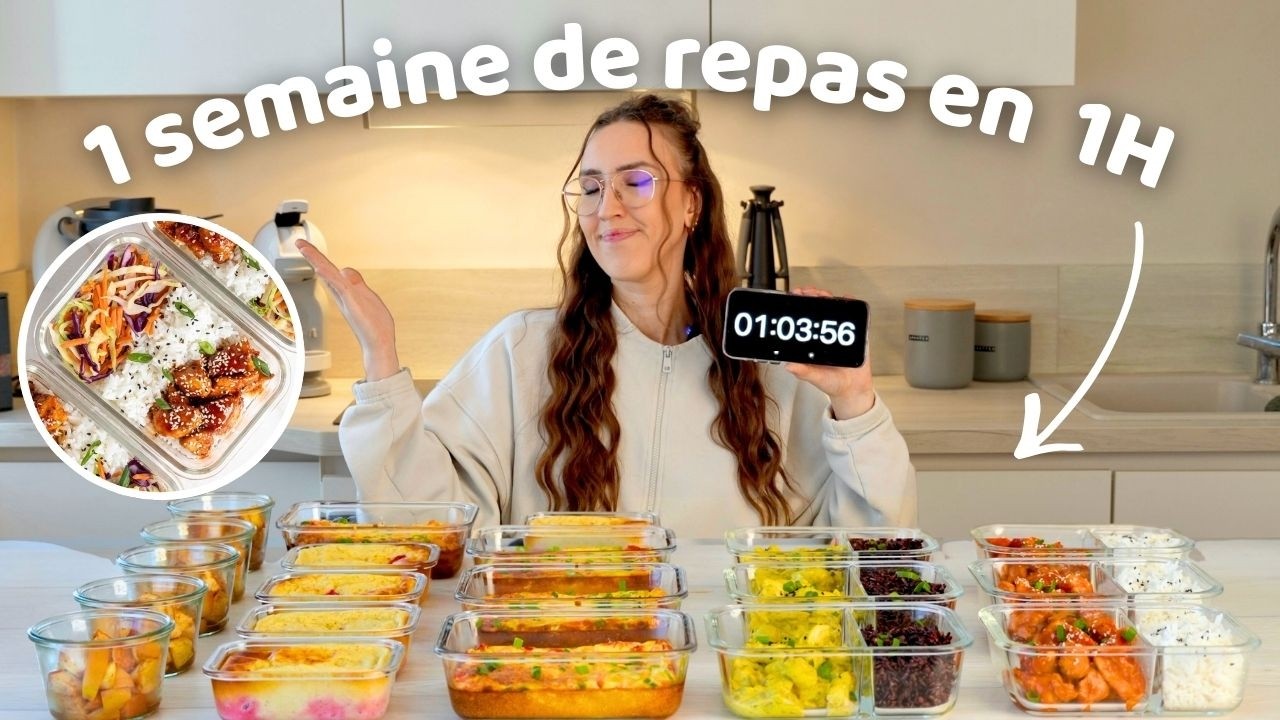
“Most meal prep fails at the planning stage. People batch-cook one thing, get bored by Wednesday, and order takeout anyway. This method solves the monotony problem by treating each container as a modular assembly — five identical foundations, five slightly different eating experiences depending on what you grab. The whole system takes 58 minutes. The parallel sheet pan logic is the reason it actually works.”
Why This Recipe Works
One hour. Five lunches. No complicated technique. The entire value of this method lives in the word simultaneously — and most people never use it.
The Parallel Cooking Logic
A conventional cook approaches a meal sequentially: roast the chicken, then the vegetables, then prep the grains. That's fine for dinner for two. For five days of lunch, it's a 90-minute commitment that kills the habit before it starts. This method treats the kitchen like a factory floor. All three sheet pans go into the oven at the same time. The rice goes on the stove at the same time. The eggs hit the skillet while everything else handles itself. Nothing waits for anything else.
The rack positioning is not arbitrary. The middle rack provides even, radiant heat from above and below — ideal for chicken breast, which needs consistent internal temperature without burning the exterior. The upper rack runs hotter at the top, which accelerates caramelization on the broccoli and peppers. The lower rack delivers bottom heat that drives moisture out of the sweet potatoes without scorching the tops. Put the wrong thing in the wrong rack and the timing falls apart.
The Moisture Problem (And Why It Destroys Most Meal Preps)
Soggy meal prep is almost always a cooling failure, not a cooking failure. Hot food sealed into airtight containers generates condensation on the inside of the lid that drips back onto the components. Rice becomes mushy. Roasted vegetables lose their edges. Eggs turn rubbery. The fix is five minutes on the counter — not in the container — before sealing. That's all. The steam escapes, the surface moisture dissipates, and the texture holds through Friday.
The vegetable sheet pan spacing serves the same anti-moisture logic. Crowded vegetables can't release their steam. It pools around them instead, and they end up boiled in their own water at 410°F rather than roasted. A visible gap between each piece is the difference between caramelized edges and limp produce by Tuesday.
Why Greek Yogurt Is the Last Step
The Greek yogurt isn't a garnish. It's a protein-dense, lactic acid-rich layer that does two things during the eating experience: it cools the reheated components and it acts as an improvised sauce that ties the rice, chicken, and vegetables together into something that feels intentional rather than assembled. But it only works as the final layer. Mixed into the rice, it dissolves. Heated in the microwave, it separates and turns watery. Add it after reheating, or use it cold straight from the fridge as a contrast temperature element.
The Chickpea Upgrade
The balsamic-seasoned chickpeas are easy to overlook in a recipe this size, but they're load-bearing. They add fiber, plant-based protein, and — after sitting in the balsamic overnight — a deep, slightly sweet acidity that cuts through the neutral rice base and makes the whole container taste more complex than its preparation time suggests. Don't skip the overnight seasoning step. The vinegar needs time to penetrate.
Building the Habit
The containers on the counter before cooking starts are not an organizational nicety. They're a cognitive anchor. When you can see the five stations, you portion evenly. Without them, the last container always ends up short on chicken or heavy on rice. Batch cooking is a spatial problem as much as a culinary one — and the people who do it consistently have already solved the spatial problem before they turn on the oven.
Where Beginners Mess This Up
Before we start, read this. These are the 4 reasons your the 1-hour weekly meal prep (5 balanced lunches, zero stress) will fail:
- 1
Cooking everything sequentially instead of simultaneously: If you roast the chicken first, then the vegetables, then the sweet potatoes, you're looking at 90 minutes minimum. The entire method depends on all three sheet pans entering a preheated oven at the same time. Position them correctly — chicken in the middle, vegetables up top, sweet potatoes on the bottom — and everything finishes in the same 28-32 minute window.
- 2
Not drying the chicken before roasting: Wet chicken steams instead of roasts. You want the surface moisture gone so the Maillard reaction can happen — that's the browning that adds flavor. Pat every breast completely dry with paper towels before seasoning. It takes 30 seconds and makes a noticeable difference by day three when you're eating it cold.
- 3
Overcrowding the vegetable sheet pan: Piled vegetables steam in their own moisture and turn soft and dull. Spread the broccoli, peppers, and zucchini in a true single layer with visible gaps between pieces. If your pan is too small, use two pans. Caramelized edges are the goal, and they require direct contact with hot metal and circulating air.
- 4
Skipping the cooling step before sealing containers: Hot food sealed into airtight containers traps condensation that makes rice mushy and vegetables soggy by day two. Let everything cool on the sheet pans for a full five minutes — or longer if your kitchen is warm — before portioning. The difference between a meal prep that tastes good on Friday versus one that's already declining by Tuesday comes down to this.
The Video Reference Library
Want to see it in action? Here are the exact videos we analyzed and combined to build this foolproof recipe translation:
The source method that inspired this recipe. Strong visual demonstration of the parallel cooking setup and portioning workflow. Watch for the sheet pan arrangement and how the components are distributed across containers.
🛠️ Core Equipment
- Three large rimmed sheet pansYou need enough surface area to cook everything simultaneously without crowding. Standard half-sheet pans (18x13 inches) are the right size. Thin, warped pans create hot spots that burn the edges while leaving the center underdone.
- Heavy-bottomed pot with tight-fitting lidBrown rice requires a stable, even simmer for 18-20 minutes without lifting the lid. A thin pot fluctuates in temperature and produces unevenly cooked grains. The lid seal traps steam that finishes the rice from above.
- Instant-read thermometerChicken breast reaches safe temperature (75°C / 165°F) well before it looks done on the outside. Guessing costs you either undercooked protein or dried-out chicken you'll be eating all week. Two seconds with a thermometer eliminates both outcomes.
- Five glass meal prep containers with locking lidsGlass doesn't absorb odors or stain from balsamic and spices the way plastic does. Locking lids prevent leaks when the containers stack in the fridge. Setting them out before you start portioning — as visual stations — prevents uneven distribution.
The 1-Hour Weekly Meal Prep (5 Balanced Lunches, Zero Stress)
🛒 Ingredients
- ✦1.75 kg boneless, skinless chicken breasts
- ✦500 g dry brown rice
- ✦800 g fresh broccoli florets
- ✦600 g red and yellow bell peppers, cut into chunks
- ✦500 g zucchini, sliced into half-moons
- ✦750 g sweet potatoes, cubed into 2-inch pieces
- ✦1 large yellow onion, finely diced
- ✦4 cloves garlic, minced
- ✦3 tablespoons extra virgin olive oil
- ✦15 large eggs
- ✦500 g plain Greek yogurt
- ✦2 cans chickpeas, drained and rinsed
- ✦2 teaspoons dried oregano
- ✦1.5 teaspoons dried thyme
- ✦1.5 teaspoons sea salt
- ✦1 teaspoon freshly ground black pepper
- ✦2 cups low-sodium vegetable broth
- ✦2 tablespoons balsamic vinegar
👨🍳 Instructions
01Step 1
Preheat the oven to 410°F (210°C). Set five glass meal prep containers on the counter as portioning stations before you touch a single ingredient.
02Step 2
Rinse the brown rice under cold water until the water runs clear, then combine with 2 cups water and 2 cups vegetable broth in a heavy-bottomed pot. Bring to a boil over high heat.
03Step 3
Reduce heat to low, cover with a tight-fitting lid, and simmer undisturbed for 18-20 minutes until all liquid is absorbed.
04Step 4
Pat the chicken breasts completely dry with paper towels. Arrange on one large sheet pan and season generously with half the salt, pepper, and oregano.
05Step 5
Toss broccoli, bell peppers, and zucchini in a large bowl with 1.5 tablespoons olive oil, half the thyme, and remaining salt and pepper. Spread in a single layer on a second sheet pan with visible gaps between pieces.
06Step 6
Toss cubed sweet potatoes with remaining 1.5 tablespoons olive oil and remaining oregano on a third sheet pan, distributing in a single layer.
07Step 7
Load all three sheet pans into the oven simultaneously: chicken on the middle rack, vegetables on the upper rack, sweet potatoes on the lower rack. Set a timer for 28-32 minutes.
08Step 8
While the oven runs, heat a non-stick skillet over medium heat. Scramble the eggs with minced garlic, diced onion, and a pinch of salt for 5-7 minutes until just set but still slightly creamy. Transfer to a bowl to cool.
09Step 9
Drain the rinsed chickpeas and season with half the remaining minced garlic, 2 tablespoons balsamic vinegar, and a light pinch of salt and pepper. Set aside.
10Step 10
Verify the chicken reaches an internal temperature of 75°C (165°F) with an instant-read thermometer. Confirm sweet potatoes are fork-tender and broccoli edges are caramelized. Remove all pans and cool for 5 minutes.
11Step 11
Cut the chicken into bite-sized pieces.
12Step 12
Divide the cooked rice evenly among the five containers as the base layer.
13Step 13
Distribute the chicken equally across all five containers.
14Step 14
Portion the roasted vegetables — broccoli, bell peppers, zucchini, and sweet potatoes — evenly across each container, aiming for color variety in each one.
15Step 15
Add a portion of scrambled eggs and seasoned chickpeas to each container.
16Step 16
Top each container with a dollop of Greek yogurt. Seal tightly and refrigerate for up to five days.
Nutrition Per Serving
Estimates based on standard preparation. Adjustments alter macros.
🔄 Substitutions
Instead of Chicken breast...
Use Lean ground turkey or baked tofu
Turkey roasts differently — form into portions and use a meat thermometer to 74°C. Tofu should be pressed dry and cubed before roasting at the same temperature for 25 minutes.
Instead of Brown rice...
Use Quinoa or farro
Quinoa cooks faster (15 minutes) and provides complete amino acids. Farro takes longer (25-30 minutes) but has a satisfying chew and strong nutty flavor that holds up cold.
Instead of Greek yogurt...
Use Unsweetened plant-based yogurt or cottage cheese
Cottage cheese is tangier with higher protein density. Plant-based yogurt works well if dairy is off the table — look for one with live cultures.
Instead of Sweet potatoes...
Use Roasted cauliflower or Brussels sprouts
Cauliflower reduces the carbohydrate load significantly. Brussels sprouts get remarkably crispy at 410°F and add a slightly bitter contrast that works well against the mild chicken.
🧊 Storage & Reheating
In the Fridge
Store sealed in glass containers for up to 5 days. The chickpeas and sweet potatoes hold up through the full five days. The scrambled eggs are best consumed by day three.
In the Freezer
Freeze without the Greek yogurt topping for up to 2 months. Thaw overnight in the fridge and add fresh yogurt before eating.
Reheating Rules
Microwave with the lid cracked for 2-3 minutes, stirring once at the midpoint. The Greek yogurt should be added after reheating — heating it causes it to separate.
❓ Frequently Asked Questions
Can I use white rice instead of brown?
Yes, but adjust the timing. White rice cooks in 15-18 minutes rather than 18-20, and uses slightly less liquid. Start the rice after the sheet pans are in the oven so they finish simultaneously.
Why do all three sheet pans go in at the same time?
The entire method is built around parallel cooking. If you cook sequentially, total time balloons to 90+ minutes. The rack positions — middle for chicken, upper for vegetables, lower for sweet potatoes — are chosen so each component gets the right heat profile simultaneously.
Is it safe to eat meal prepped eggs on day 5?
Technically yes if stored properly, but the texture degrades significantly. Scrambled eggs are best by day three. If you're prepping for a full five days, consider making a fresh batch of eggs midweek or replacing them with an extra portion of chickpeas.
Do I have to use glass containers?
No, but glass has meaningful advantages for a five-day prep. It doesn't absorb balsamic stains or chicken odors the way plastic does, and it reheats more evenly in the microwave. BPA-free plastic with locking lids is a workable alternative.
How do I keep the vegetables from getting soggy by day 3?
Two things matter: don't crowd the sheet pan (gaps allow moisture to escape during roasting), and let everything cool fully before sealing the containers. Hot food trapped under a lid creates condensation that accelerates sogginess. Five minutes of cooling time on the counter saves two days of texture.
Can I scale this up to 7 days instead of 5?
The limiting factor is food safety, not the recipe. Five days is the outer edge of safe refrigerated storage for cooked chicken and eggs. For seven days, prep in two batches — Sunday for Monday through Wednesday, Wednesday evening for Thursday through Saturday.
The Science of
The 1-Hour Weekly Meal Prep (5 Balanced Lunches, Zero Stress)
We turned everything on this page into a beautiful, flour-proof PDF cheat sheet. Print it out, stick it to your fridge, and never mess up your the 1-hour weekly meal prep (5 balanced lunches, zero stress) again.
*We'll email you the high-res PDF instantly. No spam, just perfectly cooked meals.
AlmostChefs Editorial Team
We translate the internet's most popular cooking videos into foolproof, beginner-friendly written recipes. We analyze multiple methods, test them in our kitchen, and engineer a single "Master Recipe" that gives you the best possible result with the least possible stress.