Matcha Done Right (Stop Ruining Your Green Tea)
A precise, obsession-worthy guide to making matcha at home — from ceremonial whisked bowls to cold lattes and baked goods. We broke down the most-watched YouTube methods to find exactly where home cooks go wrong and how to fix it in one technique.
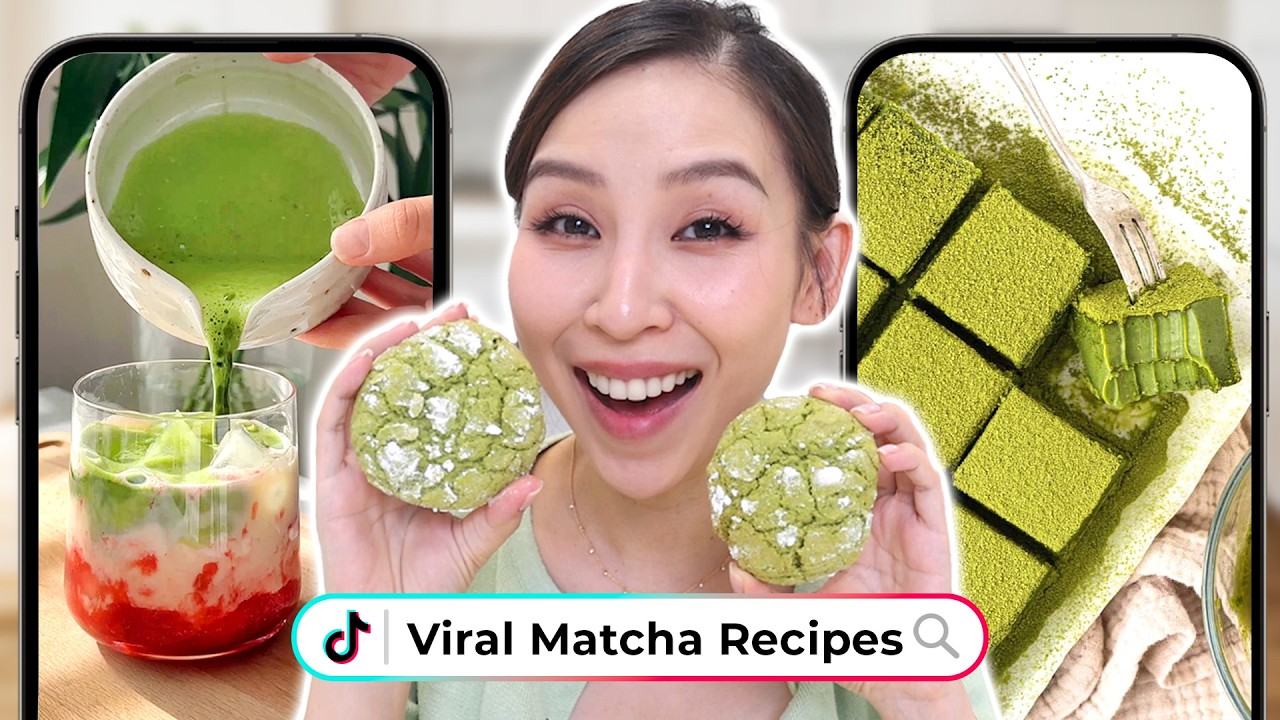
“Matcha is not just green tea with extra steps. It is powdered shade-grown tea ground to a particle size of 5-10 microns, and it behaves completely differently from any other form of tea. The reason most homemade matcha tastes bitter, grainy, or flat has nothing to do with the recipe — it has to do with water temperature, sifting, and the order of operations. Get those three things right and every matcha you make will be smooth, grassy, and slightly sweet with no bitterness. Get them wrong and you're drinking expensive grass water.”
Why This Recipe Works
Matcha is one of the most misunderstood ingredients in the modern kitchen. People buy it for the health benefits, make it once, taste something bitter and gritty, and conclude that either they don't like matcha or they did something wrong. They usually did something wrong — but the mistake is always the same one, and it's entirely fixable.
The Temperature Problem Is the Whole Problem
Every bitter matcha experience traces back to water that is too hot. Boiling water (212°F/100°C) does two things simultaneously: it scorches the chlorophyll and amino acids responsible for matcha's natural sweetness, and it accelerates the extraction of tannins — the astringent compounds that make your mouth feel dry and the tea taste like a mistake. The L-theanine that creates matcha's signature calm, focused energy is particularly heat-sensitive. At 175°F (80°C), it survives intact. At 212°F, it's gone within seconds.
This is not a subtle difference. The same ceremonial-grade matcha brewed at 212°F versus 175°F tastes like two entirely different products. One is bitter, one is sweet and grassy with a clean umami finish. A kitchen thermometer costs less than a single bag of quality matcha powder. It is the single highest-leverage purchase you can make for your morning routine.
The Sifting Step That Nobody Skips Twice
Matcha powder is ground to an average particle size of 5-10 microns — finer than most cosmetic powders. At that size, the particles create powerful electrostatic bonds with each other, forming dense clumps whenever they're exposed to air moisture. Pour water over unsifted matcha and those clumps immediately form a wet, compact core that whisking cannot penetrate. You'll find small green lumps at the bottom of your bowl no matter how long you whisk.
Sifting through a fine-mesh sifter breaks those bonds before water is introduced, spreading the particles into a loose, even layer that hydrates uniformly. It takes fifteen seconds. Anyone who has skipped it once and experienced the lumps does not skip it twice.
Why the Whisking Technique Is Not Decoration
The traditional chasen (bamboo whisk) is not a cultural affectation. Its 80-100 finely split tines are engineered to create micro-foam — a layer of tiny, dense bubbles that suspend the matcha particles evenly throughout the liquid and soften the mouthfeel dramatically. The W or M-pattern stroke — rapid, back-and-forth rather than circular — generates turbulence at the surface where foam forms, rather than pushing liquid in a vortex toward the edges.
A bamboo chasen produces foam so fine it resembles steamed milk foam. A regular whisk produces larger, coarser bubbles that collapse in under a minute. A handheld frother sits between the two and is perfectly adequate for daily latte production. If you're drinking matcha for ceremonial reasons or care about the full sensory experience, the chasen is worth owning. It is purpose-built for this specific task in a way no substitute fully replicates.
The Grade Question Has a Real Answer
The matcha industry uses "ceremonial" and "culinary" as marketing terms without standardized definitions, which creates confusion. The practical distinction is this: ceremonial-grade matcha uses the youngest leaves from the top of the plant, shade-grown to maximize chlorophyll and L-theanine. The result is a naturally sweet, complex powder that tastes complete when whisked with nothing but water. Culinary-grade matcha uses older, larger leaves and produces a more bitter, robust powder that holds up in baking, smoothies, and sweetened lattes — applications where the bitterness gets masked or becomes useful texture.
Drink culinary-grade matcha straight and you will not like matcha. This is not your fault. Use ceremonial grade for bowls and straight lattes, culinary grade for anything involving sugar, cream, or oven heat. The price difference reflects the quality difference, and it is accurate.
The Latte Architecture
For iced and hot lattes, the order of operations matters more than the ratio. Always whisk matcha with hot water first to fully emulsify the powder before adding milk. Pouring cold milk directly over matcha powder — a common shortcut — produces a separated, gritty drink where clumps of powder float in milk that never fully integrates. The hot-water-first technique creates a smooth, concentrated base that then disperses evenly into whatever liquid you add.
Oat milk is not the default choice arbitrarily. Its natural starch content creates a body and slight sweetness that complements matcha's umami without overwhelming it — a balance that thin nut milks and full-fat coconut milk both fail to achieve for different reasons. For hot lattes, steam the milk to 140°F rather than 160°F; the lower temperature keeps the delicate matcha flavor from being drowned by scalded dairy. Small adjustments. Dramatic results.
Where Beginners Mess This Up
Before we start, read this. These are the 4 reasons your matcha done right (stop ruining your green tea) will fail:
- 1
Using boiling water: Boiling water (212°F/100°C) scorches the catechins and amino acids in matcha, destroying the L-theanine that creates the calm, focused energy matcha is known for. It also releases tannins that make the tea aggressively bitter. The correct temperature is 160–175°F (70–80°C). If you don't have a thermometer, boil water and let it sit uncovered for 3-4 minutes.
- 2
Skipping the sift: Matcha powder clumps on contact with moisture. If you pour water over unsifted matcha, you get dense wet clumps that no amount of whisking will break down — they just become chewy lumps at the bottom of your bowl. Sifting takes 15 seconds and eliminates this completely. It is not optional.
- 3
Whisking in circles instead of a W or M shape: Circular whisking creates a vortex that pushes powder to the edges rather than emulsifying it into the water. The traditional chasen technique — rapid back-and-forth strokes in a W or M shape — generates the micro-foam that makes ceremonial matcha smooth and frothy. If you're using a milk frother instead of a chasen, use short bursts at the surface rather than deep submersion.
- 4
Using culinary-grade matcha for drinking straight: Culinary-grade matcha is designed to be baked or blended with milk and sweetener — its bitterness gets masked in those applications. Drink it straight and you'll wonder why anyone likes matcha. Ceremonial or premium-grade matcha has a naturally sweet, umami-forward flavor that needs no masking. The price difference is real but so is the quality gap.
The Video Reference Library
Want to see it in action? Here are the exact videos we analyzed and combined to build this foolproof recipe translation:
The most comprehensive overview of matcha techniques on YouTube — covers ceremonial preparation, lattes, and iced variants with clear close-ups of proper whisking form and the foam consistency you're aiming for.
A deep dive into traditional Japanese matcha preparation — useful for understanding the historical context behind the technique and why each step exists.
Step-by-step guide to making cafe-quality iced matcha lattes at home, with tips on layering, sweetener ratios, and milk temperature for the cleanest pour.
🛠️ Core Equipment
- Bamboo chasen (matcha whisk)The 80–100 tines on a traditional chasen create micro-foam that no other tool replicates. A regular whisk leaves the matcha flat and under-emulsified. A frother works as a backup but produces larger, coarser bubbles.
- Chawan (matcha bowl) or wide-bottomed ceramic bowlThe wide surface area gives the chasen room to make proper whisking strokes. A tall narrow mug physically prevents the W-motion technique — you end up just stirring instead of aerating.
- Fine-mesh sifterEliminates clumps before they make contact with water. This single tool is the difference between smooth matcha and lumpy matcha, and it costs less than a single bag of good powder.
- Instant-read kitchen thermometerTemperature precision is the most critical variable in matcha. Eyeballing it is guesswork. A thermometer removes the guesswork entirely and costs under ten dollars.
Matcha Done Right (Stop Ruining Your Green Tea)
🛒 Ingredients
- ✦2 teaspoons ceremonial-grade matcha powder, sifted
- ✦2 ounces water, heated to 175°F (80°C)
- ✦6 ounces oat milk, steamed or frothed (for latte version)
- ✦1-2 teaspoons maple syrup or honey (optional)
- ✦1/2 teaspoon pure vanilla extract (optional, for latte)
- ✦Pinch of sea salt (draws out sweetness, optional)
- ✦Ice cubes (for iced variant)
👨🍳 Instructions
01Step 1
Sift 2 teaspoons of matcha powder through a fine-mesh sifter directly into your chawan or wide-bottomed bowl. Break up any remaining clumps with the back of a spoon.
02Step 2
Heat water to exactly 175°F (80°C). If you don't have a thermometer, bring water to a boil and let it rest uncovered for 3-4 minutes.
03Step 3
Pour 2 ounces of the heated water over the sifted matcha powder.
04Step 4
Using a bamboo chasen, whisk in rapid back-and-forth strokes in a W or M pattern — not circular — for 20-30 seconds until a uniform frothy layer forms on the surface.
05Step 5
For a ceremonial bowl: drink as-is. The flavor should be grassy, slightly sweet, and smooth with no bitterness.
06Step 6
For a hot matcha latte: froth 6 ounces of oat milk to 140°F (60°C). Add vanilla and maple syrup to the milk if using. Pour the frothed milk slowly over the whisked matcha base and stir gently.
07Step 7
For an iced matcha latte: fill a glass with ice. Add sweetener and a splash of cold water to the matcha base and whisk briefly. Pour over ice, then top with cold oat milk.
08Step 8
Taste before adding sweetener. Ceremonial-grade matcha has natural sweetness that disappears under too much syrup. Start with half a teaspoon and adjust.
Nutrition Per Serving
Estimates based on standard preparation. Adjustments alter macros.
🔄 Substitutions
Instead of Ceremonial-grade matcha...
Use Premium culinary-grade matcha
Works in lattes where milk and sweetener mask the extra bitterness. Do not use for straight ceremonial bowls — the flavor difference is significant and not worth the savings.
Instead of Oat milk...
Use Whole dairy milk or barista almond milk
Whole milk creates a richer, creamier latte with more body. Barista almond milk is formulated to froth without separating — regular almond milk will curdle in hot applications.
Instead of Maple syrup...
Use Honey, agave, or simple syrup
All work equally well. Honey adds a floral note that pairs nicely with matcha's grassiness. Simple syrup dissolves most cleanly in cold applications where granulated sugar would remain gritty.
Instead of Bamboo chasen...
Use Handheld milk frother
Produces acceptable results for daily lattes. Use short surface bursts rather than deep submersion to build micro-foam. The chasen is worth purchasing if you drink matcha more than twice a week.
🧊 Storage & Reheating
In the Fridge
Whisked matcha is best consumed immediately. The foam collapses within minutes and the flavors oxidize quickly. Do not pre-make matcha.
In the Freezer
Matcha powder can be stored in an airtight container in the freezer for up to 6 months with minimal flavor loss. Bring to room temperature before opening to prevent condensation from forming on the powder.
Reheating Rules
Do not reheat matcha. The heat further degrades the amino acids. If your matcha has gone cold, make a fresh bowl — it takes less than 5 minutes.
❓ Frequently Asked Questions
Why does my matcha taste bitter?
Almost always water temperature. If you used boiling water (212°F), the heat destroys the L-theanine and amplifies the tannins, producing aggressive bitterness. Brew at 175°F and the difference is dramatic. The second most common cause is culinary-grade powder used for straight drinking — it's simply not designed for that application.
What is the difference between ceremonial and culinary grade matcha?
Ceremonial grade comes from the youngest, most tender tea leaves at the top of the plant, harvested in early spring. It's shade-grown for 3-4 weeks before harvest to spike chlorophyll and L-theanine content, which produces the sweet, umami-forward flavor. Culinary grade uses older leaves and lower-shade periods, resulting in a more bitter, robust powder that holds up in baked goods and milk-based drinks but tastes harsh when consumed straight.
Do I need a bamboo chasen or can I use a regular whisk?
A regular whisk works but produces significantly coarser, larger bubbles rather than the fine, persistent micro-foam a chasen creates. For lattes, a handheld frother is a reasonable substitute. For ceremonial preparation, the chasen is worth owning — a quality one costs about the same as a single ceremonial bowl at a tea shop.
Why is my matcha clumping even after whisking?
You skipped the sift. Matcha powder has a tendency to form dense clumps on contact with moisture, and no amount of whisking will fully break them down once wet. Sifting before adding any liquid is non-negotiable. It takes 15 seconds and solves this problem completely.
Can I make matcha with cold water?
Cold water does not hydrate matcha properly — the powder won't emulsify and you'll get a gritty, uneven mixture. Always whisk with 175°F water first, even if making an iced drink. You then pour that concentrated whisked base over ice and cold milk.
How much caffeine is in matcha compared to coffee?
A standard serving of matcha (1-2 teaspoons) contains roughly 70-80mg of caffeine — about half a cup of drip coffee. However, matcha's L-theanine content modulates caffeine absorption, producing a slower, steadier energy curve without the spike and crash associated with coffee. This is why matcha drinkers often describe the effect as 'calm focus' rather than 'wired.'

The Science of
Matcha Done Right (Stop Ruining Your Green Tea)
We turned everything on this page into a beautiful, flour-proof PDF cheat sheet. Print it out, stick it to your fridge, and never mess up your matcha done right (stop ruining your green tea) again.
*We'll email you the high-res PDF instantly. No spam, just perfectly cooked meals.
AlmostChefs Editorial Team
We translate the internet's most popular cooking videos into foolproof, beginner-friendly written recipes. We analyze multiple methods, test them in our kitchen, and engineer a single "Master Recipe" that gives you the best possible result with the least possible stress.