Perfect Matcha Macarons with Buttercream Filling (Stop Cracking the Shells)
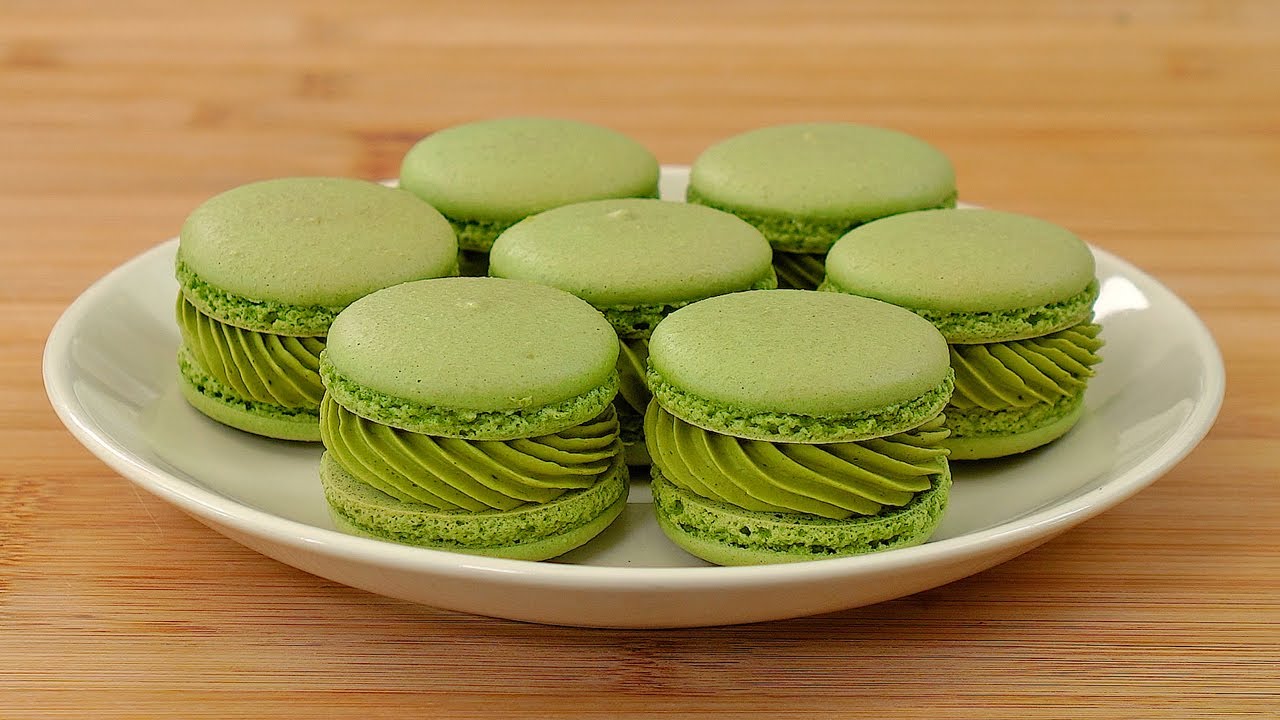
Delicate French meringue shells with a deep ceremonial matcha flavor, paired with a silky vanilla buttercream filling. We broke down the most common failure points — cracked tops, hollow feet, wrinkled surfaces — and engineered a method that produces consistent, glossy results even in a home kitchen.
“Macarons have a reputation for being difficult. That reputation is mostly earned by people who didn't measure their almond flour by weight, didn't rest the shells long enough before baking, or baked on a single sheet instead of double-panning. The macaron is not capricious — it is precise. Give it precision and it performs. Every cracked shell, hollow foot, or wrinkled top has a specific, diagnosable cause. We found them all.”
Why This Recipe Works
The macaron is the most honest pastry in existence. It tells you exactly what you did wrong by breaking in precisely the right place. Cracked top? You didn't let it rest. No feet? Your meringue was weak. Hollow interior? You pulled it too early. The shell is a diagnostic instrument, and once you learn to read it, you stop being afraid of it and start treating it as feedback. That shift — from fear to curiosity — is what separates people who make good macarons from people who try once, call it impossible, and buy them from a bakery instead.
The Meringue Foundation
Everything in a macaron shell starts with the meringue, and the meringue starts with the egg whites. Aged egg whites — separated 24 to 48 hours before use and left uncovered in the refrigerator — have lower surface tension and reduced moisture content than fresh whites. This means they whip faster, hold their structure longer, and produce a finer, more stable foam. Fresh whites work, but they have less margin for error. In a recipe with this little tolerance for deviation, margin matters.
The whipping stage requires more precision than most home bakers apply. Stiff peaks mean stiff — the tip should stand straight without curling when you pull out the whisk. More importantly, the meringue should be completely smooth between your fingers, with no trace of undissolved sugar. Sugar that hasn't fully dissolved into the meringue will weep moisture during resting, creating wet spots that prevent the skin from forming properly. Eight to ten minutes at high speed is not an estimate; it's the minimum.
The Physics of Macaronage
Macaronage is the step that intimidates people, and the intimidation is justified — it is genuinely the most skill-dependent part of the process. The goal is to deliberately deflate the whipped meringue to a specific, narrow consistency window. Under-fold and the batter holds too much air, puffing in the oven and cracking through the top. Over-fold and the gluten structure of the almond flour is overworked, producing batter that flows too freely, spreads flat on the pan, and bakes into thin, feetless discs with no interior texture.
The lava test is the only reliable measure. After every ten folds, lift the spatula and watch the batter fall. It should drop in a slow, unbroken ribbon — not a glob, not a stream, but a ribbon. Drop a small amount on a plate. At the correct consistency, the mound will flatten completely smooth in ten to fifteen seconds. Faster than that, you've gone too far. Slower, keep folding. This is not a feeling you develop instantly. Make the recipe three times and you will understand it deeply. Make it once and you might get lucky.
Why the Rest Matters
The 30-to-45-minute resting period after piping is where most shortcuts backfire. As the piped shells sit at room temperature, a dry membrane forms on the surface as moisture evaporates from the meringue. This membrane is structural — it is a physical barrier that, under baking heat, forces the expanding batter to find another exit. That exit is the foot. Without the membrane, steam punches straight up through the top, producing the cracked, footless shells that signal an impatient baker.
You can test readiness by touching the surface lightly. The shell should feel dry, matte, and completely non-sticky. In humid kitchens, this can take a full hour. In dry conditions, twenty-five minutes may suffice. Watch the shell, not the clock.
Double-Panning and Even Heat
The double sheet pan technique is the single most impactful equipment adjustment a home baker can make for macarons. A single thin pan conducts heat directly from the oven floor to the bottom of the shells, essentially frying the base before the top has time to set. The result is burned feet, hollow centers, and shells that stick stubbornly to the parchment. Stack two identical pans and the air gap between them acts as an insulating buffer, converting direct conductive heat into ambient radiant heat that surrounds the shell evenly from all sides.
Oven temperature calibration matters equally. Most home ovens run 15 to 25 degrees off from their indicated temperature, and macarons are cooked at 300°F — a narrow window where 25 degrees too hot produces browning and cracking, while 25 degrees too cool produces underbaked, sticky shells. An oven thermometer is inexpensive and eliminates this variable entirely.
The Maturation Rule
Fresh macarons taste like dry almond cookies with buttercream. Macarons after 12 hours of refrigerated assembly taste like what people mean when they say macarons — chewy, yielding shells with a slight resistance that gives way to a soft interior, the filling and shell merging into a single cohesive texture. This transformation is not optional. The buttercream absorbs moisture from the shell and softens it from the inside through a process called osmotic maturation. Skipping it is the equivalent of eating bread dough instead of bread. The recipe isn't done when the shells come out of the oven. It's done the following morning.
Where Beginners Mess This Up
Before we start, read this. These are the 4 reasons your perfect matcha macarons with buttercream filling (stop cracking the shells) will fail:
- 1
Skipping the macaronage test: Macaronage — the folding step where you deflate the meringue into the almond mixture — is the most technically demanding part of the process. Under-fold and the batter holds too much air, causing the shells to crack and dome. Over-fold and the batter runs flat with no feet. The correct consistency is lava-like: the batter should fall off the spatula in a thick, continuous ribbon and a mound should flatten out within 10-15 seconds. Test constantly during folding. Stop the moment it passes.
- 2
Not resting the piped shells: After piping, the shells must rest uncovered at room temperature for 30-45 minutes until a dry skin forms on the surface. This skin is what forces the rising batter to expand sideways into feet rather than cracking upward through the top. Bake too early and the shell surface is still wet, splitting open from internal steam pressure. You can test readiness by gently touching a shell — it should feel dry and not stick to your finger.
- 3
Using low-quality or high-moisture matcha: Culinary-grade matcha often contains more moisture and has a duller, more bitter flavor than ceremonial-grade. In a macaron shell — where the almond flour mixture must be bone-dry to work — extra moisture disrupts the meringue and produces unstable batter. Use ceremonial-grade or high-quality culinary matcha, and sift it with the almond flour to prevent clumping.
- 4
Baking on a single sheet pan: A single thin sheet pan transmits too much direct heat to the bottom of the shells, cooking them from below before the tops have time to set. This burns the feet and produces hollow interiors. Always double-pan — stack two identical sheet pans together. The air gap between them insulates the bottom shells and creates even, ambient heat that sets the whole macaron simultaneously.
The Video Reference Library
Want to see it in action? Here are the exact videos we analyzed and combined to build this foolproof recipe translation:
The primary reference video. Clear visual guides on macaronage consistency, the lava-ribbon test, and proper resting time before baking. Worth watching twice before starting.
Detailed walkthrough of the French meringue method with close-up footage of the correct stiff peak stage. Helpful for calibrating what the meringue should look like at each stage.
Systematic breakdown of the ten most common macaron failures with side-by-side comparisons of correct versus incorrect batter, resting, and baking. Essential for diagnosing problems.
🛠️ Core Equipment
- Kitchen scaleMacarons cannot be made by volume. Every component — almond flour, powdered sugar, egg whites, granulated sugar — must be weighed to the gram. A 5-gram deviation in egg white weight changes the entire hydration ratio of the batter.
- Stand mixer with whisk attachmentAchieving stiff, glossy meringue peaks requires sustained, high-speed whipping that hand mixers struggle to maintain consistently. The stand mixer also frees your hands for macaronage prep.
- Fine-mesh sieveAlmond flour and powdered sugar must be sifted together to remove any coarse almond pieces. Unsifted flour produces bumpy, pockmarked shells instead of the smooth domed surface you're aiming for.
- Double sheet pansTwo identical rimmed sheet pans stacked together insulate the shells from direct bottom heat. This single change eliminates one of the most common macaron failures — burnt feet and hollow interiors.
Perfect Matcha Macarons with Buttercream Filling (Stop Cracking the Shells)
🛒 Ingredients
- ✦100g blanched almond flour, sifted
- ✦180g powdered sugar, sifted
- ✦2 teaspoons ceremonial-grade matcha powder, sifted
- ✦100g aged egg whites (from approximately 3 large eggs), room temperature
- ✦1/4 teaspoon cream of tartar
- ✦100g granulated sugar
- ✦2 tablespoons water
- ✦1 teaspoon vanilla extract
- ✦Pinch of fine sea salt
- ✦225g unsalted butter, softened to room temperature
- ✦240g powdered sugar, sifted (for buttercream)
- ✦2-3 tablespoons heavy cream
- ✦1/2 teaspoon vanilla bean paste
- ✦Pinch of fine sea salt (for buttercream)
- ✦Optional: 1 teaspoon ceremonial matcha for dusting finished shells
👨🍳 Instructions
01Step 1
Age the egg whites by separating them 24-48 hours ahead. Store uncovered or loosely covered in the refrigerator, then bring to room temperature 1 hour before using.
02Step 2
Sift the almond flour, 180g powdered sugar, and matcha powder together into a large bowl. Discard any pieces that don't pass through the sieve. If more than 2 tablespoons of almond flour remains, process it briefly in a food processor and sift again.
03Step 3
Place the room-temperature egg whites in a clean, grease-free stand mixer bowl. Begin whipping on medium speed. When the whites start to foam, add the cream of tartar and increase to high speed.
04Step 4
Gradually add the granulated sugar one tablespoon at a time while the mixer runs. Continue whipping until the meringue holds stiff, glossy peaks — the tip should stand straight up without curling. This takes 8-10 minutes total.
05Step 5
Add the vanilla extract and a pinch of sea salt to the meringue. Whip for 30 more seconds to incorporate.
06Step 6
Pour the entire almond flour mixture over the meringue at once. Begin macaronage: using a flexible silicone spatula, fold and press the batter against the side of the bowl in a smearing motion. This intentionally deflates the meringue.
07Step 7
Transfer the batter to a piping bag fitted with a round tip (Wilton #12 or equivalent). Pipe 1.5-inch rounds onto parchment-lined double-stacked sheet pans, holding the bag perpendicular to the surface and releasing with a quick flick.
08Step 8
Let the piped shells rest at room temperature, uncovered, for 30-45 minutes. The shells are ready when they are dry to the touch and no longer stick to your finger.
09Step 9
Preheat the oven to 300°F (150°C). Bake the rested shells on the double-stacked pans for 12-14 minutes, rotating once at the halfway point.
10Step 10
Slide the parchment off the hot pan immediately and let the shells cool completely on the parchment before attempting to remove them. Fully cooled shells release cleanly; warm shells tear.
11Step 11
Make the buttercream: beat the softened butter in the stand mixer on high speed for 3-4 minutes until pale and fluffy. Add the sifted powdered sugar in three additions, beating well between each. Add the heavy cream, vanilla bean paste, and salt. Beat on high for 2 more minutes until silky.
12Step 12
Match the shells by size. Pipe or spoon buttercream onto the flat side of one shell and press a matching shell on top. The filling should reach just to the edge without overflowing.
13Step 13
Refrigerate the assembled macarons for at least 12 hours before serving. This maturation period allows the filling to soften the shells from the inside, producing the characteristic chewy texture.
Nutrition Per Serving
Estimates based on standard preparation. Adjustments alter macros.
🔄 Substitutions
Instead of Almond flour...
Use Hazelnut flour or sunflower seed flour
Hazelnut flour pairs exceptionally well with matcha and produces a slightly nuttier shell. Sunflower seed flour works for nut allergies but produces a greenish-gray shell due to chlorogenic acid reaction.
Instead of Unsalted butter (buttercream)...
Use Vegan butter (Miyoko's or Earth Balance)
Works well for a dairy-free version. Vegan butter is often saltier — reduce or omit the added salt. The texture is slightly less silky but structurally sound.
Instead of Heavy cream...
Use Full-fat coconut cream
Adds a faint coconut flavor that pairs surprisingly well with matcha. Use chilled coconut cream for the best emulsification.
Instead of Ceremonial matcha...
Use High-quality culinary matcha (not bargain culinary grade)
Acceptable if the culinary grade is fresh and vibrantly colored. Avoid any matcha that has a yellowish or brownish tint — it's oxidized and will taste bitter and flat in the shells.
🧊 Storage & Reheating
In the Fridge
Store assembled macarons in an airtight container for up to 4 days. They peak in quality at 24-48 hours after assembly.
In the Freezer
Freeze unassembled shells between layers of parchment for up to 1 month. Thaw at room temperature for 20 minutes before filling. Do not freeze assembled macarons with buttercream.
Reheating Rules
Macarons are served at room temperature. Remove from the refrigerator 15-20 minutes before serving to take the chill off the buttercream.
❓ Frequently Asked Questions
Why did my macaron shells crack on top?
Almost always caused by insufficient resting time before baking. The shells need a dry skin to form — typically 30-45 minutes at room temperature. Without it, steam from the batter escapes through the top rather than expanding into feet at the base. Cracking can also result from oven temperature being too high.
Why don't my macarons have feet?
Feet form when the dry skin on top forces rising batter to expand sideways. No feet usually means the shell wasn't rested long enough, the meringue was under-whipped, or the batter was over-folded and too liquid to hold structure during baking. Double-panning is also critical — a single thin pan delivers too much direct bottom heat to allow proper foot formation.
Why are my shells hollow inside?
Hollow shells are caused by under-baking or by meringue that was over-whipped before folding. Under-baked shells have a set exterior but an underdone interior that deflates after cooling. Over-whipped meringue creates too coarse a foam structure. Bake until the shells lift cleanly from parchment — add 1-2 minutes if needed.
Can I make macarons without a stand mixer?
Technically yes, but a hand mixer must be used at full power for 10+ minutes to achieve stiff peaks in the meringue. The arm fatigue is real and inconsistency in mixing speed can destabilize the foam. A stand mixer is strongly recommended for consistent results.
How do I know when the macaronage is done?
The ribbon test is definitive. Lift your spatula and let the batter fall back into the bowl — it should flow in a thick, unbroken ribbon. Then drop a small amount onto a plate. The mound should flatten completely smooth within 10-15 seconds. If it flattens in 5 seconds, you've over-folded. If it still shows a peak at 20 seconds, keep folding.
Can I use liquid food coloring to tint the shells?
No. Liquid food coloring adds moisture that destabilizes the meringue. Use gel food coloring if additional color is desired, added in tiny amounts during the last 30 seconds of meringue whipping. For matcha macarons, the matcha provides the color naturally.

The Science of
Perfect Matcha Macarons with Buttercream Filling (Stop Cracking the Shells)
We turned everything on this page into a beautiful, flour-proof PDF cheat sheet. Print it out, stick it to your fridge, and never mess up your perfect matcha macarons with buttercream filling (stop cracking the shells) again.
*We'll email you the high-res PDF instantly. No spam, just perfectly cooked meals.
AlmostChefs Editorial Team
We translate the internet's most popular cooking videos into foolproof, beginner-friendly written recipes. We analyze multiple methods, test them in our kitchen, and engineer a single "Master Recipe" that gives you the best possible result with the least possible stress.