The Best Creamy Garlic Herb Mashed Potatoes (Stop Doing It Wrong)
Yukon gold potatoes mashed with roasted garlic, fresh herbs, and warmed butter and cream for a velvety, indulgent side dish. We analyzed the most common home-cook mistakes to build one foolproof technique that nails the texture every time — no gluey, stiff, or watery results.
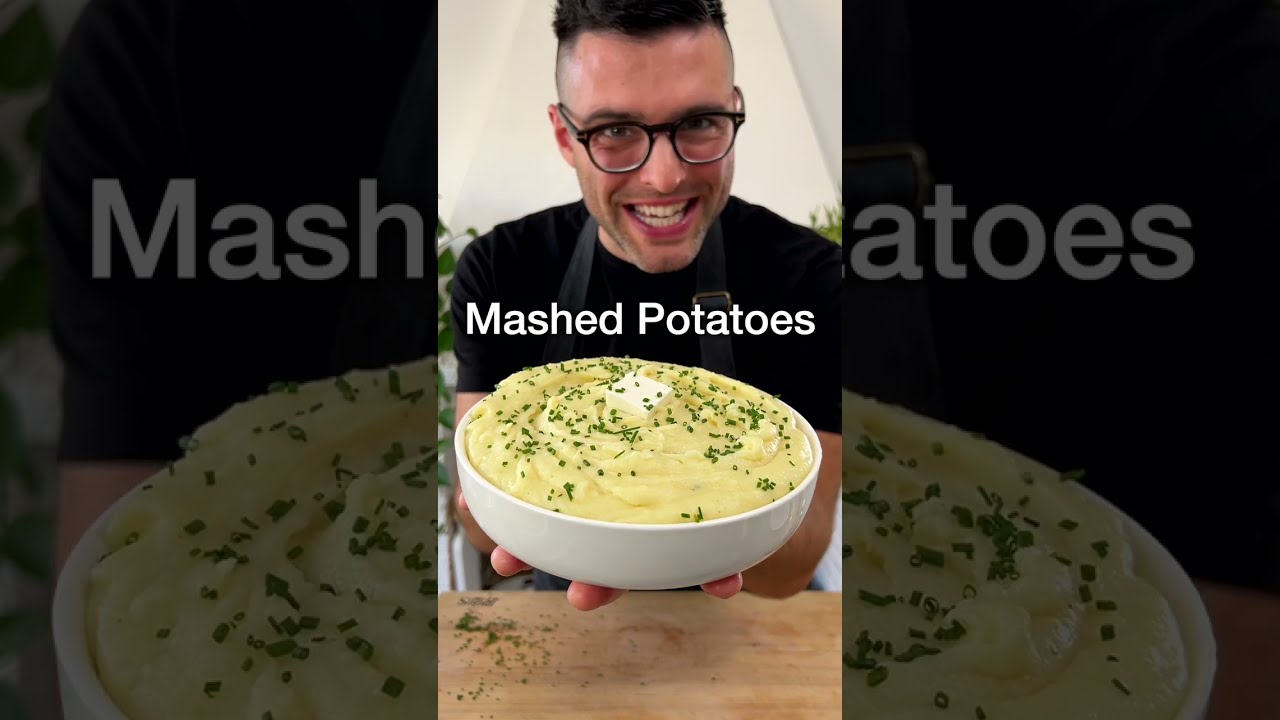
“Everyone has made mashed potatoes. Most of them have been quietly disappointed by the result — gluey, stiff, weirdly watery, or aggressively bland. The fix isn't a better recipe. It's understanding two things: why cold dairy ruins the texture, and why over-mashing turns potatoes into wallpaper paste. We broke down the most common mistakes so you don't have to make them.”
Why This Recipe Works
Mashed potatoes are the dish everyone thinks they know how to make. They're also the dish that almost everyone quietly gets wrong — producing results that are too stiff, too watery, inexplicably gluey, or flat enough to disappear beneath the main course. The problem is never the recipe. It's the physics.
The Starch Problem
Potatoes are mostly water and starch — specifically, granules of amylose and amylopectin packed tightly inside each cell. When you boil a potato, heat causes those granules to absorb water and swell, softening the cell walls and making the flesh mashable. So far so good.
The problem starts when you apply mechanical force. A potato masher crushes the swollen cells and releases some of their starch into the mix — that's what gives mashed potatoes their body. But every additional mash stroke ruptures more granules and releases more of that sticky gel. Past a certain point, you're not making mashed potatoes anymore. You're making wallpaper paste. This is why food processors and hand mixers are instruments of destruction here: they apply continuous, high-speed force that obliterates every granule in the pot. The result is a smooth, uniform, completely inedible glue.
The fix: stop mashing before you think you're done. The butter and milk will smooth out the remaining texture during the fold. A ricer is even better — it pushes each piece through a small die individually, breaking cells open without rupturing their starch granules the way percussive mashing does.
The Dairy Temperature Rule
This is the rule most home cooks don't know, and it explains a significant percentage of bad mashed potatoes. Cold butter and cold milk shock the partially ruptured starch granules, causing them to tighten and seize — the same mechanism that makes cold gravy congeal on a plate. Once this happens, no amount of stirring brings the mash back. You end up with a dense, sticky, lumpy texture that won't smooth out.
The solution is simple: warm your dairy before it goes anywhere near the potatoes. Milk should be steaming-warm, not scalded. Butter should be softened to room temperature at minimum, or briefly melted and then allowed to cool slightly so it's liquid but not cold. This keeps the starch granules relaxed and allows them to absorb the fat and liquid evenly, producing that velvety, flowing texture you want.
The Drying Step
After you drain the potatoes, there's water on them — not just surface water, but moisture that has soaked into the outer layer of each piece during boiling. If you mash immediately, that water gets worked into the mash and dilutes the butter and cream you're about to add. Two minutes in the empty hot pot, off the heat, lets that surface moisture evaporate through the residual heat of the pot. It's a small step. It has a noticeable effect.
The Garlic Question
Raw minced garlic in mashed potatoes is fine. It delivers a sharp, present garlic flavor that works well with the richness of butter and sour cream. But if you want something more complex — a sweeter, rounder garlic note that reads as background depth rather than foreground punch — roast a full head at 400°F for 40 minutes, squeeze the cloves into the mash, and skip the raw garlic entirely. Both versions are correct. They're just different dishes.
The herbs go in last and off the heat. Heat destroys the chlorophyll in fresh parsley and chives within minutes, turning them gray and extracting bitter compounds from the cell walls. Fold them in after you've finished seasoning and right before serving. The color stays vivid and the flavor stays bright.
The Yukon Gold Decision
Russets make fluffier mashed potatoes. Red potatoes make waxier ones. Yukon gold makes creamy ones — and creamy is what this recipe is optimizing for. Yukon golds have a medium starch content, a naturally buttery flavor, and thin skins that don't require aggressive peeling. Their cells burst smoothly under a masher and absorb fat evenly. They are the correct choice for this application, and not by a small margin.
The combination of Yukon gold, warmed whole milk, sour cream, and softened butter produces a mash that is rich without being heavy, smooth without being gluey, and flavorful enough to stand on its own — not just as a vehicle for gravy, but as the reason people come back for seconds.
Where Beginners Mess This Up
Before we start, read this. These are the 4 reasons your the best creamy garlic herb mashed potatoes (stop doing it wrong) will fail:
- 1
Adding cold butter and milk: Cold dairy shocks the starch granules in the potato and causes them to seize, producing a gluey, dense texture that no amount of stirring fixes. Both butter and milk must be warmed before they touch the potatoes. This single step is responsible for more ruined mashed potatoes than any other.
- 2
Over-mashing or using a blender: Potatoes contain starch granules that rupture under excessive mechanical force, releasing a sticky gel that makes the mash gluey and thick. A hand masher or ricer is the ceiling. A blender or food processor is a disaster every time, no exceptions.
- 3
Not draining and drying the potatoes: After boiling, excess water clings to and soaks into the potato flesh. If you mash immediately after draining, that water dilutes the butter and cream, producing a thin, soupy texture. Letting the drained potatoes sit for 2 minutes in the empty hot pot drives off residual moisture through evaporation.
- 4
Under-salting the boiling water: Potatoes absorb salt during cooking. If the water isn't properly seasoned, no amount of salt added at the end fully compensates — the flavor sits on the surface instead of through the flesh. The water should taste noticeably salty before the potatoes go in.
The Video Reference Library
Want to see it in action? Here are the exact videos we analyzed and combined to build this foolproof recipe translation:
The foundational walkthrough that covers potato selection, boiling technique, and why warming your dairy changes everything. Best first watch before attempting any mashed potato recipe.
🛠️ Core Equipment
- Potato masherControls exactly how much mechanical force hits the starch. A good masher lets you stop at the right texture — creamy with just enough body. Avoid hand mixers unless you want glue.
- Large heavy-bottomed potYukon gold potatoes need even, gentle boiling heat. A thin pot creates hot spots that overcook the exterior before the center is done, producing an uneven texture in the final mash.
- ColanderDrains fast and completely. The faster you drain and return the potatoes to the hot pot, the more residual moisture evaporates before you start mashing.
- Small saucepan or microwaveFor warming the milk and butter before incorporating. Non-negotiable if you want a smooth, cohesive mash rather than a seized, gluey one.
The Best Creamy Garlic Herb Mashed Potatoes (Stop Doing It Wrong)
🛒 Ingredients
- ✦2.5 pounds Yukon gold potatoes, peeled and cut into 1-inch pieces
- ✦6 tablespoons unsalted butter, softened
- ✦3/4 cup whole milk, warmed
- ✦3 tablespoons sour cream
- ✦1.5 teaspoons kosher salt, plus more for the boiling water
- ✦1/2 teaspoon freshly ground black pepper
- ✦3 cloves garlic, minced
- ✦1/4 teaspoon garlic powder
- ✦3 tablespoons fresh chives, chopped
- ✦2 tablespoons fresh parsley, finely chopped
👨🍳 Instructions
01Step 1
Place the diced potatoes in a large pot and cover with cold water by at least 2 inches. Bring to a boil over high heat.
02Step 2
Once boiling, add 1 teaspoon of kosher salt to the water. Reduce heat to medium and simmer for 15-20 minutes, until completely fork-tender with no resistance at the center.
03Step 3
Drain the potatoes thoroughly in a colander, then immediately return them to the empty hot pot off the heat.
04Step 4
Let the drained potatoes sit uncovered in the hot pot for 2 minutes to release residual surface moisture.
05Step 5
Mash the warm potatoes with a potato masher using circular motions until most lumps are gone but the mash still has body.
06Step 6
Fold in the softened butter and sour cream, stirring gently until evenly distributed.
07Step 7
Pour the warmed milk in gradually while stirring, adding just enough to reach your desired consistency.
08Step 8
Stir in the minced garlic, remaining salt, black pepper, and garlic powder until evenly distributed.
09Step 9
Gently fold in the chives and parsley, reserving a small handful for garnish.
10Step 10
Taste and adjust seasoning. Transfer to a serving bowl, top with reserved herbs, and serve immediately.
Nutrition Per Serving
Estimates based on standard preparation. Adjustments alter macros.
🔄 Substitutions
Instead of Whole milk...
Use Unsweetened almond milk or low-fat milk
Slightly lighter texture and fewer calories. Almond milk adds a subtle nuttiness. Warm it regardless — cold dairy is cold dairy.
Instead of Sour cream...
Use Greek yogurt
Tangy brightness with added protein and probiotics. Full-fat Greek yogurt is the closest texture match. Non-fat works but thins the mash slightly.
Instead of Butter...
Use Olive oil or avocado oil (3 tablespoons)
Loses the dairy richness but produces a smooth, savory mash with a different flavor profile. Good for dairy-free versions. Use a high-quality extra virgin olive oil — the flavor is prominent.
Instead of Yukon gold potatoes...
Use Russet potatoes mixed with cauliflower (50/50)
Fluffier texture with lower glycemic impact. The cauliflower becomes nearly invisible once mashed. Steam the cauliflower rather than boiling to prevent it from making the mash watery.
🧊 Storage & Reheating
In the Fridge
Store in an airtight container for up to 3 days. Press plastic wrap directly onto the surface before sealing to prevent a skin from forming.
In the Freezer
Freeze in portions for up to 1 month. The texture changes slightly upon thawing — add a splash of warmed milk when reheating to bring it back.
Reheating Rules
Reheat gently in a saucepan over low heat with 1-2 tablespoons of warmed milk, stirring constantly. Microwave works in a pinch — cover loosely and heat in 30-second bursts, stirring between each.
❓ Frequently Asked Questions
Why are my mashed potatoes gluey?
Two causes: you added cold dairy, or you over-mashed. Cold butter and milk cause the starch granules to seize and become sticky. Over-mashing ruptures those same granules and releases a gummy gel. Warm your dairy before it touches the potatoes, and stop mashing while there's still a little texture — the stirring during incorporation will handle the rest.
Can I make mashed potatoes ahead of time?
Yes. They hold well in a covered pot or slow cooker on warm for up to 2 hours with a thin layer of warmed milk on top to prevent skin. For longer storage, refrigerate and reheat gently with added milk. They won't be quite as fluffy as fresh, but they'll be close.
What's the best potato for mashing?
Yukon gold is the standard for a reason — its natural buttery flavor and medium starch content produce a creamy, cohesive mash that holds together. Russets are higher starch and produce a fluffier, drier result. Red potatoes are waxy and resist mashing smoothly. Yukon gold is the answer almost every time.
Do I really need to warm the milk and butter?
Yes. This is not optional. Cold dairy causes the starches in the potato to tighten up, producing a dense, gluey texture that cannot be fixed after the fact. Take the 2 minutes to warm them. It changes the entire outcome.
How do I keep mashed potatoes from getting a skin on top?
Press plastic wrap or a sheet of parchment directly onto the surface of the mash — no air gap. This prevents the moisture from evaporating and the starch from oxidizing into a dry film. A thin layer of warmed milk on top also works as a protective barrier.
Can I use a hand mixer or food processor?
You can, but you probably shouldn't. Both tools apply far more mechanical force than a hand masher or ricer, rupturing starch granules and releasing the gluey gel that makes mash dense and sticky. If you use a hand mixer, do it briefly on the lowest setting and stop the moment the lumps are gone.

The Science of
The Best Creamy Garlic Herb Mashed Potatoes (Stop Doing It Wrong)
We turned everything on this page into a beautiful, flour-proof PDF cheat sheet. Print it out, stick it to your fridge, and never mess up your the best creamy garlic herb mashed potatoes (stop doing it wrong) again.
*We'll email you the high-res PDF instantly. No spam, just perfectly cooked meals.
AlmostChefs Editorial Team
We translate the internet's most popular cooking videos into foolproof, beginner-friendly written recipes. We analyze multiple methods, test them in our kitchen, and engineer a single "Master Recipe" that gives you the best possible result with the least possible stress.