Foolproof Margherita Pizza (The Crust Is the Whole Point)
A classic Italian Margherita pizza with a whole wheat crust, quick San Marzano tomato sauce, fresh buffalo mozzarella, and basil. We broke down the most-watched YouTube methods to build one technique that delivers a crispy base and properly melted cheese every time — no pizza oven required.
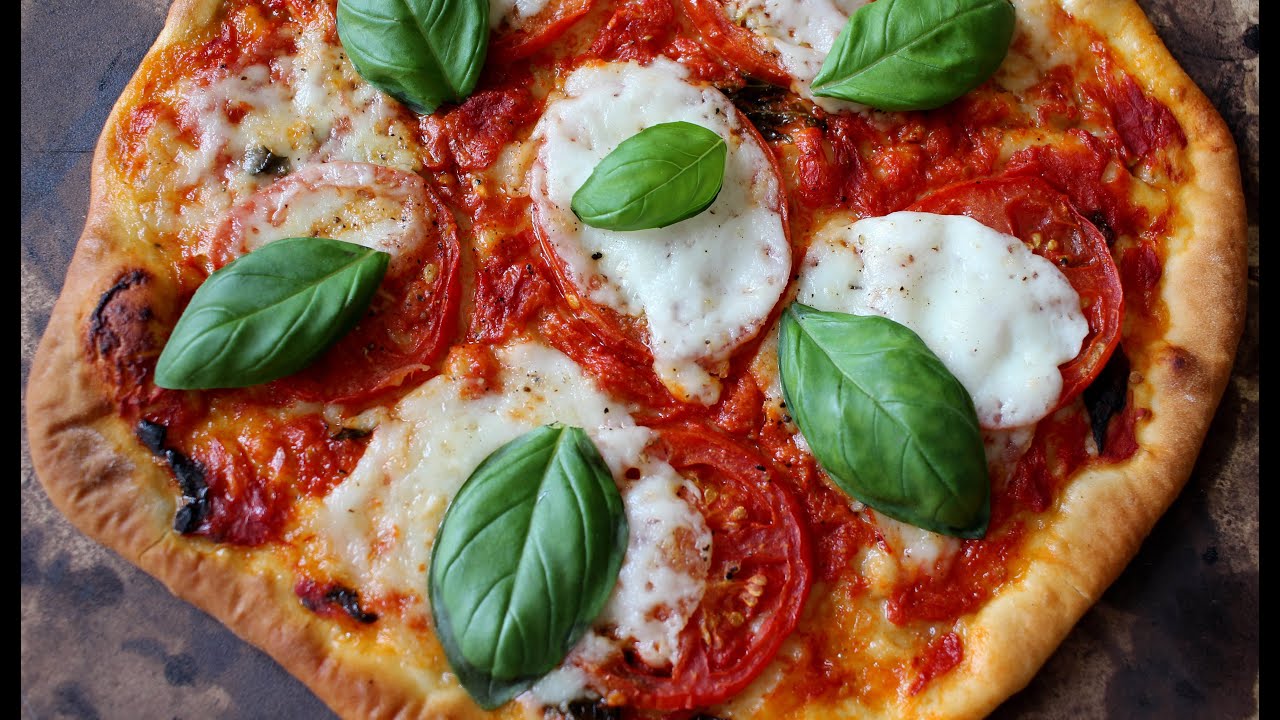
“Margherita pizza looks deceptively simple. Three toppings. One crust. What could go wrong? The answer: almost everything. Soggy centers from wet mozzarella. Dense crumb from under-proofed dough. Sauce that tastes like tomato paste. The version that actually works requires understanding why each step exists — and where every shortcut breaks down.”
Why This Recipe Works
Margherita pizza is Italy's proof that constraints produce genius. Three toppings. No protein. No complexity to hide behind. The crust is exposed. The sauce is exposed. The cheese is exposed. If any one of them is mediocre, the pizza is mediocre. There is nowhere to hide.
The Dough Architecture
Whole wheat flour does something interesting to pizza dough that all-purpose flour alone doesn't: it introduces bran particles that interrupt gluten development. This sounds like a problem, and it would be in a baguette. For pizza, it's an advantage — the bran creates micro-tears in the gluten network that prevent the crust from puffing into bread. You get a thinner, crisper base with actual structural integrity rather than a chewy loaf pretending to be pizza.
The tradeoff is absorption. Whole wheat flour drinks water faster than white flour, which means your dough may feel tight after mixing even when the hydration is correct. Resist the urge to add more flour. Knead for the full 8-10 minutes and let the gluten network develop. The dough will smooth out.
The proof matters more than almost any other variable. Yeast produces carbon dioxide as it consumes the sugars in the flour, and those gas bubbles are what create the open, slightly blistered texture in the finished crust. Under-proof and you have a dense crumb with no character. Proof correctly and you have a crust that puffs at the edges and stays thin in the center — the geometry that makes every bite taste different depending on where you start.
Sauce That Stays in Place
San Marzano tomatoes are not a marketing invention. They're grown in volcanic soil in the Sarno river valley, which produces fruit with lower water content, thicker walls, and sweeter flavor than standard canning tomatoes. Lower water content means less liquid in your sauce, which means the sauce doesn't saturate the dough during baking. This is a practical advantage, not culinary snobbery.
The sauce needs 15-20 minutes of simmering to concentrate. What you're doing is evaporating water until the sauce reaches a consistency that will stay put on the dough rather than migrating toward the edges under heat. Test it: drag a spoon through the sauce. The channel should hold for a few seconds before slowly filling back in. If the sauce rushes to fill immediately, it's still too wet and needs more time.
The Cheese Problem
Buffalo mozzarella is made from water buffalo milk, which contains a higher fat content than cow's milk — roughly 8% versus 3.5%. That fat is what creates the creamy, slightly tangy character that distinguishes it from the low-moisture mozzarella block. It also creates a problem: high fat content means high water content in fresh form.
Drain it. Always. Tear the cheese into rough pieces and set them on paper towels for at least 30 minutes before the pizza goes into the oven. The paper absorbs the surface whey that would otherwise pool on top of your finished pizza. This single step eliminates the most common complaint about homemade Margherita — the flooded, waterlogged center that tastes like hot cream and regret.
Temperature as Technique
A 475°F oven with a preheated pizza stone is doing something specific: it's applying two simultaneous heat sources to the dough. The stone below radiates intense bottom heat that crisps the base immediately upon contact. The oven air above melts and browns the cheese. The pizza cooks from both directions at once, which is why it takes 12-15 minutes rather than the 25-30 minutes a cold surface would require.
The cornmeal on the stone is not flavor — it's mechanics. The small round granules act as ball bearings between the raw dough and the hot stone surface, making it possible to slide the pizza off without it tearing. It also adds a subtle crunch to the bottom crust that became standard in American pizza culture for this exact functional reason.
Margherita pizza does not reward improvisation. It rewards precision applied to a very small number of variables. Get the dough to actually double. Drain the cheese. Preheat the stone. Leave the basil off until after the bake. Four rules. One perfect pizza.
Where Beginners Mess This Up
Before we start, read this. These are the 4 reasons your foolproof margherita pizza (the crust is the whole point) will fail:
- 1
Using wet mozzarella straight from the bag: Fresh buffalo mozzarella is packed in whey or water. Place it on the pizza without draining and you've guaranteed a soggy center. The cheese releases its liquid as it melts, saturating the sauce layer and steaming the crust from above instead of letting it crisp. Tear the mozzarella at least 30 minutes before baking and let it drain on paper towels.
- 2
Under-proofing the dough: When the recipe says 60-90 minutes until doubled, it means doubled — not 'puffed up a bit.' Under-proofed dough fights you during shaping, springs back aggressively, and produces a dense, bready crust with no chew. If your kitchen is cold, the dough needs more time. Trust volume, not the clock.
- 3
Skipping the oven preheat: A 475°F oven needs at least 30 minutes to fully saturate the baking stone or sheet with heat. Slide a pizza into a half-hot oven and the bottom crust never catches up to the toppings — you get melted cheese and a pale, soft base. Preheat, wait, then bake.
- 4
Adding basil before baking: Fresh basil scorches at 475°F in under five minutes. Black, bitter shreds on top of your pizza are not a garnish. Basil goes on after the pizza exits the oven, while the cheese is still molten enough to wilt the leaves slightly. Same rule applies to any delicate fresh herb.
The Video Reference Library
Want to see it in action? Here are the exact videos we analyzed and combined to build this foolproof recipe translation:
The primary reference — covers dough hydration, sauce consistency, and the exact cheese placement technique that prevents the dreaded soggy center.
🛠️ Core Equipment
- Pizza stone or heavy baking sheetA [pizza stone](/kitchen-gear/review/pizza-stone) stores heat and transfers it directly to the dough bottom, replicating the floor of a deck oven. A heavy baking sheet is the next best option — thin sheets flex and cool too fast, giving you a pale, soft crust.
- Large mixing bowlDough needs room to double. A bowl that's too small restricts rise. Use the largest one you have — the dough should triple the available space before proofing begins.
- Small saucepanThe sauce cooks in 15-20 minutes in a small pan because the shallow depth concentrates the liquid quickly. A wide skillet spreads it too thin and the sauce evaporates unevenly. A [stainless saucepan](/kitchen-gear/review/saucepan) keeps heat steady throughout.
- Kitchen towel or plastic wrapCovers the dough during proofing. The cover traps moisture and heat, creating the warm, humid microclimate the yeast needs to work efficiently. A dry kitchen creates a skin on the dough surface that impedes rise.
Foolproof Margherita Pizza (The Crust Is the Whole Point)
🛒 Ingredients
- ✦2 cups whole wheat flour
- ✦1 cup all-purpose flour
- ✦1 packet instant yeast (2.25 teaspoons)
- ✦1 teaspoon sea salt
- ✦1 tablespoon extra virgin olive oil
- ✦1 cup warm water (110°F)
- ✦1 can (28 ounces) San Marzano tomatoes, crushed by hand
- ✦3 cloves fresh garlic, minced
- ✦2 tablespoons extra virgin olive oil for sauce
- ✦1 teaspoon dried oregano
- ✦1 teaspoon kosher salt
- ✦1/2 teaspoon cracked black pepper
- ✦8 ounces fresh buffalo mozzarella cheese, torn into bite-sized pieces
- ✦1 large handful fresh basil leaves (about 15 leaves)
- ✦1 tablespoon balsamic vinegar
- ✦Cornmeal for dusting the pizza stone or baking sheet
- ✦1 pinch red pepper flakes (optional)
👨🍳 Instructions
01Step 1
Combine whole wheat flour, all-purpose flour, instant yeast, and sea salt in a large mixing bowl.
02Step 2
Create a well in the center of the dry ingredients and pour in warm water (110°F) and 1 tablespoon olive oil.
03Step 3
Stir with a wooden spoon until a shaggy dough forms, then knead on a lightly floured surface for 8-10 minutes until smooth and elastic.
04Step 4
Place dough in a lightly oiled bowl, cover with a kitchen towel, and let rise in a warm spot for 60-90 minutes until doubled in size.
05Step 5
While the dough rises, heat 2 tablespoons olive oil in a small saucepan over medium heat. Add minced garlic and sauté for 1 minute until fragrant.
06Step 6
Add crushed San Marzano tomatoes, oregano, kosher salt, black pepper, and red pepper flakes if using. Simmer over low heat for 15-20 minutes until thickened.
07Step 7
Tear the mozzarella into bite-sized pieces and drain on paper towels for at least 30 minutes before using.
08Step 8
Preheat oven to 475°F with the pizza stone or baking sheet inside. Allow at least 30 minutes for full heat saturation.
09Step 9
Punch down the risen dough and stretch it into a 12-14 inch round on your work surface, working gently from the center outward.
10Step 10
Carefully transfer shaped dough onto the hot, cornmeal-dusted pizza stone or baking sheet.
11Step 11
Spread 1 cup of tomato sauce evenly across the dough, leaving a 1-inch border for the crust. Distribute the drained mozzarella pieces across the sauce.
12Step 12
Bake for 12-15 minutes until the crust is golden brown and the cheese is melted and bubbling at the edges.
13Step 13
Remove from the oven and immediately scatter fresh basil leaves across the top. Drizzle lightly with balsamic vinegar and rest for 2-3 minutes before slicing.
Nutrition Per Serving
Estimates based on standard preparation. Adjustments alter macros.
🔄 Substitutions
Instead of All-purpose flour (the full amount)...
Use 100% whole wheat flour or spelt flour
Denser, nuttier crumb with more fiber. Add 1 tablespoon extra water to compensate for the higher absorption rate of whole grain flour. Proof time may extend by 15-20 minutes.
Instead of Fresh buffalo mozzarella...
Use Cashew ricotta or dairy-free mozzarella
Lower saturated fat, different melt behavior. Dairy-free mozzarella should still be drained before use — it carries surface moisture just like the real thing. Cashew ricotta doesn't melt the same way but adds creaminess.
Instead of Instant yeast...
Use Sourdough starter or active dry yeast with longer fermentation
Sourdough adds complexity and better digestibility through fermentation. Use 1/4 cup active starter in place of yeast, reduce water slightly, and allow a 4-6 hour cold proof in the refrigerator instead of the 90-minute room-temperature proof.
Instead of San Marzano tomatoes...
Use Fresh heirloom or Roma tomatoes, roasted and pureed
Roast halved tomatoes at 400°F for 25 minutes before pureeing. Brighter acidity, more seasonal flavor. Slightly more work but higher lycopene content and a fresher result.
🧊 Storage & Reheating
In the Fridge
Store leftover slices in an airtight container for up to 3 days. The crust softens overnight but reheats well.
In the Freezer
Freeze fully baked and cooled slices in a single layer, then transfer to a freezer bag. Keeps for up to 2 months. Reheat directly from frozen.
Reheating Rules
Reheat in a dry skillet over medium heat with a lid on for 4-5 minutes. This re-crisps the bottom while the lid traps steam to melt the cheese. Avoid the microwave — it produces a rubbery crust and watery cheese.
❓ Frequently Asked Questions
Why is my pizza crust soggy in the middle?
Three likely culprits: mozzarella that wasn't drained, sauce applied too thick, or an oven that wasn't fully preheated. All three produce the same result — excess moisture steaming the crust from above instead of heat crisping it from below. Address all three and the soggy center disappears.
Can I make the dough ahead of time?
Yes, and it's actually better that way. After the initial knead, place the dough in an oiled container and refrigerate for up to 48 hours. Cold fermentation develops more complex flavor. Pull it out 1 hour before you plan to bake to let it come to room temperature before shaping.
Do I need a pizza stone?
No, but it helps significantly. A heavy baking sheet preheated in the oven is the best alternative. The key is that whatever surface the pizza bakes on must already be hot when the dough touches it — that initial blast of bottom heat is what creates a crispy crust.
Why does my dough keep springing back when I try to shape it?
The gluten is too tight. This happens when the dough hasn't fully relaxed after proofing, or when it was overworked during kneading. Cover it with a kitchen towel and let it rest for 10-15 minutes. The gluten will relax and the dough will become cooperative.
Can I use dried basil instead of fresh?
Technically yes, but the flavor profile changes significantly. Dried basil goes in with the sauce during simmering — it won't work as a finishing herb because its aromatics have already been processed. If substituting, add 1 teaspoon dried basil to the sauce and skip the fresh garnish.
How do I get the charred spots like a restaurant pizza?
Two options: move the pizza to the top rack for the final 2 minutes under the broiler, or increase oven temperature to 500°F if your oven allows it. Char develops from direct intense heat on the exposed dough and cheese surface. A conventional oven maxed out is as close as you'll get at home without a dedicated pizza oven.

The Science of
Foolproof Margherita Pizza (The Crust Is the Whole Point)
We turned everything on this page into a beautiful, flour-proof PDF cheat sheet. Print it out, stick it to your fridge, and never mess up your foolproof margherita pizza (the crust is the whole point) again.
*We'll email you the high-res PDF instantly. No spam, just perfectly cooked meals.
AlmostChefs Editorial Team
We translate the internet's most popular cooking videos into foolproof, beginner-friendly written recipes. We analyze multiple methods, test them in our kitchen, and engineer a single "Master Recipe" that gives you the best possible result with the least possible stress.