Mandu (Korean Dumplings)
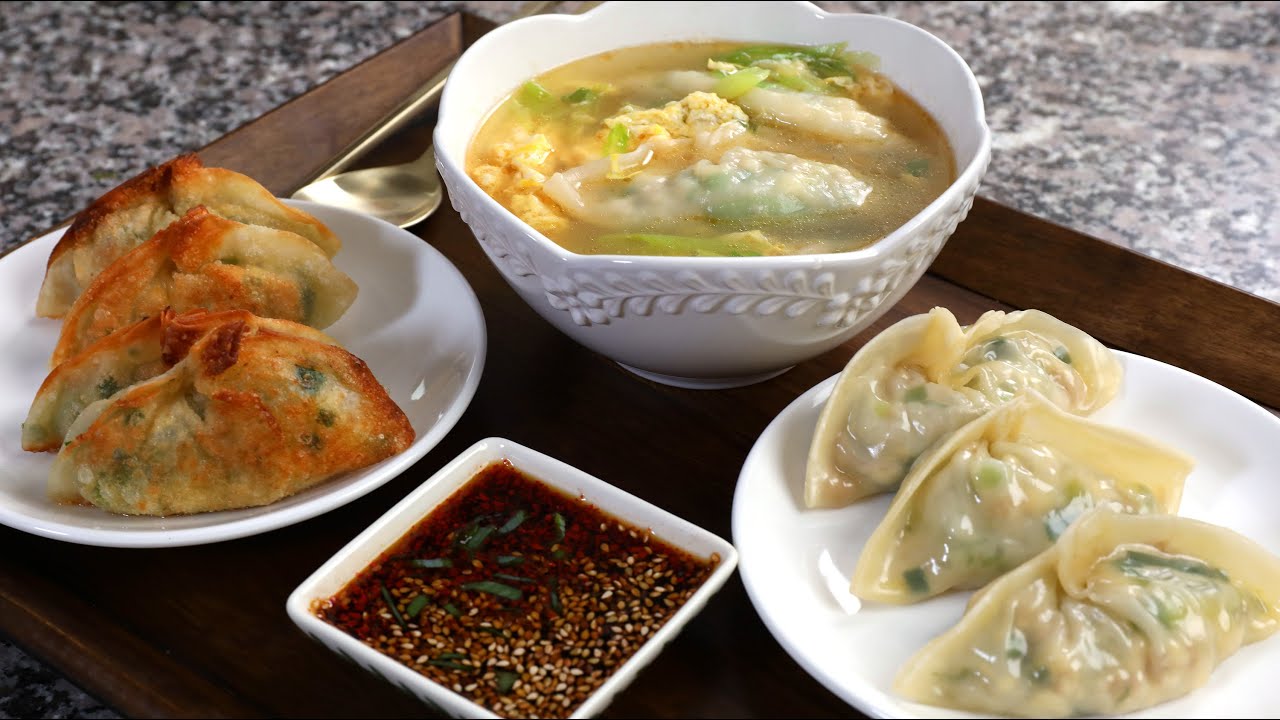
Juicy pork and vegetable dumplings wrapped in thin skins — pan-fried until golden on the bottom, steamed tender on top. Korea's beloved dumpling, three ways.
Why This Recipe Works
Most dumpling recipes fail before anyone touches a wrapper. They fail in the filling stage, because the cooks who wrote them either didn't understand food science or didn't care enough to explain it. Wet filling is the enemy. Trapped air is the enemy. Impatience is the enemy. Mandu, Korea's contribution to the global dumpling canon, is a dish that rewards precision and punishes sloppiness with burst seams and a soggy, structurally compromised mess. Here is why this specific recipe, executed with discipline, produces dumplings that are worth the forty-five minutes of your life.
The Moisture Problem, Addressed at Every Stage
The filling in mandu is a three-component system: ground pork, napa cabbage, and firm tofu. Each of these contains significant water. Left unmanaged, that water turns your filling into a slurry, prevents the wrapper from sealing properly, and generates steam pressure during cooking that blows your dumpling open from the inside. The recipe attacks this problem twice.
First, the cabbage. Tossing finely chopped napa cabbage with salt and letting it sit for ten minutes draws water out via osmosis — the salt creates a concentration gradient that pulls moisture through the cell walls. Squeezing the salted cabbage in a clean kitchen towel removes a remarkable volume of liquid. What remains is intensely flavored, structurally intact cabbage that adds texture without contributing moisture.
Second, the tofu. Firm tofu is approximately 85% water by weight. Crumbling and squeezing it through a clean kitchen towel extracts enough moisture to transform it from a liability into an asset. Dry, crumbled tofu in the filling serves a specific structural function: it disperses fat and juice from the pork throughout the filling, creating a lighter, more cohesive texture than an all-meat dumpling would achieve. This is not a modern innovation — Korean cooks figured out the tofu trick centuries ago, initially for Buddhist reasons, but the functional result is a filling that is simultaneously leaner and juicier than pork alone.
Mixing and Binding in a Large Mixing Bowl
Once the wet components are neutralized, the filling is combined in a large mixing bowl and worked by hand. Hand-mixing is not optional sentiment — it is the correct technique. Your hands can feel when the proteins in the pork have been worked enough to bind the filling into a cohesive mass that holds its shape on the wrapper. Over-mixed filling becomes rubbery; under-mixed filling falls apart when you try to pleat the edges. You are looking for the moment the filling begins to feel tacky and slightly sticky — that is glutinous protein binding the whole thing together.
Soy sauce adds umami and salinity. Sesame oil adds fat-soluble aromatic compounds that survive cooking. Garlic delivers allicin, which mellows under heat but leaves its structural imprint on the flavor profile. These are not decorative additions — they are the biochemical foundation of why mandu tastes the way it does.
The Pleating Seal: Function Disguised as Craft
The half-moon fold with three to four pleats along the sealed edge is not decorative. The pleats create a thickened, layered edge that is mechanically stronger than a flat crimped seal. More importantly, pleating as you seal allows you to press out trapped air from the interior — a step explicitly required to prevent burst dumplings during cooking. Each pleat is a small compression that expels a pocket of air. Four pleats is not arbitrary; it is approximately the number required to fully evacuate air from a tablespoon of filling sealed in a standard round wrapper. Brush the edges with beaten egg before sealing. Egg protein coagulates quickly during cooking and acts as edible glue — the bond is significantly more reliable than water alone.
The Pan-Fry and Steam Method: Thermal Engineering
Gun-mandu, the pan-fried variation, achieves two cooking objectives that would otherwise be in direct conflict: a deeply caramelized, structurally rigid bottom crust, and a fully cooked, tender interior without a leathery top. The two-stage cooking method resolves this conflict mechanically.
Stage one: heat vegetable oil in a non-stick skillet over medium-high heat and place the mandu flat-side down. The flat bottom — a result of your careful shaping — maximizes contact surface with the pan. Three minutes of direct contact heat creates the Maillard reaction across the entire base: proteins brown, starches gelatinize and crisp, and you get the structural integrity that distinguishes gun-mandu from its boiled counterparts.
Stage two: add a quarter cup of cold water to the hot pan and immediately cover with a tight-fitting lid. The water flash-vaporizes on contact with the hot oil, generating a burst of steam that fills the covered pan and cooks the tops and interiors of the dumplings through convective heat transfer. The wrapper becomes translucent and tender. The filling reaches safe internal temperature without the bottoms burning. After the water evaporates — approximately five to six minutes — remove the lid and allow the bottoms to re-crisp for one to two minutes. The result is a dumpling with two distinct texture zones: crackled gold underneath, silky and yielding above.
Why You Should Make Four Dozen at Once
Mandu freezes exceptionally well, and this is not a coincidence. The high fat content of the pork filling resists freezer burn better than lean-protein fillings. The egg seal remains intact through the freeze-thaw cycle. Frozen mandu cook from frozen without defrosting — simply add two minutes to the steaming stage. Arrange uncooked mandu in a single layer on a parchment-lined sheet pan, freeze until solid, then transfer to freezer bags. This prevents them from fusing together into an unusable block. The investment in an afternoon of mandu-making pays dividends across three months of meals. Do not make a small batch. That is a failure of long-term thinking.
Mandu (Korean Dumplings)
🛒 Ingredients
- ✦1 package round dumpling wrappers (about 40 sheets)
- ✦1/2 lb ground pork
- ✦1 block firm tofu (8 oz), squeezed dry and crumbled
- ✦2 cups napa cabbage, finely chopped and salted
- ✦4 green onions, finely chopped
- ✦2 cloves garlic, minced
- ✦1 tablespoon soy sauce
- ✦1 tablespoon sesame oil
- ✦1/2 teaspoon salt
- ✦1/4 teaspoon black pepper
- ✦1 egg, beaten (for sealing)
- ✦Vegetable oil for pan-frying
- ✦1/4 cup water (for steaming)
👨🍳 Instructions
01Step 1
Finely chop napa cabbage, toss with 1/2 teaspoon salt, and let sit for 10 minutes. Squeeze out as much water as possible using a clean towel.
02Step 2
Squeeze tofu dry in a clean towel, crumbling it as you squeeze. It should be as dry as possible.
03Step 3
Combine ground pork, tofu, drained cabbage, green onions, garlic, soy sauce, sesame oil, salt, and pepper in a large bowl. Mix thoroughly with your hands until the filling holds together.
04Step 4
Place a dumpling wrapper in your palm. Add about 1 tablespoon of filling to the center. Brush the edges with beaten egg.
05Step 5
Fold the wrapper in half to form a half-moon. Press the edges firmly to seal, then create 3-4 pleats along the sealed edge for a decorative look.
06Step 6
For pan-fried mandu (gun-mandu): Heat oil in a non-stick skillet over medium-high heat. Place mandu flat-side down in a single layer. Cook until the bottoms are golden brown, about 3 minutes.
07Step 7
Add 1/4 cup water to the pan and immediately cover with a lid. Steam for 5-6 minutes until the water evaporates and the wrappers become translucent.
08Step 8
Remove lid and cook for another 1-2 minutes until the bottoms are crispy again. Serve with dipping sauce (soy sauce + rice vinegar + sesame seeds).
Nutrition Per Serving
Estimates based on standard preparation. Adjustments alter macros.
🔄 Substitutions
Instead of Ground pork...
Use Ground beef or chicken
Pork is traditional and juiciest. Beef works well; chicken needs extra sesame oil for moisture
Instead of Napa cabbage...
Use Regular cabbage or kimchi
Kimchi mandu (김치만두) is a hugely popular variation — use drained, chopped kimchi
Instead of Tofu...
Use Glass noodles (dangmyeon)
Chopped cooked glass noodles are a common alternative or addition
🧊 Storage & Reheating
In the Fridge
Store uncooked mandu for 1-2 days on a parchment-lined tray, covered.
In the Freezer
Freeze in a single layer on a sheet pan, then transfer to bags. Keeps 3 months. Cook from frozen.
Reheating Rules
Re-fry in a pan with a splash of water and lid to re-crisp and re-steam.
❓ Frequently Asked Questions
Can I use store-bought dumpling wrappers?
Absolutely. Round wrappers work best for the traditional half-moon shape. Look for ones labeled 'mandu wrappers' or 'gyoza wrappers' at Asian grocery stores. Thinner wrappers give a better texture.
What are the different types of mandu?
Gun-mandu (pan-fried) is the most popular at home. Mul-mandu (boiled) goes in soups. Jjin-mandu (steamed) is softer and lighter. Tuigim-mandu (deep-fried) is crunchy street food. The filling is the same — only the cooking method changes.
Why did my mandu burst while cooking?
Either there was too much filling, the edges weren't sealed tightly enough, or air was trapped inside. Use about 1 tablespoon of filling and press out all air when sealing.

The Science of
Mandu (Korean Dumplings)
We turned everything on this page into a beautiful, flour-proof PDF cheat sheet. Print it out, stick it to your fridge, and never mess up your mandu (korean dumplings) again.
*We'll email you the high-res PDF instantly. No spam, just perfectly cooked meals.
AlmostChefs Editorial Team
We translate the internet's most popular cooking videos into foolproof, beginner-friendly written recipes. We analyze multiple methods, test them in our kitchen, and engineer a single "Master Recipe" that gives you the best possible result with the least possible stress.