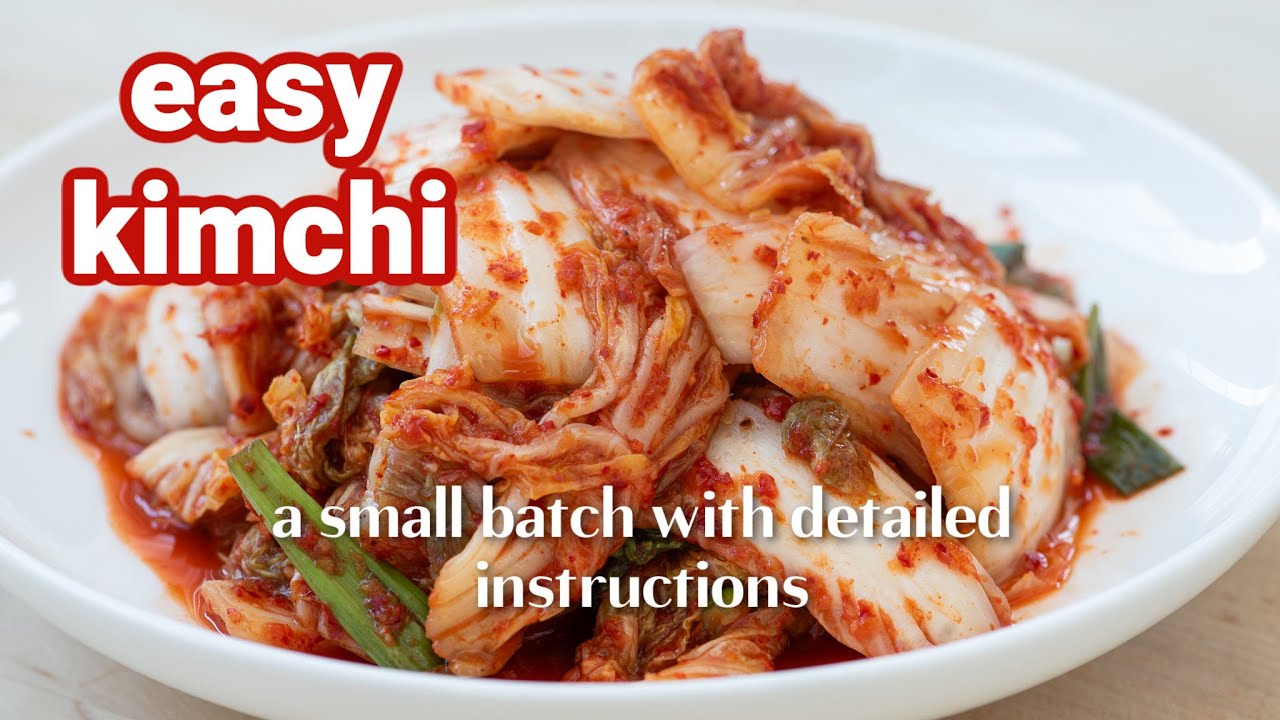
Mak Kimchi (Easy Cut Kimchi)
Pre-cut napa cabbage kimchi that's ready in a fraction of the time. All the flavor of traditional kimchi without the whole-cabbage ceremony.
Why This Recipe Works
Mak kimchi is not a shortcut. That framing — the lazy version, the weeknight cheat — misses the point entirely and insults a method that Korean home cooks have refined over centuries of practical necessity. Mak (막) means roughly or carelessly in the colloquial sense, but the fermentation science underneath it is anything but careless. This is a recipe engineered by repeated failure, generational feedback, and the cold logic of microbiology. Let's go through exactly why it works, step by unromantic step.
The Geometry of Salting
Pre-cutting napa cabbage into 1.5-inch pieces before salting is the structural decision that defines this entire recipe. When you cut first, you expose the internal cell walls of the cabbage — the soft, moisture-heavy tissue that takes hours to penetrate when left in whole-leaf form. Salt draws water out of plant cells via osmosis. More cut surface means more exposed cell membrane means faster, more uniform osmotic action. The cabbage wilts in 1.5–2 hours instead of the 6–8 hours required for whole-head preparations.
The tool doing the heavy lifting here is a large mixing bowl. Not a pot, not a colander, not a sheet pan — a bowl deep enough to hold the full volume of unsalted cabbage, which is roughly double what it will be post-wilting, and wide enough to toss every 30 minutes without losing pieces over the sides. This is not a detail to improvise around.
The Draining Imperative
Rinse the salted cabbage two to three times under cold water. This is not optional. The salt has done its job — it pulled moisture out of the cells and created the flexible, pliable texture you need. Now it needs to leave. Any residual sodium chloride will interfere with the lactobacillus fermentation by suppressing bacterial activity beyond the threshold required to start the culture. You want enough salt to create a hostile environment for pathogens. You do not want enough salt to stop your beneficial bacteria cold.
Drain in a colander for a minimum of 15 minutes. Then squeeze. The cabbage should be damp — not dripping, not bone dry. Water is fermentation's enemy in the short term: it dilutes the kimchi paste, prevents the aromatics from adhering to the cell walls, and creates a diluted brine that extends the lag phase of fermentation by days. You squeezed the cabbage. Good. Move on.
Paste Chemistry
Gochugaru is doing three jobs simultaneously in this recipe. First and most obviously, it provides heat — capsaicin from dried Korean red pepper. Second, it provides color — the characteristic deep red that signals a properly made kimchi paste rather than a pale, underflavored approximation. Third, and least appreciated, it provides fermentation substrate. Gochugaru contains residual sugars and carbohydrates that feed the lactobacillus culture during the initial room-temperature fermentation window. This is why cheap, sun-dried Korean red pepper is preferable to any substitution that lacks this carbohydrate structure.
Fish sauce and salted shrimp (saeujeot) compound the umami base. These are not interchangeable with soy sauce in any meaningful culinary sense — they contribute glutamates, free amino acids, and a salinity profile that integrates into the fermentation process rather than sitting on top of it. The shrimp paste in particular introduces additional microbial cultures that contribute to the complexity of aged kimchi flavor in ways that a simple salt-soy substitution will never replicate. Use the real ingredients. Make the vegan version if you must, but know what you're trading away.
The Mixing Protocol
When you combine the drained cabbage with the seasoning paste, you need to use your hands. Wear kitchen gloves — gochugaru stains aggressively and capsaicin on unprotected skin becomes genuinely unpleasant after the first few minutes of massage. The reason hands are specified over spoons or tongs is tactile feedback: you can feel whether every piece of cabbage is coated, whether the radish and carrot are evenly distributed, whether the mixture has the right sticky, clinging consistency or whether it's too wet and needs another round of squeezing.
Even coating is not aesthetic. It ensures that every piece of cabbage has equal access to the fermentation paste, resulting in uniform flavor development across the entire batch rather than the intensely seasoned pieces at the bottom of the jar and the pale, underseasoned pieces at the top.
The Physics of Packing
Pack the finished kimchi into glass mason jars or purpose-built kimchi containers with proper airtight seals. Glass is preferred over plastic because it does not absorb odors, does not leach compounds under acidic conditions, and allows visual monitoring of fermentation without opening the jar. Pack tightly — press down firmly to eliminate air pockets. Lactobacillus is an anaerobic organism. It requires a low-oxygen environment to outcompete the aerobic surface molds that will colonize your kimchi if you leave air pockets near the surface.
Leave one inch of headspace. This sounds counterintuitive — you just pressed out all the air — but carbon dioxide is a fermentation byproduct. Within 24–48 hours at room temperature (approximately 65–72°F), the kimchi will begin producing CO₂ actively enough that the brine rises and the contents expand. Without headspace, you will open the jar to find kimchi juice distributed across your refrigerator shelf. The jar is not the problem. The headspace is the engineering solution.
Fermentation Timeline
One to two days at room temperature starts the culture. You will see small bubbles forming along the sides of the jar — this is CO₂, this is correct, this is exactly what you want. Move the jars to the refrigerator. Cold temperatures slow lactobacillus activity without stopping it. The kimchi continues fermenting, just at a pace measured in weeks rather than hours.
Young kimchi at one week is bright, sharp, garlicky, and crisp. Aged kimchi at one to three months is sour, funky, and deeply complex — structurally better for cooking applications like kimchi jjigae and kimchi fried rice precisely because the acid has softened the cabbage and the fermentation has produced lactic acid concentrations that brighten whatever broth or fat it touches.
This is not a recipe about ceremony. It is a recipe about results, built on science that has been working reliably for hundreds of years before anyone thought to name the mechanism.
Mak Kimchi (Easy Cut Kimchi)
🛒 Ingredients
- ✦1 large napa cabbage (about 2 lbs), cut into 1.5-inch pieces
- ✦1/4 cup coarse sea salt (for salting)
- ✦3 tablespoons gochugaru (Korean red pepper flakes)
- ✦2 tablespoons fish sauce
- ✦1 tablespoon salted shrimp (saeujeot), minced
- ✦1 tablespoon sugar
- ✦4 cloves garlic, minced
- ✦1 teaspoon fresh ginger, grated
- ✦3 green onions, cut into 1-inch pieces
- ✦1/4 Korean radish (mu), julienned (or 4 red radishes, sliced)
- ✦1 small carrot, julienned
👨🍳 Instructions
01Step 1
Cut napa cabbage into 1.5-inch bite-sized pieces. Discard the tough core end.
02Step 2
Toss cabbage pieces with coarse sea salt in a large bowl. Let sit for 1.5-2 hours, tossing every 30 minutes, until the cabbage is wilted and flexible.
03Step 3
Rinse the salted cabbage 2-3 times under cold water. Drain thoroughly in a colander for 15 minutes. Squeeze gently to remove excess water.
04Step 4
In a separate bowl, combine gochugaru, fish sauce, salted shrimp, sugar, garlic, and ginger. Mix into a paste.
05Step 5
Add green onions, radish, and carrot to the paste. Toss to coat.
06Step 6
Add the drained cabbage to the seasoning mixture. Use your hands (wear gloves) to thoroughly mix, making sure every piece is coated in red paste.
07Step 7
Pack the kimchi tightly into glass jars or airtight containers. Press down to minimize air pockets. Leave 1 inch of headspace — it expands during fermentation.
08Step 8
Leave at room temperature for 1-2 days to start fermentation (you'll see tiny bubbles), then refrigerate. Ready to eat immediately, but best after 1 week.
Nutrition Per Serving
Estimates based on standard preparation. Adjustments alter macros.
🔄 Substitutions
Instead of Napa cabbage...
Use Green cabbage
Crunchier, holds up longer, but different flavor — common in Korean-American households
Instead of Fish sauce + salted shrimp...
Use Soy sauce (3 tablespoons) + kelp powder (1 teaspoon)
For vegan kimchi — add extra garlic to compensate for lost umami
Instead of Korean radish (mu)...
Use Daikon radish
Very similar — daikon is slightly milder but works perfectly
🧊 Storage & Reheating
In the Fridge
Keeps for 3-6 months. Flavor deepens and sourness increases over time.
In the Freezer
Freeze in portions for up to 6 months. Texture softens but great for cooking (jjigae, fried rice).
Reheating Rules
Serve cold as banchan. For cooking, add directly to hot pan or stew — no thawing needed.
❓ Frequently Asked Questions
What does mak mean in mak kimchi?
Mak (막) means 'roughly' or 'carelessly' in Korean. Mak kimchi is the no-fuss version — cut the cabbage into pieces, mix with paste, jar it up. No careful leaf-by-leaf spreading, no whole cabbage handling. It's kimchi for people who want results without the ritual.
Is mak kimchi less authentic than traditional kimchi?
Not at all — mak kimchi is deeply traditional in its own right. It's how Korean families make everyday kimchi between the big kimjang (mass kimchi-making) sessions. The full tongbaechu method is for special batches; mak kimchi is for Tuesday night.
How do I know when kimchi is done fermenting?
Taste it. Fresh kimchi (day 1-2) tastes salty and garlicky. After 3-5 days at room temperature, you'll notice bubbles and a tangy sourness developing. When it hits your preferred level of tang, refrigerate to slow it down. There's no wrong answer — it's personal preference.

The Science of
Mak Kimchi (Easy Cut Kimchi)
We turned everything on this page into a beautiful, flour-proof PDF cheat sheet. Print it out, stick it to your fridge, and never mess up your mak kimchi (easy cut kimchi) again.
*We'll email you the high-res PDF instantly. No spam, just perfectly cooked meals.
AlmostChefs Editorial Team
We translate the internet's most popular cooking videos into foolproof, beginner-friendly written recipes. We analyze multiple methods, test them in our kitchen, and engineer a single "Master Recipe" that gives you the best possible result with the least possible stress.