Cold Buckwheat Mak Guksu (The Korean Noodle You're Sleeping On)
A rustic Korean cold buckwheat noodle dish served in a punchy gochujang-vinegar broth with crisp vegetables and a soft-boiled egg. Simpler and more forgiving than naengmyeon, this is the everyday cold noodle that Koreans actually make at home on hot days — and it comes together in under 30 minutes.

“Most people have heard of naengmyeon. Fewer people know mak guksu — the casual, no-ceremony cold buckwheat noodle that home cooks across Gangwon Province have been making on sweltering afternoons for generations. The name literally means 'roughly made noodles,' which tells you everything about the philosophy: no fuss, no elaborate broth prep, no special equipment. Just cold, chewy noodles in a bracingly sour-spicy sauce that works as hard as the summer is hot.”
Why This Recipe Works
Mak guksu is what Korean food actually looks like on a Tuesday in August. Not the curated banchan spread of a restaurant meal, not the ceremony of naengmyeon pulled from a copper bowl — just a cook who is hot, hungry, and wants cold noodles in fifteen minutes. The name tells you everything: mak means roughly, casually, without fuss. This is the dish that existed before food styling.
The Buckwheat Question
Buckwheat is a structurally different grain than wheat, and if you treat buckwheat noodles like you treat spaghetti you will have a bad time. Wheat pasta has gluten — an elastic protein network that makes noodles stretchy and forgiving of an extra minute in the pot. Buckwheat has almost no gluten, which is exactly what gives memil guksu its distinctive earthy chew and slightly grainy bite. That same low-gluten structure means there is a narrow window between underdone and falling apart.
The technique is simple but requires attention: boil in abundant water, check early, pull the moment there's genuine resistance in the center, and shock immediately in ice water. The ice bath isn't a suggestion — it's the second half of the cooking process. Cold water stops heat penetration instantly and contracts the exterior of each noodle strand into a firmer, slightly silkier texture. A fine-mesh sieve lets you move fast enough to matter.
The Sauce Architecture
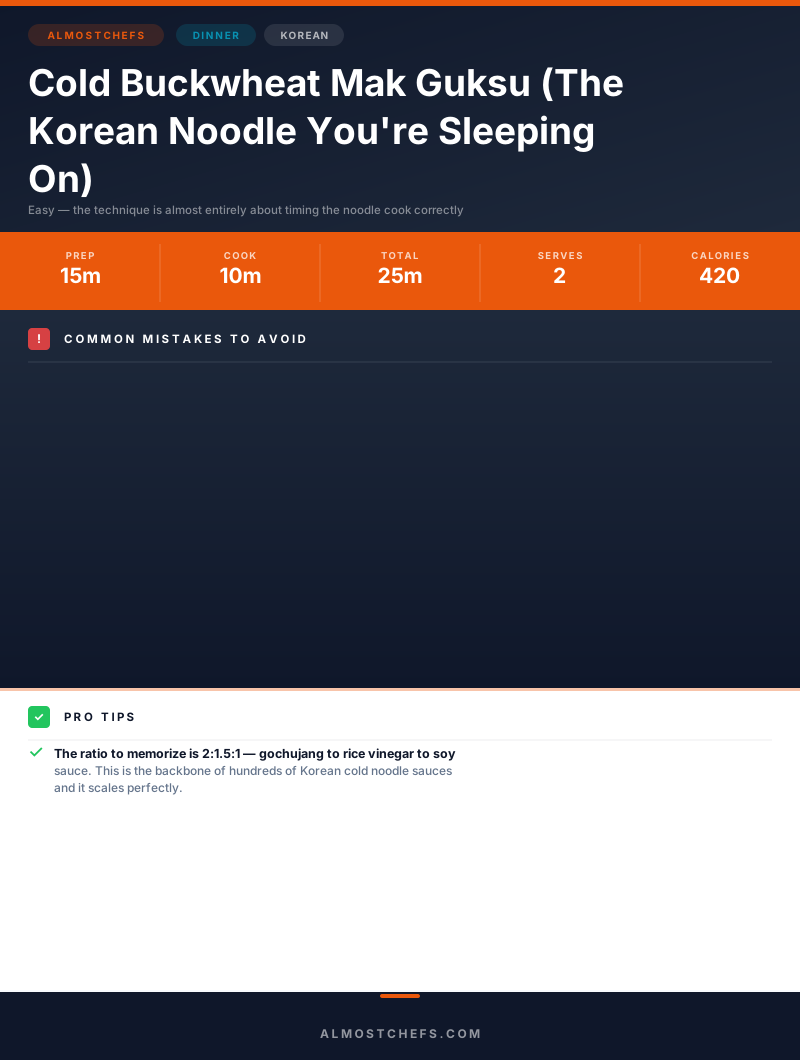
The backbone of mak guksu is a ratio: gochujang, rice vinegar, and soy sauce in a 2:1.5:1 proportion by volume. This particular balance — sweet-fermented heat up front, acidic brightness in the middle, salty depth underneath — is the same logic behind dozens of Korean cold noodle and salad dressings. Memorize the ratio and you own the dish.
What makes this version distinct is the kimchi brine. Most home cooks drain their kimchi and discard the liquid, which is a waste of something extraordinary. Kimchi brine carries weeks or months of fermentation: lactic acid, residual gochugaru, garlic, ginger, and a complex salinity that no single ingredient can replicate. Two tablespoons of brine into the sauce and suddenly the whole thing has depth that reads as experienced rather than assembled.
The sauce must be tasted cold. Cold temperature suppresses sweetness and saltiness — what tastes aggressively seasoned at room temperature will taste flat and thin straight from the refrigerator. Season to the cold state, not the ambient state. This is one of the most common failures in cold dishes, and it's invisible until the moment the bowl lands in front of you.
The Egg
A 7-minute egg is not a trend — it is the correct egg for this application. The whites are fully set, giving you clean slices that hold their shape. The yolk is jammy and just barely flowing at the center, which provides a layer of richness against lean, cold buckwheat that a hard-boiled yolk simply cannot. In a dish with this much acid and heat, you need something fatty and mild to provide balance. The egg is that thing.
Assembly and Temperature
Mak guksu is an entirely cold dish and every component should be cold before it hits the bowl. Noodles: ice-bathed. Cucumber: straight from the refrigerator. Kimchi: cold from the jar. Eggs: chilled after peeling. Sauce: made ahead and refrigerated. If you work this way, you can plate in under two minutes and the dish stays cold for the duration of the meal. If you assemble with room-temperature components, the dish is merely lukewarm before you finish the first bite.
A large mixing bowl filled with ice water is the only piece of equipment that really matters here. Everything else — the sauce, the toppings, the garnishes — is secondary to the noodle technique. Get that right and the rest of the dish assembles itself.
Mak guksu rewards speed and cold. The entire point is effortlessness delivered with precision — rough around the edges, exact where it counts.
Where Beginners Mess This Up
Before we start, read this. These are the 4 reasons your cold buckwheat mak guksu (the korean noodle you're sleeping on) will fail:
- 1
Overcooking the buckwheat noodles: Buckwheat noodles have a much smaller margin of error than wheat noodles. Thirty seconds too long and you go from pleasantly chewy to gummy and falling apart. Start testing at the 4-minute mark. The noodles should have a slight resistance at the center — not raw starch, but genuine chew. Pull them a beat before you think they're done.
- 2
Skipping the ice bath: The cold shock immediately halts cooking and firms the noodles' exterior into a silky, slightly springy texture. Without it, residual heat continues cooking the noodles in the colander and the texture turns mealy. The ice bath is not optional — it is the technique.
- 3
Under-seasoning the broth: Cold suppresses perceived saltiness and sweetness. A broth that tastes perfectly balanced warm will taste flat and thin at refrigerator temperature. Season more aggressively than feels comfortable. Taste the sauce cold, not at room temperature, before you dress the noodles.
- 4
Using warm noodles: Mak guksu is a cold dish in every sense — the noodles, the bowl, even the sauce should be chilled before assembly. Warm noodles absorb the dressing unevenly and the dish loses its defining contrast of temperature and texture.
🛠️ Core Equipment
- Large potBuckwheat noodles need room to move freely. A crowded pot causes uneven cooking and the noodles mat together. Use at least 3 quarts of water per 2 servings.
- Large bowl filled with ice waterThe ice bath stops cooking instantly and sets the noodle texture. You need enough ice and cold water to fully submerge both portions — a small bowl won't do.
- Fine-mesh sieve or colanderYou need to drain fast. Every second the noodles sit in hot water, they keep cooking. A fine-mesh sieve lets you lift and drain in one motion without losing noodle strands.
- Mixing bowl for the sauceWhisking the gochujang, vinegar, soy, and sesame oil together in a dedicated bowl before dressing lets you taste and adjust without contaminating the noodles.
Cold Buckwheat Mak Guksu (The Korean Noodle You're Sleeping On)
🛒 Ingredients
- ✦7 ounces dried buckwheat noodles (memil guksu)
- ✦2 tablespoons gochujang (Korean red pepper paste)
- ✦1.5 tablespoons rice vinegar
- ✦1 tablespoon soy sauce
- ✦1 tablespoon toasted sesame oil
- ✦2 teaspoons gochugaru (Korean red pepper flakes)
- ✦1.5 teaspoons sugar
- ✦1 teaspoon toasted sesame seeds
- ✦1 clove garlic, finely grated
- ✦1 teaspoon fresh ginger, finely grated
- ✦1/2 small cucumber, julienned
- ✦1/2 cup kimchi, roughly chopped
- ✦2 tablespoons kimchi brine
- ✦2 large eggs
- ✦2 cups crushed ice
- ✦1/2 teaspoon salt (for boiling water)
- ✦2 tablespoons cold water (to thin sauce if needed)
- ✦1 sheet roasted gim (Korean seaweed), crumbled, for garnish
- ✦Thinly sliced scallions, for garnish
👨🍳 Instructions
01Step 1
Bring a large pot of water to a rolling boil. Add salt.
02Step 2
Lower the eggs gently into the boiling water and cook for exactly 7 minutes for a jammy yolk. Transfer immediately to the ice bath and let sit for 5 minutes, then peel and halve lengthwise.
03Step 3
In a mixing bowl, whisk together gochujang, rice vinegar, soy sauce, sesame oil, gochugaru, sugar, grated garlic, ginger, and kimchi brine until fully combined and smooth.
04Step 4
Cook the buckwheat noodles according to package directions, checking for doneness at the 4-minute mark. The noodles should have a slight chew at the center.
05Step 5
Drain the noodles immediately through a fine-mesh sieve, then plunge into the ice bath. Swish vigorously with your hands for 30 seconds, then drain again.
06Step 6
Divide the noodles between two bowls. Add crushed ice alongside the noodles to keep everything cold.
07Step 7
Spoon the gochujang sauce over the noodles. Add the julienned cucumber, chopped kimchi, and halved soft-boiled eggs.
08Step 8
Garnish with crumbled gim, toasted sesame seeds, and sliced scallions. Serve immediately.
Nutrition Per Serving
Estimates based on standard preparation. Adjustments alter macros.
🔄 Substitutions
Instead of Buckwheat noodles (memil guksu)...
Use Soba noodles
Japanese soba is very similar — also made from buckwheat, similar texture and flavor. Look for 100% buckwheat soba rather than blended varieties for the closest result.
Instead of Gochujang...
Use Doenjang mixed with gochugaru
Produces a less sweet, earthier sauce with more fermented funk. Use 1.5 tablespoons doenjang and 1 tablespoon gochugaru. Completely different but equally traditional.
Instead of Rice vinegar...
Use Apple cider vinegar
Slightly more assertive flavor than rice vinegar. Start with 1 tablespoon and taste before adding the full amount — it's sharper and can overpower the gochujang.
Instead of Kimchi...
Use Thinly sliced radish or daikon dressed with rice vinegar and salt
Loses the fermented complexity but provides the necessary crunch and acidity. Let the radish sit in the vinegar dressing for 10 minutes before adding.
🧊 Storage & Reheating
In the Fridge
Store noodles and sauce separately in airtight containers for up to 1 day. Dressed noodles absorb the sauce overnight and the texture degrades. Always dress to order.
In the Freezer
Not recommended. Cooked buckwheat noodles become mealy and waterlogged after freezing and thawing.
Reheating Rules
This is a cold dish — do not reheat. If the leftover noodles have clumped, rinse briefly under cold water and drain before re-dressing.
❓ Frequently Asked Questions
What is the difference between mak guksu and naengmyeon?
Naengmyeon is the formal version — it uses a carefully prepared cold broth (often beef or dongchimi radish kimchi brine) and thinner, chewier noodles made from a blend of buckwheat and starch. Mak guksu is the casual, everyday version: a quicker sauce-dressed preparation with coarser buckwheat noodles and no elaborate broth. Mak means 'roughly' or 'casually' in Korean. The name is the whole philosophy.
Why do my buckwheat noodles always fall apart?
Almost always overcooking. Buckwheat has very little gluten compared to wheat, so the structure is more fragile. Start testing at 4 minutes. The noodles should have clear chew at the center when you bite one. Also, vigorous swishing in the ice bath strengthens the exterior — don't skip this step.
Can I make this dish gluten-free?
Only if you use 100% buckwheat noodles (not blended with wheat flour, which many brands do) and swap the soy sauce for tamari or coconut aminos. Check your gochujang label as well — some brands add wheat flour as a thickener. Purely Korean brands tend to be cleaner.
How spicy is this?
At the ratios in this recipe, it lands at a medium heat — noticeable warmth that builds as you eat but doesn't overwhelm. To reduce heat, cut the gochugaru entirely and reduce gochujang to 1 tablespoon. To increase heat, add more gochugaru rather than more gochujang, which adds sweetness along with heat.
Do I need to use crushed ice in the bowl?
Traditional mak guksu is often served directly over shaved or crushed ice, especially in summer. The ice keeps everything at temperature and slightly dilutes the sauce as it melts, mellowing the intensity. It's not mandatory, but it is how the dish is meant to be eaten. Chilling the bowl in the freezer is a reasonable compromise.
What protein works well in mak guksu besides egg?
Thinly sliced brisket or beef chuck that's been boiled and chilled is the traditional addition. Pulled rotisserie chicken also works well for a quick weeknight version. Keep proteins cold — adding warm protein to cold noodles raises the temperature of the dish and ruins the contrasting textures.
The Science of
Cold Buckwheat Mak Guksu (The Korean Noodle You're Sleeping On)
We turned everything on this page into a beautiful, flour-proof PDF cheat sheet. Print it out, stick it to your fridge, and never mess up your cold buckwheat mak guksu (the korean noodle you're sleeping on) again.
*We'll email you the high-res PDF instantly. No spam, just perfectly cooked meals.
AlmostChefs Editorial Team
We translate the internet's most popular cooking videos into foolproof, beginner-friendly written recipes. We analyze multiple methods, test them in our kitchen, and engineer a single "Master Recipe" that gives you the best possible result with the least possible stress.