Classic Macaroni and Cheese (The Creamy, Never-Grainy Method)
A rich, ultra-creamy stovetop and oven-finished macaroni and cheese built on a properly made béchamel, two-cheese blend, and a golden breadcrumb crust. We broke down the most-watched YouTube methods to find the technique that guarantees smooth, glossy sauce every single time — no gritty, broken cheese sauce ever again.

“Macaroni and cheese should be one of the simplest dishes in existence. It is also one of the most reliably ruined. The culprit is almost always the same: cheese added too hot, too fast, or to the wrong base — producing a greasy, grainy, broken sauce that no amount of stirring will fix. The solution isn't a different recipe. It's understanding why the sauce breaks in the first place, and building a method around preventing it.”
Why This Recipe Works
Macaroni and cheese sits at a strange intersection: it is simultaneously the dish most Americans have eaten hundreds of times and the dish most Americans have never made correctly from scratch. The boxed version trained an entire generation to expect a specific texture — that unnaturally smooth, almost fluorescent orange sauce — and when homemade attempts produce a grainy, broken, or dry result, people assume they did something wrong. They did. But it's one fixable thing, and once you understand it, you'll never make a broken cheese sauce again.
The Béchamel Is Not Optional
The instinct is to skip it. Melt butter, add milk, dump in cheese — why make a roux? The answer is starch. The flour in a properly made béchamel coats the cheese proteins in a layer of hydrated starch granules. This starch coating acts as a physical buffer that prevents the proteins from bonding directly with each other at high temperatures, which is exactly the mechanism behind a broken, grainy sauce. When you add cheese to plain hot milk or cream with no starch present, the proteins seize the moment the temperature climbs above roughly 155°F, squeezing out their fat and clumping into rubbery solids. The grease floats. The solids sink. The sauce is dead, and there is no bringing it back.
A roux-based béchamel takes four minutes to make. It is the single most important technique in this recipe, and in creamy pasta cooking generally. Cook the butter and flour together in a heavy saucepan over medium heat until the raw flour smell burns off and you detect the faintest nutty aroma — about 90 seconds. Then add warm milk slowly, whisking constantly, until you have a smooth, medium-thick sauce that coats a spoon. That's it. That's the whole foundation.
The Temperature Rule
Even with a proper béchamel, the most common failure point remains temperature. Cheese must be added off heat — or as close to off heat as possible — because the béchamel itself can reach temperatures high enough to break the added cheese if you add it too aggressively while the burner is still on. The protocol is simple: remove the pan from the burner entirely, wait sixty seconds for the temperature to drop slightly, then add the shredded cheese in stages, stirring each addition completely into the sauce before adding the next. The residual heat in the béchamel is more than sufficient to melt the cheese smoothly. You don't need the burner at all.
This technique also explains why pre-shredded cheese is such a consistent saboteur. Anti-caking agents like cellulose and modified starch coat every strand in the bag. These agents don't cook off or dissolve into the sauce — they remain as gritty particles suspended throughout. A fresh block of sharp cheddar, run across a box grater for three minutes, melts entirely differently: clean, smooth, and completely incorporated. The difference in texture is immediately obvious, and it costs nothing but a few minutes of effort.
The Cheese Architecture
Cheese selection matters more than most recipes admit. Sharp white cheddar provides the flavor backbone — that recognizable tang and bite. But cheddar alone produces a sauce that, while flavorful, can be slightly stringy and prone to breaking under prolonged heat. Gruyère fixes this: it has a naturally smooth, buttery melt profile due to its lower casein content and higher fat ratio, and it blends seamlessly into a béchamel without any grittiness. Parmesan contributes glutamates — the same savory depth you get from aged hard cheeses — and enough salt to round out the entire sauce without over-salting. Each cheese is solving a different problem. Together, they cover each other's weaknesses in a way that no single-cheese sauce can.
The Pasta Timing Problem
The oven phase continues cooking the pasta, and most recipes don't account for this. If the elbow macaroni goes into the baking dish fully cooked, it comes out bloated and soft — the kind of texture that made you think something was wrong with the recipe when the real issue was timing. Pull the pasta two minutes before the package's al dente recommendation. It should feel underdone when you taste it — noticeably firm, almost resistant. By the time the dish bakes at 375°F for twenty-five minutes, the pasta will have absorbed additional sauce and finished cooking to exactly the right texture inside a baking dish that holds the heat evenly across the entire surface.
The Crust Question
A breadcrumb crust is not mere garnish — it is a texture layer that makes the difference between a side dish and a centerpiece. Panko (Japanese-style breadcrumbs) is the superior choice here: the larger, airier flakes create a crust that is simultaneously crispy on top and light enough not to feel like you're eating a coating. Tossed in melted butter and Parmesan before scattering, they arrive at the table as a deeply golden, shatteringly crisp cap over the creamy pasta beneath. The contrast between the crunchy crust and the soft, saucy interior is the entire point of baking rather than simply serving stovetop. If you skip the oven step, you are making a different — and perfectly valid — dish. But you are not making this dish.
Where Beginners Mess This Up
Before we start, read this. These are the 4 reasons your classic macaroni and cheese (the creamy, never-grainy method) will fail:
- 1
Adding cheese to a sauce that's too hot: Above 155°F (68°C), the proteins in cheese seize and squeeze out their fat, leaving you with rubbery solids floating in a greasy puddle. Always pull the pot off the heat or reduce it to the lowest setting before adding shredded cheese. The residual heat in the béchamel is more than enough to melt it smoothly.
- 2
Using pre-shredded cheese: Pre-shredded cheese is coated in cellulose and potato starch to prevent clumping in the bag. Those same anti-clumping agents also prevent the cheese from melting cleanly into a sauce — they create a gritty, slightly grainy texture no matter what you do. Buy blocks and shred them yourself. It takes three minutes and it's non-negotiable.
- 3
Skipping the roux or making it wrong: The béchamel (butter-flour base) is the structural foundation of the sauce. It coats the cheese proteins in starch, which stabilizes them at higher temperatures and prevents the sauce from breaking. A too-thin roux means the sauce won't hold. A burnt roux means flour taste throughout. Cook it just until it smells faintly nutty and turns a very pale blonde — about 90 seconds.
- 4
Undercooking the pasta before baking: If you're finishing the mac and cheese in the oven, cook the pasta only to al dente — it should have real resistance when bitten. The oven phase with the sauce adds additional cook time, and pasta that went in fully cooked comes out soft and bloated. Pull it two minutes early. It will catch up.
The Video Reference Library
Want to see it in action? Here are the exact videos we analyzed and combined to build this foolproof recipe translation:
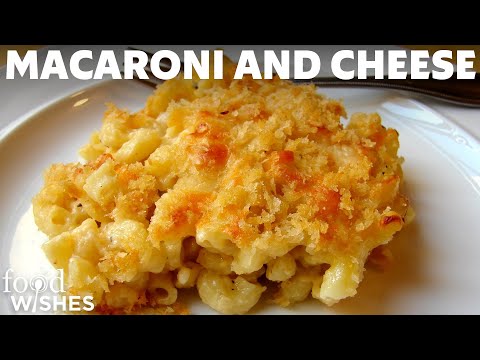
The reference video for this recipe. Walks through the béchamel method clearly and demonstrates exactly when and how to add cheese for a glossy, unbroken sauce. Watch the cheese addition sequence closely.
2. Why Your Cheese Sauce Breaks (And How to Fix It)
A deep-dive into the food science of cheese sauces, explaining protein and fat behavior at different temperatures. Invaluable if you've ever ended up with a greasy, grainy result and couldn't figure out why.
3. Baked Mac and Cheese: Breadcrumb Crust TechniqueFocuses specifically on the oven-finishing step and how to achieve a golden, crispy breadcrumb top without drying out the pasta underneath. Good reference for getting the bake timing right.
🛠️ Core Equipment
- Heavy-bottomed saucepanEven, controlled heat across the base is essential for making béchamel without scorching. A [heavy saucepan](/kitchen-gear/review/saucepan) eliminates the hot spots that burn the roux before it's ready.
- Box grater or rotary cheese graterFreshly grated cheese melts at least 30% more smoothly than pre-shredded. A [box grater](/kitchen-gear/review/box-grater) with a medium-fine side gives you the ideal shred texture for sauce work.
- 2-quart baking dishFor the oven-finished version, a ceramic or enameled [baking dish](/kitchen-gear/review/baking-dish) retains heat evenly and gives you a properly set, cuttable mac rather than a loose, soupy center.
- WhiskCritical for incorporating milk into the roux without lumps. A flat whisk works best in a saucepan — it reaches the corners and edges where lumps hide.
Classic Macaroni and Cheese (The Creamy, Never-Grainy Method)
🛒 Ingredients
- ✦1 pound elbow macaroni
- ✦4 tablespoons unsalted butter
- ✦3 tablespoons all-purpose flour
- ✦3 cups whole milk, warmed
- ✦1/2 cup heavy cream
- ✦2 cups sharp white cheddar, freshly grated (from block)
- ✦1 cup Gruyère, freshly grated (from block)
- ✦1/2 cup Parmesan, freshly grated
- ✦1 teaspoon dry mustard powder
- ✦1/4 teaspoon freshly grated nutmeg
- ✦1/4 teaspoon cayenne pepper
- ✦1 teaspoon kosher salt, plus more for pasta water
- ✦1/2 teaspoon freshly ground black pepper
- ✦1/2 cup panko breadcrumbs
- ✦1 tablespoon unsalted butter, melted (for topping)
- ✦1 tablespoon fresh flat-leaf parsley, finely chopped (optional)
👨🍳 Instructions
01Step 1
Bring a large pot of heavily salted water to a boil. Cook the elbow macaroni for 2 minutes less than the package's al dente time. Drain and toss with a small drizzle of butter to prevent sticking. Set aside.
02Step 2
Preheat your oven to 375°F (190°C) if finishing in the oven.
03Step 3
In a heavy-bottomed saucepan over medium heat, melt 4 tablespoons butter. Add the flour all at once and whisk constantly for 90 seconds until the mixture smells faintly nutty and turns a very pale blonde color.
04Step 4
Slowly pour in the warmed milk in a thin, steady stream, whisking vigorously the entire time. Add the heavy cream. Continue whisking over medium heat for 4-5 minutes until the béchamel thickens enough to coat the back of a spoon.
05Step 5
Stir in the dry mustard, nutmeg, cayenne, salt, and black pepper.
06Step 6
Remove the pan from heat completely. Wait 60 seconds. Then add the grated cheddar and Gruyère in three additions, stirring each fully into the sauce before adding the next.
07Step 7
Stir the cooked pasta into the cheese sauce until every piece is thoroughly coated.
08Step 8
Transfer to a buttered 2-quart baking dish. Spread evenly.
09Step 9
Combine panko breadcrumbs, melted butter, and Parmesan. Scatter evenly over the top of the pasta.
10Step 10
Bake at 375°F for 20-25 minutes until the sauce is bubbling at the edges and the breadcrumb topping is deep golden brown.
11Step 11
Remove from oven and let rest for 5 minutes before serving. Garnish with fresh parsley if desired.
Nutrition Per Serving
Estimates based on standard preparation. Adjustments alter macros.
🔄 Substitutions
Instead of Gruyère...
Use Fontina or Havarti
Both melt even more smoothly than Gruyère. Fontina is slightly more neutral; Havarti adds a mild buttery note. Either works well as a creamy base cheese.
Instead of Heavy cream...
Use Evaporated milk
A classic diner technique — evaporated milk's reduced water content produces a denser, richer sauce that's surprisingly stable. Don't substitute with regular milk; the results are noticeably thinner.
Instead of Panko breadcrumbs...
Use Crushed Ritz crackers or crushed saltines
Ritz crackers add a distinct buttery richness to the crust that many consider superior to plain breadcrumbs. Use one sleeve, crushed coarsely, mixed with one tablespoon of melted butter.
Instead of Elbow macaroni...
Use Cavatappi, shells, or penne
Cavatappi (corkscrew) is the professional kitchen's preferred shape — the ridges and hollow center trap sauce inside each piece. Medium shells work similarly. Avoid smooth pastas like penne — the sauce slides off.
🧊 Storage & Reheating
In the Fridge
Store covered in the baking dish or an airtight container for up to 4 days. The flavors meld and some argue it's better on day two.
In the Freezer
Freeze before baking for best results — assemble through the breadcrumb topping, wrap tightly with foil, and freeze for up to 2 months. Bake directly from frozen at 375°F for 45-50 minutes.
Reheating Rules
Add 2 tablespoons of whole milk per portion, cover with foil, and reheat at 325°F for 15-20 minutes. Stovetop reheating with a splash of milk over low heat also works well. The microwave dries it out significantly — use only when necessary and cover with a damp paper towel.
❓ Frequently Asked Questions
Why is my cheese sauce grainy and gritty?
Two causes, one solution. Either the sauce was too hot when you added the cheese, causing the proteins to seize and expel fat, or you used pre-shredded cheese coated in anti-clumping starches. Pull the pan fully off the heat before adding cheese, and always shred from a block.
Can I make this without baking it in the oven?
Absolutely. Stovetop mac is richer and creamier than the baked version because none of the sauce evaporates. Just combine the pasta and sauce in the pot, adjust salt, and serve immediately. Skip the breadcrumbs or toast them separately in a dry pan and scatter over individual portions.
What's the best cheese combination for mac and cheese?
Sharp white cheddar for flavor backbone, Gruyère for smooth meltability, and a hard aged cheese like Parmesan for depth and umami. The ratio should weight heavily toward cheddar (about 50%) with the others supporting. Avoid processed cheeses unless you specifically want that ultra-smooth diner style — in which case, American cheese melts flawlessly.
My sauce is too thick. How do I fix it?
Add warm whole milk a splash at a time, stirring constantly over low heat until you reach the desired consistency. Never add cold milk directly — it can cause the sauce to tighten further before it loosens. Always warm it first.
Can I prepare this ahead of time?
Yes. Assemble completely — pasta in sauce, breadcrumb topping and all — cover with foil, and refrigerate up to 24 hours before baking. Add 5-8 extra minutes to the bake time since it's going in cold. This is the ideal dinner party approach.
Why does my baked mac dry out in the oven?
The pasta keeps absorbing sauce even during baking. Make the sauce slightly looser than you think it needs to be before adding the pasta — it should look almost too saucy at the assembly stage. Also, don't overbake; once the crust is golden and the edges are bubbling, it's done. Every extra minute past that point is moisture leaving the dish.
The Science of
Classic Macaroni and Cheese (The Creamy, Never-Grainy Method)
We turned everything on this page into a beautiful, flour-proof PDF cheat sheet. Print it out, stick it to your fridge, and never mess up your classic macaroni and cheese (the creamy, never-grainy method) again.
*We'll email you the high-res PDF instantly. No spam, just perfectly cooked meals.
AlmostChefs Editorial Team
We translate the internet's most popular cooking videos into foolproof, beginner-friendly written recipes. We analyze multiple methods, test them in our kitchen, and engineer a single "Master Recipe" that gives you the best possible result with the least possible stress.