Classic Lox and Bagels (The Assembly Masterclass)
A Jewish-American breakfast institution: toasted whole grain bagels layered with silky smoked salmon, cream cheese, crisp cucumbers, red onion, and capers. We broke down the most popular methods to build one foolproof assembly technique that nails the texture contrast and flavor balance every time.
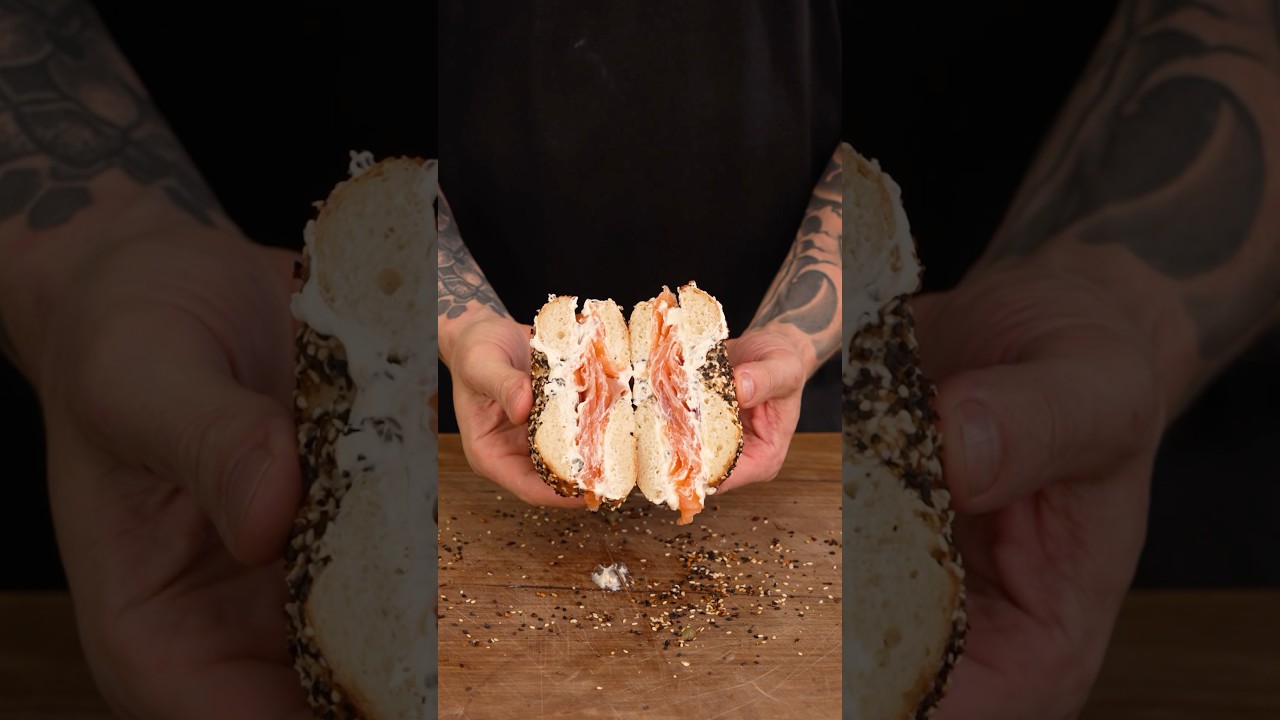
“Lox and bagels looks like it can't be messed up. It can. The wrong toasting level makes the bagel crack under the spread. Too much cream cheese drowns the salmon. Raw red onion added too early turns pungent and sharp within minutes. This is a dish built on balance — and balance requires knowing the order of operations.”
Why This Recipe Works
Lox and bagels is the easiest dish in American breakfast culture to get slightly wrong. Not catastrophically wrong — wrong in the quiet, deflating way where each component is technically fine but the whole thing doesn't sing. The bagel softens under the toppings. The cream cheese is too thick in the middle and absent at the edges. The salmon slides. The red onion punches through everything else like an uninvited guest. These are all fixable problems, and fixing them requires understanding why they happen in the first place.
The Bagel Is the Foundation
Everything else is toppings. The bagel is the structure, and if the structure fails, nothing else matters. Whole grain bagels have a denser, more open crumb than white bagels, which makes them both more flavorful and more prone to tearing if the cream cheese isn't properly softened. Toast to light golden brown — firm enough to hold under compression without becoming so hard it cracks when you bite. The goal is a surface that can take a spread without absorbing it immediately.
Butter goes on first, while the bagel is still hot. This creates a temporary moisture barrier between the bread and the cream cheese. Without it, the warm bagel slowly wicks moisture out of the cream cheese layer, softening the surface within minutes. The butter layer buys you time — and the richness it adds is not unwelcome in a dish that already leans into fat as a primary flavor element.
The Cream Cheese Problem
Block cream cheese at refrigerator temperature is approximately the consistency of cold clay. Spreading it on a toasted bagel with any pressure at all tears the surface. The solution is patience: leave it out for 20 minutes minimum. Softened cream cheese spreads in a single smooth pass from center to edge, with no tearing and no uneven thickness. Use an offset spatula rather than a butter knife — the angled blade gives you far more control over coverage and thickness than a straight edge.
Two tablespoons per half is the correct amount. Less and you lose the creamy buffer that makes the salmon-to-bread ratio work. More and you can't taste the lox through the dairy. This is a balanced dish, not a cream cheese delivery vehicle.
The Salmon Question
Quality is everything here because smoked salmon is almost the only protein in the dish. You're tasting it directly, unadorned, without the cover of a sauce or a cooking process. Cheap lox smells aggressively fishy, has a slick, greasy texture, and is often over-salted to compensate for low-quality fish. Good lox is silky, slightly translucent, deeply orange-pink, and tastes of the sea without assaulting you with brine. Buy the best you can reasonably afford — this is a 14-minute dish where ingredient quality is the entire point.
Layer the salmon in overlapping, slightly folded slices rather than flat sheets. A flat slice of salmon lays like cellophane and peels off as a single unit when you bite. Folded and layered, it has structural integrity, creates a slightly raised texture that holds the vegetable toppings above the cream cheese, and distributes flavor more evenly across each bite.
The Toppings as Architecture
Cucumber, tomato, red onion, and capers each serve a specific function. Cucumber provides cool, watery crunch that refreshes the palate between bites of rich salmon. Tomato adds acidity and a slight sweetness. Red onion contributes a sharp sulfurous bite that cuts through the fat of cream cheese and salmon. Capers provide concentrated brine — a small, intense hit of salt and vinegar that snaps the whole flavor profile into clarity.
Leave out any one of these and the dish feels incomplete. They are not garnish. They are the counterbalance to the richness of the salmon and cream cheese, and without them the whole thing tastes monolithic.
The Lemon Is the Last Step
Acid finishes fat-forward dishes. Always. The lemon squeeze at the end brightens every component simultaneously: it makes the dill and chives smell greener, it makes the cucumber crisper on the palate, and it makes the salmon taste cleaner and lighter than it did a second before. Add it too early and the acid wilts the herbs and draws moisture out of the cucumber slices, which then transfers to the bagel. Squeeze it at the table, thirty seconds before you eat. It takes three seconds and changes the entire dish.
This is not a recipe that rewards improvisation or shortcuts. It rewards attention to sequence. Get the order right, use room-temperature cream cheese, buy good lox, and finish with lemon. That's the whole system.
Where Beginners Mess This Up
Before we start, read this. These are the 4 reasons your classic lox and bagels (the assembly masterclass) will fail:
- 1
Under-toasting the bagel: A barely-toasted bagel is soft and collapses under the weight of toppings, creating a soggy mess within minutes. You want light golden brown with a firm, slightly crispy surface that can hold cream cheese without tearing. If your bagel is fresh from the bakery, toast it anyway — structure matters.
- 2
Cold cream cheese straight from the fridge: Cold cream cheese tears the bagel surface instead of spreading smoothly. It needs to be fully softened at room temperature for at least 20 minutes. If you skip this, you get uneven coverage, ripped bagel, and frustration — all avoidable.
- 3
Piling on toppings out of order: Cream cheese goes directly on the warm bagel. Salmon goes on the cream cheese. Vegetables go on the salmon. This sequence isn't aesthetic preference — it's functional. Salmon on bare bagel slides. Vegetables under salmon compress and release moisture into the bread. Order is architecture.
- 4
Skipping the lemon finish: Smoked salmon is rich, fatty, and salty. Without acid, the whole bite sits heavy. Fresh lemon juice added at the last second before eating cuts through the fat, brightens the herbs, and makes the entire thing taste cleaner. Do not skip it, and do not add it early — it will wilt the herbs and make the cucumber weep.
The Video Reference Library
Want to see it in action? Here are the exact videos we analyzed and combined to build this foolproof recipe translation:
The foundational walkthrough that covers toasting level, cream cheese technique, and layering order. Excellent close-ups of the salmon folding technique that creates volume without bulk.
🛠️ Core Equipment
- Toaster or toaster ovenEven, controlled heat on both cut surfaces simultaneously. A skillet works in a pinch but requires flipping and monitoring. A [toaster oven](/kitchen-gear/review/toaster-oven) is the superior tool here — you can toast two full bagels at once without babysitting.
- Offset spatula or butter knifeFor spreading softened cream cheese without tearing the bagel surface. An [offset spatula](/kitchen-gear/review/offset-spatula) gives you more control over coverage than a standard butter knife, especially on whole grain bagels with an uneven crumb.
- Sharp serrated knifeFor slicing the bagel cleanly without compressing it. A dull knife drags and tears, leaving a ragged edge that holds toppings unevenly. Keep your [serrated knife](/kitchen-gear/review/serrated-knife) sharp — it matters more here than people think.
- Small citrus juicerFor the lemon finish. Squeezing directly risks seeds landing in your food. A [citrus juicer](/kitchen-gear/review/citrus-juicer) gives you clean, seed-free juice with one motion.
Classic Lox and Bagels (The Assembly Masterclass)
🛒 Ingredients
- ✦2 whole grain bagels, fresh
- ✦4 ounces smoked salmon (lox), thinly sliced
- ✦4 tablespoons cream cheese, softened to room temperature
- ✦1 medium English cucumber, thinly sliced
- ✦1 medium ripe tomato, sliced
- ✦2 tablespoons fresh dill, chopped
- ✦1 small red onion, thinly sliced
- ✦2 tablespoons capers, drained
- ✦2 tablespoons unsalted butter, softened
- ✦1 lemon, cut into wedges for serving
- ✦2 large eggs (optional, for serving alongside)
- ✦2 tablespoons fresh chives, minced
- ✦1 teaspoon cracked black pepper
- ✦Sea salt to taste
👨🍳 Instructions
01Step 1
Remove cream cheese and butter from the fridge at least 20 minutes before you start. Both must be fully softened before use.
02Step 2
Slice each bagel horizontally with a serrated knife using a gentle sawing motion. Do not press down — let the blade do the work.
03Step 3
Toast the bagel halves until light golden brown with a slightly crispy exterior, about 3-4 minutes. They should have structure but not be cracker-hard.
04Step 4
While still hot, spread softened butter evenly across each toasted half. The heat from the bagel will melt it into the crumb.
05Step 5
Layer cream cheese generously on top of the buttered surface, about 2 tablespoons per half. Spread to the edges — no bare spots.
06Step 6
Arrange the smoked salmon in overlapping layers across the cream cheese, covering the entire surface. Fold or drape slices slightly for volume.
07Step 7
Layer cucumber slices and tomato across the salmon in an even, organized pattern.
08Step 8
Scatter thinly sliced red onion and drained capers across the top.
09Step 9
Sprinkle fresh dill and chives evenly over the assembled bagels. Season with cracked black pepper and a small pinch of sea salt.
10Step 10
Squeeze fresh lemon juice directly over each bagel just before serving. Serve immediately.
Nutrition Per Serving
Estimates based on standard preparation. Adjustments alter macros.
🔄 Substitutions
Instead of Cream cheese...
Use Greek yogurt or whipped ricotta
Tangier and lighter than standard cream cheese. Greek yogurt adds protein and probiotics. Whipped ricotta is creamier with a more delicate flavor. Both spread more easily straight from the fridge than block cream cheese.
Instead of Plain or white bagel...
Use Whole grain, sprouted, or multigrain bagel
Nuttier and more complex in flavor with better satiety. Toasts slightly faster. The denser crumb holds toppings more firmly than a white bagel.
Instead of Smoked salmon (lox)...
Use Wild-caught salmon or trout, thinly sliced
Fresher, cleaner flavor with less sodium. You lose the distinctive smoky cure but gain more pronounced natural fish flavor. Works well if you find standard lox too salty.
Instead of Raw red onion...
Use Quick-pickled shallots
Soak thinly sliced shallots in rice vinegar, a pinch of sugar, and salt for 20 minutes. The result is a mellow, tangy, slightly sweet version that doesn't overpower the salmon and has better digestibility than raw alliums.
🧊 Storage & Reheating
In the Fridge
Assembled bagels do not store. Build only what you plan to eat immediately. Components — sliced vegetables, cream cheese, lox — can be refrigerated separately for up to 2 days (lox) or 5 days (vegetables, cream cheese).
In the Freezer
Do not freeze assembled bagels. Plain bagels freeze well for up to 3 months — slice before freezing and toast directly from frozen, adding 1-2 minutes to your standard toast time.
Reheating Rules
Bagels are best toasted fresh. If you must reheat a plain toasted bagel, use a toaster oven at 325°F for 3-4 minutes. Do not microwave — it steams the crumb into a gummy mass.
❓ Frequently Asked Questions
What's the difference between lox, gravlax, and smoked salmon?
Lox is cured in salt brine but not smoked — it's the silkiest and most delicate, with a clean salty flavor. Gravlax is cured with salt, sugar, and dill, giving it a slightly sweet herbal note. Smoked salmon is cold-smoked after curing, adding a smoky layer on top of the brine. All three work on a bagel, but classic lox and bagels uses true lox or cold-smoked salmon. Hot-smoked salmon is too flaky and dry for this application.
Why does my cream cheese keep tearing the bagel?
It's too cold. Cream cheese straight from the refrigerator is firm enough to drag and tear the toasted bagel surface. Leave it out for at least 20 minutes before spreading. If you're in a rush, microwave for 10 seconds — not more, or it becomes liquid at the edges.
Can I make this ahead for brunch guests?
Partially. Toast the bagels up to 30 minutes ahead and keep them in a warm oven at 200°F uncovered. Prep all toppings and set out in separate bowls. Assemble individual bagels to order rather than pre-assembling — once the cream cheese hits the warm bagel and the cucumber goes on top, you have maybe 5 minutes before the texture degrades.
How much lox per person is actually enough?
Two ounces per person is standard, which is what this recipe uses. More than that tips the balance toward the fish dominating every bite. If you're serving lox as the centerpiece of a larger brunch spread with eggs and sides, 1.5 ounces per person is enough.
Are capers necessary?
Culinarily, no. Structurally, yes. Capers provide the sharp, briny counterpoint that prevents the dish from tasting entirely rich and fatty. Without them, lox and bagels is pleasant but one-dimensional. The brine note from even a small scatter of capers snaps the whole flavor profile into focus. If you genuinely dislike capers, substitute a small amount of finely minced cornichon.
What's the correct cream cheese to salmon ratio?
Equal visual coverage — cream cheese should cover the bagel fully, salmon should cover the cream cheese fully. You don't want to taste cream cheese without salmon in any bite, or salmon without cream cheese. About 2 tablespoons of cream cheese and 2 ounces of salmon per bagel half achieves this balance reliably.

The Science of
Classic Lox and Bagels (The Assembly Masterclass)
We turned everything on this page into a beautiful, flour-proof PDF cheat sheet. Print it out, stick it to your fridge, and never mess up your classic lox and bagels (the assembly masterclass) again.
*We'll email you the high-res PDF instantly. No spam, just perfectly cooked meals.
AlmostChefs Editorial Team
We translate the internet's most popular cooking videos into foolproof, beginner-friendly written recipes. We analyze multiple methods, test them in our kitchen, and engineer a single "Master Recipe" that gives you the best possible result with the least possible stress.