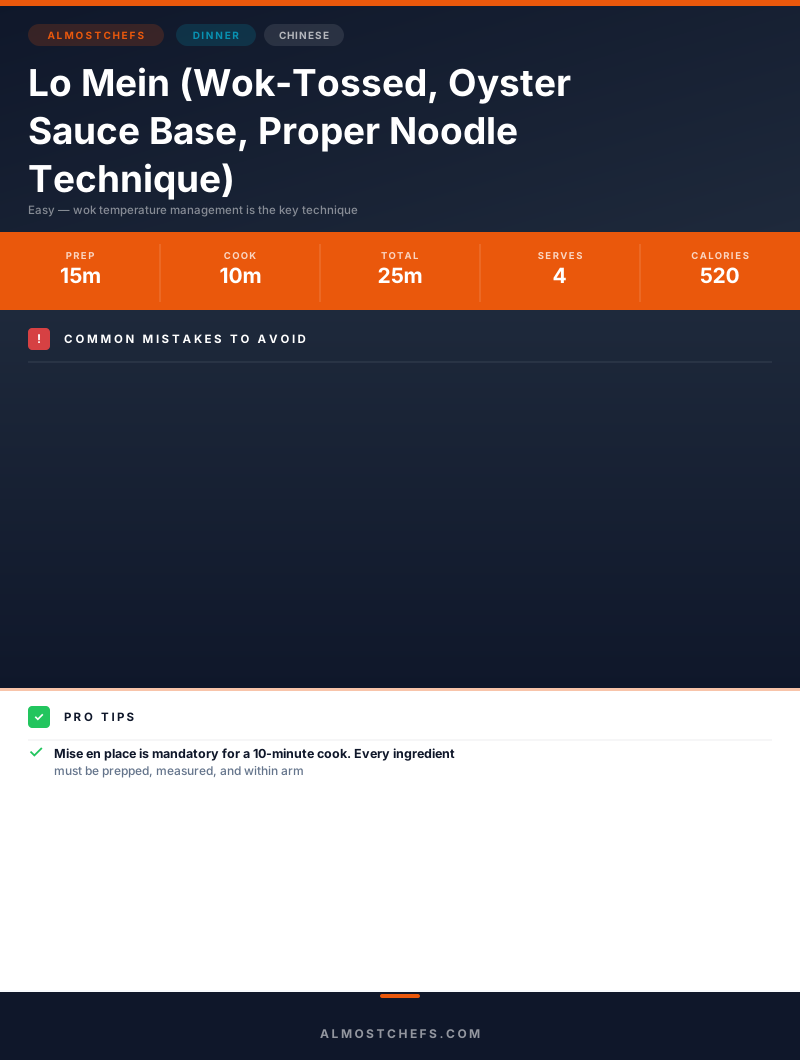
Lo Mein (Wok-Tossed, Oyster Sauce Base, Proper Noodle Technique)
Lo mein built on pre-cooked, oil-tossed egg noodles, a high-heat wok, and an oyster sauce base that coats every strand without pooling at the bottom of the bowl.

“Lo mein takes 10 minutes of active cooking and produces a result that is significantly better at home than most takeout because you control the heat and the sauce ratio. The technique is not complicated, but it requires understanding what the dish actually is before you start.”
Why This Recipe Works
Lo mein is a noodle dish, not a stir-fry — that distinction is worth understanding. Stir-frying is a technique that relies on high heat applied quickly to ingredients that are raw or minimally cooked going in. Lo mein uses pre-cooked noodles combined with a separately cooked protein and vegetables, brought together in a hot wok with a pre-made sauce. The wok provides finishing heat, sauce reduction, and textural development. The actual cooking of the components happens before they meet in the wok.
Lo Mein vs. Chow Mein: The Fundamental Distinction
The name tells you everything. In Cantonese, "lo" (撈) means to toss or stir; "mein" (麵) means noodles. "Chow" (炒) means to fry or stir-fry. The entire difference between these two dishes exists in what happens to the noodle before it reaches the serving bowl.
Lo mein noodles are parboiled until mostly cooked (soft, pliable), drained, tossed with oil, then added to a wok that already contains cooked protein, vegetables, and sauce. The wok step takes 90 seconds — the noodles are already cooked. They're absorbing sauce and finishing their cook against the residual heat. The result is a soft, chewy, sauce-coated noodle with cohesive texture.
Chow mein noodles are either pressed into a cake and pan-fried until crispy (the Hong Kong-style approach), or thin dried noodles are stir-fried dry until some develop a crunch. The texture goal is the opposite of lo mein — crispiness rather than chewiness.
Understanding this means the parboil step is not optional prep work that can be skipped in the interest of time. It is the defining technique that creates lo mein instead of something else.
The Wok Heat Problem in Home Kitchens
Commercial wok burners produce between 150,000 and 300,000 BTU of heat output. A typical home gas burner produces between 8,000 and 15,000 BTU. This is not a minor difference — it is a 10-to-20-fold gap in thermal energy that fundamentally changes the cooking dynamics.
In a commercial kitchen, a whole wok-load of noodles and vegetables can be stir-fried at constant high temperature because the burner replaces heat as fast as the cold ingredients absorb it. Temperature stays at 450-500°F throughout the cook. Maillard reactions occur on vegetable surfaces. Fat in the wok reaches temperatures where it produces the slightly smoky, char-adjacent flavor called wok hei. The sauce reduces in seconds rather than minutes.
In a home kitchen, adding cold ingredients to a hot wok drops the temperature immediately. The mass of 4 servings of cold noodles, protein, and vegetables absorbs heat faster than a 12,000 BTU burner can replace it. The wok temperature drops below the Maillard threshold, steam from the food moisture builds up in the pan rather than vaporizing immediately, and you are steaming your stir-fry rather than frying it.
The home kitchen workarounds are: preheat the wok longer (3-4 minutes, until it is visibly smoking before oil goes in), cook in smaller batches rather than loading the full recipe at once, and move fast once cooking begins. Smaller thermal load per batch means the wok temperature stays higher throughout the cook. The results are measurably better than attempting the full recipe volume in one go.
Sauce Mechanics: Why the Ratio Matters
The oyster sauce base in this recipe — oyster sauce, soy sauce, hoisin, sesame oil, sugar — is designed to coat rather than pool. The sugar content and the oyster sauce viscosity combine to create a sauce that, when introduced to a hot wok, reduces quickly and its sugar begins to caramelize, increasing both viscosity and adhesion. A properly executed lo mein sauce coats every noodle strand and clings to it; excess sauce should be minimal or absent in the serving bowl.
Oyster sauce is the dominant ingredient because it provides two things simultaneously: the briny, savory depth from concentrated oyster extract (which contributes glutamates and umami compounds), and a thick, slightly viscous body that promotes coating. Soy sauce provides the primary saltiness and adds a secondary umami contribution from its own glutamate and nucleotide content. Hoisin provides sweetness and complexity from its fermented bean paste base. Sesame oil is added to the pre-mixed sauce (not the wok) because toasted sesame oil has a smoke point of approximately 350°F — well below the wok temperature during active cooking — and burns bitter if added directly to the hot wok surface.
The sugar is functional beyond flavor. In a hot wok, simple sugars undergo Maillard reactions with amino acids from the protein residue and noodle surface at temperatures above 280°F. This produces new flavor compounds — the same category of compounds responsible for the appealing browning in seared meat or caramelized onions — and contributes the slight lacquered quality to well-executed stir-fry sauce. One teaspoon of sugar in the total sauce volume is below the threshold of perceptible sweetness in the finished dish but above the threshold of meaningful Maillard contribution. It is a functional ingredient, not a sweetener.
Vegetable Geometry: Why Uniform Cuts Matter
A wok cook that lasts 10 minutes has no margin for inconsistent vegetable preparation. A 1/4-inch thick carrot matchstick cooks in 2 minutes in a hot wok; a 1/2-inch carrot chunk takes 4-5 minutes. In a 10-minute total cook, the thick chunks are still raw when the thin matchsticks are overdone. The uniformity requirement for stir-fry is not aesthetic — it is the physical constraint of a cooking method that operates too fast for ingredient variation to be managed by timing alone.
The target cut for all vegetables in this recipe is consistent: approximately 1/8-inch thick, 2 inches long. This produces a cook time of roughly 90-120 seconds per vegetable type at proper wok temperature. Hard vegetables (carrot, bell pepper) go in first; leafy vegetables (cabbage, bok choy) go in 60 seconds later. This staggering accounts for the density difference between the two vegetable categories while keeping the total vegetable cook time within the 3-minute window of a hot wok.
A good Dutch oven for the parboiling step, combined with the right wok technique, means every component enters the wok at the right stage of preparation — the noodles parboiled to 80%, the vegetables cut to consistent size, the sauce pre-mixed and ready. When everything is prepared correctly before the wok gets hot, the 10-minute cook produces a result that tastes like it took significantly longer.
Where Beginners Mess This Up
Before we start, read this. These are the 4 reasons your lo mein (wok-tossed, oyster sauce base, proper noodle technique) will fail:
- 1
Using dry noodles straight from the package: Lo mein requires pre-cooked noodles that are parboiled, drained, and tossed with a small amount of oil before entering the wok. Dry noodles dumped into a stir-fry do not cook evenly — the exterior in contact with the wok base overcooks and sticks while the interior stays raw. Parboiling takes 2 minutes and produces noodles that are 80% cooked, flexible, and ready to finish in the wok with the sauce. Tossing the parboiled noodles with oil immediately after draining prevents them from clumping into a solid mass before they reach the wok.
- 2
Low wok temperature: Lo mein cooked in a pan that isn't hot enough produces steamed, limp noodles sitting in a watery sauce rather than the slightly chewy, seared noodles with a concentrated, cling-capable sauce. The wok must be preheated until it is visibly smoking before any oil or food is added. Smoking at this stage means the iron is above 400°F — hot enough to vaporize moisture immediately on contact, preventing the 'steaming' effect that ruins texture. Home ranges typically cannot match restaurant wok burner output, which means you must cook in smaller batches and work faster to compensate.
- 3
Adding the sauce too early: The oyster sauce base must go into the wok after the protein and vegetables have developed color and the noodles are already in the pan. Adding the sauce to the wok before the noodles are in means the sugar in the hoisin and oyster sauce begins to caramelize and then burn before the noodles can absorb the sauce. Burned sugar in a stir-fry sauce produces a bitter, acrid coating rather than a savory-sweet glaze. The sequence: hot wok, oil, protein, aromatics, vegetables, noodles, sauce. The sauce is always last.
- 4
Inconsistent vegetable cut size: A 10-minute wok cook requires all ingredients to be approximately the same size for even cooking. Thick carrot matchsticks take 3-4 minutes to cook through; thin-shredded cabbage takes 90 seconds. If your vegetables are inconsistently cut, some will be raw while others are overcooked by the time everything looks done. Cut all vegetables to roughly 1/8-inch thickness and 2-inch lengths. This uniformity is the single most important prep step for stir-fry cooking.
The Video Reference Library
Want to see it in action? Here are the exact videos we analyzed and combined to build this foolproof recipe translation:
The primary technique reference for this recipe. Covers wok preheating to smoking temperature, the noodle parboil and oil-toss method, sauce addition timing, and the visual cues for when the dish is done. The wok temperature section is essential for home cooks working on lower-output burners.
Clear comparison of the two dishes: lo mein uses pre-cooked tossed noodles for a softer result; chow mein uses either crispy pan-fried noodles or dry-tossed noodles. The fundamental difference in noodle preparation drives the entirely different texture profile of each dish.
Specifically addresses the limitation of home range burner output versus restaurant wok burners and provides the workarounds: smaller batches, longer preheat times, and the specific visual cues for adequate heat. Critical for anyone cooking this recipe on a standard electric or gas home range.
🛠️ Core Equipment
- Carbon steel wok or large cast iron skilletThe wok is the cooking vessel this dish is designed for. Its shape concentrates heat at the base while the sloped sides allow ingredients to be pushed away from the hot zone and held at lower temperatures while the next batch cooks. Carbon steel develops a seasoned surface that conducts heat more evenly with each use. A large cast iron skillet is the best home substitute — use a 12-inch skillet at minimum, preheated until smoking.
- Large pot for parboiling noodlesLo mein noodles parboil in 2-3 minutes in vigorously boiling water. The pot needs to be large enough to accommodate the noodle volume without crowding — crowded noodles in insufficient water don't parboil evenly and stick together in clumps.
- Wok spatula (chuan) or flat wooden spatulaThe curved edge of a wok spatula is matched to the curved base of a wok, allowing you to scrape and toss ingredients from the bottom of the wok without leaving a portion behind. A flat spatula misses the curved base and allows ingredients to sit in the hot zone and burn while you're attending to the top layer.
- Mixing bowl for sauceThe sauce components — oyster sauce, soy sauce, sesame oil, hoisin, sugar, white pepper — must be combined and ready before the wok is heated. Lo mein moves too fast (10 minutes total cook time) for measuring and mixing sauce components during cooking. Prep the sauce, prep the aromatics, prep the vegetables, then heat the wok.
- Colander and tongs for noodle managementParboiled noodles drain in a colander and are immediately tossed with oil using tongs to prevent clumping. Noodles that sit in a colander without oil tossing form a solid mass within 60 seconds of draining. Tongs allow you to toss and separate the noodles efficiently without burning your hands in the steam.
Lo Mein (Wok-Tossed, Oyster Sauce Base, Proper Noodle Technique)
🛒 Ingredients
- ✦1 lb (450g) fresh lo mein noodles or thick dried egg noodles
- ✦2 tablespoons vegetable oil, divided
- ✦1 lb (450g) protein: boneless chicken thighs (thinly sliced), shrimp (peeled), or flank steak (thinly sliced)
- ✦4 cloves garlic, minced
- ✦1 tablespoon fresh ginger, minced or grated
- ✦1 cup (80g) cabbage, thinly shredded
- ✦1 medium bell pepper, thinly sliced
- ✦2 medium carrots, julienned (thin matchsticks, about 2 inches long)
- ✦1 cup (80g) bok choy or baby bok choy, roughly chopped
- ✦3 green onions, cut into 2-inch pieces
- ✦3 tablespoons oyster sauce
- ✦2 tablespoons soy sauce
- ✦1 tablespoon toasted sesame oil
- ✦1 tablespoon hoisin sauce
- ✦1 teaspoon granulated sugar
- ✦1/4 teaspoon ground white pepper
👨🍳 Instructions
01Step 1
Combine the oyster sauce, soy sauce, sesame oil, hoisin sauce, sugar, and white pepper in a small bowl and stir until the sugar dissolves. Set aside.
02Step 2
Parboil the noodles: bring a large pot of water to a vigorous boil. Add the noodles and cook for 2 minutes (fresh noodles) or per package directions minus 2 minutes (dried noodles). Drain immediately in a colander, then toss with 1 teaspoon of vegetable oil to prevent clumping. Set aside.
03Step 3
Prepare your protein. If using chicken: slice thinly across the grain into strips, about 1/4 inch thick. If using beef: slice thinly against the grain. If using shrimp: peel and devein. Season with a pinch of salt and a teaspoon of soy sauce. Set aside.
04Step 4
Heat the wok over the highest heat your burner can produce for 2-3 minutes until the wok is smoking. Add 1 tablespoon of vegetable oil and swirl to coat the base.
05Step 5
Add the protein in a single layer and let cook without moving for 60-90 seconds to develop some color. Toss and cook for an additional 60-90 seconds until cooked through. Remove the protein from the wok and set aside.
06Step 6
Return the wok to high heat. Add the remaining 1 tablespoon of oil. Add the garlic and ginger and cook, tossing constantly, for 30 seconds until fragrant.
07Step 7
Add the carrots and bell pepper first (they need the most time). Toss in the hot wok for 90 seconds. Add the cabbage and bok choy and toss for another 60 seconds. The vegetables should be slightly softened but still have bite — not fully cooked.
08Step 8
Add the parboiled noodles to the wok. Toss to combine with the vegetables, breaking up any clumps.
09Step 9
Pour the sauce over the noodles and vegetables. Add the cooked protein and green onions. Toss everything together vigorously for 60-90 seconds until the sauce is evenly distributed and coats every strand of noodle. The sauce should cling to the noodles, not pool at the wok base.
10Step 10
Transfer immediately to serving bowls and eat without delay. Lo mein loses texture quickly as the noodles continue to absorb sauce and the wok temperature effects dissipate.
Nutrition Per Serving
Estimates based on standard preparation. Adjustments alter macros.
🔄 Substitutions
Instead of Oyster sauce...
Use Hoisin sauce (increased) or mushroom stir-fry sauce
Oyster sauce provides a specific briny, savory depth from concentrated oyster extract that is difficult to fully replicate. Increasing the hoisin to 3 tablespoons and adding 1 extra tablespoon of soy sauce approximates the flavor profile but the result will be sweeter and less briny. Mushroom-based stir-fry sauce (available in most Asian grocery stores) is the best oyster-free substitute and is vegan.
Instead of Lo mein noodles...
Use Spaghetti or linguine
Dried spaghetti or linguine parboiled for 4-5 minutes (to the just-flexible stage) works as a functional substitute. The texture is slightly different — Italian pasta is softer and less chewy than egg noodles — but the dish is recognizable. Cook to al dente, not fully cooked, before adding to the wok.
Instead of Hoisin sauce...
Use Additional oyster sauce plus 1/2 teaspoon five-spice powder
Hoisin contributes sweetness, complexity, and the characteristic slightly fermented note from its fermented bean paste base. The substitute produces a different flavor profile — less sweet, more savory — but works in the context of the larger sauce.
Instead of Fresh ginger...
Use Ground ginger
Use 1/4 teaspoon ground ginger in place of 1 tablespoon fresh. Ground ginger has a different flavor profile than fresh — earthier, less bright and spicy — and is noticeably less pungent. Fresh ginger is strongly preferred in stir-fry cooking where its sharp, clean heat is a defining flavor element.
🧊 Storage & Reheating
In the Fridge
Store leftovers covered for up to 3 days. The noodles will absorb the remaining sauce as they sit and become drier. Refrigerated lo mein reheats adequately but does not replicate the fresh-cooked texture.
In the Freezer
Not recommended. Lo mein noodles do not freeze and thaw well — they become mushy and lose structural integrity. Make only what you'll eat within 3 days.
Reheating Rules
Reheat in a hot wok or skillet with a splash of water or chicken broth (1-2 tablespoons) over medium-high heat, tossing constantly, for 2-3 minutes. The added liquid rehydrates the noodles and creates steam that heats everything evenly. Microwave reheating works but produces steamed, softened noodles rather than the slightly chewy, wok-textured result.
❓ Frequently Asked Questions
What is the difference between lo mein and chow mein?
The noodle preparation is the entire distinction. Lo mein — the name literally means 'tossed noodles' in Cantonese — uses parboiled, pre-cooked noodles that are tossed with the sauce and vegetables in the wok. The noodles are soft, coated, and chewy. Chow mein — 'fried noodles' — uses either crispy pan-fried noodle cakes that are topped with a sauce, or thin dried noodles that are stir-fried dry until some of them develop a slightly crispy texture. Lo mein is soft; chow mein is crispy to varying degrees. The sauce, vegetables, and protein can be nearly identical between the two dishes.
Why do restaurant lo mein noodles have more flavor than homemade?
Two main factors: wok hei and seasoning volume. Wok hei — the slightly charred, smoky flavor that comes from extremely high-heat wok cooking — requires burner output that home ranges cannot match. Commercial wok burners produce 150,000-300,000 BTU; home burners produce 8,000-15,000 BTU. The thermal intensity difference produces flavor compounds through Maillard reactions that simply don't form at lower temperatures. The second factor is salt — restaurant cooking typically uses significantly more soy sauce and salt than home recipes. Season aggressively.
Can I use regular spaghetti or linguine instead of lo mein noodles?
Yes. Parboil spaghetti for about half its package cooking time — until just flexible but still firm in the center. Drain, toss with oil, and proceed as with lo mein noodles. The texture will be slightly different (Italian pasta is softer and less chewy), but the dish is entirely recognizable. This is a practical weeknight substitution when specialty noodles are not available.
Why does my sauce pool at the bottom instead of coating the noodles?
Temperature and viscosity. If the wok temperature has dropped too low by the time the sauce goes in, the sauce stays liquid rather than reducing and binding to the noodles. Two solutions: increase heat aggressively when you add the sauce, and add 1 teaspoon of cornstarch to the sauce mixture before cooking. The cornstarch thickens the sauce under heat, increasing adhesion to the noodle surface. Also ensure the noodles are well-drained before entering the wok — wet noodles add water that dilutes the sauce.
Is lo mein healthy?
In the context of the total nutritional profile, lo mein is a balanced meal with protein, vegetables, and carbohydrates. The sodium content is the primary concern — oyster sauce and soy sauce are both high in sodium, and this recipe reaches approximately 840mg per serving. To reduce sodium: use low-sodium soy sauce, reduce the oyster sauce by 1 tablespoon and compensate with a tablespoon of chicken broth, and avoid adding additional salt.
Can I make this vegetarian or vegan?
Yes. Omit the protein entirely or substitute firm tofu (pressed and cubed, pan-fried until golden before adding to the wok). Replace oyster sauce with mushroom stir-fry sauce or additional hoisin. Add mushrooms (shiitake, cremini, or king oyster) for umami depth. The sauce and vegetable components are otherwise already plant-based.
The Science of
Lo Mein (Wok-Tossed, Oyster Sauce Base, Proper Noodle Technique)
We turned everything on this page into a beautiful, flour-proof PDF cheat sheet. Print it out, stick it to your fridge, and never mess up your lo mein (wok-tossed, oyster sauce base, proper noodle technique) again.
*We'll email you the high-res PDF instantly. No spam, just perfectly cooked meals.
AlmostChefs Editorial Team
We translate the internet's most popular cooking videos into foolproof, beginner-friendly written recipes. We analyze multiple methods, test them in our kitchen, and engineer a single "Master Recipe" that gives you the best possible result with the least possible stress.