Linguine with Clams (The Italian Classic, Done Right)
Tender littleneck clams in a savory white wine and garlic broth tossed with silky linguine. We dissected the most common failures in home kitchens to deliver one foolproof technique that nails the broth, the pasta texture, and the clam timing every single time.
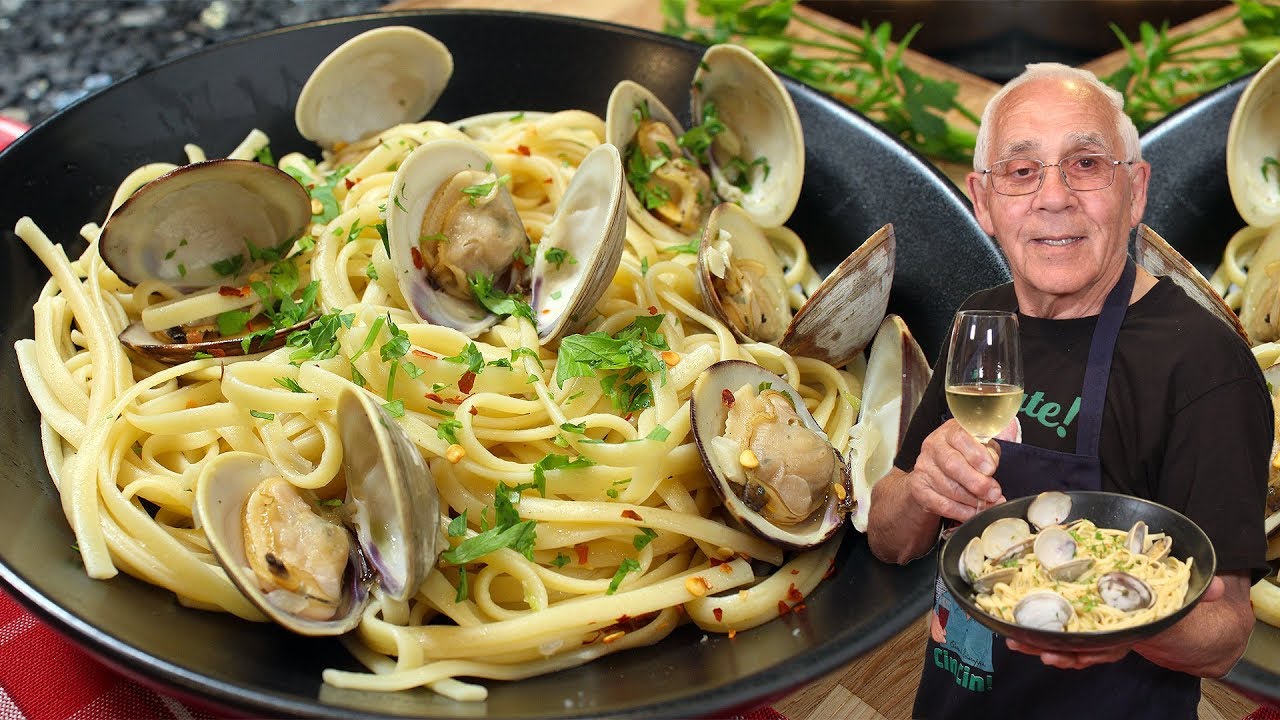
“Linguine alle vongole is one of Italy's greatest pasta dishes, and also one of the most frequently ruined. The broth goes muddy. The clams turn to rubber. The pasta either soaks up all the sauce or slides out of it. Every failure traces back to the same three mistakes: cooking the garlic too hot, ignoring the pasta water, and letting the clams sit too long in the pan. Fix those three things and you have a restaurant-quality dinner in forty minutes.”
Why This Recipe Works
Linguine alle vongole is deceptively simple and almost universally misunderstood. The ingredient list is short. The method looks straightforward. And yet most home versions arrive at the table with overcooked clams, greasy broth, and pasta that has absorbed every drop of sauce and turned to starch paste. The dish is not hard — it is unforgiving of inattention, and the margin for error is smaller than people expect.
The Clam Problem
Fresh clams are alive until you cook them. That single fact determines everything about how you handle them. A clam that is open before cooking and doesn't close when tapped is dead and should be discarded — no exceptions. A clam that opens during cooking is done. A clam that stays closed after ten minutes is dead. These are binary states with no grey area.
The moment a clam opens, it is cooked. Not nearly cooked. Not almost done. Done. Every second it stays over heat, the proteins in the meat contract further, squeezing out moisture and turning a sweet, tender bite into something closer to a pencil eraser. The professional technique is to remove each clam as it opens and set it aside — even if that means pulling them out one by one over the course of a few minutes. The clams come back into the pan at the very end, just long enough to warm through.
Littleneck clams are the right call here. They are small, sweet, and reliably clean from good fishmongers. Manila clams work equally well. Avoid larger quahogs — the meat-to-shell ratio is worse and they take longer to open, which means your broth reduces too far before they're ready.
The Garlic Window
This dish lives or dies in a ninety-second window. That is how long you have between "pale golden and fragrant" and "bitter and acrid" when garlic hits hot olive oil. High heat accelerates this. Distraction accelerates this. The fix is simple: medium-high heat, constant stirring, and your full attention. Nothing else is happening in the kitchen during this step.
Garlic color is your indicator, not time. Pale straw-gold means you are right on the edge — add the wine immediately. Any darker and the flavor has already started to turn. A heavy-bottomed skillet with even heat distribution gives you more control here than a thin pan that creates hot spots.
The Emulsion
Most pasta sauces fail in the finishing step, not the cooking step. The combination of olive oil, broth, and pasta water needs to come together into a single cohesive sauce — not oil floating on watery liquid. This is an emulsion, built by the starch in the pasta water acting as a binding agent between fat and water.
The technique: transfer the pasta directly into the skillet using tongs (never rinse it, never let it sit in a colander), then add pasta water a few tablespoons at a time while tossing continuously over medium heat. You will see the sauce shift from thin and greasy to glossy and cohesive. Stop adding water the moment it reaches that glossy stage. The butter goes in off the heat at the very end, stirred in gently until just melted — this is the final richness layer that ties everything together without breaking the emulsion.
Why Lemon Does the Heavy Lifting
The lemon zest and juice added at the end are not garnish. They are the acid counterpoint that makes the brininess of the clams taste bright instead of flat, cuts through the richness of the butter and olive oil, and amplifies the white wine aromatics that have been simmering in the broth. Leave them out and the dish tastes one-dimensional. Add them and everything snaps into focus.
This is a dish built on restraint — a short ingredient list, a fast technique, and a precise finish. Every component earns its place. The clams bring brine and sweetness. The wine brings acid and aromatics. The garlic brings depth. The pasta water builds structure. The butter and lemon close it. Get the timing right on each element and you have one of the great pasta dishes of the Italian canon, ready in forty minutes.
Where Beginners Mess This Up
Before we start, read this. These are the 4 reasons your linguine with clams (the italian classic, done right) will fail:
- 1
Burning the garlic: Garlic in olive oil goes from raw to bitter in under sixty seconds on high heat. This dish depends entirely on pale golden, fragrant garlic — not brown, not dark, definitely not black. Keep the heat at medium-high and stir constantly. If you smell anything sharp or acrid, pull the pan off the burner immediately. Bitter garlic cannot be saved.
- 2
Skipping the pasta water: Pasta water is starch-loaded, slightly salty liquid that binds fat and broth into a cohesive sauce. Without it, the olive oil floats on top of the clam broth and the whole dish feels greasy and separated. Add it gradually while tossing — you are building an emulsion, not just loosening the pasta.
- 3
Overcooking the clams: Clams are done the moment their shells open. That is not a suggestion — it is the finish line. Every second they stay in the heat after opening, they tighten and shrink into rubbery little erasers. As soon as the last clam cracks open, cut the heat. Transfer the pasta in immediately and work fast.
- 4
Ignoring dead clams before cooking: A clam that is open before cooking and does not close when tapped is already dead. Cook it anyway and it will smell like a tide pool in August. Tap every open clam before it goes in the pan. If it stays open, throw it out. This is not optional.
The Video Reference Library
Want to see it in action? Here are the exact videos we analyzed and combined to build this foolproof recipe translation:
The primary source for this method. Focused on the garlic timing, clam selection, and the emulsification technique that creates a silky broth rather than a watery one.
🛠️ Core Equipment
- Large deep skillet with a tight-fitting lidThe lid traps steam that forces the clams open evenly. A shallow pan cannot hold the clams and sauce together — you will be crowding them, which means uneven cooking and some clams never opening.
- Large pasta potLinguine needs room to move. A crowded pot drops the water temperature when you add the pasta, which means uneven cooking and sticky noodles. Use the biggest pot you have.
- Tongs or pasta forkYou are transferring wet pasta directly from the pot to the skillet — not draining into a colander first. Tongs let you do this in one motion while preserving the pasta water in the pot for immediate use.
Linguine with Clams (The Italian Classic, Done Right)
🛒 Ingredients
- ✦1 pound linguine pasta
- ✦2 pounds littleneck clams, scrubbed and rinsed
- ✦5 cloves garlic, minced
- ✦1/2 cup dry white wine
- ✦1/4 cup fresh flat-leaf parsley, chopped
- ✦3 tablespoons extra virgin olive oil
- ✦1/2 teaspoon red pepper flakes
- ✦1 can (14.5 ounces) crushed tomatoes
- ✦1/2 cup reserved pasta water
- ✦1 teaspoon kosher salt
- ✦1/2 teaspoon black pepper
- ✦2 tablespoons unsalted butter
- ✦Zest of 1 lemon
- ✦2 tablespoons fresh lemon juice
- ✦1/4 cup reserved clam liquid
👨🍳 Instructions
01Step 1
Bring a large pot of heavily salted water to a rolling boil over high heat, about 8-10 minutes.
02Step 2
While the water heats, tap any open clams on the counter. Discard any that stay open. Scrub the remaining clams thoroughly under cold running water with a stiff brush.
03Step 3
Warm the olive oil in a large deep skillet over medium-high heat until shimmering, about 2 minutes.
04Step 4
Add the minced garlic and red pepper flakes. Stir constantly until pale golden and fragrant, about 1-2 minutes. Do not walk away.
05Step 5
Pour in the white wine and let it simmer until the alcohol mostly evaporates, about 3 minutes.
06Step 6
Add the crushed tomatoes and reserved clam liquid, stirring to combine. Let the sauce simmer for 2 minutes.
07Step 7
Arrange the scrubbed clams in a single layer in the simmering broth. Cover with a tight-fitting lid and cook over medium heat until all clams open, about 8-10 minutes.
08Step 8
Remove the opened clams to a plate and cover loosely with foil to keep warm.
09Step 9
Drop the linguine into the boiling water and cook until just shy of al dente — about 1-2 minutes less than the package directions.
10Step 10
Before draining, reserve at least 1/2 cup of pasta water. Transfer the pasta directly into the skillet using tongs — do not rinse it.
11Step 11
Toss the pasta in the clam broth over medium heat, adding pasta water a splash at a time, until a silky, cohesive sauce forms and coats every strand, about 2-3 minutes.
12Step 12
Remove from heat. Stir in the butter, lemon zest, and lemon juice until the butter melts completely.
13Step 13
Return the clams to the skillet. Season with salt and black pepper to taste. Scatter the chopped parsley over everything.
14Step 14
Divide among four shallow bowls and serve immediately.
Nutrition Per Serving
Estimates based on standard preparation. Adjustments alter macros.
🔄 Substitutions
Instead of Linguine pasta...
Use Whole wheat linguine or chickpea pasta
Slightly earthier, nuttier flavor. Both hold up well to the broth and reach al dente reliably. Increases fiber considerably.
Instead of Dry white wine...
Use Low-sodium chicken broth or additional clam juice
Creates a more delicate, less acidic sauce. Loses some of the wine's aromatic complexity but keeps the savory depth. Add a squeeze of lemon to compensate for the missing acidity.
Instead of Unsalted butter...
Use Extra virgin olive oil
Lighter, more Mediterranean result. The sauce will be slightly less rich and silky but still cohesive. Use the same quantity.
Instead of Crushed tomatoes...
Use Omit entirely for a white clam sauce
Classic white (bianco) preparation — brighter, more briny, and lets the clam flavor dominate. Add an extra splash of white wine and clam juice to compensate for the lost liquid volume.
🧊 Storage & Reheating
In the Fridge
Store leftover pasta and clams separately if possible. Pasta in an airtight container for up to 2 days. The sauce degrades quickly — reheat gently with a splash of water.
In the Freezer
Not recommended. Clams turn rubbery after freezing and thawing. The pasta texture also suffers significantly.
Reheating Rules
Low heat in a covered skillet with 2-3 tablespoons of water, tossing gently until warmed through. Microwave kills the sauce texture — avoid it.
❓ Frequently Asked Questions
Why did some of my clams not open?
A clam that doesn't open after 10 minutes of steaming in a covered pan is almost certainly dead. Discard it. Forcing it open and eating it is a gamble not worth taking. If more than 10-15% of your clams didn't open, they were likely stored improperly before you bought them — buy from a different source next time.
Can I use canned clams instead of fresh?
Yes, and it's a legitimate shortcut. Use two 6.5-ounce cans of chopped clams, reserve the liquid, and add the clams at the very end — just long enough to warm through. The flavor is less briny and complex than fresh, but the technique works perfectly.
Why does my sauce look greasy and separated?
The emulsion broke. This happens when the heat is too high during the pasta-tossing step, or when you didn't use enough pasta water. Fix it: add a splash of cold pasta water and toss aggressively over low heat. The starch will re-bind the fat and broth into a cohesive sauce.
Do I need to purge the clams in salt water?
Littleneck clams from reputable fishmongers are usually pre-purged and clean. If you notice significant sand or grit, soak them in cold salted water (1 tablespoon salt per quart) for 30 minutes before scrubbing. The clams will filter the water and expel the grit.
What white wine should I use?
Dry and neutral — Pinot Grigio is the classic choice, but any unoaked white works. Avoid Chardonnay (too buttery) and anything labeled 'cooking wine' (pre-salted trash). If you wouldn't drink it, don't cook with it.
Why is my linguine sticking together after draining?
You drained it into a colander and let it sit. Never do this with pasta destined for a sauced dish. Transfer it directly from the boiling water into the skillet using tongs, with some pasta water still clinging to the strands. The residual starch and moisture are structural — they are not waste.
The Science of
Linguine with Clams (The Italian Classic, Done Right)
We turned everything on this page into a beautiful, flour-proof PDF cheat sheet. Print it out, stick it to your fridge, and never mess up your linguine with clams (the italian classic, done right) again.
*We'll email you the high-res PDF instantly. No spam, just perfectly cooked meals.
AlmostChefs Editorial Team
We translate the internet's most popular cooking videos into foolproof, beginner-friendly written recipes. We analyze multiple methods, test them in our kitchen, and engineer a single "Master Recipe" that gives you the best possible result with the least possible stress.