The Lentil Soup That Actually Tastes Like Something (No Sad Beige Bowls)
A deeply savory, naturally creamy lentil soup built on properly sweated aromatics, bloomed spices, and a finishing hit of lemon. Vegan, gluten-free, and ready in under an hour — this is the weeknight bowl that earns a permanent spot in rotation.
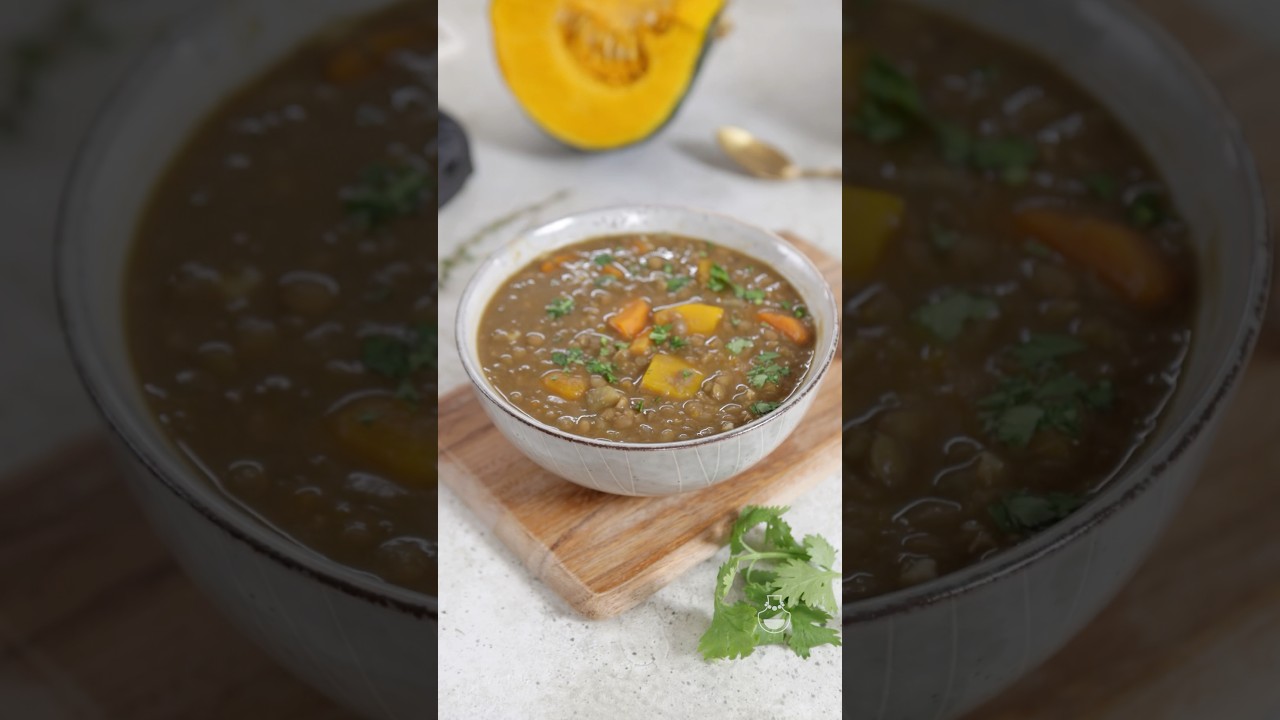
“Most lentil soup is an apology for real food. Watery, underseasoned, texturally confused — the kind of thing people eat when they feel guilty about yesterday. That is not this. This version starts with aromatics cooked long enough to actually matter, adds spices at the right moment so they bloom instead of just floating, and finishes with lemon that lifts the entire pot. Lentils are one of the most nutritionally dense ingredients in your pantry. They deserve to taste like it.”
Why This Recipe Works
Lentil soup has a reputation problem. Somewhere between its association with austerity cooking and its tendency to appear in beige, flavorless form at every office potluck and post-illness meal train, it became the food you eat when you've given up on enjoying dinner. This is entirely a technique failure — not an ingredient problem, not a cultural problem, not a problem with lentils themselves. The lentil is blameless. Every bowl of sad, watery, underseasoned lentil soup is the direct result of a series of small decisions made by someone who was in a hurry and didn't think it would matter.
It matters. Every step of it.
The Equipment Case Before We Begin
This recipe is simple. That does not mean it's forgiving of bad tools. You need a large heavy-bottomed pot or, ideally, a Dutch oven. The distinction is thermal mass. A thin-walled stockpot has hot spots — zones where the metal conducts heat unevenly, producing scorching at the center while the outer edges of the aromatics sit in lukewarm oil. A Dutch oven holds temperature steady across the entire base. When you reduce the heat to simmer, it actually simmers instead of careening between a boil and a crawl. The result is lentils that cook evenly, a mirepoix that softens rather than burns, and a fond that develops across the whole surface rather than charring in one corner.
You also need a sharp chef's knife. Not for safety theater — for uniformity. Onion, carrot, and celery cut to a consistent small dice cook at the same rate. Irregular chunks mean some pieces are mush while others are still crunchy, and you're trying to split the difference between two wrong textures instead of hitting one right one. A dull knife produces ragged cuts. Use the right tool.
Before any of that, your dried lentils go through a fine-mesh sieve under cold running water. Brown lentils come from processing lines that occasionally contribute small stones, grit, and debris. A 30-second rinse is not optional — it is the step that separates cooking from a dental emergency. Take it seriously.
And finally: a wooden spoon or silicone spatula for scraping. The fond — the browned layer that develops on the bottom of the pot as the aromatics cook — is concentrated flavor. When you add broth, you have a window to deglaze it, scraping it off the bottom and dissolving it into the liquid. Skip that step and you're leaving the best part of the pot behind. A flat-edged silicone spatula gets into the corners more effectively; a wooden spoon has better leverage for the scraping motion. Either works. Using neither is the only wrong answer.
Build the Base or Build Nothing
The first six minutes of this recipe determine whether the final soup tastes like something or like warm water with legumes suspended in it. The mirepoix — onion, carrot, celery — is used across essentially every soup tradition on earth because it works. These three aromatics, cooked together in fat over sustained heat, produce a sweet, savory, layered foundation that no amount of spice can replicate if the base was skipped.
What you're actually waiting for: the onion to go fully translucent. That visual cue corresponds to the degradation of the sulfur compounds responsible for raw onion's sharpness, and the beginning of sugar release as cell walls break down. The carrots begin to soften at the edges, converting starches. The celery loses its grassy, almost medicinal edge. None of this happens at three minutes. None of it begins to happen at four. Set a timer for six, adjust heat so nothing colors too fast, and leave it alone.
The Spice Blooming Problem Everyone Ignores
Cumin and oregano are not flavors. They are compressed flavor potential, locked inside cell structures and fat-soluble aromatic compounds that require heat and fat to release. Add them directly to liquid — as most home cooks do, tipping the spice jar into the simmering broth — and those compounds remain largely insoluble and inert. You'll taste a shadow of the spice and wonder if your cumin is old.
Add them to the residual oil in the pan, after the garlic, before the liquid. Thirty seconds over medium heat. The fat physically dissolves and distributes the aromatic compounds throughout the cooking medium. This is called blooming, and it is not optional technique for advanced cooks — it is basic chemistry, available to anyone with a pot and thirty additional seconds of patience. The difference in the finished bowl is not subtle and cannot be compensated for at any later stage.
Lentil Texture Is a Choice You Have to Make
Brown lentils at 25 minutes are tender, creamy in the center, and structurally intact. Brown lentils at 40 minutes are disintegrating into the broth, and you now have porridge. These are not the same dish.
The creaminess of a properly cooked lentil soup comes from starch release — the natural thickening that occurs as the outer surface of each lentil hydrates and sheds starch into the liquid. This process happens whether or not the lentils fall apart. The goal is to stop cooking when the starch has released and the lentils are fully tender inside, but before the structural collapse that turns individual legumes into an undifferentiated mass. Check at 25 minutes by tasting a lentil directly. It should be creamy inside with no chalkiness and should hold its shape when pressed rather than immediately smearing. If it's still chalky, five more minutes. If it's already smearing, you're past the window.
Acid Is Architecture, Not Garnish
The lemon juice added at the end of this recipe is not optional and is not a finishing touch. It is structural. Every legume dish — lentils, chickpeas, white beans, black beans — carries a latent heaviness from the combination of protein, starch, and fat-soluble spice residue. Without acid, the soup tastes complete but flat, the way a chord sounds resolved but lifeless without a leading tone to get there.
Acid goes in last, off heat or nearly so. Heat degrades the brightness of citrus rapidly — lemon juice added at a rolling boil loses most of what you added it for within two minutes. Add it when the spinach has wilted and you've pulled the pot off the burner. Taste before. Taste after. The before version is technically correct. The after version is why you'll make this recipe again.
Why Day Two Is the Actual Goal
This soup is demonstrably better after 24 hours. The lentils continue absorbing the seasoned broth as the pot cools. The cumin and oregano integrate rather than sitting as distinct top notes. The tomato rounds and deepens. The lemon mellow slightly while the overall acid balance holds. The whole thing tastes like someone who knew what they were doing planned it this way.
Make a double batch. Store in an airtight container for up to five days. Add a splash of broth when reheating because the lentils will have absorbed additional liquid overnight and the soup will have thickened considerably. Consider the first serving a proof of concept. The leftovers are the point.
Where Beginners Mess This Up
Before we start, read this. These are the 4 reasons your the lentil soup that actually tastes like something (no sad beige bowls) will fail:
- 1
Rushing the mirepoix: Onion, carrot, and celery are the flavor foundation of this soup. If you dump them in and move on in 3 minutes, you get raw vegetable flavor suspended in liquid. Cook them a full 6 minutes until the onion is completely translucent and the carrots have softened at the edges. That patience is where the sweetness and depth come from.
- 2
Adding spices to liquid instead of fat: Cumin and oregano need direct contact with hot oil to bloom — the fat pulls out and distributes the fat-soluble flavor compounds in a way water simply cannot. Add your spices after the garlic, let them toast for 30 seconds in the residual oil, then deglaze with broth. The difference in flavor is not subtle.
- 3
Overcooking the lentils into paste: Brown lentils should be tender but holding their shape. At 25 minutes they're done. At 40 minutes you have mush. The soup should have body from lentil starch release, not from the lentils disintegrating entirely. Check at 25 minutes and trust your teeth.
- 4
Forgetting the lemon: Acid is not optional in lentil soup — it's structural. Without lemon, the soup tastes flat and one-dimensional no matter how good your spices are. Add it at the end, off or almost off heat, and taste the transformation. This is true of almost every legume dish and most people skip it every single time.
The Video Reference Library
Want to see it in action? Here are the exact videos we analyzed and combined to build this foolproof recipe translation:
The source video for this recipe. Clear technique walkthrough covering vegetable prep, spice timing, and the correct lentil texture at the finish.
🛠️ Core Equipment
- Large heavy-bottomed pot or Dutch ovenEven heat distribution prevents hot spots that scorch the bottom while the top layer is still underdone. A [Dutch oven](/kitchen-gear/review/dutch-oven) is ideal — the weight holds temperature steady through the full simmer.
- Sharp chef's knifeYou're cutting onion, carrots, celery, and garlic. Uniform dice matters here — uneven pieces cook at different rates, leaving some vegetables mushy while others are still firm.
- Fine-mesh sieve or colanderFor rinsing the dried lentils. Brown lentils occasionally contain small stones or debris from processing. A 30-second rinse is not optional — it's food safety.
- Wooden spoon or silicone spatulaFor scraping the fond (browned bits) off the bottom when you add the broth. That fond is concentrated flavor. Don't leave it behind.
The Lentil Soup That Actually Tastes Like Something (No Sad Beige Bowls)
🛒 Ingredients
- ✦2 tablespoons extra virgin olive oil
- ✦1 large yellow onion, finely diced
- ✦3 medium carrots, cut into small cubes
- ✦2 celery stalks, diced
- ✦4 cloves garlic, minced
- ✦1 cup dried brown lentils, rinsed
- ✦6 cups low-sodium vegetable broth
- ✦1 can diced tomatoes, 14.5 ounces
- ✦2 teaspoons dried oregano
- ✦1 teaspoon ground cumin
- ✦1 bay leaf
- ✦1/4 teaspoon red pepper flakes
- ✦2 cups fresh spinach, roughly chopped
- ✦2 tablespoons fresh lemon juice
- ✦Sea salt to taste
- ✦Ground black pepper to taste
👨🍳 Instructions
01Step 1
Heat the olive oil in a large pot over medium-high heat until it shimmers, about 1 minute.
02Step 2
Add the diced onion, carrots, and celery. Sauté until the vegetables soften and the onion turns fully translucent, about 6 minutes, stirring occasionally.
03Step 3
Stir in the minced garlic and cook until fragrant, about 45 seconds.
04Step 4
Add the rinsed lentils and stir to coat with the oil and aromatics.
05Step 5
Pour in the vegetable broth and canned tomatoes with their juice. Add the bay leaf.
06Step 6
Add the oregano, cumin, and red pepper flakes. Stir to combine.
07Step 7
Bring the soup to a gentle boil, then reduce heat to medium-low. Simmer uncovered for 25 to 30 minutes, until lentils are tender but still holding their shape.
08Step 8
Add the fresh spinach and stir until wilted, about 2 minutes.
09Step 9
Add the lemon juice and season generously with sea salt and black pepper. Taste and adjust.
10Step 10
Remove the bay leaf. Ladle into bowls and serve immediately.
Nutrition Per Serving
Estimates based on standard preparation. Adjustments alter macros.
🔄 Substitutions
Instead of Vegetable broth...
Use Bone broth or mushroom broth
Bone broth adds collagen and a richer, more savory baseline. Mushroom broth deepens the umami without adding animal products. Either version makes the soup taste more complex.
Instead of Brown lentils...
Use Red lentils or green French lentils (lentilles du Puy)
Red lentils break down into a creamy purée — reduce cook time to 15-20 minutes and expect a completely different texture. Green lentils hold their shape firmly and have a slightly peppery flavor — increase cook time by 10 minutes.
Instead of Olive oil...
Use Ghee or coconut oil
Ghee brings a subtle nuttiness and better fat-soluble vitamin absorption. Coconut oil adds mild sweetness. Both have higher smoke points, making the initial sauté slightly more forgiving.
Instead of Canned tomatoes...
Use Fresh tomatoes or 2 tablespoons tomato paste
Fresh tomatoes are better in summer when they're ripe. Tomato paste intensifies the umami and adds body — use it if you want a richer, more concentrated soup.
🧊 Storage & Reheating
In the Fridge
Store in an airtight container for up to 5 days. The soup thickens as lentils absorb liquid overnight — add a splash of broth when reheating.
In the Freezer
Freeze in individual portions for up to 3 months. Lentil soup freezes exceptionally well. Thaw overnight in the fridge or directly in a covered pot over low heat.
Reheating Rules
Reheat on the stovetop over medium-low with a splash of water or broth, stirring occasionally. Microwave works but tends to unevenly heat — stir halfway through.
❓ Frequently Asked Questions
Do I need to soak lentils before cooking?
No — unlike chickpeas and dried beans, lentils require no soaking. A rinse under cold water to remove debris and dust is all they need. They cook directly from dried in 25-30 minutes.
Why is my lentil soup bland?
Two likely culprits: under-sautéed aromatics or insufficient salt. The mirepoix needs a full 6 minutes to develop sweetness and depth. Salt should be added at the end in layers — season, taste, season again. Lemon juice is also essential; without it, even a well-seasoned soup tastes flat.
Can I blend this soup?
Yes, and it's excellent partially blended. Use an immersion blender to pulse the soup 3-4 times — this creates a creamy base while leaving some lentils and vegetables intact for texture. Full blending produces a silky purée that's closer to a bisque.
Is this soup actually filling?
One serving has 15g of protein and 12g of fiber — enough to keep you full for 4+ hours. Lentils are one of the most satiating plant foods available, largely because the fiber slows glucose absorption and the protein triggers satiety hormones more effectively than refined carbohydrates.
Can I make this in a slow cooker?
Yes. Sauté the aromatics and bloom the spices on the stovetop first — do not skip this step in a slow cooker version. Transfer everything to the slow cooker, add broth and tomatoes, and cook on low for 6-8 hours or high for 3-4 hours. Add spinach and lemon in the last 15 minutes.
Why does my soup taste different the next day?
Because it is better. The lentils continue absorbing the seasoned broth overnight, the spices meld, and the overall flavor integrates into something more unified. Day-two lentil soup is a known phenomenon. Make a double batch specifically for leftovers.

The Science of
The Lentil Soup That Actually Tastes Like Something (No Sad Beige Bowls)
We turned everything on this page into a beautiful, flour-proof PDF cheat sheet. Print it out, stick it to your fridge, and never mess up your the lentil soup that actually tastes like something (no sad beige bowls) again.
*We'll email you the high-res PDF instantly. No spam, just perfectly cooked meals.
AlmostChefs Editorial Team
We translate the internet's most popular cooking videos into foolproof, beginner-friendly written recipes. We analyze multiple methods, test them in our kitchen, and engineer a single "Master Recipe" that gives you the best possible result with the least possible stress.