The Plant-Based Power Bowl (38g Protein, No Compromise)
A layered grain bowl that stacks lentils, quinoa, roasted chickpeas, and caramelized sweet potatoes under a creamy Greek yogurt tahini dressing. We reverse-engineered the most popular Buddha bowl recipes to build the one that actually delivers on the protein promise without tasting like wellness homework.

“Most Buddha bowls are aesthetic projects. Pretty colors, token protein, forgotten by 2pm. This one was engineered differently: two complete plant proteins stacked on each other, roasted chickpeas for crunch, and a dressing that uses Greek yogurt to push the protein count past 38g per bowl. It doesn't taste like a compromise. It tastes like a meal.”
Why This Recipe Works
Most Buddha bowls are performance art. They photograph well. They appear on wellness blogs between articles about journaling and cold plunges. They fill you up for about ninety minutes, at which point you're eating crackers over your keyboard wondering where it went wrong.
This bowl is built differently. The 38g protein figure isn't marketing — it's architecture.
The Double-Protein Foundation
Quinoa and lentils are frequently mentioned together in the same sentence but rarely understood in the same sentence. Here's the actual reason they belong in the same bowl: quinoa is one of the few plant foods classified as a complete protein, containing all nine essential amino acids. Lentils are high in protein but low in methionine. Quinoa fills that gap. Together, they deliver a more complete amino acid profile than either would alone — which is why combining them produces muscle protein synthesis outcomes closer to animal protein than most people expect from plants.
The chickpeas add a third protein layer and, more importantly, the textural component the bowl depends on. Roasted properly — dry, seasoned, blasted at 425°F until genuinely crispy — they function as the crouton of this dish. Crunch is not decorative here. It's structural contrast that makes each bite interesting instead of monotonous.
The Dressing Does Work
Standard tahini dressing is oil and acid. It adds flavor but not protein. The Greek yogurt addition to this dressing is the detail that separates this recipe from the standard version: half a cup of nonfat Greek yogurt adds roughly 6g of protein to the entire batch while thickening the dressing to the consistency that actually clings to quinoa instead of pooling at the bowl's bottom.
The emulsification matters. Tahini and lemon juice resist combining initially — the mixture seizes into a thick, broken-looking paste before it comes together. This is chemistry, not failure. Keep whisking. Add warm water slowly. The fat in the tahini emulsifies with the acid from the lemon and the proteins in the yogurt into a smooth, stable dressing that coats every component it touches.
Roasting at High Heat
Sweet potatoes and chickpeas both need 425°F, but for different reasons. Sweet potatoes caramelize at high heat — their natural sugars (about 7g per cup) convert via the Maillard reaction into the browned, slightly crispy edges that taste completely different from a steamed sweet potato. Chickpeas need high heat to drive off surface moisture fast enough to brown before the inside turns to mush. Roasting at 350°F produces pale, soft chickpeas. 425°F produces the snap you're after.
A rimmed baking sheet is non-negotiable for this step. The rim prevents components from rolling into the oven; the flat metal surface conducts heat directly to the vegetables. Parchment is optional. Air gaps between pieces are not — crowded pans steam instead of roast. Give everything space.
Bowl Architecture
The quinoa goes down flat and wide, not piled in the center. A flat base creates maximum surface area so that every forkful passes through multiple layers: grain, legume, vegetable, crunch. A mounded base means the first half of the bowl is mostly quinoa and the second half is mostly toppings. Distribute deliberately.
Season every layer independently during cooking. This bowl has five separate components. If even two of them are underseasoned, no amount of dressing saves it. The dressing is meant to unify a bowl of already-seasoned components, not rescue bland ones.
The purple cabbage goes on last, raw, and cold. Heat destroys its structural integrity and turns it limp and dull. Its job is crunch and color contrast — both disappear the moment it touches warmth. Add it just before serving, every time.
Where Beginners Mess This Up
Before we start, read this. These are the 4 reasons your the plant-based power bowl (38g protein, no compromise) will fail:
- 1
Overcooking the lentils into mush: Green lentils need to be tender but structurally intact. Cook them past 25 minutes and they dissolve into the bowl, killing the texture contrast that makes this dish work. Test at 20 minutes — they should yield to a bite without falling apart.
- 2
Skipping the chickpea drying step: Wet chickpeas steam instead of roast. Before seasoning, spread them on a paper towel and press firmly to remove as much surface moisture as possible. Dry chickpeas go into the oven. Wet chickpeas come out soft and pale. This step takes 90 seconds and changes everything.
- 3
Making the tahini dressing too thick: Tahini seizes when it first hits the lemon juice — the mixture will briefly look broken and gluey. Keep whisking and add warm water one tablespoon at a time. The goal is pourable, not spreadable. Too thick and it doesn't penetrate the bowl; it just sits on top.
- 4
Cooking all components in sequence: This recipe has four parallel tracks: lentils on the stove, quinoa on the stove, chickpeas in the oven, sweet potatoes in the oven. Run them simultaneously and everything is ready in 30 minutes. Run them in sequence and you're cooking for an hour. Time the starts together.
The Video Reference Library
Want to see it in action? Here are the exact videos we analyzed and combined to build this foolproof recipe translation:
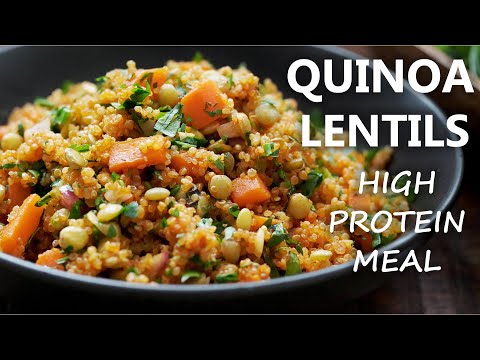
The source video for this recipe's approach to layering and dressing ratios. Clear breakdown of the tahini-yogurt dressing technique and why the component ratios matter.
2. How to Roast Chickpeas Perfectly
Deep dive into the moisture-removal technique that separates crispy chickpeas from soft ones. The drying step alone is worth watching.
3. Meal Prep Buddha Bowls for the WeekPractical walkthrough for scaling this bowl into a week of lunches. Covers storage sequencing and which components to keep separate until serving.
🛠️ Core Equipment
- Two rimmed baking sheets ↗Chickpeas and sweet potatoes need separate sheets — different sizes mean different browning rates, and crowding either pan causes steaming instead of roasting. Spread them out.
- Two medium saucepans ↗Lentils and quinoa cook at different rates in different water ratios. Combining them is a trap. Two pots running simultaneously is the move.
- Small whisk ↗The tahini dressing requires aggressive whisking to emulsify properly. A fork technically works but leaves streaks. A whisk gets you to a smooth, uniform dressing in under a minute.
- Large serving bowls ↗Buddha bowls are architectural. You need bowl depth and width to layer components without everything collapsing into each other. Shallow plates destroy the presentation and the eating experience.
The Plant-Based Power Bowl (38g Protein, No Compromise)
🛒 Ingredients
- ✦1 cup dried green lentils, rinsed
- ✦1 cup quinoa, uncooked
- ✦1 can (15 oz) chickpeas, drained and patted dry
- ✦3 tablespoons olive oil, divided
- ✦1 teaspoon smoked paprika
- ✦1 teaspoon garlic powder
- ✦Salt and black pepper to taste
- ✦2 medium sweet potatoes, cut into 1-inch cubes
- ✦2 cups fresh spinach, roughly chopped
- ✦1 medium red bell pepper, thinly sliced
- ✦1 cup shredded purple cabbage
- ✦1/2 cup raw pumpkin seeds
- ✦1/4 cup tahini paste
- ✦1/2 cup plain nonfat Greek yogurt
- ✦3 tablespoons fresh lemon juice
- ✦2 cloves garlic, minced
- ✦1/4 teaspoon cayenne pepper
- ✦3 tablespoons warm water
👨🍳 Instructions
01Step 1
Preheat oven to 425°F. Rinse lentils under cold water, then combine with 3 cups water in a medium saucepan. Bring to a boil over medium-high heat.
02Step 2
Reduce heat to medium-low and simmer lentils for 20-25 minutes until tender but still holding their shape. Drain any excess water and season with salt.
03Step 3
Rinse quinoa and combine with 2 cups water in a separate saucepan. Bring to a boil, then reduce heat to medium-low, cover, and cook for 12-15 minutes until water is absorbed and grains are fluffy.
04Step 4
Pat chickpeas thoroughly dry with paper towels, pressing firmly to remove surface moisture. Toss with 1 tablespoon olive oil, smoked paprika, garlic powder, salt, and pepper.
05Step 5
Spread chickpeas on one rimmed baking sheet in a single layer. Toss sweet potato cubes with 1 tablespoon olive oil, salt, and pepper, then spread on a second baking sheet.
06Step 6
Roast both sheets at 425°F for 20-25 minutes, shaking the chickpea pan halfway through. Chickpeas should be golden and crispy; sweet potatoes should be caramelized at the edges.
07Step 7
Whisk together tahini, Greek yogurt, lemon juice, minced garlic, cayenne, and warm water in a small bowl until smooth and pourable. Adjust consistency with more water, one tablespoon at a time.
08Step 8
Heat remaining 1 tablespoon olive oil in a skillet over medium heat. Sauté spinach until wilted, about 2 minutes. Season with salt.
09Step 9
Divide quinoa evenly among four bowls as the base.
10Step 10
Layer lentils, roasted chickpeas, roasted sweet potatoes, wilted spinach, red bell pepper, and purple cabbage over each quinoa base.
11Step 11
Scatter pumpkin seeds across the top of each bowl.
12Step 12
Drizzle tahini dressing generously over each bowl and serve immediately.
Nutrition Per Serving
Estimates based on standard preparation. Adjustments alter macros.
🔄 Substitutions
Instead of Greek yogurt (in dressing)...
Use Silken tofu, blended smooth
Makes the dressing fully vegan. Texture is slightly thinner — reduce warm water by 1 tablespoon. Protein content stays comparable.
Instead of Green lentils...
Use Cooked lentil pasta (1.5 cups dry)
Reduces cook time to 10 minutes. Slightly softer texture. Pushes protein from 9g to 13g per serving for an even higher-protein bowl.
Instead of Tahini paste...
Use Natural almond butter (1/4 cup)
Dressing becomes thicker and nuttier. Reduce water by 1 tablespoon. Adds 2g protein per serving and a richer, sweeter flavor profile.
Instead of Spinach...
Use Shredded kale, massaged with lemon juice
More substantial texture. Kale needs 2 minutes of hand-massaging with lemon juice to soften before adding to the bowl — skip this and it's unpleasantly chewy.
🧊 Storage & Reheating
In the Fridge
Store components separately in airtight containers for up to 4 days. Assembled bowls with dressing go soggy within 3 hours.
In the Freezer
Quinoa and lentils freeze well for up to 2 months. Roasted vegetables and chickpeas do not — they turn mushy on thawing. Freeze the bases only.
Reheating Rules
Reheat quinoa and lentils with a splash of water in a covered skillet over medium-low for 3-4 minutes. Re-crisp chickpeas in a dry pan or at 400°F for 5 minutes. Always add fresh dressing after reheating.
❓ Frequently Asked Questions
How do I get 38g of protein from a plant-based bowl?
The protein stacks across multiple sources: quinoa (8g per cup, cooked), lentils (9g per half cup, cooked), chickpeas (7g per half cup), Greek yogurt in the dressing (6g), and pumpkin seeds (5g per quarter cup). No single ingredient carries the load — the total is built by layering complete and complementary proteins.
Can I make this ahead for the week?
Yes — it's one of the best meal-prep recipes for this. Cook all components Sunday, store separately, and assemble each morning. Keep the dressing in a jar. The only thing that doesn't hold is the assembled bowl with dressing already on it, which goes soggy fast.
Why are my roasted chickpeas soft instead of crispy?
Surface moisture. Canned chickpeas carry significant water that needs to be physically removed before roasting. Drain, rinse, then press them dry with paper towels for at least 90 seconds. Moisture that isn't removed turns to steam in the oven and prevents browning.
Can I use red lentils instead of green?
Technically yes, but red lentils dissolve completely during cooking — they won't hold their shape in the bowl. Green or French (Puy) lentils are the only varieties that stay intact. Red lentils work in soups and dals, not in bowls where structure matters.
Is this bowl actually filling enough as a meal?
At 580 calories with 15g of fiber and 38g of protein, yes. The combination of high fiber from lentils and chickpeas plus complete protein from quinoa produces sustained satiety. Most people report no hunger until 4-5 hours after eating it.
What does smoked paprika do for the chickpeas?
It adds a subtle smokiness that reads as 'meaty' to the palate — the same compound (paprika contains trace amounts of capsaicin and aroma molecules similar to smoked foods) that makes roasted red peppers taste satisfying. On plain chickpeas, it provides the umami-adjacent depth that would otherwise require animal protein.
The Science of
The Plant-Based Power Bowl (38g Protein, No Compromise)
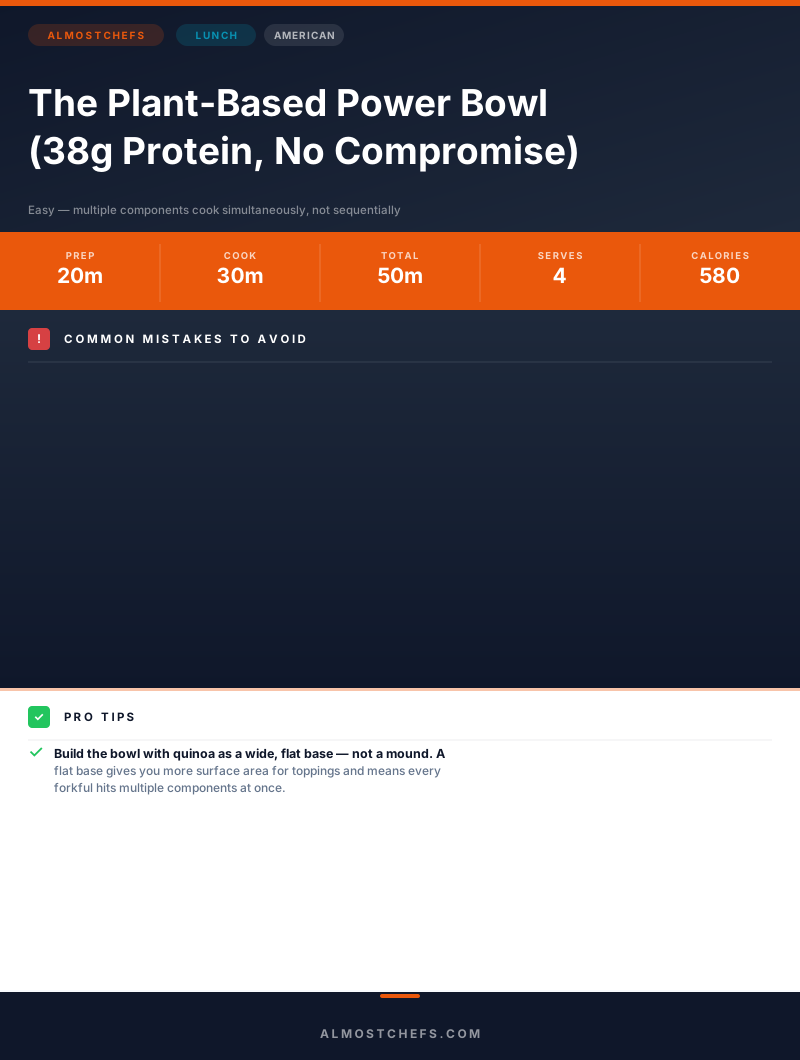
We turned everything on this page into a beautiful, flour-proof PDF cheat sheet. Print it out, stick it to your fridge, and never mess up your the plant-based power bowl (38g protein, no compromise) again.
*We'll email you the high-res PDF instantly. No spam, just perfectly cooked meals.
AlmostChefs Editorial Team
We translate the internet's most popular cooking videos into foolproof, beginner-friendly written recipes. We analyze multiple methods, test them in our kitchen, and engineer a single "Master Recipe" that gives you the best possible result with the least possible stress.