Fragrant Lemongrass Chicken (Your Weeknight Thai Fix)
Tender chicken thighs simmered in a coconut-lemongrass broth with fish sauce, garlic, and chilies — restaurant-quality Southeast Asian flavor in under an hour. We broke down the technique so you never end up with watery sauce or rubbery chicken again.

“Lemongrass chicken is one of those dishes that looks exotic on the menu and turns out to be embarrassingly simple to cook at home. The problem most people run into isn't complexity — it's technique. They crowd the pan during the sear, skip the deglazing step, or let the sauce run too loose. Fix those three things and you have a dish that tastes like it came out of a Bangkok street kitchen, not a weeknight panic.”
Why This Recipe Works
Lemongrass chicken is the rare weeknight dish that sounds like an event and cooks like a Tuesday. The technique is three steps — sear, sauté, simmer — and the aromatics do most of the intellectual work. What trips people up isn't complexity. It's the small physics of heat management that nobody explains.
The Sear Is Not Optional
Chicken thighs are forgiving, but they are not self-flavoring. The sear is where you build the foundation of the entire dish. Dry the chicken completely before it touches the pan. Hot oil, not warm oil. Single layer, not a pile. Each piece needs direct contact with the pan surface to trigger the Maillard reaction — that cascade of flavor compounds that turns pale raw protein into something that smells like dinner.
Crowd the pan and the meat steams in its own released moisture. Steamed chicken is grey, soft, and flat. You lose the browned fond on the pan bottom, which means you lose the deglazing step, which means your sauce starts from nothing. This is the first branch point where lemongrass chicken diverges from good to forgettable.
Lemongrass Is a Structural Ingredient
Most home cooks treat lemongrass as a garnish — a stalk dropped in for fragrance and fished out before serving. That's not how it works here. Thinly sliced and sautéed with shallots and garlic, it breaks down into the sauce and becomes part of the flavor backbone. The volatile aromatic oils — primarily citral, the compound responsible for lemongrass's distinctive lemony-floral character — are fat-soluble, which means they bond to the coconut milk rather than evaporating into the steam.
Bruise the stalks before slicing. The flat of a chef's knife pressed down hard ruptures the fibrous cell walls and releases substantially more aromatic oil than a clean cut alone. You'll smell the difference immediately.
Use only the bottom third of each stalk. The white-to-pale-yellow section is where the flavor lives. The upper green portion is mostly cellulose — tough, bitter, and chemically inert from a flavor perspective.
The Coconut Broth Equation
Coconut milk is an emulsion of fat and water. It is not stable under high heat. A rolling boil breaks that emulsion and you get greasy, separated sauce with a grainy texture. The target is a gentle simmer — small bubbles at the edges of the pan, not the center. At that temperature, the lemongrass continues to infuse, the chicken stays tender, and the sauce reduces to a consistency that coats without cloying.
Twenty to twenty-five minutes is the extraction window. Short of that, the lemongrass hasn't fully released into the broth. Beyond it, the chicken starts to tighten. This is one of those rare cases where precision matters not as pedantry but because the protein and the aromatics have genuinely different optimal windows that happen to overlap in a narrow range.
Finishing Acid
Lime juice goes in last. Always. Acid added during cooking reacts with heat to produce bitter compounds and loses its fresh citrus volatiles within minutes. Lime juice added at the end, off the heat, remains bright and sharp — it cuts through the richness of the coconut milk and lifts every other flavor in the dish. This is the step most recipes bury in a paragraph of instructions without explanation. Now you know why it matters.
Taste before you serve. The balance of fish sauce (salt, umami), lime (brightness, acid), and brown sugar (roundness) is the signature of this dish. Too much fish sauce and it's briny. Too little and it's flat. The final seasoning adjustment is not a formality — it's the last 10% that separates a good dish from a great one.
Where Beginners Mess This Up
Before we start, read this. These are the 4 reasons your fragrant lemongrass chicken (your weeknight thai fix) will fail:
- 1
Crowding the pan during the sear: If you dump all the chicken in at once, the pan temperature drops and you get steam instead of sear. Steamed chicken releases liquid into the pan, which means you lose all those browned bits that become the backbone of the sauce. Work in batches. Let each piece develop color before it moves.
- 2
Skipping the deglaze: When you add the fish sauce and soy sauce after sautéing the aromatics, you must scrape the bottom of the pan. Those caramelized bits are concentrated flavor — the Maillard reaction locked in place. Leaving them behind means a flat sauce. Scraping them up means depth.
- 3
Simmering too fast or too short: A hard boil breaks down the coconut milk and turns the sauce grainy. A rushed 10-minute simmer doesn't let the lemongrass fully infuse the broth. Medium-low and 20-25 minutes is not a suggestion — it's the extraction window. The sauce should reduce by about a third.
- 4
Adding lime juice too early: Lime juice added during cooking turns bitter and loses its brightness. It goes in at the very end, off the heat, as a finishing acid that lifts the entire dish. This is the difference between a sauce that tastes alive versus one that tastes cooked-down and flat.
The Video Reference Library
Want to see it in action? Here are the exact videos we analyzed and combined to build this foolproof recipe translation:
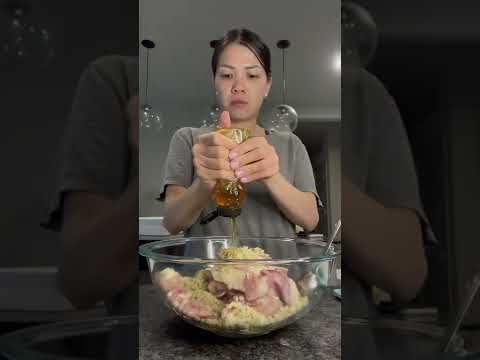
The source video for this recipe. Clear demonstration of the sear-and-simmer method with close-ups of the sauce consistency you're targeting at each stage.
2. How to Prepare Lemongrass for Cooking
A focused tutorial on breaking down lemongrass stalks — which parts to use, how to bruise versus slice, and how preparation method affects flavor intensity in the final dish.
3. Thai Coconut Chicken FundamentalsCovers the broader technique of building Southeast Asian coconut broths, including how to balance fish sauce acidity, coconut richness, and chili heat in a single pan.
🛠️ Core Equipment
- Large heavy-bottomed skillet or Dutch oven ↗Even heat distribution is essential for getting a proper sear without hot spots. Thin pans cause the chicken to steam in its own liquid before browning. A [Dutch oven](/kitchen-gear/review/dutch-oven) handles both the sear and the braise without needing to transfer between pans.
- Wooden spoon or flat-edged spatula ↗For scraping the fond (browned bits) off the bottom when you deglaze with fish sauce. Metal on a nonstick surface damages the coating. Wood or silicone preserves both the pan and the flavor.
- Sharp chef's knife ↗Lemongrass stalks are fibrous and dense. A dull knife bruises and shreds the stalk instead of slicing cleanly, releasing bitter compounds from the outer layers into the dish. Thin, clean cuts mean more surface area for controlled flavor extraction.
- Fine-mesh sieve (optional) ↗If you want a restaurant-smooth sauce, strain it before serving to remove lemongrass fibers. Not required, but the texture difference is noticeable.
Fragrant Lemongrass Chicken (Your Weeknight Thai Fix)
🛒 Ingredients
- ✦1.75 pounds boneless, skinless chicken thighs, cut into bite-sized pieces
- ✦4 stalks fresh lemongrass, white and light green parts only, thinly sliced
- ✦5 garlic cloves, minced
- ✦3 medium shallots, thinly sliced
- ✦1 tablespoon fresh ginger, finely minced
- ✦3 tablespoons fish sauce (nam pla)
- ✦3 tablespoons fresh lime juice
- ✦1 cup unsweetened coconut milk
- ✦1 cup chicken broth or water
- ✦2 tablespoons vegetable oil
- ✦1 to 2 Thai red chilies, sliced, or 1 teaspoon red pepper flakes
- ✦1.5 teaspoons brown sugar
- ✦1 teaspoon soy sauce
- ✦Sea salt and freshly cracked black pepper to taste
- ✦1/4 cup fresh cilantro, roughly chopped
- ✦2 green onions (scallions), cut into 1-inch pieces
👨🍳 Instructions
01Step 1
Pat the chicken thigh pieces dry with paper towels and season generously with salt and black pepper on both sides.
02Step 2
Heat the vegetable oil in a large heavy-bottomed skillet or Dutch oven over medium-high heat until it shimmers.
03Step 3
Working in batches to avoid overcrowding, sear the chicken pieces until they develop a light golden crust on all sides, about 8 to 10 minutes total. Transfer to a plate.
04Step 4
Lower the heat to medium and add the sliced shallots and minced garlic to the same pan, stirring frequently until fragrant and slightly softened, about 2 to 3 minutes.
05Step 5
Stir in the ginger and sliced lemongrass, cooking for another minute until the aroma becomes pronounced.
06Step 6
Pour in the fish sauce and soy sauce, scraping up all the browned bits from the bottom of the pan with a wooden spoon.
07Step 7
Return the seared chicken to the pan along with the coconut milk and chicken broth, stirring well to combine.
08Step 8
Add the sliced chilies and brown sugar, then bring to a gentle simmer over medium heat.
09Step 9
Reduce heat to medium-low and simmer uncovered for 20 to 25 minutes, stirring occasionally, until the chicken is cooked through and the sauce has reduced and slightly thickened.
10Step 10
Remove from heat. Squeeze in the fresh lime juice and taste, adjusting seasoning with additional salt, pepper, or fish sauce as needed.
11Step 11
Fold in the chopped cilantro and sliced green onions, reserving a small handful for garnish.
12Step 12
Serve over jasmine rice or with steamed rice noodles, garnished with reserved cilantro and green onions.
Nutrition Per Serving
Estimates based on standard preparation. Adjustments alter macros.
🔄 Substitutions
Instead of Coconut milk (full-fat)...
Use Light coconut milk or Greek yogurt mixed with broth
Slightly less rich and creamy but still effective. Greek yogurt adds subtle tanginess and reduces saturated fat significantly. Don't boil aggressively if using yogurt — it can curdle at high heat.
Instead of Fish sauce...
Use Tamari or soy sauce plus a small squeeze of anchovy paste
Slightly less pungent but delivers similar umami depth. Use 2 tablespoons tamari plus half a teaspoon anchovy paste as a 1:1 swap for 3 tablespoons fish sauce. Taste as you go.
Instead of Brown sugar...
Use Honey or pure maple syrup
Honey adds subtle floral notes that actually complement lemongrass well. Use three-quarters of the volume called for — both are sweeter by weight than brown sugar.
Instead of Chicken thighs...
Use Skinless chicken breast
Leaner option but dries out quickly. Reduce simmer time to 15-18 minutes and cut pieces slightly larger to reduce surface area exposed to heat.
🧊 Storage & Reheating
In the Fridge
Store in an airtight container for up to 3 days. The coconut broth thickens slightly as it chills — this is normal. It loosens when reheated.
In the Freezer
Freeze in portions for up to 2 months. Coconut milk-based sauces can separate slightly on thawing; whisk gently over low heat to re-emulsify.
Reheating Rules
Reheat gently over medium-low heat with a splash of broth or water to loosen the sauce. High heat breaks down the coconut emulsion and makes the sauce greasy.
❓ Frequently Asked Questions
Can I use lemongrass paste instead of fresh stalks?
You can. Use 1 tablespoon of paste per stalk. The flavor is slightly less bright and more muted than fresh, but it's a legitimate weeknight shortcut. Look for refrigerated paste rather than shelf-stable — better aroma.
My sauce is too thin. What happened?
You either didn't reduce long enough or you used a pan that's too small, which raises the liquid level and slows evaporation. Uncover the pan, increase heat to medium, and reduce for another 5 minutes. Don't add cornstarch — it muds the flavor.
How do I know which part of the lemongrass to use?
Use only the bottom third of the stalk — the white to pale yellow portion. Peel away the tough outer two layers and discard. The upper green portion is fibrous, bitter, and contributes almost nothing to flavor. You can toss it in the broth whole for extra aroma and remove before serving.
Is this dish actually Thai, or is it Vietnamese?
Lemongrass chicken appears across Southeast Asia with regional variations. Vietnamese ga nuong xa is grilled. Thai versions typically use coconut milk and fish sauce in the manner of this recipe. This is firmly in the Thai-inspired camp, though it's not a strict regional recipe — it's a home-cook synthesis of the flavor profile.
Can I make this in an Instant Pot?
Yes, but you lose the sauce reduction. Sear on the sauté function, build the sauce as written, then pressure cook on high for 8 minutes with a 5-minute natural release. After opening, switch back to sauté and reduce the sauce for 5-7 minutes uncovered to concentrate it.
Why does my coconut milk sauce look curdled?
You simmered too aggressively. Coconut milk separates when it boils hard — the fat breaks out of the emulsion. Keep the heat at a gentle simmer (small bubbles at the edges, not a rolling boil) and it stays smooth. If it's already split, whisk it vigorously over low heat; it usually comes back together.
The Science of
Fragrant Lemongrass Chicken (Your Weeknight Thai Fix)
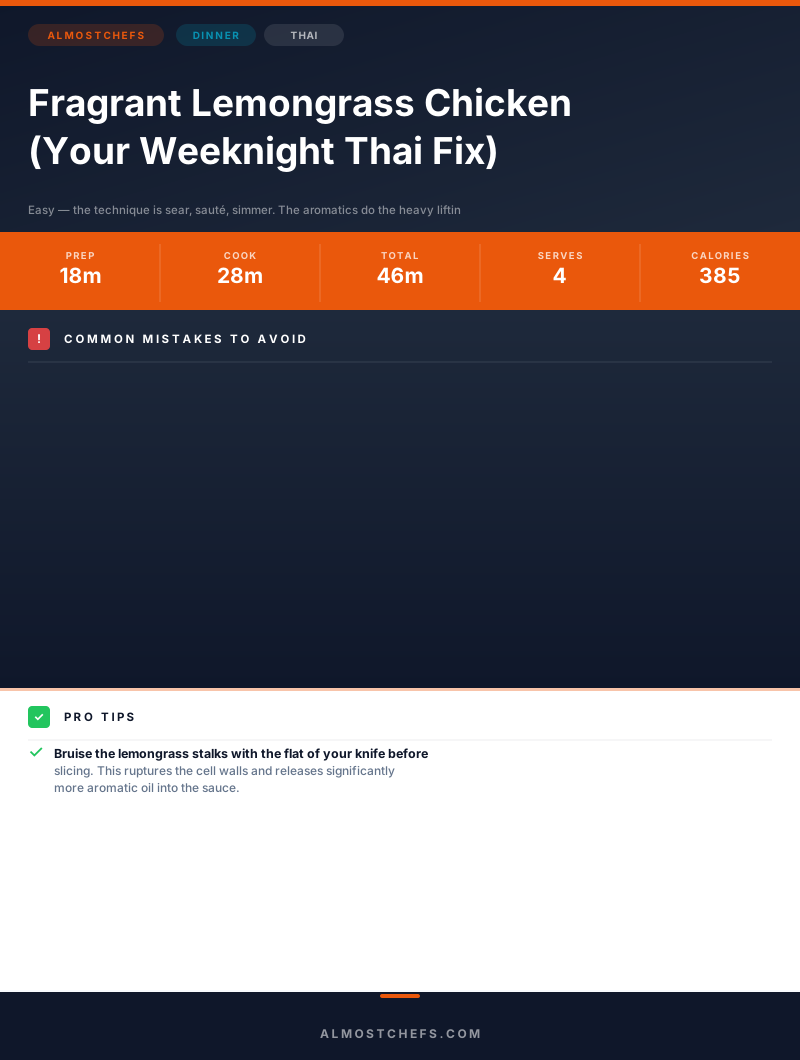
We turned everything on this page into a beautiful, flour-proof PDF cheat sheet. Print it out, stick it to your fridge, and never mess up your fragrant lemongrass chicken (your weeknight thai fix) again.
*We'll email you the high-res PDF instantly. No spam, just perfectly cooked meals.
AlmostChefs Editorial Team
We translate the internet's most popular cooking videos into foolproof, beginner-friendly written recipes. We analyze multiple methods, test them in our kitchen, and engineer a single "Master Recipe" that gives you the best possible result with the least possible stress.