Homemade Lemonade (Fresh, Real, No Shortcuts)
Classic homemade lemonade made with freshly squeezed lemons, natural sweeteners, and a pinch of sea salt that unlocks more citrus flavor than you'd expect. We broke down the technique so every glass is perfectly balanced — not cloyingly sweet, not face-puckering tart.
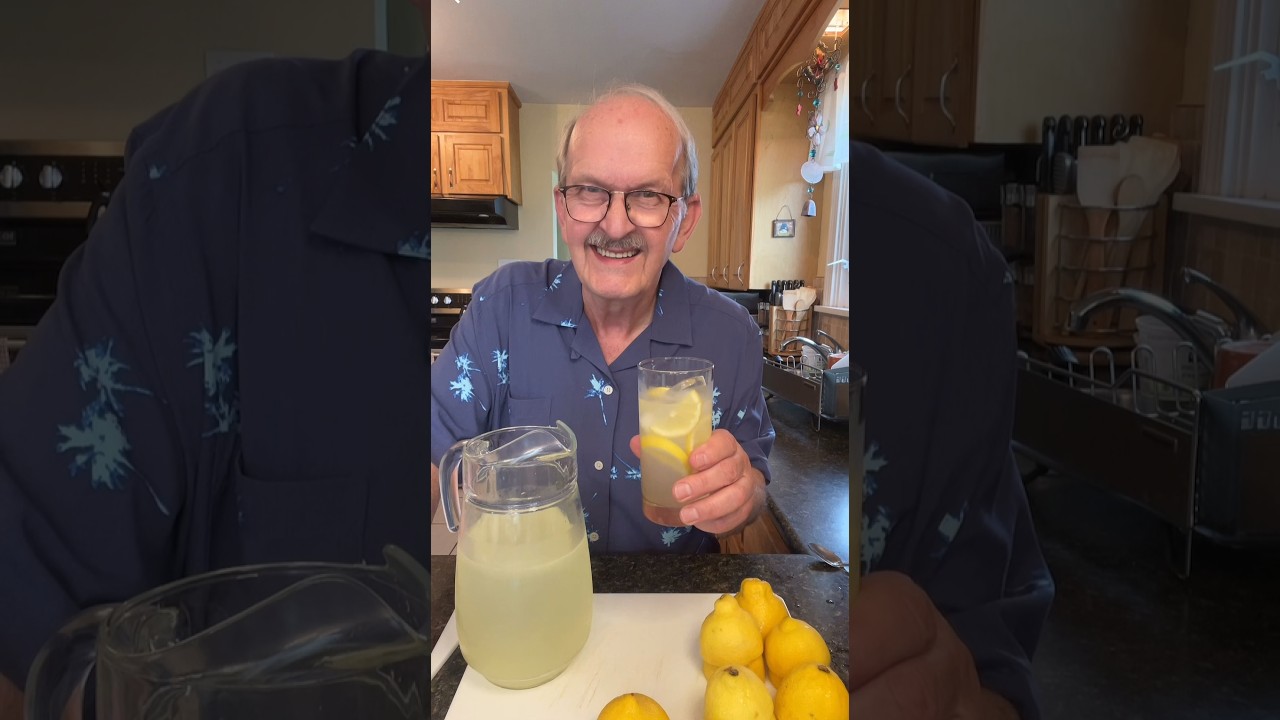
“Every lemonade recipe claims to be the best. Most of them are sugar water with a lemon squeezed in as an afterthought. The difference between flat, one-dimensional lemonade and the kind people ask you to make again comes down to three things: rolling your lemons before juicing, dissolving your sweetener completely, and adding a pinch of salt you'll never taste but will absolutely miss if it's gone.”
Why This Recipe Works
Lemonade is three ingredients: lemon, sugar, water. The fact that most homemade versions disappoint says less about the recipe and more about the assumptions people bring to it. You don't need special equipment or exotic ingredients. You need to understand what each step is actually doing — and stop skipping the ones that feel unnecessary.
Rolling Is Not Optional
Lemons are anatomically inefficient. The juice is trapped in small sacs surrounded by membranes, and a firm exterior rind keeps everything compressed. When you roll a lemon hard against the counter with the heel of your hand, you're physically rupturing those membranes before the lemon is cut. The result: 20-30% more juice from the same piece of fruit, with less effort at the juicer.
This is not a chef's trick. It's basic physics applied to citrus. Skip it and you leave juice — and therefore flavor — behind.
The Salt Is the Secret
Every recipe that tastes better than yours has salt in it. Not enough to taste, but enough to work. At the molecular level, sodium ions suppress the perception of bitterness while simultaneously amplifying sweet and savory aromas. In lemonade, the natural bitterness from lemon pith and rind is always present in small amounts. Salt quiets that bitterness and lets the pure citrus note come forward.
One quarter teaspoon for a full pitcher. You will not taste salt. You will taste more lemon.
Sweetener Dissolution Is Real Work
Honey and maple syrup are viscous. They do not mix into cold water on contact — they sink, cling to the bottom, and create an inconsistent sweetness that tastes cloying on first sip and thin at the end of the glass. If you've ever made lemonade and thought "this tastes weirdly sweet but also somehow not sweet enough," undissolved sweetener is why.
The fix is physical: stir vigorously for 2-3 full minutes. If you're scaling up or if your honey is particularly thick, make a quick simple syrup — dissolve the sweetener in one cup of hot water first, then add it to the cold water and lemon juice. The dissolved version integrates smoothly and the flavor distribution is even from first glass to last.
Fresh Is Not Negotiable
Bottled lemon juice is pasteurized at high heat to extend shelf life. That heat destroys the volatile aromatic compounds — limonene, citral — that give fresh lemon its distinctive brightness. What's left is tart but not complex. It tastes like lemon the way a photograph tastes like food.
There is no technique, no sweetener, and no garnish that rescues lemonade made with bottled juice. Six fresh lemons for four servings. That's the line.
The Ice Problem
Ice is a dilution time bomb. Lemonade made to taste perfect at pour will be watery in fifteen minutes as the ice melts. The professional solution: build the base 10-15% stronger than you want the final result, then let the melting ice bring it into balance. Alternatively, freeze the lemonade itself into cubes — they melt into more lemonade instead of water.
This is the kind of small calculation that separates lemonade people remember from lemonade they politely finish and forget.
Where Beginners Mess This Up
Before we start, read this. These are the 4 reasons your homemade lemonade (fresh, real, no shortcuts) will fail:
- 1
Using bottled lemon juice: Bottled juice is pasteurized and oxidized. The volatile aromatic compounds that make fresh lemon smell like a lemon — limonene, citral, linalool — break down within hours of squeezing. Bottled juice tastes flat because it is flat. Fresh lemons only.
- 2
Skipping the rolling step: Rolling the lemon firmly on the counter before cutting breaks down the internal membrane structure of the juice sacs. You'll extract 20-30% more juice from the same lemon. Skipping this step means leaving flavor on the cutting board.
- 3
Not fully dissolving the sweetener: Honey and maple syrup do not dissolve on contact with cold water. If you stir for 30 seconds and call it done, you'll have pockets of intense sweetness at the bottom and under-sweetened lemonade at the top. Stir for a full 2-3 minutes, or make a simple syrup first.
- 4
Over-diluting with ice: Ice melts. Lemonade that tastes perfectly balanced when you pour it will taste watered-down ten minutes later. Mix the lemonade slightly stronger than you want it — the dilution will meet you in the middle.
The Video Reference Library
Want to see it in action? Here are the exact videos we analyzed and combined to build this foolproof recipe translation:
Clean walkthrough of the fresh-squeeze method with clear explanation of the rolling technique and sweetener ratios. Best starting point for understanding lemon prep.
🛠️ Core Equipment
- Citrus juicer or hand-held reamerA proper [citrus juicer](/kitchen-gear/review/citrus-juicer) extracts juice efficiently without tearing the pith, which is bitter. Hand-squeezing leaves too much juice behind and grinds pith into the liquid.
- Fine-mesh strainerSeeds and excessive pulp create an unpleasant texture. A [fine-mesh sieve](/kitchen-gear/review/fine-mesh-sieve) catches both while letting the good stuff through. Essential for a clean, clear pour.
- Large pitcher with a long spoonYou need room to stir vigorously enough to actually dissolve honey or maple syrup in cold water. A 2-quart pitcher gives you the volume without splashing.
Homemade Lemonade (Fresh, Real, No Shortcuts)
🛒 Ingredients
- ✦6 large fresh lemons
- ✦1 cup fresh lemon juice, squeezed (from the 6 lemons above)
- ✦1 cup raw honey or pure maple syrup
- ✦6 cups filtered water
- ✦1/4 teaspoon fine sea salt
- ✦1 tablespoon fresh mint leaves, optional
- ✦2 cups ice cubes
- ✦1 pinch cayenne pepper, optional
👨🍳 Instructions
01Step 1
Wash 6 large fresh lemons thoroughly under cool running water and pat dry.
02Step 2
Roll each lemon firmly on the counter with the heel of your hand for about 30 seconds, applying steady pressure.
03Step 3
Cut each lemon in half and juice into a large pitcher through a fine-mesh strainer to catch seeds and pulp.
04Step 4
Add 6 cups of filtered water to the pitcher with the lemon juice.
05Step 5
Add 1 cup of honey or maple syrup and stir vigorously for 2-3 minutes until completely dissolved.
06Step 6
Add 1/4 teaspoon fine sea salt and stir well. Taste and adjust — more lemon juice for tartness, more sweetener for balance.
07Step 7
If using mint, gently tear the leaves to bruise them slightly and add to the pitcher. Let infuse for 5 minutes.
08Step 8
Fill glasses halfway with ice. Pour the lemonade over the ice, stir gently for 30 seconds to chill, and serve immediately.
Nutrition Per Serving
Estimates based on standard preparation. Adjustments alter macros.
🔄 Substitutions
Instead of Raw honey...
Use Coconut sugar or monk fruit sweetener
Monk fruit is flavor-neutral and works well if you want the sweetness without any floral notes. Coconut sugar adds a subtle caramel undertone. Both have a lower glycemic impact than honey.
Instead of Filtered still water...
Use Sparkling water or club soda
Add sparkling water last and skip vigorous stirring to preserve carbonation. Reduces perceived tartness slightly due to the way carbonation interacts with acid receptors.
Instead of Fresh lemon juice only...
Use Equal parts fresh lemon and fresh lime juice
Creates a more complex citrus profile with subtle tropical notes. Slightly more tart overall — reduce sweetener by 2 tablespoons to compensate.
Instead of Fine sea salt...
Use Himalayan pink salt
Minimal flavor difference at this quantity. Pink salt contains trace minerals that theoretically support electrolyte balance, though you'd need to drink more than a glass for that to matter.
🧊 Storage & Reheating
In the Fridge
Store the lemonade base (without ice) in a sealed pitcher or jar for up to 4 days. The flavor actually improves in the first 24 hours.
In the Freezer
Freeze in ice cube trays or small portions for up to 2 months. Thaw in the fridge and stir well before serving — the sweetener can separate slightly.
Reheating Rules
Not applicable — serve cold. If you've refrigerated it, taste before serving and re-stir, as the sweetener may have settled.
❓ Frequently Asked Questions
Why does my homemade lemonade taste flat compared to store-bought?
Store-bought lemonade uses citric acid concentrate to amplify tartness, natural flavors (essentially synthetic lemon aroma compounds), and preservatives. Your lemonade is more restrained because it's real. The fix: add more fresh lemon juice until the tartness is where you want it, and don't skip the sea salt — it makes the flavor pop significantly.
How many lemons do I need for 1 cup of juice?
Six large lemons is the standard, but lemon yield varies wildly by variety and ripeness. Eureka lemons (the common grocery store kind) give about 2-3 tablespoons per fruit. Meyer lemons are juicier and sweeter. When in doubt, buy eight lemons and have two in reserve.
Can I make lemonade ahead of time for a party?
Yes — make the base (lemon juice, water, sweetener, salt) up to 24 hours ahead and refrigerate without ice. Add ice only when serving, and if using sparkling water, add it right before guests arrive. Pre-made lemonade with ice left in it becomes diluted and flat.
How do I make a simple syrup instead of dissolving honey directly?
Combine 1 cup honey or sugar with 1 cup water in a small saucepan. Heat over medium heat, stirring, until completely dissolved (about 3 minutes). Do not boil — you just need dissolution. Cool completely before adding to your lemon juice and water. This produces a silkier, more evenly sweet lemonade.
Is this recipe vegan?
If you use maple syrup, yes — fully vegan. Raw honey is an animal product. The recipe works equally well with either sweetener, so the choice is yours.
Why add salt to a sweet drink?
Salt suppresses bitterness and enhances sweetness and aroma — this is food chemistry, not intuition. At 1/4 teaspoon for a full pitcher, you're well below any detectable saltiness. What you'll notice is that the lemon flavor tastes more vivid and the sweetness feels more balanced. Remove it and the lemonade will taste slightly flat by comparison.
The Science of
Homemade Lemonade (Fresh, Real, No Shortcuts)
We turned everything on this page into a beautiful, flour-proof PDF cheat sheet. Print it out, stick it to your fridge, and never mess up your homemade lemonade (fresh, real, no shortcuts) again.
*We'll email you the high-res PDF instantly. No spam, just perfectly cooked meals.
AlmostChefs Editorial Team
We translate the internet's most popular cooking videos into foolproof, beginner-friendly written recipes. We analyze multiple methods, test them in our kitchen, and engineer a single "Master Recipe" that gives you the best possible result with the least possible stress.