Lemon Bars (Shortbread Crust, Tart Lemon Curd, Powdered Sugar Finish)
Lemon bars with a buttery shortbread base and a lemon curd layer that's genuinely tart, not cloyingly sweet. The curd-to-crust ratio and the curd setting temperature are the two techniques.
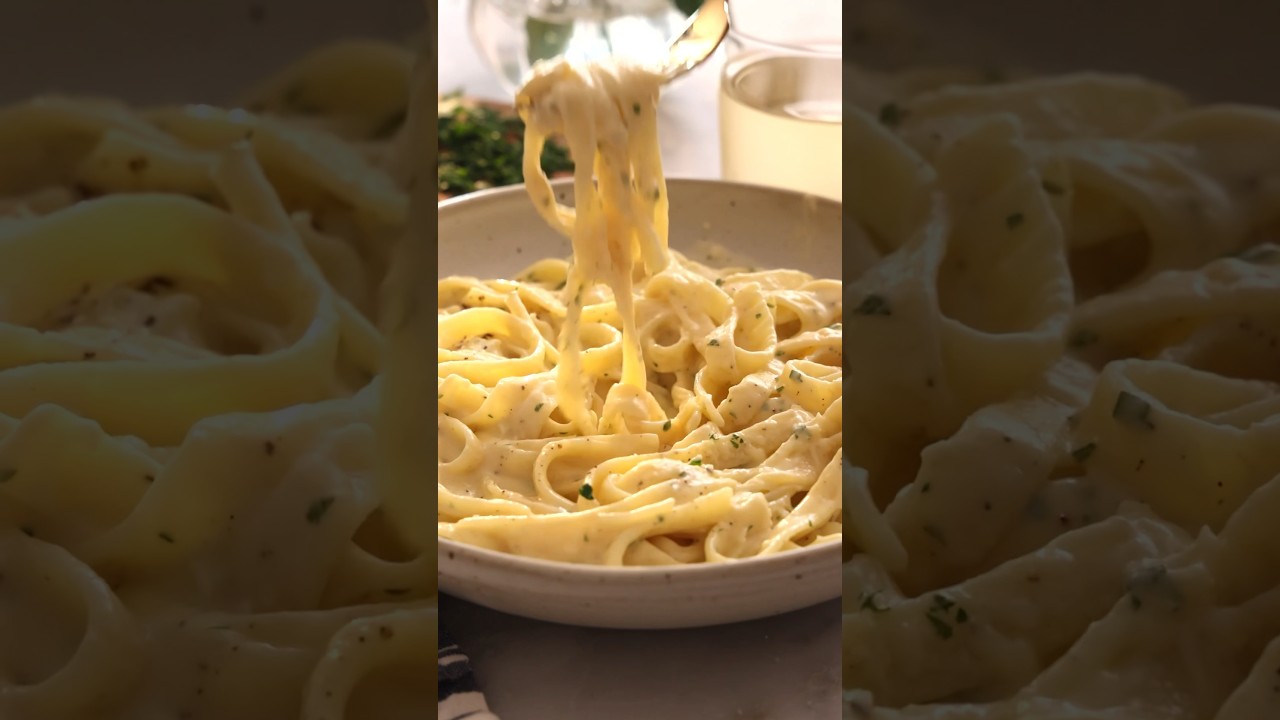
“Most lemon bars fail at the curd. Either it's too sweet and the lemon is a background note, or the texture is somewhere between scrambled eggs and soup because the bake temperature was wrong. The fix is not complicated — it's a matter of understanding what you're actually building: a shortbread base that needs structural integrity before the curd goes on, and a lemon curd that sets through egg protein coagulation at the right temperature. Once you understand those two mechanisms, lemon bars stop being a guessing game.”
Why This Recipe Works
Lemon bars are a two-component structure: a buttery shortbread base and a set lemon curd on top. The failure modes of each component are different, the bake times are different, and the doneness cues are different. The reason most lemon bar recipes produce mediocre results is that they treat it as a single recipe with one bake, when it's really two recipes executed in sequence inside the same pan.
Understanding what's happening at a molecular level in each layer makes the recipe predictable.
The Shortbread Crust: Why Cold Butter Matters
Shortbread is fat, flour, and sugar — no eggs, no leavening. The texture of the finished crust depends entirely on how the fat interacts with the flour before baking.
Cold butter, when pressed into flour and sugar, remains in small discrete pieces rather than coating every flour particle. During baking, two things happen simultaneously: the water content in the butter converts to steam, creating small vapor pockets that produce a slightly flaky, layered texture, and the butter fat melts and lubricates the flour proteins, preventing them from forming long gluten chains. The result is a crust that is firm, crisp, and structurally solid — it holds up under the weight and moisture of the curd without becoming soggy or gummy.
Melted butter, by contrast, coats every flour particle and produces a more homogeneous dough. The resulting crust is denser, more cookie-like, and lacks the slight layering that makes a good shortbread crust feel different from a glorified graham cracker base. Both approaches taste fine. For structural performance under a liquid curd, cold butter wins.
The par-bake step exists because of what happens when raw dough and liquid curd meet. If you pour liquid onto unbaked shortbread dough, the liquid is absorbed before any baking structure can form. The dough essentially becomes a wet paste that bakes into something dense and damp — and the curd, losing moisture into the porous raw dough, never sets properly either. Par-baking for 18-20 minutes at 350°F drives enough moisture out of the crust and creates enough structural integrity that the curd can sit on top and bake independently.
The Lemon Curd: Egg Coagulation and Why Flour Is There
Lemon curd sets through the coagulation of egg proteins. Egg yolk proteins (including lipovitellin and phosvitin) and egg white proteins (ovalbumin, ovotransferrin) begin to denature — unfold and cross-link — at approximately 160°F and are fully set between 175-185°F. The challenge is that the line between "properly set" and "overcooked and grainy" is about 10 degrees Fahrenheit.
This is where the 1/3 cup of flour earns its place. Flour in a curd acts as a stabilizer that increases the viscosity of the liquid before and during cooking, which does two things: it slows the rate of temperature increase in the egg proteins (because the starch granules absorb heat and moisture before the proteins fully denature), and it gives the curd structure even at the lower end of the coagulation temperature range. The flour effectively widens your window of correctly-cooked curd from about 10 degrees to closer to 20-25 degrees. It's not there for flavor. It's there for forgiveness.
The 2 tablespoons of lemon zest are doing a different job than the juice. Fresh lemon juice provides citric acid and water — the tartness, the brightness, the clean cut through the sweetness of the sugar. But the volatile aromatic compounds that create the perception of intense lemon flavor live in the zest: limonene, citral, linalool. These are found in the oils of the lemon peel, not the juice. Juice alone produces a curd that tastes like sweetened citric acid. Juice plus zest produces a curd that tastes like lemon. The distinction matters more here than in almost any other lemon recipe, because the bars are consumed cold, which suppresses perceived flavor intensity — you need both contributions to get the right result.
The Curd-to-Crust Ratio
The standard failure with lemon bars is too much crust and too little curd, or curd that's too sweet and not tart enough to stand up to the buttery base. This recipe uses a 9x13-inch pan for 16 bars because the ratio of curd depth to crust depth in that format is correct: roughly 1:1 by height, which means every bite has equal crust and curd. Smaller pans with the same quantity of filling produce bars where the curd overwhelms the shortbread. More filling in the same 9x13 pan produces a longer bake time that risks overbaking the crust while the deeper curd catches up.
The Cooling Logic
Lemon curd at serving temperature is a different material than lemon curd at oven temperature. At 175°F it's a pourable liquid. At room temperature it's a soft gel. At refrigerator temperature (38-40°F) it's a firm, sliceable layer with enough structural integrity to hold a clean edge when cut. This transition requires time — specifically, a minimum of 2 hours of refrigeration and ideally 4 hours.
The reason the powdered sugar dusting goes on last, right before serving, is simple hygroscopicity. Powdered sugar is finely ground sucrose with a small percentage of cornstarch added to prevent caking. Both sucrose and cornstarch are hygroscopic — they draw moisture from their environment. Cold lemon curd has surface moisture. The contact between powdered sugar and that moist surface initiates absorption, and within 20-30 minutes the powdered sugar has dissolved into a thin syrup layer and the bars look naked. Dust right before serving and the finish holds for the duration of whatever you're serving them at.
A fine-mesh sieve for the dusting is worth mentioning specifically — it produces an even, light layer without clumping, which is the difference between bars that look polished and bars that look like someone sneezed powdered sugar at them.
The recipe is not difficult. It is two techniques executed sequentially with attention to temperature at each stage. The shortbread crust is cold butter and patience. The lemon curd is eggs, acid, and not overbaking. Everything else is assembly.
Where Beginners Mess This Up
Before we start, read this. These are the 4 reasons your lemon bars (shortbread crust, tart lemon curd, powdered sugar finish) will fail:
- 1
Adding curd to an under-baked crust: The crust needs to be par-baked until it's pale gold and set before any curd touches it. If the crust is raw when the curd goes in, it steams rather than bakes, producing a dense, gummy layer that never crisps. Par-bake at 350°F for 18-20 minutes until the edges are just beginning to color. The crust will look slightly underdone in the center — that's correct, it will finish baking with the curd.
- 2
Overbaking the curd: Lemon curd sets through egg protein coagulation. Egg proteins denature and set between 160-180°F. Push the curd above 185°F and the proteins tighten and squeeze — you get a curd that's rubbery, grainy, and shows air bubbles on the surface. Pull the pan when the curd has a slight jiggle in the center and the edges are fully set. It will firm up completely as it cools.
- 3
Skipping the zest: Lemon juice provides acid and tartness. Lemon zest provides the aromatic volatile compounds — limonene, citral — that make something taste unmistakably like lemon rather than just sour. Juice-only curd is flat and one-dimensional. Two tablespoons of zest changes the character of the entire recipe. Do not skip it.
- 4
Cutting before fully chilled: Hot lemon curd is still liquid. Even room-temperature lemon curd is soft. The curd needs a minimum of two hours in the refrigerator — four hours is better — before you cut it. Cut too early and you get crumbling shortbread, oozing curd, and a powdered sugar dusting that dissolves into the wet surface in seconds.
The Video Reference Library
Want to see it in action? Here are the exact videos we analyzed and combined to build this foolproof recipe translation:
The primary reference for this recipe. Covers the par-bake technique, the correct curd consistency before baking, and how to identify the jiggle test for doneness on the curd layer.
🛠️ Core Equipment
- 9x13-inch metal baking panMetal conducts heat faster and more evenly than glass, which matters for the par-bake. Glass pans also have inconsistent temperatures that can cause the curd to overbake on the edges while the center is still liquid. Metal is the correct choice here.
- Parchment paper with overhangLining the pan with parchment and leaving a two-inch overhang on both sides creates handles. After chilling, you lift the entire slab out onto a cutting board and cut with precision — no wrestling the bars out of the pan corner by corner.
- Fine-mesh sieveTwo jobs: straining the curd before pouring to remove any bits of cooked egg or zest fiber, and dusting the powdered sugar finish evenly over the cooled bars. Both operations improve the final product significantly.
- Microplane or zesterThe zest needs to be fine — coarse zest leaves stringy texture in the curd. A Microplane produces fine, fragrant zest in one pass without digging into the bitter white pith beneath. See our [Microplane review](/kitchen-gear/review/microplane-zester) for the specific model we use on this recipe.
Lemon Bars (Shortbread Crust, Tart Lemon Curd, Powdered Sugar Finish)
🛒 Ingredients
- ✦2 cups all-purpose flour
- ✦1/2 cup powdered sugar
- ✦1/2 teaspoon fine salt
- ✦1 cup unsalted butter, cold, cut into 1/2-inch cubes
- ✦4 large eggs, room temperature
- ✦1 1/2 cups granulated sugar
- ✦1/2 cup fresh lemon juice (4-5 lemons)
- ✦2 tablespoons lemon zest (2-3 lemons)
- ✦1/3 cup all-purpose flour
- ✦Powdered sugar for dusting
👨🍳 Instructions
01Step 1
Preheat the oven to 350°F. Line a 9x13-inch metal baking pan with parchment paper, leaving a 2-inch overhang on the two long sides.
02Step 2
Combine flour, powdered sugar, and salt in a food processor. Pulse twice to mix. Add cold butter cubes and pulse in short bursts until the mixture resembles coarse, pea-sized crumbles with no large butter chunks remaining.
03Step 3
Press the crumb mixture evenly into the prepared pan. Use the bottom of a flat measuring cup to compact it into an even, firm layer. Press it slightly up the sides — about 1/4 inch — to create a small lip that will contain the curd.
04Step 4
Bake the crust for 18-20 minutes until the edges are pale golden and the center looks dry and set. Remove from the oven and let cool for 5 minutes while you prepare the curd.
05Step 5
Whisk together eggs, granulated sugar, lemon juice, lemon zest, and flour in a bowl until smooth and fully combined with no visible flour streaks.
06Step 6
Pour the curd through a fine-mesh sieve directly onto the warm par-baked crust, discarding any solids left in the sieve.
07Step 7
Return to the oven and bake for 22-25 minutes, until the edges of the curd are fully set and the center still has a slight jiggle — like firm Jell-O — when you gently shake the pan.
08Step 8
Remove from the oven and cool to room temperature on a wire rack for at least 1 hour, then refrigerate uncovered for a minimum of 2 hours before cutting. Four hours produces cleaner cuts.
09Step 9
Use the parchment overhang to lift the slab out of the pan onto a cutting board. Use a sharp chef's knife wiped clean between cuts to slice into 16 bars.
10Step 10
Dust generously with powdered sugar through a fine-mesh sieve immediately before serving. Do not dust in advance — powdered sugar dissolves into the cold curd within 20-30 minutes.
Nutrition Per Serving
Estimates based on standard preparation. Adjustments alter macros.
🔄 Substitutions
Instead of Fresh lemon juice...
Use Meyer lemon juice or lime juice
Meyer lemons produce a sweeter, more floral curd with less acidity — reduce sugar to 1 1/4 cups to maintain balance. Lime juice produces a sharper, more tropical result that works exceptionally well with a coconut-enriched crust.
Instead of All-purpose flour (crust)...
Use Almond flour (1 3/4 cups) with 1 tablespoon cornstarch
Produces a gluten-free crust with a nuttier flavor and slightly more crumble. Press firmly — almond flour crust requires more compaction to hold together under the liquid curd.
Instead of Unsalted butter (crust)...
Use Vegan butter (same quantity), cold
Works nearly identically if the vegan butter is kept cold throughout. Avoid coconut oil — it lacks the water content that creates steam pockets during baking, and the crust comes out more like a dense cookie than a layered shortbread.
🧊 Storage & Reheating
In the Fridge
Store cut bars in a single layer in an airtight container for up to 4 days. The curd holds its texture well. Do not stack without parchment between layers — they will stick and the curd will transfer.
In the Freezer
Freeze undusted bars on a parchment-lined baking sheet until solid, then transfer to a freezer bag with parchment between layers. Store for up to 2 months. Thaw overnight in the refrigerator.
Reheating Rules
Lemon bars are served cold or at room temperature — not reheated. Bring refrigerated bars to room temperature for 15 minutes before serving for slightly softer texture. Dust with fresh powdered sugar after thawing.
❓ Frequently Asked Questions
Why are my lemon bars runny in the center?
Either the curd was underbaked or not chilled long enough before cutting. The curd is done when the edges are fully set and the center jiggles only slightly — like Jell-O, not like liquid. After baking, the bars need a minimum of 2 hours of refrigeration to fully firm up. If you cut them warm or at room temperature, the curd will be soft regardless of how long you baked them.
Why does my curd have a foamy, bubbly top?
You incorporated air into the curd mixture when whisking. Whisk just until combined — no vigorous beating. Alternatively, pouring the curd through a fine-mesh sieve removes most surface bubbles before baking. If bubbles persist, pop them with a toothpick before putting the pan in the oven.
Can I use bottled lemon juice?
Technically yes, but the result will be noticeably inferior. Bottled lemon juice lacks the aromatic volatile compounds that fresh juice and zest provide. The bars will taste flat and generically citrusy rather than bright and distinctly lemon-forward. If you have access to fresh lemons, use them.
How do I get clean cuts?
Chill fully — at least 4 hours in the refrigerator — before cutting. Use a sharp chef's knife, not a serrated knife. Wipe the blade clean with a damp towel between every single cut. Scoring the cuts lightly before pressing through helps keep the lines straight.
Can I double the recipe?
Yes, but use two 9x13 pans rather than scaling up to one larger pan. The curd depth affects bake time significantly — a deeper curd layer takes longer to set and risks overbaking the crust underneath while the curd catches up.
Why does the powdered sugar disappear after I dust it?
Powdered sugar is hygroscopic — it absorbs moisture from the air and from the cold, moist surface of the curd. Dust the bars immediately before serving, not before. If you're transporting them, bring the powdered sugar and a sieve separately and dust at the destination.
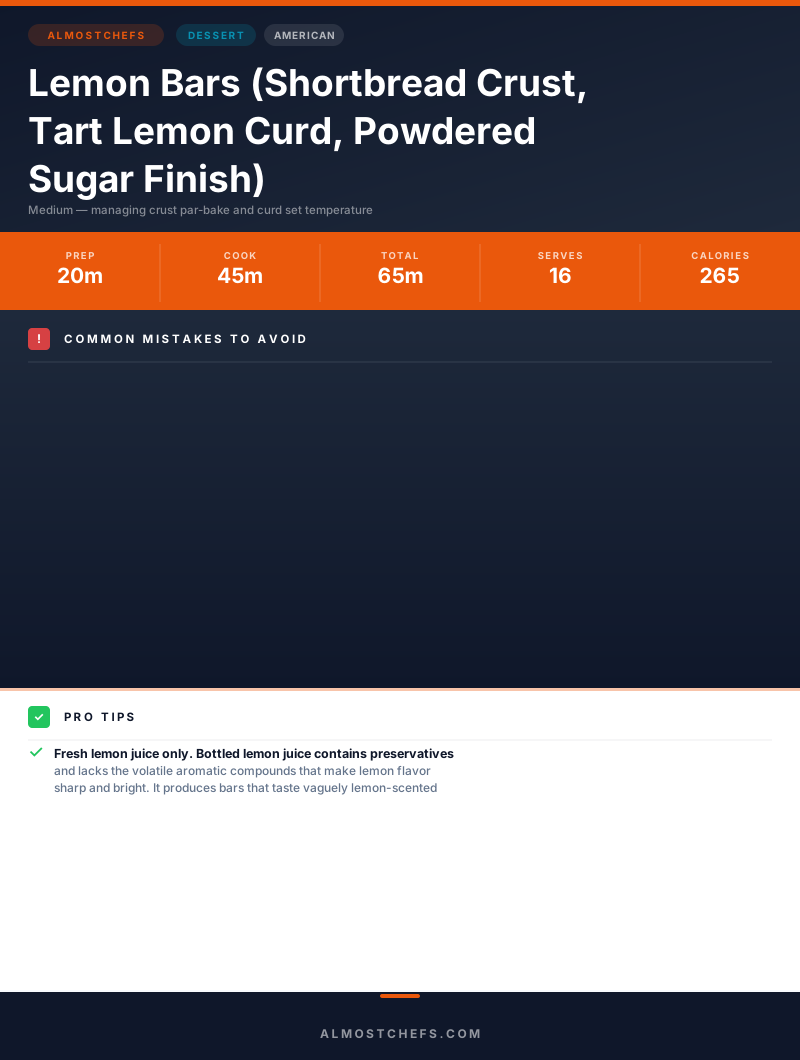
The Science of
Lemon Bars (Shortbread Crust, Tart Lemon Curd, Powdered Sugar Finish)
We turned everything on this page into a beautiful, flour-proof PDF cheat sheet. Print it out, stick it to your fridge, and never mess up your lemon bars (shortbread crust, tart lemon curd, powdered sugar finish) again.
*We'll email you the high-res PDF instantly. No spam, just perfectly cooked meals.
AlmostChefs Editorial Team
We translate the internet's most popular cooking videos into foolproof, beginner-friendly written recipes. We analyze multiple methods, test them in our kitchen, and engineer a single "Master Recipe" that gives you the best possible result with the least possible stress.