High-Protein Turkey & Veggie Power Skillet (38g Protein, One Pan)
A lean ground turkey skillet with a creamy Greek yogurt and cottage cheese sauce, sautéed bell peppers, mushrooms, and a hit of smoked paprika. We engineered this one-pan dinner to hit 38g of protein per serving in under 40 minutes — no fancy techniques, no compromise on flavor.
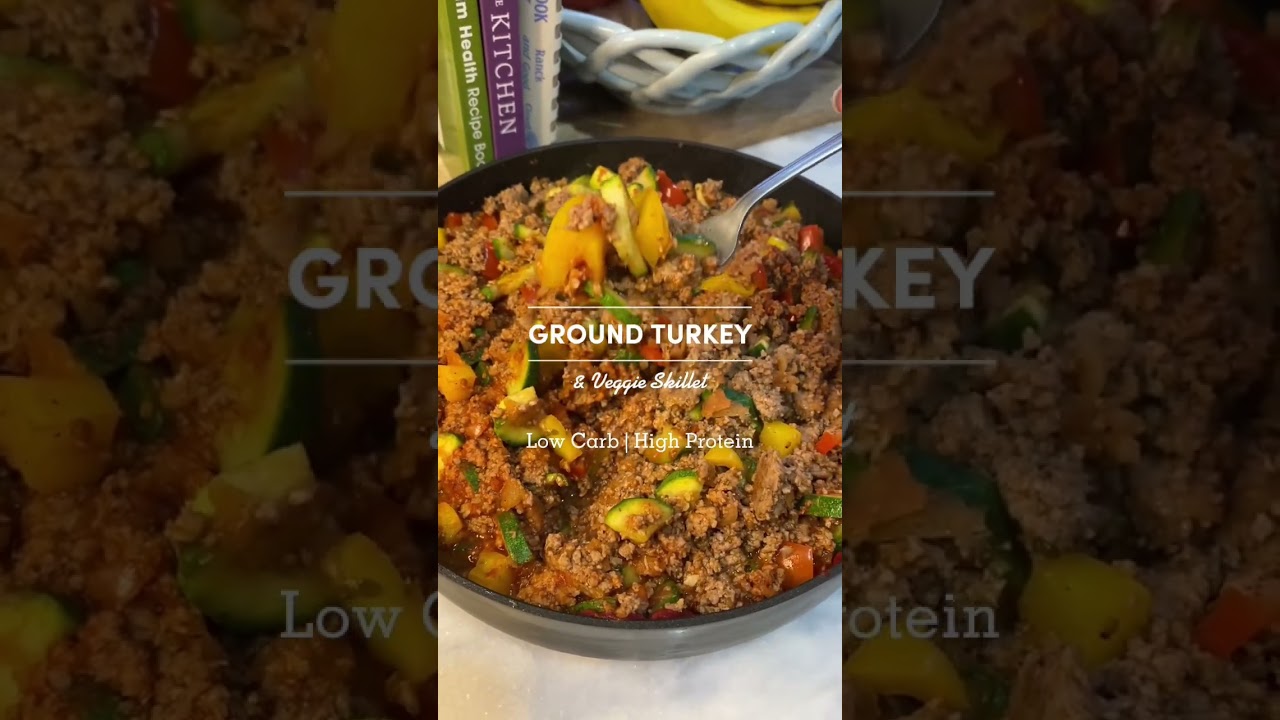
“Most high-protein dinners taste like a compromise — flavorless chicken breast, sad steamed broccoli, protein powder sauces that taste exactly like protein powder. This skillet is different. It hits 38g of protein per serving by stacking two underrated protein sources — Greek yogurt and cottage cheese — into a sauce that is legitimately creamy and rich. The ground turkey does the heavy lifting, but the sauce is what makes people ask for seconds. One pan. Thirty-seven minutes. Zero meal-prep suffering.”
Why This Recipe Works
The fitness food category has a branding problem. Everything is either aggressively bland or drowning in protein powder aftertaste. Chicken breast portioned into Tupperware. Brown rice that tastes like wet cardboard. The entire aesthetic communicates suffering as virtue. This skillet refuses that premise. Thirty-eight grams of protein per serving, built around a sauce that people actually want to eat, using techniques that require no skill and one pan to clean.
The Protein Stack
Most high-protein recipes earn their numbers the obvious way — massive portions of lean meat. This one takes a different approach: two dairy protein sources work alongside the ground turkey to create a complete amino acid profile without dramatically increasing serving size or calorie count. Greek yogurt brings roughly 10g of protein per 100g. Cottage cheese adds another significant hit at 11g per 100g, plus a creaminess that yogurt alone can't replicate. Stacked together, they turn what would otherwise be a modest 28g-protein skillet into a 38g powerhouse — a 36% improvement — without adding a single gram of extra meat.
The key is that these aren't protein supplements awkwardly inserted into a recipe. They are the sauce. They create the body, the richness, and the coating that makes every piece of turkey and every vegetable feel worth eating. The protein is structural.
Why Ground Turkey Works Here
Ground turkey has a reputation problem. Cooked without fat or acid, 93/7 turkey becomes dry, crumbly, and tasteless — essentially the texture of sawdust with the flavor to match. The fix is twofold: brown it properly (actual Maillard reaction, not steam-cooking in a crowded pan), and then finish it in an acidic, dairy-rich sauce that rehydrates the meat as it simmers. The lemon juice and balsamic added at the end help break through the lean dryness that makes turkey disappointing in other recipes.
Fat equals flavor in most cooking. In this recipe, the smoked paprika, tomato paste, garlic, and balsamic pull the flavor load that fat would normally carry. None of these are expensive pantry items. All of them are already in most kitchens.
The One-Pan Logic
The sequence matters. Onion and garlic go first — they need time to soften and release their aromatics. Turkey goes in next, browned in batches if necessary, because a crowded large skillet steams instead of sears and you lose the crust that makes ground meat taste like more than ground meat. Vegetables come after the turkey is cooked through — they need five minutes, not fifteen. The sauce goes in last, pre-mixed and cold, poured into a pan that has been pulled back from maximum heat.
This sequence is also the cleanup strategy. One pan absorbs everything — the browning fond from the turkey, the vegetable juices, the sauce. By the time the meal is done, the pan has been deglazed twice and there's nothing to scrub.
The Sauce Architecture
The tomato paste in the sauce serves a function that most people underestimate. It acts as an emulsifier — its concentrated solids help bind the yogurt, cottage cheese, and broth into a cohesive coating rather than a separated, watery mess. Two tablespoons is the right amount. Less and the sauce feels thin. More and you've made a meat sauce that competes with the dairy flavor rather than supporting it.
Smoked paprika is the dominant seasoning for a reason. Sweet paprika makes this taste generic. Cayenne alone makes it one-dimensional. Smoked paprika adds complexity that reads as depth rather than heat — it's the reason this dish doesn't taste like diet food, even though every macro in it has been optimized. That distinction matters when you're eating this three days in a row out of a meal prep container.
The balsamic and lemon juice go in at the very end. Both are volatile. Both lose their brightness within two minutes of sustained high heat. Adding them last — off a screaming burner — is what keeps the dish tasting alive rather than flat and cooked-through.
Where Beginners Mess This Up
Before we start, read this. These are the 4 reasons your high-protein turkey & veggie power skillet (38g protein, one pan) will fail:
- 1
Not draining excess fat from the turkey: Even 93/7 lean ground turkey releases some fat as it renders. If you skip draining before adding the sauce, the fat breaks the emulsion and you end up with a greasy, separated mess instead of a cohesive creamy sauce. Tip the pan and spoon off the excess before proceeding.
- 2
Adding the yogurt sauce over high heat: Greek yogurt and cottage cheese are both dairy proteins that seize and curdle at high temperatures. The sauce goes in after you've already added the vegetables and the pan has come off its highest heat. If the pan is screaming hot, you get grainy white chunks instead of a smooth coating.
- 3
Whisking the sauce directly into the pan: Combine the yogurt, cottage cheese, chicken broth, and tomato paste in a separate bowl first. Blending them cold before they hit heat ensures a uniform emulsion. Pouring each component separately into a hot pan creates streaky, uneven sauce.
- 4
Overcooking the vegetables: Bell peppers and mushrooms go in after the turkey is browned — not before. Five minutes of sauté is all they need. Overcooked peppers turn slimy and lose their structural contrast against the meat. You want slight bite, not mush.
The Video Reference Library
Want to see it in action? Here are the exact videos we analyzed and combined to build this foolproof recipe translation:
The source video that inspired this recipe. Demonstrates the sauce whisking technique and proper browning sequence for lean ground turkey.
🛠️ Core Equipment
- Large skillet (12-inch)Surface area matters for browning. A crowded pan steams the turkey instead of browning it, which kills flavor. A 12-inch skillet gives the meat room to make contact with the hot surface and develop color.
- Wooden spoon or stiff silicone spatulaBreaking up ground turkey requires deliberate pressure. A wooden spoon lets you smash clumps flat against the pan surface as the meat cooks, preventing large wet chunks from steaming internally.
- Small mixing bowl and whiskThe sauce components must be emulsified before they hit the pan. Whisking cold yogurt, cottage cheese, broth, and tomato paste together in a bowl first is what keeps the sauce smooth and prevents curdling.
High-Protein Turkey & Veggie Power Skillet (38g Protein, One Pan)
🛒 Ingredients
- ✦1.5 lbs lean ground turkey (93/7)
- ✦2 tablespoons extra-virgin olive oil
- ✦1 medium yellow onion, finely diced
- ✦3 cloves garlic, minced
- ✦2 medium bell peppers (red and yellow), chopped into bite-sized pieces
- ✦2 cups fresh mushrooms, sliced
- ✦1 cup low-sodium chicken broth
- ✦1/2 cup plain nonfat Greek yogurt
- ✦1/3 cup cottage cheese (2% milkfat)
- ✦2 tablespoons tomato paste
- ✦1 teaspoon smoked paprika
- ✦1/2 teaspoon garlic powder
- ✦1/4 teaspoon cayenne pepper
- ✦1 teaspoon dried oregano
- ✦Salt and black pepper to taste
- ✦2 tablespoons fresh parsley, chopped
- ✦1 tablespoon balsamic vinegar
- ✦Juice of half a lemon
👨🍳 Instructions
01Step 1
Heat olive oil in a large skillet over medium-high heat until shimmering, about 1 minute.
02Step 2
Add the diced onion and cook, stirring occasionally, until softened and translucent, approximately 4 minutes.
03Step 3
Stir in the minced garlic and cook until fragrant, about 45 seconds, then add the ground turkey and break it apart with a wooden spoon as it browns, cooking for 6-8 minutes until no pink remains.
04Step 4
Pour off any excess fat if needed, then add the chopped bell peppers and sliced mushrooms to the skillet and sauté for 5 minutes until the vegetables begin to soften.
05Step 5
Whisk together the chicken broth, Greek yogurt, cottage cheese, and tomato paste in a small bowl until smooth and well combined.
06Step 6
Pour the sauce mixture into the skillet and stir well to coat all ingredients evenly.
07Step 7
Add the smoked paprika, garlic powder, cayenne pepper, and dried oregano, then stir to distribute the spices throughout, cooking for 3-4 minutes until the sauce thickens slightly.
08Step 8
Reduce heat to medium-low and simmer for 5 minutes, allowing flavors to meld and the sauce to cling to the turkey and vegetables.
09Step 9
Finish with balsamic vinegar and lemon juice, then taste and adjust salt and black pepper as needed.
10Step 10
Garnish with fresh parsley and serve immediately over brown rice, cauliflower rice, or alongside roasted sweet potatoes.
Nutrition Per Serving
Estimates based on standard preparation. Adjustments alter macros.
🔄 Substitutions
Instead of Plain nonfat Greek yogurt...
Use Nonfat plain Icelandic skyr
Skyr has more protein per gram than Greek yogurt — about 20g per 100g vs 10g. Slightly tangier mouthfeel and even creamier sauce. Protein jumps to approximately 41g per serving.
Instead of Cottage cheese (2% milkfat)...
Use Nonfat cottage cheese or silken tofu
Nonfat cottage cheese reduces fat by 1g per serving with no flavor loss. Silken tofu makes the dish fully vegan while maintaining creaminess — use extra-firm silken for best results.
Instead of Lean ground turkey (93/7)...
Use Ground chicken breast (99% lean) or plant-based ground meat with collagen peptides
Ground chicken breast is slightly drier but pairs perfectly with the creamy sauce. Plant-based ground meat with added collagen peptides can push protein to 45g per serving for vegetarian diets.
Instead of Bell peppers and mushrooms...
Use Broccoli florets and zucchini chunks
Reduces carbs by 4g per serving while keeping fiber intact. Zucchini absorbs the sauce beautifully. Add broccoli in the last 3 minutes of vegetable sauté to prevent overcooking.
🧊 Storage & Reheating
In the Fridge
Store in an airtight container for up to 4 days. The sauce thickens when cold — add a splash of broth when reheating.
In the Freezer
Freeze in individual portions for up to 2 months. The sauce texture changes slightly upon thawing but recovers fully when reheated with a tablespoon of broth or water.
Reheating Rules
Reheat in a skillet over medium-low heat with 1-2 tablespoons of chicken broth, stirring occasionally, until warmed through. Microwaving works but can unevenly heat the dairy-based sauce — stir halfway through.
❓ Frequently Asked Questions
Why does my sauce turn grainy or curdled?
The two most common causes are adding the sauce to a pan that's too hot, or not pre-mixing the sauce components before adding them. Whisk the yogurt, cottage cheese, broth, and tomato paste together in a bowl first, then pour into the pan after reducing heat to medium. Both Greek yogurt and cottage cheese are heat-sensitive proteins that seize when they hit a screaming hot surface.
Can I use full-fat Greek yogurt instead of nonfat?
Yes, and it'll taste richer. Full-fat yogurt is more forgiving with heat — the extra fat content helps stabilize the sauce and reduces the risk of curdling. The trade-off is about 30-40 additional calories per serving and 3-4g of added fat.
Is this actually good for meal prep, or does it get soggy?
It's genuinely one of the better meal prep dishes. The sauce thickens overnight and clings tighter to the turkey and vegetables, which prevents the watery pooling that makes most meal prep lunches depressing. Reheat with a splash of broth and it returns to the right consistency.
How do I get more flavor without adding calories?
Double the smoked paprika and add a pinch of red pepper flakes with the other spices. A second tablespoon of balsamic vinegar at the finish also adds significant depth with minimal calories. Freshly cracked black pepper — as opposed to pre-ground — makes a noticeable difference.
Can I add grains directly to the skillet?
Yes. Add 1 cup of pre-cooked brown rice or quinoa directly to the pan during the last 3 minutes of simmering and stir to coat. This turns it into a complete one-pan meal. Add an extra 1/4 cup of broth to account for the grain absorption.
Why balsamic vinegar at the end?
Balsamic adds a hit of acid and subtle sweetness that cuts through the richness of the yogurt-cottage cheese sauce. Adding it at the end — off high heat — preserves its complexity. Cooked too long, it loses its brightness and just tastes sour.
The Science of
High-Protein Turkey & Veggie Power Skillet (38g Protein, One Pan)
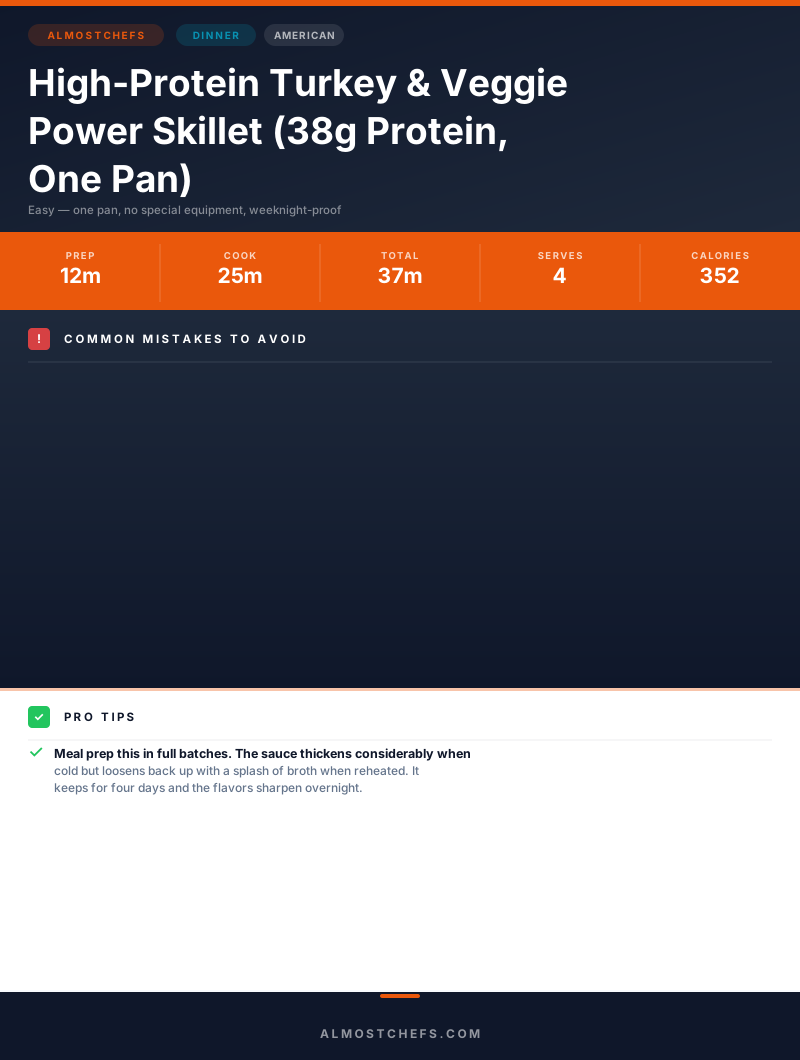
We turned everything on this page into a beautiful, flour-proof PDF cheat sheet. Print it out, stick it to your fridge, and never mess up your high-protein turkey & veggie power skillet (38g protein, one pan) again.
*We'll email you the high-res PDF instantly. No spam, just perfectly cooked meals.
AlmostChefs Editorial Team
We translate the internet's most popular cooking videos into foolproof, beginner-friendly written recipes. We analyze multiple methods, test them in our kitchen, and engineer a single "Master Recipe" that gives you the best possible result with the least possible stress.