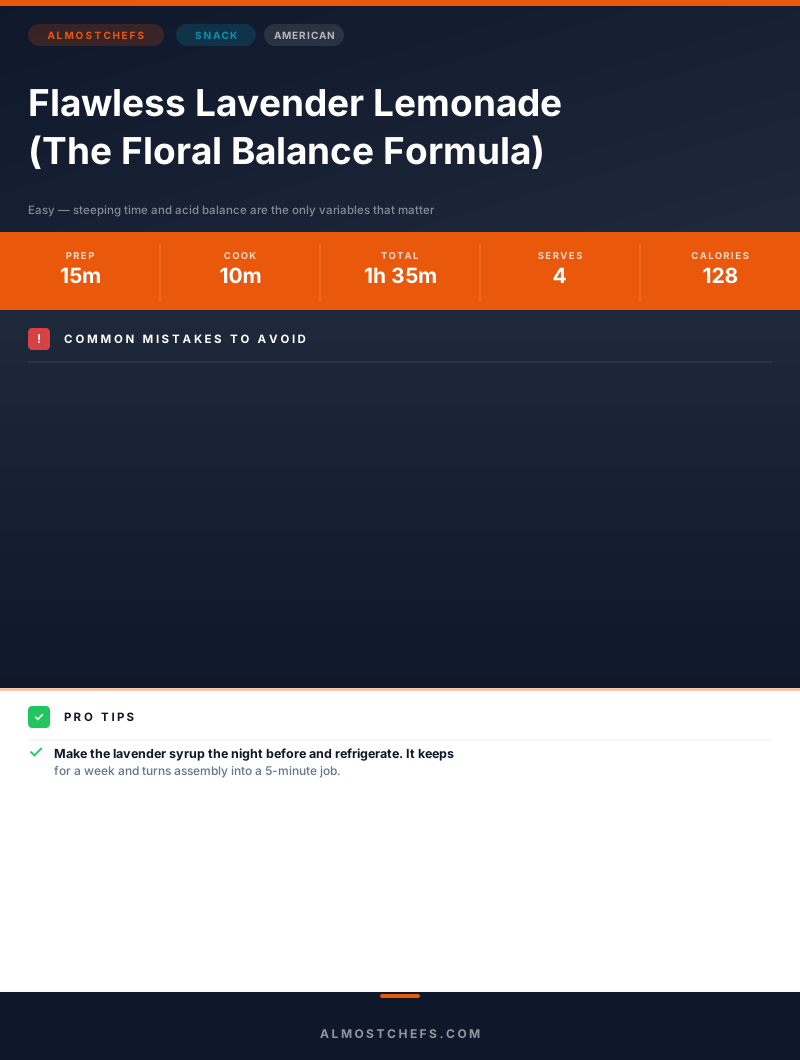
Flawless Lavender Lemonade (The Floral Balance Formula)
A naturally sweetened, pale-purple summer drink that balances tart lemon juice with delicate lavender without letting the floral notes take over. We analyzed the steeping time, sweetener options, and acid ratios to build one foolproof formula that works every time.

“Lavender lemonade sounds simple until you taste one that's been over-steeped. Then it doesn't taste like lemonade — it tastes like drinking a soap bar. The difference between a gorgeous, delicate floral drink and a perfume accident is 90 seconds of steeping time and the order you add your acid. This recipe solves both.”
Why This Recipe Works
Lavender lemonade has a reputation for being easy. It isn't. It's a drink with a very narrow operating window, and most versions miss it in the same direction: too much lavender, steeped too long, sweetened without tasting, assembled in the wrong order. The result is a drink that smells like a bath product and tastes like you're gargling potpourri. This recipe exists to close that window and lock it.
The Steeping Problem
Lavender contains two categories of aromatic compounds: linalool and linalyl acetate, which produce the clean floral notes you want, and camphor-adjacent compounds that emerge with extended heat exposure. At 8 minutes of steeping in just-boiled water, you get the first category. At 15 minutes, you get both — and the camphoraceous notes dominate, producing the soapy flavor that gives lavender lemonade a bad name.
The visual cue is color. Pull the lavender at pale purple — it should look like diluted violet food coloring, not like strong tea. If the water is the color of grape juice, you've already gone too long. Strain immediately and add cold water to arrest further extraction from the residual heat in the buds.
Culinary grade matters too. Ornamental lavender — the kind from garden centers and flower markets — is bred for fragrance intensity, not food use. The aromatic compound concentration is significantly higher, and steeping even a small amount produces a medicinal result. The bag must say "culinary grade" or "food grade." This is not optional caution.
The Acid Architecture
Lemon juice is volatile. Its brightness comes from volatile aromatic compounds that evaporate rapidly above 140°F. Adding fresh lemon juice to hot lavender water doesn't just fail to combine well — it actively destroys the thing that makes lemon taste like lemon. The juice becomes flat and acidic without the aromatic brightness that defines lemonade.
This is why the lemon zest matters as much as the juice. The zest contains the essential oils — limonene, primarily — that live in the colored outer skin of the lemon. These oils survive the cold-preparation process intact and carry the actual lemon aroma that the cooked-down juice loses. Zest first. Juice second. Always cold.
The small amount of sea salt in this recipe is not a mistake. Salt at low concentrations suppresses bitterness receptors on the palate, which makes both the lavender and the honey read as sweeter and more complex without adding any perceptible saltiness. The same principle is why a good French press always benefits from a pinch of salt in the grounds.
The Sweetener Question
Honey is the better choice here — not for health reasons, but for flavor. A good raw honey has floral top notes that harmonize with lavender rather than competing with it. The bees have, in a sense, already done some of the flavor bridging for you.
Maple syrup works well but adds a faint caramel undercurrent that's more detectable in a delicate drink like this. It's not wrong — it's just a different flavor profile. Grade A light amber maple syrup is the least intrusive option if that's your sweetener.
Either way, dissolve the sweetener in warm lavender water, not cold. Honey in particular will stratify and settle in cold liquid, leaving you with a sweet sludge at the bottom of the pitcher and an undersweetened drink above it. Warm liquid, active stirring, complete dissolution — then add the cold water.
The Hour That Matters
The one-hour refrigeration step is listed as a minimum because that's when the chemistry finishes. At room temperature, the lavender, lemon, and sweetener exist as three separate flavor impressions that happen to share a glass. After an hour of cold integration, the compounds have had enough time to interact — the esters blend, the acid softens slightly against the floral notes, and the result reads as a single coherent drink rather than a combination plate.
This is the least dramatic step and the one most likely to be skipped. Don't skip it. Make the lemonade the morning of whatever you're serving it at. The version your guests drink will taste better than the version you tasted when you finished making it, and you'll understand why it earned 15 recipe requests in the database.
Where Beginners Mess This Up
Before we start, read this. These are the 4 reasons your flawless lavender lemonade (the floral balance formula) will fail:
- 1
Over-steeping the lavender: Eight to ten minutes is the ceiling. Beyond that, the volatile compounds in dried lavender buds turn from floral to medicinal — think mothballs with lemon. Set a timer. The liquid should be pale purple, not deep violet. Color is your early warning system.
- 2
Adding lemon juice while the lavender water is still hot: Heat degrades citric acid and causes the juice to lose its brightness. Always let the lavender water cool below 100°F before combining with lemon juice. Room temperature or refrigerator-chilled is ideal.
- 3
Using too much sweetener before tasting: Honey and maple syrup vary enormously in sweetness intensity depending on source and grade. Start with 1/3 cup, stir to dissolve completely, then taste and adjust. You cannot un-sweeten a pitcher of lemonade.
- 4
Skipping the lemon zest: The zest contains the essential oils that give lemon its actual lemon character — not just acid, but aroma. Without it, lavender lemonade tastes flat and one-dimensional. Zest first, juice second, always.
The Video Reference Library
Want to see it in action? Here are the exact videos we analyzed and combined to build this foolproof recipe translation:

The foundational video for this recipe. Covers steeping time, the honey vs. maple syrup debate, and how to read the color of your lavender infusion to know when to strain.
2. Floral Drink Fundamentals
A broader look at balancing floral infusions with citrus across multiple beverage styles. Useful context for understanding why the acid addition order matters.
3. Summer Beverage MasterclassCovers natural sweetener ratios in cold drinks, including why honey requires warm liquid to dissolve properly and how to prevent crystallization in the finished pitcher.
🛠️ Core Equipment
- Fine-mesh sieve ↗Essential for straining lavender buds cleanly. Any bud that makes it into the pitcher will continue steeping and push the floral intensity past the point of no return.
- Medium saucepan ↗You only need to heat 2 cups of water, not the full batch. A small saucepan gives you precise temperature control and prevents over-extraction from excessive heat retention.
- Large pitcher (at least 2-quart) ↗You need room to stir without splashing and space for ice expansion. A tight pitcher forces you to stir in a way that bruises the mint garnish and muddies the color.
- Microplane or citrus zester ↗A box grater takes too much pith with the zest, adding bitterness. A microplane pulls only the colored oil-rich surface. The difference in flavor is significant.
Flawless Lavender Lemonade (The Floral Balance Formula)
🛒 Ingredients
- ✦6 cups filtered water, divided
- ✦1 cup fresh lemon juice (about 5–6 medium lemons)
- ✦3 tablespoons dried culinary lavender buds
- ✦1/2 cup raw honey or pure maple syrup
- ✦2 tablespoons fresh lemon zest
- ✦1/4 teaspoon sea salt
- ✦6–8 fresh lavender sprigs, for garnish
- ✦1 cup ice cubes
- ✦Optional: 2 tablespoons fresh mint leaves
👨🍳 Instructions
01Step 1
Zest your lemons first, before juicing. Measure 2 tablespoons of zest and set aside.
02Step 2
Juice the lemons into a bowl until you have 1 cup of fresh juice. Strain out seeds but leave some pulp for body.
03Step 3
Bring 2 cups of filtered water to a gentle boil in a medium saucepan over medium-high heat.
04Step 4
Remove from heat and add the dried lavender buds. Stir once gently to submerge.
05Step 5
Steep for exactly 8–10 minutes. Watch the color: you want pale purple, not deep violet. Strain through a fine-mesh sieve into your large pitcher, pressing lightly on the buds.
06Step 6
Allow the lavender water to cool to room temperature, about 15–20 minutes. Do not add honey or lemon while it's still steaming.
07Step 7
Add the honey or maple syrup to the warm (not hot) lavender water and stir until completely dissolved — about 60 seconds of active stirring.
08Step 8
Add the lemon juice, remaining 4 cups of cold filtered water, and sea salt. Stir to combine.
09Step 9
Stir in the lemon zest. Taste and adjust: more honey for sweetness, more lemon juice for tartness.
10Step 10
Refrigerate for at least 1 hour before serving. The flavors integrate significantly as it chills.
11Step 11
Fill tall glasses with ice. Pour the lemonade to about three-quarters full.
12Step 12
Garnish with a fresh lavender sprig and mint leaves if using. Stir briefly before each pour — the zest settles.
Nutrition Per Serving
Estimates based on standard preparation. Adjustments alter macros.
🔄 Substitutions
Instead of Dried culinary lavender...
Use Fresh lavender flowers or culinary lavender extract
Fresh flowers are more delicate and bright — steep for only 5–6 minutes. Extract is highly concentrated: use 1/4 teaspoon in place of the full tablespoons of dried buds. Start with less and add more.
Instead of Raw honey...
Use Pure maple syrup or monk fruit sweetener
Maple syrup dissolves more easily and adds subtle depth. Monk fruit or stevia works for low-glycemic versions — add to taste since sweetness intensity varies by brand. Monk fruit leaves no aftertaste when measured carefully.
Instead of Filtered water...
Use Coconut water (for half the volume)
Replaces up to 3 cups of the still water. Adds electrolytes and a faint tropical sweetness that pairs surprisingly well with lavender. Use the unsweetened, unflavored variety.
Instead of Fresh lemon juice...
Use Half lemon, half fresh lime juice
Lime brings a slightly sharper, more tropical edge that reduces the overall sweetness impression without adding more acid. Use the same total volume — 1 cup combined.
🧊 Storage & Reheating
In the Fridge
Store covered in the pitcher or an airtight container for up to 4 days. The lavender flavor mellows slightly after day 2, which some people actually prefer.
In the Freezer
Freeze as ice cubes and add directly to glasses of still or sparkling water. Lavender lemonade ice cubes in plain water is an underrated move.
Reheating Rules
This is a cold drink. Do not reheat. If the honey has settled, stir to redistribute before serving.
❓ Frequently Asked Questions
Why does my lavender lemonade taste like soap?
Over-steeping. The culprit is always steeping time beyond 10 minutes, which releases camphoraceous compounds from the lavender that read as soapy or medicinal on the palate. If it's already happened, add more lemon juice and cold water to dilute — but there's a limit to how much you can recover. Next batch, set a timer.
Can I use lavender essential oil instead of dried buds?
No. Essential oils are not food-grade and are unsafe for consumption. Culinary lavender buds or food-grade lavender extract are the only appropriate options for edible applications.
Why is my lemonade not turning purple?
Dried lavender buds produce a very pale, almost grey-purple hue — not the vivid violet you see in photos, which is often enhanced. The color is subtle and natural. If you want a more visible purple, steep for the full 10 minutes and use a white or clear pitcher to show it off.
Can I make this ahead for a party?
Yes, and you should. Make the lavender syrup up to a week in advance and refrigerate it. Combine with lemon juice and water the morning of, then chill. Just add ice and garnishes at serving time so nothing dilutes.
Is lavender lemonade safe during pregnancy?
Culinary lavender in food quantities is generally considered safe, but medicinal amounts or concentrated lavender products are not recommended. The amount in this recipe is culinary — but consult your healthcare provider for personal guidance.
Why does my honey clump at the bottom instead of dissolving?
The liquid was too cold when you added it. Honey needs warm liquid (at least 80°F) to dissolve cleanly. Always add honey to the lavender-steeped water while it's still warm, stir vigorously, and let it dissolve completely before adding cold water or refrigerating.
The Science of
Flawless Lavender Lemonade (The Floral Balance Formula)
We turned everything on this page into a beautiful, flour-proof PDF cheat sheet. Print it out, stick it to your fridge, and never mess up your flawless lavender lemonade (the floral balance formula) again.
*We'll email you the high-res PDF instantly. No spam, just perfectly cooked meals.
AlmostChefs Editorial Team
We translate the internet's most popular cooking videos into foolproof, beginner-friendly written recipes. We analyze multiple methods, test them in our kitchen, and engineer a single "Master Recipe" that gives you the best possible result with the least possible stress.