Lasagna (Bolognese, Béchamel, Layered Right — The Complete Method)
Lasagna built on a proper Bolognese meat sauce, a béchamel that holds the layers together, and a specific layering order that prevents the common problem of dry edges and watery middle.

“Most homemade lasagna has the same problem: the middle is wet, the edges are dry, and the layers slide apart on the plate. It's an assembly problem and a sauce problem — too much tomato liquid, not enough béchamel structure, and a layering order that doesn't account for how heat moves through a 9x13 pan. This recipe fixes all three.”
Why This Recipe Works
Lasagna has a reputation as a weekend project — something that takes all afternoon, feeds twelve people, and requires a specific kind of commitment that weeknight cooking cannot support. That reputation is partially earned. Done correctly, lasagna is a multi-component dish where each element requires individual attention before assembly. The Bolognese demands a long reduction. The béchamel requires constant attention for 10 minutes. The assembly has a specific logic that most recipes don't explain.
What that reputation misses is that every step has a clear mechanical reason, and understanding those reasons eliminates guesswork entirely. This is a recipe where you can be confident in the outcome before the pan goes into the oven, because you understand what each component is doing and why it's built the way it is.
The Bolognese Reduction: Concentration as Flavor
A Bolognese is not a tomato sauce with meat in it. It is a meat braise that happens to contain tomato — and the distinction matters for both flavor and texture. The meat provides the primary flavor foundation. The wine adds acid and complexity that mellows through the long simmer. The tomato contributes body and brightness. The long reduction is what transforms these separate ingredients into a cohesive sauce with depth.
The reduction phase is doing two things simultaneously. First, it is evaporating water from the crushed tomatoes and released meat juices, concentrating the flavor compounds left behind. The glutamates in the beef become more potent per unit volume. The tomato's lycopene-rich solids compress against the meat, flavoring it from the outside in. The sweet caramelization compounds from the cooked onion intensify. Every 10 minutes of simmering is a flavor concentration event.
Second, the reduction is changing the physical structure of the sauce in a way that matters critically for the finished lasagna. A loose Bolognese with plenty of free liquid will release steam during the bake, saturating the noodles and producing the wet, soupy lasagna center that ruins the dish. A properly reduced Bolognese — thick enough that it moves like molten lava when the pot is tilted — has most of that free water already gone. In the oven, it finishes reducing against the noodles and béchamel without liquefying them.
The tomato paste deserves specific attention. Cooking it in the fat before the wine goes in — a process called pinçage in French technique — caramelizes the sugars in the paste and produces Maillard compounds that add roasted, rich notes to the sauce. Raw tomato paste added directly to liquid contributes a sharper, more acidic character. Two minutes of stirring the paste in hot fat completely transforms its flavor contribution.
Béchamel: Structure, Not Richness
Most lasagna recipes treat béchamel as an optional enrichment — a creamy layer added for luxurious effect, easily swapped for extra ricotta or simply omitted. This is a misunderstanding of what béchamel is doing.
Ricotta is a protein-dense dairy product. When heated, protein denatures and the whey — the liquid portion of the dairy — separates and drains out. In a lasagna that bakes at 375°F for an hour, the ricotta releases significant moisture into the surrounding layers. This is additive to the moisture problem from an inadequately reduced Bolognese, and it explains why ricotta-only lasagna often has a wet, sliding-apart quality when cut.
Béchamel is a starch-thickened sauce. The roux — butter cooked with flour — creates a network of gelatinized starch granules when the milk is added and heated. As the béchamel bakes inside the lasagna, those starch granules continue to set and firm, forming a semi-solid matrix between the noodle layers. It is, functionally, a structural mortar. The noodles bond to the béchamel as it sets; the béchamel bonds to the Bolognese on either side; the cheese layers bond to the béchamel surface. The result is a lasagna that holds its shape when cut because every layer is adhered to the layers above and below it through this starch-set matrix.
This is why the layering order matters. Noodles on béchamel, béchamel touching both the noodle below and the meat sauce above, creates the maximum bonding surface area. Béchamel that is only applied in thick globs rather than spread evenly across the noodle surface produces weak points — areas where adjacent layers have no adhesive connection — and the lasagna falls apart at those gaps when cut.
The nutmeg in the béchamel is functional, not decorative. Freshly grated nutmeg contains myristicin and related aromatic compounds that suppress the perception of dairy flatness — the bland, slightly heavy quality that a bechamel without seasoning carries. It does not taste like nutmeg in the finished dish. It makes the béchamel taste more like itself: clean, creamy, and balanced.
The Dutch Oven for the Bolognese Simmer
A 45-60 minute reduction requires consistent, even heat across the entire base of the pot. Thin-bottomed pans develop hot spots — areas where the metal is in direct contact with the burner flame and reaches significantly higher temperatures than the surrounding surface. At a rolling simmer, these hot spots scorch the dense meat sauce at the base while the rest of the sauce is still liquid. Scorched Bolognese has a bitter, acrid note that carries through the entire finished lasagna.
A heavy-bottomed Dutch oven distributes heat through its thick walls and base, eliminating hot spots and producing the even, gentle simmer that a Bolognese reduction requires. The same properties that make it ideal for braising — thermal mass, even heat distribution, heavy lid — make it the right tool for this sauce. An enameled cast iron Dutch oven or a fully clad stainless version will both perform correctly.
Layering Logic: Why the Order Is Not Arbitrary
The layering sequence — thin Bolognese on the bottom of the dish, then noodle, then ricotta mixture, then béchamel, then Bolognese, then mozzarella, repeat — is engineered around how heat moves through a 9x13 pan.
Sauce on the bottom of the dish prevents the base noodles from sticking and burning against the glass. Noodles directly above provide the structural platform. Ricotta mixture on the noodle acts as a soft, protein-rich cushion that bonds to the noodle below and the béchamel above. Béchamel over the ricotta provides the structural adhesive for the next noodle layer. Bolognese completes the flavor layer and provides moisture for the next noodle set to absorb during the bake.
Ending with béchamel and mozzarella on top serves a specific purpose: the béchamel creates a base for the mozzarella to melt into, producing the browned, bubbling top crust that is one of the defining visual and textural signatures of the finished dish. Ending with Bolognese on top instead produces a dry, crusted tomato surface and prevents the cheese from melting evenly.
The Foil-On, Foil-Off Bake Sequence
A 9x13 lasagna contains 8+ layers of food material. The outermost layers are in direct contact with 375°F oven air. The center layers are insulated by every layer surrounding them. Without foil, the top browns and the edges firm before the center has reached temperature. The noodle layers in the middle are still underdone and firm when the surface looks finished.
Foil traps steam inside the pan, creating a humid, approximately 212°F steam environment above the lasagna surface. This steam conducts heat into the interior of the pan more efficiently than dry air alone, bringing the center to temperature while protecting the top from early browning. After 45 minutes with foil — when the interior is fully heated and the noodles are cooked through — removing the foil exposes the cheese-topped surface to direct oven air for 15 minutes of browning and crisping. The result is a lasagna where the center is cooked, the layers are set, and the top is golden and bubbling.
The 20-minute rest after baking completes the structural process. The béchamel cools from fully molten to a set, firm consistency. The noodle layers, which have been absorbing liquid throughout the entire bake, finish that process and compress under the weight of the layers above them. The fat from the meat sauce redistributes into the béchamel rather than pooling on the plate. A lasagna cut at 20 minutes produces a clean, firm slice. A lasagna cut the moment the pan comes out of the oven is a liquid architectural disaster. The rest is not optional — it is the final step of the cook.
Where Beginners Mess This Up
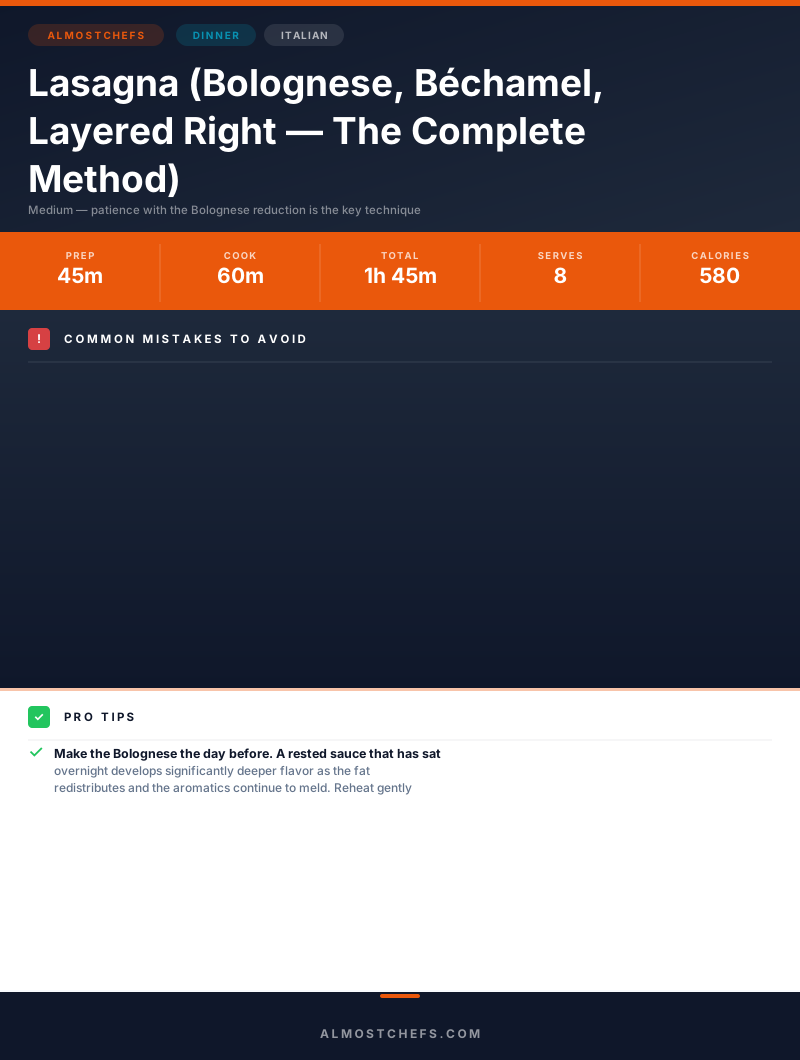
Before we start, read this. These are the 4 reasons your lasagna (bolognese, béchamel, layered right — the complete method) will fail:
- 1
Bolognese with too much liquid: A Bolognese that goes into the lasagna still loose will saturate the noodles with tomato water as it bakes, turning the middle of the pan into a soggy layer and making clean slices impossible. The meat sauce must be reduced until it barely moves when you tilt the pot — thick, concentrated, and rich. This takes 45-60 minutes of actual simmering after the wine reduces. There is no shortcut. Rushing the reduction is the most common single cause of watery lasagna.
- 2
Using only ricotta and skipping the béchamel: Ricotta provides creaminess but no structural binding. It is protein-dense but releases whey as it heats, which adds to the moisture problem rather than solving it. Béchamel — a cooked roux thinned with milk — sets as it bakes into a firm, creamy matrix that holds the layers together. Without béchamel, you are relying on ricotta and cheese alone to bind eight layers of noodles, meat, and cheese. That structure fails in the oven and produces layers that slide off each other the moment the pan is cut.
- 3
Cutting the lasagna too soon: Lasagna straight from the oven is structurally liquid. The béchamel and cheese layers are still molten, the noodle layers haven't reabsorbed the surrounding moisture, and there is no cohesion holding the layers together. Rest the lasagna for a minimum of 20 minutes before cutting. During this time, the béchamel re-sets, the layers compress and bond, and the slices hold their shape when lifted. Cut too early and the best result is a collapsed pile.
- 4
Not covering with foil for the first bake phase: An uncovered 9x13 pan of lasagna in a 375°F oven will have browned, crisped top edges while the center is still cold and the noodles are underdone. Foil traps steam inside the pan, creating a humid cooking environment that heats the layers evenly from all sides simultaneously. Remove the foil for the final 15 minutes to produce the browned, bubbling top. Cover then uncover — this is the sequence.
The Video Reference Library
Want to see it in action? Here are the exact videos we analyzed and combined to build this foolproof recipe translation:
The primary technique reference for this recipe. Covers Bolognese reduction indicators, béchamel consistency targets, and the layering sequence in detail. The visual cues for sauce thickness are particularly useful.
🛠️ Core Equipment
- 9x13 inch baking dishThe standard size for this recipe's 8 servings and noodle count. A smaller pan forces too many layers that don't cook evenly. Glass or ceramic retains heat evenly across the base and produces consistent browning without hot spots.
- Heavy-bottomed Dutch oven or large saucepanThe Bolognese needs 45-60 minutes of gentle, consistent simmering. Thin-bottomed pans develop hot spots that scorch the meat sauce at the base while the top is still loose. A [Dutch oven](/kitchen-gear/review/dutch-oven) distributes heat evenly and holds temperature steadily through the long reduction.
- Whisk and heavy saucepan for béchamelBéchamel requires constant whisking as the milk is added to the roux. A heavy saucepan prevents the bottom from scorching while the roux absorbs the milk. A thin, light pan will produce scorched béchamel within 90 seconds of milk addition.
- Large pot for boiling noodlesLasagna noodles need room to move in heavily salted boiling water. Crowding them produces noodles that stick together in sheets that tear when you try to separate them. Use the largest pot you have.
- Aluminum foilThe foil-on, foil-off baking sequence is not optional. It is the mechanism that produces evenly cooked layers with a properly browned top. Standard kitchen foil works fine — no special equipment required.
Lasagna (Bolognese, Béchamel, Layered Right — The Complete Method)
🛒 Ingredients
- ✦1 lb ground beef (80/20)
- ✦1/2 lb Italian sausage, casings removed
- ✦1 medium yellow onion, finely diced
- ✦4 cloves garlic, minced
- ✦1 can (28 oz) crushed tomatoes
- ✦2 tablespoons tomato paste
- ✦1 cup dry red wine
- ✦1 teaspoon dried oregano
- ✦1 teaspoon dried basil
- ✦Salt and black pepper to taste
- ✦12 lasagna noodles
- ✦4 tablespoons unsalted butter
- ✦4 tablespoons all-purpose flour
- ✦3 cups whole milk, warmed
- ✦1/4 teaspoon freshly grated nutmeg
- ✦2 cups whole-milk ricotta
- ✦3 cups shredded low-moisture mozzarella
- ✦1 cup finely grated Parmigiano-Reggiano
- ✦2 large eggs
- ✦Fresh basil leaves for topping
👨🍳 Instructions
01Step 1
Heat a Dutch oven or large heavy-bottomed pot over medium-high heat. Add the ground beef and Italian sausage with no oil. Brown in batches if needed, breaking into small pieces. Season with salt and pepper. Drain excess fat, leaving about 1 tablespoon in the pot.
02Step 2
Add the diced onion to the browned meat. Cook over medium heat, stirring occasionally, until the onion is fully soft and translucent, about 8 minutes.
03Step 3
Add the minced garlic and tomato paste. Stir constantly for 2 minutes until the tomato paste darkens slightly and the garlic is fragrant.
04Step 4
Pour in the red wine and raise heat to medium-high. Cook, stirring occasionally, until the wine is almost completely evaporated and the smell of alcohol is gone, about 8-10 minutes.
05Step 5
Add the crushed tomatoes, oregano, basil, and a generous pinch of salt. Stir to combine. Reduce heat to low and simmer uncovered for 45-60 minutes, stirring every 10-15 minutes, until the sauce is very thick and barely moves when the pot is tilted.
06Step 6
While the Bolognese simmers, make the béchamel. Melt butter in a medium heavy-bottomed saucepan over medium heat. Add flour all at once and whisk constantly for 2 minutes to cook the raw flour taste out. The roux should be pale golden and smell slightly nutty.
07Step 7
Add the warmed milk to the roux in a thin, steady stream, whisking continuously. This is non-negotiable — add too fast and the roux doesn't absorb the milk evenly, producing a lumpy sauce. Keep whisking until all the milk is incorporated and the sauce is smooth.
08Step 8
Continue cooking over medium heat, whisking frequently, until the béchamel thickens enough to coat the back of a spoon and a finger dragged across leaves a clean line, about 8-10 minutes. Season with nutmeg, salt, and white pepper. Remove from heat.
09Step 9
Cook lasagna noodles in heavily salted boiling water for 2 minutes less than package directions indicate. Drain and lay flat on oiled parchment or a lightly oiled baking sheet to prevent sticking.
10Step 10
In a bowl, combine ricotta, 1 cup of the shredded mozzarella, the Parmigiano-Reggiano, and eggs. Season with salt and pepper. Mix until fully incorporated.
11Step 11
Preheat oven to 375°F. Assemble the lasagna in a 9x13 baking dish: spread a thin layer of Bolognese on the bottom of the dish, then noodles, then ricotta mixture, then béchamel, then Bolognese, then a scattering of shredded mozzarella. Repeat layers, ending with noodles topped with a generous layer of béchamel, the remaining Bolognese, and the remaining mozzarella.
12Step 12
Cover tightly with aluminum foil and bake at 375°F for 45 minutes. Remove foil and bake for an additional 15 minutes until the top is golden and bubbling.
13Step 13
Remove from oven and rest uncovered for at minimum 20 minutes before cutting. Serve topped with fresh basil leaves.
Nutrition Per Serving
Estimates based on standard preparation. Adjustments alter macros.
🔄 Substitutions
Instead of Ground beef and Italian sausage...
Use All ground beef, or ground turkey
All-beef Bolognese is more traditional and produces a cleaner, beefier flavor. Italian sausage adds fennel and spice complexity — if you skip it, add 1/2 teaspoon fennel seed and a pinch of red pepper to the beef. Ground turkey produces a leaner, milder sauce; compensate with an extra tablespoon of tomato paste and a splash of Worcestershire sauce for depth.
Instead of Whole milk (béchamel)...
Use 2% milk or unsweetened oat milk
2% milk produces a slightly thinner béchamel that still sets adequately in the oven. Oat milk works for dairy-free versions but the finished béchamel is less rich and doesn't set as firmly. Increase the roux by 1 tablespoon each of butter and flour when using oat milk to compensate.
Instead of Red wine...
Use Beef broth with a splash of red wine vinegar
The wine serves two purposes: depth of flavor and acidity that balances the tomato. Beef broth replaces the depth, and a teaspoon of red wine vinegar replicates the acid note. Use only if wine is not available — the full wine version is noticeably better.
Instead of Ricotta...
Use Cottage cheese, strained
Press cottage cheese through a fine-mesh strainer for 30 minutes to drain excess liquid, then use 1:1 as a ricotta substitute. The flavor is slightly tangier and less rich. Add 2 tablespoons of cream cheese to the mixture to approximate ricotta's texture more closely.
🧊 Storage & Reheating
In the Fridge
Store tightly covered for up to 4 days. Lasagna improves on days 2 and 3 as the layers compress and the flavors continue to develop. Slice and store individual portions for easier reheating.
In the Freezer
Freeze fully assembled and cooked lasagna, tightly wrapped in plastic then foil, for up to 3 months. Freeze in individual portions for practical meal use. Thaw overnight in the refrigerator before reheating.
Reheating Rules
Reheat individual slices in a 350°F oven covered with foil for 20-25 minutes, or uncovered in a microwave with a damp paper towel over the top at 70% power for 3-4 minutes. The oven method preserves the top crust and layer structure significantly better than the microwave.
❓ Frequently Asked Questions
Why is my lasagna watery in the middle?
The Bolognese wasn't reduced enough before assembly. Loose tomato sauce releases water vapor during baking and saturates the noodles, liquefying the interior of the pan. The sauce must be reduced to a very thick, nearly paste-like consistency before it touches a single noodle. The visual test: tilt the pot. If the sauce moves like water, keep simmering. If it shifts slowly and heavily like lava, it's ready.
Can I assemble lasagna the night before and bake it the next day?
Yes, and this is actually the recommended approach. Assembled, unbaked lasagna covered tightly in the refrigerator overnight allows the béchamel to firm up slightly, the noodles to absorb some of the sauce moisture, and the flavors to meld before the heat sets everything permanently. Add 10-15 minutes to the covered baking time to account for starting from cold.
Do I really need the béchamel? Seems like extra work.
The béchamel is the structural element, not a flavor garnish. Ricotta alone releases whey during baking and contributes to the wet-middle problem. Béchamel — a cooked roux — sets as it heats and forms a cohesive matrix between the noodle layers. Without it, you have tomato meat sauce and cheese with pasta sheets loosely arranged around them. The layers won't bind and won't hold their shape when cut. The béchamel is the difference between a slice that holds and a pile that collapses.
How many layers should lasagna have?
This recipe produces 3 full layers with a noodle-topped béchamel and cheese cap on top — effectively 4 noodle layers in a 9x13 pan. Fewer than 3 full layers and you lose the architectural integrity of the dish. More than 4 layers in a standard pan and the bake time becomes inconsistent — the outer layers overcook before the center reaches temperature. Three layers is the structural optimum for a 9x13 at 375°F.
Fresh pasta or dried noodles?
Fresh pasta sheets produce a more delicate, tender result and a shorter bake time — reduce covered bake to 30 minutes. Dried noodles produce a firmer, more defined layer structure and hold up better to the weight of the sauce. Both work. The key distinction is moisture absorption: fresh pasta absorbs far less than dried, so reduce béchamel and Bolognese volumes slightly if using fresh sheets to prevent an overly liquid result.
My béchamel has lumps. How do I fix it?
Lumpy béchamel comes from adding cold milk too fast to the roux. To rescue it: strain the béchamel through a fine-mesh sieve while it's still hot and fluid, pressing the lumps through with the back of a spoon. If the béchamel has already thickened with lumps set in, blend with an immersion blender until smooth. Next time, warm the milk before adding and pour it in a thin, steady stream while whisking without stopping.
Why does my lasagna taste flat even though I followed the recipe?
Seasoning happens at every layer, not just the final product. The Bolognese, béchamel, and ricotta mixture each need to be seasoned independently before assembly. A lasagna built from under-seasoned components at each stage cannot be corrected at the table. Taste the Bolognese before assembly — it should be noticeably well-seasoned. Taste the béchamel — you should detect the salt and nutmeg. Taste the ricotta mixture — season it. The finished dish is the sum of these parts.
Can I make this without meat?
Yes. Replace the Bolognese with a vegetable ragu: finely diced mushrooms, zucchini, carrot, and celery sautéed down with the same onion, garlic, tomato paste, wine, and crushed tomato base. The mushrooms provide the umami and textural presence that the ground beef contributes. Reduce the vegetable ragu with the same patience as the meat version — loose vegetable sauce has the same water problem as loose meat sauce.
The Science of
Lasagna (Bolognese, Béchamel, Layered Right — The Complete Method)
We turned everything on this page into a beautiful, flour-proof PDF cheat sheet. Print it out, stick it to your fridge, and never mess up your lasagna (bolognese, béchamel, layered right — the complete method) again.
*We'll email you the high-res PDF instantly. No spam, just perfectly cooked meals.
AlmostChefs Editorial Team
We translate the internet's most popular cooking videos into foolproof, beginner-friendly written recipes. We analyze multiple methods, test them in our kitchen, and engineer a single "Master Recipe" that gives you the best possible result with the least possible stress.