Foolproof Lamb Biryani (The Dum Technique Finally Explained)
A fragrant, layered South Asian rice dish with fork-tender spiced lamb, deep mahogany caramelized onions, and whole spices cooked under a sealed lid. We broke down the most-watched YouTube methods to isolate the exact technique that produces fluffy, separate grains and juicy meat every single time.

“Biryani intimidates home cooks because it has too many moving parts and too many ways to fail. The rice turns to mush. The lamb dries out. The bottom burns while the top stays raw. None of these are the recipe's fault — they're technique failures. Master three things: the parboil percentage, the onion color, and the lid seal. Everything else is just mise en place.”
Why This Recipe Works
Lamb biryani is not a forgiving dish. Every element — the marinade, the onions, the parboil, the seal — has a specific job, and each one can fail independently. What makes this version work is understanding what those jobs actually are and executing them in sequence without cutting corners on the steps that feel optional but aren't.
The Lamb Problem
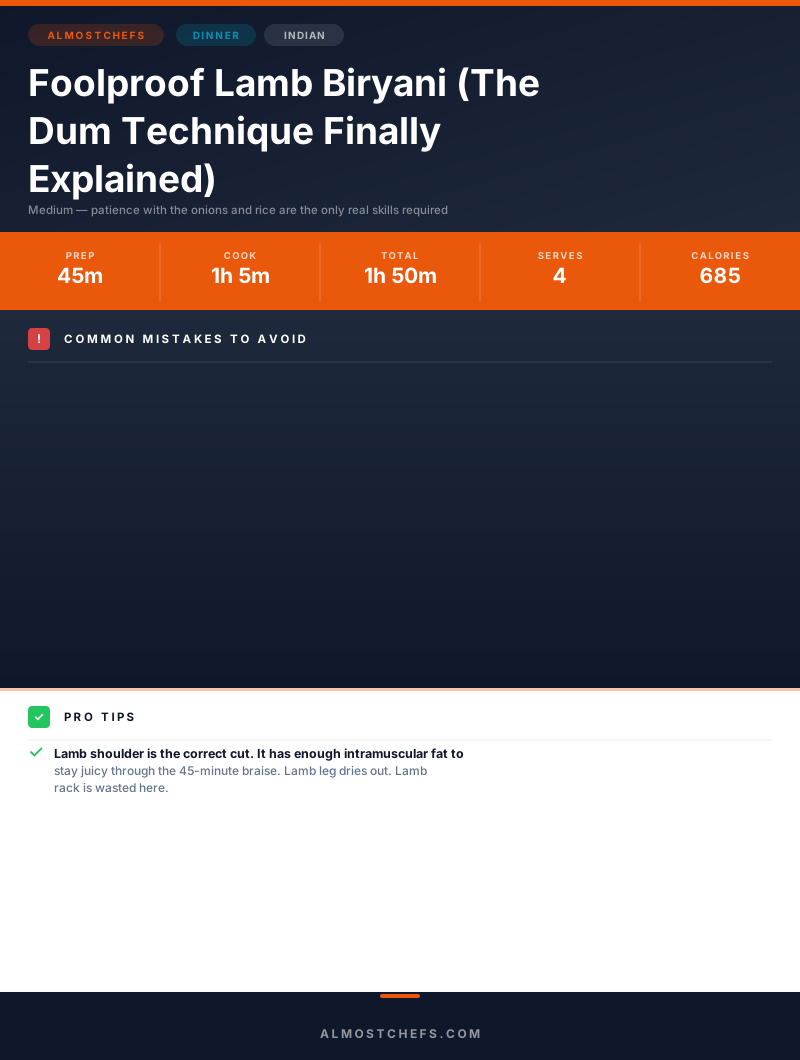
Lamb shoulder is the only cut worth using here. It has enough intramuscular fat and connective tissue to survive a 45-minute braise without drying out — and the collagen that renders from that connective tissue enriches the braising liquid that eventually steams up through the rice during dum. Lamb leg is leaner and tightens up under sustained heat. Lamb rack is too expensive and too delicate for a braise this long. Shoulder is the answer, and it's usually the cheapest option at the butcher counter.
The yogurt marinade does two things simultaneously. The lactic acid denatures the surface proteins of the lamb, creating a tender exterior without the acidity overload that citrus marinades can cause. The thick coating also clings to the meat during the high-heat browning stage, caramelizing into a spiced crust that contributes texture and flavor that no amount of spice-in-liquid can replicate. Forty-five minutes minimum. The acid needs time to work.
The Onion Foundation
This is the step most home cooks get wrong, and it's the step that determines whether your biryani tastes like a restaurant or a weeknight approximation. The onions need to be deep mahogany brown — not golden, not amber, not "pretty close." The natural sugars in yellow onions (roughly 5 grams per medium onion) need sustained high heat to undergo the Maillard reaction and caramelize fully. At golden, they're halfway there. At mahogany, they're sweet, complex, and savory in a way that saturates the entire dish.
This takes 12 to 15 minutes of active heat and frequent stirring. It cannot be shortened. It cannot be accomplished at low heat. If your onions are done in 7 minutes, your heat was too low and they steamed rather than caramelized. Start over.
The Parboil Percentage
The rice parboil is the most technically precise step in the entire recipe. You are cooking the basmati to exactly 70% doneness in boiling salted water — then draining immediately and layering it raw-side-up over the lamb. The remaining 30% of cooking happens during the dum phase, where the steam from the braising liquid and the sealed pot environment finishes the grains while simultaneously infusing them with the aromatic compounds rising from the spiced lamb below.
The test is tactile: snap a grain between your fingernails at the 5-minute mark. You should see a distinct chalky white core surrounded by a translucent outer layer. If the grain bends rather than snapping, you are already past 70% and need to drain immediately. If the core is still uniformly white all the way through, give it another 90 seconds and test again.
A fine-mesh strainer is not optional here. Every second the rice sits in residual hot water, it continues cooking. You need to drain the entire pot in one motion and let it steam off on a sheet tray or wide bowl.
The Dum Seal
Dum means "to breathe" in Urdu, and it's the defining technique that separates biryani from every other rice dish. By pressing parchment paper directly onto the rice surface and covering with a tight lid, you create a closed steam environment where the temperature stays even and the aromatic compounds from the whole spices, lamb braise, mint, and cilantro circulate continuously through the grain.
Every time you lift the lid, you break this environment. The top rice layer — which depends entirely on indirect steam to finish — stalls immediately. The internal temperature drops 15 to 20 degrees. You cannot recover this steam once it's gone. Set a timer for 12 minutes and walk away. The biryani knows what it's doing.
A Dutch oven is the ideal vessel because its thick base distributes heat evenly across the entire bottom surface, preventing the hot spots that scorch one section while leaving another underdone. The tight-fitting lid designed for long braises also creates a better seal than most standard pots. If you use a thinner pot, a heat diffuser between the burner and the base is worth the investment.
Why Whole Spices Win
The cardamom, cinnamon, cloves, and bay leaves in this recipe are whole, not ground, for a specific reason. Ground spices release their volatile aromatic oils immediately and can turn bitter during the extended braise and dum cook. Whole spices release slowly over time, building complexity in layers rather than front-loading everything into the first five minutes. The brief toast in hot ghee before adding the lamb accelerates the initial oil release, giving you both the immediate bloom and the slow background release during the cook.
Black cardamom deserves a dedicated mention. It has a smoky, almost camphor-like quality that green cardamom does not share — they are different spices that happen to share a name. The black pods provide the earthy, cooling undertone that distinguishes proper biryani from a spiced rice dish. If you've been making biryani with only green cardamom and wondering why it tastes slightly thin, this is the missing piece.
Where Beginners Mess This Up
Before we start, read this. These are the 4 reasons your foolproof lamb biryani (the dum technique finally explained) will fail:
- 1
Pulling the onions too early: Golden brown onions are underdone. You want deep mahogany — almost threatening in color. The Maillard reaction needs sustained heat and time to build the sweet, complex base flavor that defines biryani. Pull them at golden and your dish will taste flat and slightly sharp no matter what spices you add.
- 2
Overcooking the rice before layering: The parboiled rice goes into the pot at 70% done, not 90%. It should be firm with a visible chalky white core when you snap a grain. If it bends instead of snapping, you've overshot and the dum phase will turn it to porridge. Every extra second in boiling water is a mistake you can't undo.
- 3
Lifting the lid during dum: The sealed pot builds a pressurized steam environment that finishes the rice and melds the flavors simultaneously. One premature peek releases that steam, drops the internal temperature, and stalls the top layer of rice mid-cook. Set a timer. Leave the room if you have to.
- 4
Skimping on the marinade time: Thirty minutes is the absolute floor. The yogurt's lactic acid needs time to work on the lamb's surface proteins — tenderizing without turning the meat mushy. Rushed marinade means tough lamb that no amount of simmering fully corrects. Forty-five minutes is better. Overnight is better still.
The Video Reference Library
Want to see it in action? Here are the exact videos we analyzed and combined to build this foolproof recipe translation:

The source video for this recipe. Clear close-ups on the parboiling stage and the layering order. Best reference for timing the lamb braise and knowing when the dum is done.
2. The Biryani Rice Problem Solved
Focused entirely on the parboiling technique — the snap test, the visual white core, and exactly when to drain. Essential viewing before your first attempt.
3. Caramelized Onions for BiryaniThirteen minutes of watching onions cook correctly. Sounds tedious. After watching it, you will never pull your onions early again.
🛠️ Core Equipment
- Heavy-bottomed pot or Dutch oven with tight-fitting lid ↗Even heat distribution across the base prevents scorching the bottom rice layer while the top steams. Thin pots create hot spots that burn one corner and undercook another. A [Dutch oven](/kitchen-gear/review/dutch-oven) is the single best tool you can own for dum cooking.
- Fine-mesh strainer ↗You need to drain the parboiled rice fast — every second it sits in hot water, it keeps cooking. A wide fine-mesh strainer lets you dump the entire pot and drain in under ten seconds.
- Parchment paper ↗Placed directly on the rice surface before the lid, it creates a tighter steam seal than the lid alone and prevents condensation drips from pooling on the top rice layer. Foil works too, but parchment is easier to press flat.
- Large heavy skillet or second pot ↗Caramelizing the onions in the same pot as the lamb is possible but difficult — you need room to spread them in a single layer. A wide skillet gives you surface area for even browning without steaming.
Foolproof Lamb Biryani (The Dum Technique Finally Explained)
🛒 Ingredients
- ✦1.25 pounds lamb shoulder, cut into 1.5-inch cubes
- ✦2 cups basmati rice, rinsed until water runs clear
- ✦1 large yellow onion, thinly sliced into rings
- ✦3 tablespoons ghee or clarified butter, divided
- ✦1 tablespoon vegetable oil
- ✦4 cloves garlic, minced
- ✦1 tablespoon fresh ginger, finely grated
- ✦3/4 cup plain Greek yogurt
- ✦2 teaspoons garam masala
- ✦1 teaspoon ground cumin
- ✦1 teaspoon ground coriander
- ✦1/2 teaspoon cayenne pepper
- ✦4 green cardamom pods, lightly crushed
- ✦2 black cardamom pods, lightly crushed
- ✦1 cinnamon stick, 2-inch piece
- ✦4 whole cloves
- ✦2 bay leaves
- ✦3.5 cups low-sodium chicken or vegetable broth
- ✦1 teaspoon sea salt, plus more to taste
- ✦1/2 cup fresh cilantro leaves, roughly chopped
- ✦1/4 cup fresh mint leaves, roughly torn
- ✦2 tablespoons roasted cashews, halved
- ✦2 tablespoons golden raisins
👨🍳 Instructions
01Step 1
Rinse the basmati rice under cold running water, stirring with your fingers, until the water runs completely clear. Set aside to drain.
02Step 2
Combine the lamb cubes with Greek yogurt, minced garlic, grated ginger, garam masala, ground cumin, ground coriander, cayenne pepper, and 1/2 teaspoon salt. Stir until every piece is evenly coated.
03Step 3
Cover and refrigerate the lamb for at least 45 minutes.
04Step 4
Heat 2 tablespoons ghee with 1 tablespoon vegetable oil in a large heavy-bottomed pot over medium-high heat. Add the sliced onion rings and sauté, stirring frequently, until deep mahogany brown — 12 to 15 minutes.
05Step 5
Transfer the caramelized onions to a paper towel-lined plate. Reserve for layering.
06Step 6
Add the remaining 1 tablespoon of ghee to the same pot over medium-high heat. Add the crushed green and black cardamom pods, cinnamon stick, cloves, and bay leaves. Toast, stirring constantly, until fragrant — about 1 minute.
07Step 7
Add the marinated lamb with all its yogurt coating to the pot. Brown on all sides over medium-high heat, about 6 to 8 minutes, until a light golden crust develops.
08Step 8
Pour in the broth and bring to a simmer. Reduce heat to low, partially cover, and simmer until the lamb is fork-tender — 45 to 50 minutes. Stir occasionally.
09Step 9
While the lamb finishes braising, bring a large pot of well-salted water to a rolling boil. Add the drained rice and cook uncovered for 5 to 7 minutes until 70% done — firm with a visible chalky white core when you snap a grain.
10Step 10
Drain the rice immediately through a fine-mesh strainer. Speed matters.
11Step 11
Spread the parboiled rice in an even layer directly over the lamb in the pot. Do not stir.
12Step 12
Scatter the reserved caramelized onions over the rice. Distribute cilantro leaves, torn mint, roasted cashews, and golden raisins evenly across the surface.
13Step 13
Press a sheet of parchment paper directly onto the rice surface. Cover tightly with the pot lid.
14Step 14
Reduce to the absolute lowest heat setting. Cook undisturbed for 12 to 15 minutes.
15Step 15
Remove from heat and let rest, still sealed, for 3 to 5 minutes.
16Step 16
Remove the lid and parchment. Gently fluff the rice with a fork, folding the layers together loosely without crushing the lamb pieces.
Nutrition Per Serving
Estimates based on standard preparation. Adjustments alter macros.
🔄 Substitutions
Instead of Lamb shoulder...
Use Chicken breast or thighs
Reduce the braise time to 20-25 minutes. Chicken absorbs the spices faster and doesn't need the extended low-and-slow treatment lamb requires.
Instead of Ghee...
Use Coconut oil or avocado oil
Loses the nutty dairy depth but maintains the high smoke point needed for browning. Coconut oil adds a subtle sweetness that isn't unpleasant.
Instead of Greek yogurt...
Use Plain low-fat yogurt mixed with 1 tablespoon cornstarch
The cornstarch prevents curdling during the high-heat browning stage. Slightly less rich in the finished dish but tenderizes equally well.
Instead of Basmati rice...
Use Sella (parboiled) basmati
More forgiving than regular basmati — significantly harder to overcook during parboiling. Slightly chewier grain. Common in restaurant kitchens for exactly this reason.
🧊 Storage & Reheating
In the Fridge
Store in an airtight container for up to 3 days. The flavors continue to develop and the dish genuinely improves on day two.
In the Freezer
Freeze in individual portions for up to 2 months. Thaw overnight in the refrigerator before reheating.
Reheating Rules
Add 2 tablespoons of water to the portion, cover tightly, and reheat on low heat for 10 to 12 minutes. The microwave dries the rice out aggressively — use the stovetop whenever possible.
❓ Frequently Asked Questions
Why is my biryani rice mushy?
The rice went into the dum phase overcooked. It should be exactly 70% done — firm with a visible white core when snapped. The remaining 30% finishes during the sealed steam cook. If you parboil to 90%, there's nowhere for the starch to go but soft.
Can I use boneless lamb?
Yes, but bone-in pieces contribute collagen and marrow to the braising liquid, which enriches the flavor that seeps up into the rice during dum. Boneless works fine — just make the marinade time count.
My bottom layer burned. What happened?
The heat was too high during the dum phase. Once you seal the pot and reduce to low, the flame should be as small as your burner allows. If you're on a gas stove, use a heat diffuser between the burner and the pot.
Do I really need both green and black cardamom?
They serve different functions. Green cardamom is floral and citrusy. Black cardamom is smoky and cooling. Together they create the characteristic biryani depth. If you only have green, use it — but know the dish will be lighter in character.
What's the difference between biryani and pulao?
Pulao cooks the meat and rice together in the same liquid from the start. Biryani layers separately cooked meat and parboiled rice, then steams them together. The layering creates a distinct flavor gradient — spiced and intense at the bottom, clean and aromatic at the top.
How do I know the dum is actually working without lifting the lid?
After 8-10 minutes on low heat, you should see thin wisps of aromatic steam escaping around the lid edge. The pot will smell intensely fragrant. If you hear active sizzling, the heat is too high — turn it down without opening the lid.
The Science of
Foolproof Lamb Biryani (The Dum Technique Finally Explained)
We turned everything on this page into a beautiful, flour-proof PDF cheat sheet. Print it out, stick it to your fridge, and never mess up your foolproof lamb biryani (the dum technique finally explained) again.
*We'll email you the high-res PDF instantly. No spam, just perfectly cooked meals.
AlmostChefs Editorial Team
We translate the internet's most popular cooking videos into foolproof, beginner-friendly written recipes. We analyze multiple methods, test them in our kitchen, and engineer a single "Master Recipe" that gives you the best possible result with the least possible stress.