Easy Homemade Laksa (Authentic Southeast Asian in 45 Minutes)
A rich, fragrant coconut curry noodle soup built on toasted aromatics and a pantry-friendly spice paste. We broke down the most popular Southeast Asian methods to give you restaurant-quality laksa without hard-to-find ingredients or hours at the stove.

“Laksa has a reputation as a restaurant-only dish — something that requires obscure ingredients, an overnight spice paste, and thirty years of lived experience in a Malaysian kitchen. That reputation is wrong. The backbone of every great laksa is the same: aromatics toasted in fat until fragrant, a spice blend that blooms in coconut milk, and a broth that simmers long enough for the flavors to collapse into each other. Get those three things right and the rest is assembly.”
Why This Recipe Works
Laksa is Southeast Asian pragmatism in a bowl. It was never a precious dish — it was street food engineered to be fast, filling, and deeply satisfying on a tight budget. The fact that it tastes complex is not an accident. It's the result of a technique that extracts maximum flavor from a short ingredient list through a very specific sequence of heat and fat. Get that sequence right and the dish builds itself.
The Spice Paste Principle
Everything in laksa starts with the aromatics, and the aromatics start with time. Shallots need three to four minutes in hot coconut oil before anything else goes in. This is not optional. Raw shallots have a sharp, sulfurous bite that reads as harsh in a finished broth. Cooked shallots become sweet, concentrated, and sticky — a flavor base that makes every subsequent addition taste better.
Garlic and ginger go in next, for exactly one minute. The goal is to eliminate the raw, aggressive edge while preserving the aromatic punch. One minute does that. Two minutes pushes the garlic into bitterness.
Then the spices. Turmeric, curry powder, coriander — all ground, all hitting hot fat simultaneously. This is called blooming, and the principle is thermodynamic: the fat-soluble flavor compounds in ground spices only fully activate and distribute when they make contact with hot oil. Thirty seconds is the window. The oil turns vivid orange-yellow almost immediately. That color change is your signal that the volatile oils are doing their work. Stop at thirty seconds and move directly to the liquid.
The Coconut Milk Emulsion
Coconut milk is not stable at high heat. At a full rolling boil, the fat separates from the liquid and the soup breaks — you end up with an oily surface and a thin, watery broth underneath. The fix is simple: keep it at a gentle simmer. Small bubbles at the edges, not a churning center. This matters especially for leftovers, where aggressive reheating is the most common way a good laksa becomes a bad one.
The coconut milk serves two functions beyond flavor. It provides body — that thick, coating quality that makes the broth feel substantial without being heavy. And it carries the toasted spices throughout every mouthful. A water-based broth would leave the spices sitting on top. Coconut milk binds them in.
Why the Noodles Live Outside the Pot
This is the rule most people break and the reason most home laksa disappoints. Rice noodles and egg noodles are loaded with surface starch. Drop them into the broth and that starch leaches out within minutes, thickening the soup into something between a congee and a gravy. The broth that was bright and fragrant ten minutes ago now tastes muted and heavy.
Cook the noodles separately. Drain them fast. Toss with a tiny amount of neutral oil to prevent clumping. Add them to the bowl at the last moment and ladle the broth over the top. This also solves the leftover problem — store broth and noodles in separate containers and the next day's lunch is as good as the original.
The Acid Finish
Coconut milk is aggressively rich. Without something to cut through it, the broth sits on the palate like cream. The lime juice stirred in at the finish is not a flavoring agent — it's a reset button. A tablespoon of lime juice doesn't make the laksa taste citrusy. It makes the coconut milk taste like coconut milk, the turmeric taste like turmeric, and the broth taste like the complex, layered thing you built it to be.
Taste the broth before adding the lime. Then add it. Taste again. The difference is immediate and significant.
The Assembly
Laksa is a bowl dish, which means presentation is part of the experience. Noodles go in first, forming the base. Broth and protein ladle over the top. Vegetables follow. Garnishes — scallions, cilantro, chili — go on last, arranged rather than dumped. The visual contrast of bright green herbs against orange broth is not accidental; it signals freshness, and freshness is a flavor cue that primes the palate before the first bite.
Serve immediately. Laksa does not wait.
Where Beginners Mess This Up
Before we start, read this. These are the 4 reasons your easy homemade laksa (authentic southeast asian in 45 minutes) will fail:
- 1
Rushing the aromatics: Shallots, garlic, and ginger need time to soften and sweeten before the spices go in. If you add the curry powder to raw aromatics, the spices hit wet, underdeveloped fats and turn harsh rather than blooming. Three to four minutes of patience here pays off in the entire bowl.
- 2
Toasting the spices for too long: Thirty seconds is the window. Ground turmeric, curry powder, and coriander bloom instantly in hot fat — their volatile oils activate, deepen, and distribute into the base. Beyond 45 seconds they start to burn, turning the broth bitter and sharp. Watch the clock.
- 3
Cooking the noodles in the broth: Rice noodles and egg noodles shed starch aggressively. Cook them in the broth and you end up with a thick, gluey soup that clogs within minutes of leaving the pot. Always cook noodles separately, drain them, and add them to the bowl at serving time. This also lets leftovers hold up properly.
- 4
Skipping the acid at the end: Coconut milk is rich, blunting, and sweet. Without the lime juice stirred in at the finish, the broth tastes flat and one-dimensional. The acid doesn't make the laksa taste like lime — it makes everything else taste more like itself.
The Video Reference Library
Want to see it in action? Here are the exact videos we analyzed and combined to build this foolproof recipe translation:
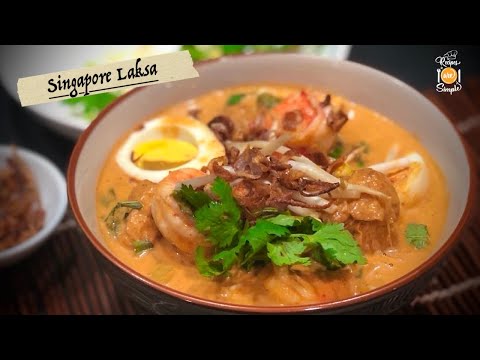
The primary reference for this recipe. Clean walkthrough of the spice paste technique and broth-building sequence.
2. Laksa Technique Deep Dive
Focused breakdown of the toasting technique and how to read the aromatics at each stage of development.
3. Southeast Asian Noodle Soups for BeginnersBroad context on laksa's regional variations and why this pantry-friendly approach stays true to the spirit of the dish.
🛠️ Core Equipment
- Large heavy-bottomed pot ↗Even heat distribution for toasting the spice paste without burning. A thin pot creates hot spots that scorch the turmeric before it can bloom properly.
- Fine-mesh sieve or colander ↗For draining noodles quickly after cooking. The longer rice noodles sit in hot water after draining, the more they clump. Fast draining and immediate plating is the move.
- Microplane or box grater ↗Fresh ginger grated on a microplane integrates into the base far more evenly than chopped ginger. You want ginger flavor throughout the broth, not pockets of intensity.
- Ladle ↗Laksa is a bowl sport. A wide ladle lets you load noodles, protein, vegetables, and broth in one smooth pour without dismantling what you built.
Easy Homemade Laksa (Authentic Southeast Asian in 45 Minutes)
🛒 Ingredients
- ✦2 tablespoons coconut oil
- ✦3 medium shallots, thinly sliced
- ✦4 cloves garlic, minced
- ✦2 tablespoons fresh ginger, grated
- ✦2 teaspoons ground turmeric
- ✦2 teaspoons red curry powder
- ✦1 teaspoon ground coriander
- ✦1 can (13.5 oz) full-fat coconut milk
- ✦4 cups low-sodium vegetable or chicken broth
- ✦2 tablespoons fish sauce
- ✦1 tablespoon lime juice
- ✦8 oz rice noodles or egg noodles
- ✦1 lb protein of choice (shrimp, chicken breast, or firm tofu), cut into bite-sized pieces
- ✦2 cups fresh bok choy or spinach, chopped
- ✦1 red bell pepper, julienned
- ✦4 scallions, cut into 1-inch pieces
- ✦1/4 cup fresh cilantro leaves
- ✦1 Thai red chili, thinly sliced (optional)
👨🍳 Instructions
01Step 1
Heat coconut oil in a large heavy-bottomed pot over medium-high heat until shimmering, about 1 minute.
02Step 2
Add the sliced shallots and sauté for 3-4 minutes until softened and beginning to turn translucent.
03Step 3
Stir in the minced garlic and grated ginger, cooking for another minute until fragrant and the raw garlic aroma fades.
04Step 4
Sprinkle the turmeric, red curry powder, and ground coriander over the aromatics. Stir constantly for 30 seconds to toast the spices.
05Step 5
Pour in the coconut milk and broth, stirring well to distribute the spice paste evenly throughout the liquid.
06Step 6
Bring to a gentle simmer over medium heat. Add the fish sauce and lime juice, tasting and adjusting seasoning as needed.
07Step 7
Cook the noodles separately in a pot of boiling water according to package directions. Drain and set aside.
08Step 8
Add your chosen protein to the simmering broth. Cook shrimp for 3-5 minutes or chicken for 6-8 minutes, until cooked through.
09Step 9
Stir in the chopped bok choy and julienned bell pepper. Simmer for 2-3 minutes until the vegetables are just tender but still vibrant.
10Step 10
Divide the cooked noodles among four serving bowls. Ladle the hot laksa broth, protein, and vegetables over the noodles.
11Step 11
Top each bowl with scallions, cilantro, and sliced red chili if using. Serve immediately with lime wedges on the side.
Nutrition Per Serving
Estimates based on standard preparation. Adjustments alter macros.
🔄 Substitutions
Instead of Full-fat coconut milk...
Use Light coconut milk or cashew cream
Slightly less decadent mouthfeel but maintains soup body with 35% fewer calories. Cashew cream (soaked cashews blended with water) produces the closest texture to full-fat.
Instead of Fish sauce...
Use Tamari or coconut aminos
Reduces sodium by roughly 40% while maintaining savory complexity. Suitable for vegetarian or vegan versions of the dish.
Instead of Rice noodles or egg noodles...
Use Brown rice noodles or buckwheat soba noodles
Nuttier flavor profile with improved satiety and a lower glycemic response. Cook times vary — check the package and taste a minute early.
Instead of Chicken breast or shrimp...
Use Firm tofu or white beans
Press tofu for at least 20 minutes before adding to the broth — unpressed tofu releases water and dilutes the seasoning. White beans add a creamy, hearty quality that works well with the coconut base.
🧊 Storage & Reheating
In the Fridge
Store the broth and noodles separately in airtight containers for up to 3 days. Combined, the noodles absorb the broth overnight and lose their texture.
In the Freezer
Freeze the broth (without noodles) for up to 2 months. Thaw overnight in the fridge and cook fresh noodles when reheating.
Reheating Rules
Reheat the broth gently over medium-low heat until steaming. Do not boil — aggressive heat breaks the coconut milk emulsion and the broth turns grainy. Add freshly cooked noodles and garnishes before serving.
❓ Frequently Asked Questions
What is the difference between laksa and other coconut curry soups?
Laksa is specifically a noodle soup — the noodles are integral to the dish, not optional. It also uses a distinct spice profile built on turmeric, lemongrass, galangal, and shrimp paste in traditional versions. Thai coconut curries are typically served over rice and use a different aromatic base. The noodle-to-broth ratio in laksa is also much higher than in most curry soups.
Can I make this vegetarian or vegan?
Yes. Replace the fish sauce with tamari or coconut aminos and use vegetable broth. Choose firm tofu or white beans as the protein. Full-fat coconut milk is already plant-based. All other ingredients in the base recipe are naturally vegan.
Why does my broth look separated or greasy?
Coconut milk can break if the heat is too high or if it comes to a full rolling boil. Keep the broth at a gentle simmer — small bubbles around the edges, not a churning boil. If the broth has already broken, whisk it vigorously off heat and add a splash of cold broth to help re-emulsify.
Can I use store-bought laksa paste instead of making the spice base?
Yes, and it significantly cuts prep time. Use 2-3 tablespoons of laksa paste in place of the garlic, ginger, turmeric, curry powder, and coriander. Toast the paste in coconut oil for 60-90 seconds before adding the coconut milk. Taste before adding fish sauce — most commercial pastes are already heavily salted.
How spicy is this recipe?
As written with one optional Thai chili as garnish, the heat level is mild. The red curry powder contributes warmth but not significant heat. To increase spice, add a teaspoon of sambal oelek or chili oil to the broth during simmering, or increase the Thai chilies in the garnish.
Why cook the noodles separately?
Rice noodles and egg noodles shed significant starch when cooked. Adding them directly to the broth turns the soup thick, gluey, and starchy within minutes. Cooking them separately keeps the broth clean, thin, and intensely flavored — and means your leftovers hold up properly the next day.
The Science of
Easy Homemade Laksa (Authentic Southeast Asian in 45 Minutes)
We turned everything on this page into a beautiful, flour-proof PDF cheat sheet. Print it out, stick it to your fridge, and never mess up your easy homemade laksa (authentic southeast asian in 45 minutes) again.
*We'll email you the high-res PDF instantly. No spam, just perfectly cooked meals.
AlmostChefs Editorial Team
We translate the internet's most popular cooking videos into foolproof, beginner-friendly written recipes. We analyze multiple methods, test them in our kitchen, and engineer a single "Master Recipe" that gives you the best possible result with the least possible stress.