LA Galbi (Grilled Short Ribs)
Cross-cut beef short ribs marinated in a sweet soy-pear sauce and grilled until caramelized. Korean BBQ's showstopper, invented in LA's Koreatown.
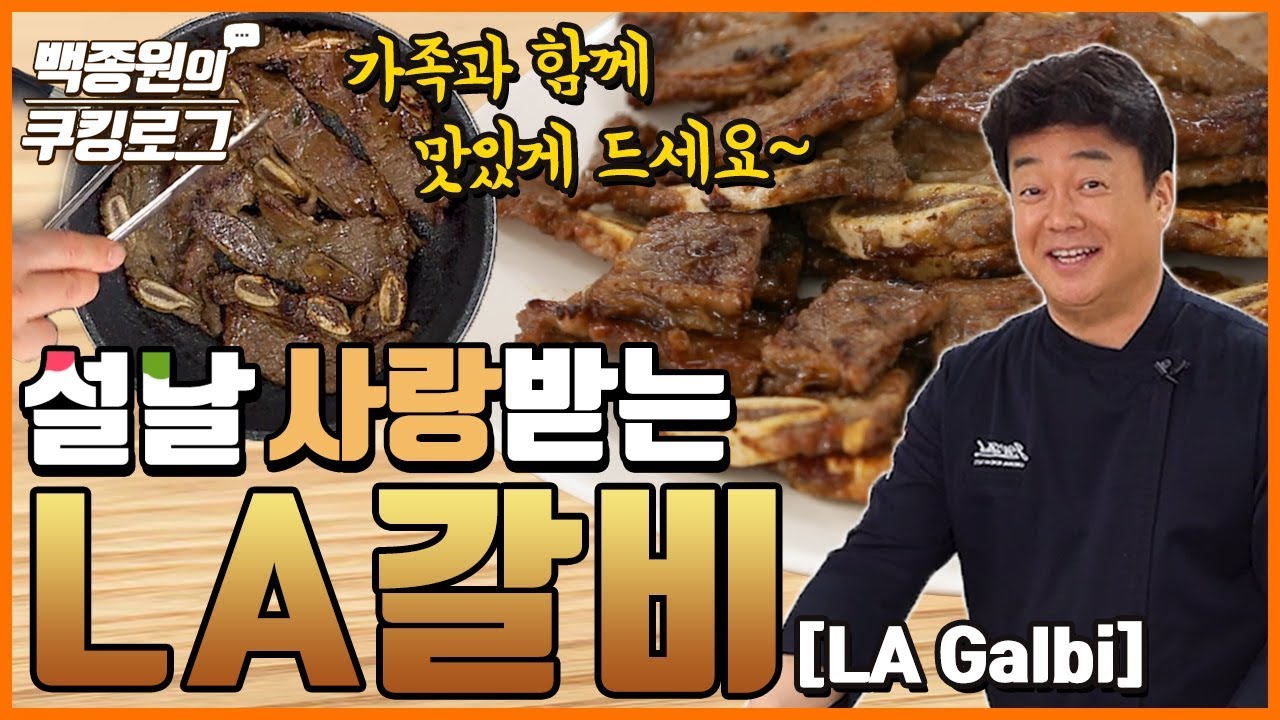
Why This Recipe Works
Most grilled beef recipes fail for the same reason most people fail at anything requiring patience: they skip the chemistry and wonder why the outcome is mediocre. LA galbi does not tolerate shortcuts. Every step in this recipe exists because biochemistry demands it, and understanding why each step works is the difference between a glossy, caramelized slab of Korean BBQ perfection and a sad, gray piece of overcooked beef that tastes like soy sauce and disappointment.
The Blood Purge Is Not Optional
The first step — soaking the ribs in cold water, changing it two or three times over one to two hours — reads like unnecessary busywork. It is not. Beef short ribs contain significant amounts of myoglobin-rich blood and bone marrow fluid locked in the porous bone structure. Left untreated, this fluid will leach out during cooking, create steam, interfere with the Maillard reaction, and produce an off-flavor that sits underneath every bite like a low-level complaint you can't quite identify but can't ignore. The cold water soak draws out that fluid through osmotic pressure before it becomes your problem. Do not skip it. Do not rush it.
The Pear-Onion Tenderization System
The marinade here is doing two distinct jobs simultaneously, which is why it works better than any single-enzyme approach. The Asian pear contributes cysteine proteases — specifically, enzymes in the same family as papain and bromelain — that cleave peptide bonds in the myofibrillar proteins of the muscle fiber. This physically softens the connective tissue and breaks down the protein matrix, making the ribs more tender without turning them to mush, provided you don't over-marinate.
The grated onion adds a second mechanism: quercetin and fructooligosaccharides that penetrate cell walls and amplify savory depth, plus additional enzymes that continue the tenderizing work. Together, they create a dual-enzyme environment that works faster and more evenly than either ingredient alone. Baek Jong Won grates both for a reason. This is not aesthetic.
The soy sauce handles osmotic seasoning — salt molecules migrate inward, displacing moisture, then pulling the surrounding marinade deeper into the meat over time. This is why overnight marination is not a suggestion but a structural requirement for a cut this thick. Galbi is not bulgogi. Bulgogi is paper-thin and marinates in under an hour. Short ribs are dense, bone-insulated slabs. They need eight to twelve hours to fully absorb flavor past the surface.
Rice Syrup vs. Everything Else
The choice of rice syrup (mulyeot) over honey or refined sugar is a technical decision, not a cultural one. Rice syrup is composed primarily of maltose and glucose oligomers, which have a higher caramelization temperature range than fructose-dominant sweeteners like honey. Honey caramelizes quickly and burns at the high heat required for proper grill char. Rice syrup creates a prolonged Maillard window — it stays pliable and glossy under intense heat instead of carbonizing into bitterness. The result is a dark, lacquered crust that tastes of complex caramel rather than burnt sugar. If you substitute honey, you will need to reduce heat or watch the ribs constantly. The recipe is less forgiving.
The Grill Is Not Decoration
High, direct heat is mandatory. The caramelization and Maillard reactions that define galbi's crust require surface temperatures above 300°F — ideally above 400°F. A charcoal grill is the ideal instrument here: the radiant heat from coals is more even and penetrating than gas, and the smoke compounds produced by fat dripping onto hot coals add a layer of flavor that no indoor method can replicate. This is not romanticism. It is combustion chemistry.
For indoor cooking, a grill pan or cast iron skillet preheated until it is visibly smoking is the correct substitute. Cast iron holds and radiates heat more efficiently than stainless or non-stick, which means less temperature drop when cold meat hits the pan. The ribs need sustained high heat for 3–4 minutes per side to build crust. If the pan cools when you add the meat, you are braising. Braised galbi is not galbi.
The Bone Is Structural, Not Decorative
LA-style cross-cut ribs — sliced thin across three to four bones — are not just an aesthetic choice. The bone acts as a heat conductor that accelerates internal cooking and as a flavor reservoir. Bone marrow and periosteum release gelatin and lipids during high-heat cooking, which migrate into the adjacent meat and enrich the texture. Boneless short rib will never produce the same mouthfeel as bone-in galbi, regardless of marinade quality. The cut matters because the cut is part of the recipe.
Born in Koreatown, Adopted by Korea
LA galbi is one of the rare cases of culinary reverse colonization — a dish invented in diaspora that was so technically superior to the original that the source country adopted it wholesale. Korean butchers in 1970s Los Angeles needed a cut that cooked fast, absorbed marinade quickly, and could be served in a high-volume restaurant environment. The cross-cut solution — slicing thin across the bone rather than between bones — solved all three problems simultaneously. The cut returned to Korea, was absorbed into the standard galbi preparation, and is now the default in Korean BBQ restaurants from Seoul to Busan. Baek Jong Won's version, with over six million views, codified it as the contemporary standard and embedded it into the Korean Lunar New Year tradition.
The lesson: efficiency and technique, even when born from commercial necessity, produce better food than tradition alone. Cook accordingly.
LA Galbi (Grilled Short Ribs)
🛒 Ingredients
- ✦3 lbs LA-style (cross-cut) beef short ribs
- ✦1/3 cup soy sauce
- ✦2 tablespoons brown sugar
- ✦2 tablespoons mirin
- ✦1 tablespoon sesame oil
- ✦1 Asian pear, grated
- ✦1/2 onion, grated
- ✦4 cloves garlic, minced
- ✦1 tablespoon fresh ginger, grated
- ✦1/2 teaspoon black pepper
- ✦1 tablespoon rice syrup (mulyeot)
- ✦Toasted sesame seeds for garnish
- ✦Butter lettuce and perilla leaves for wrapping
👨🍳 Instructions
01Step 1
Soak short ribs in cold water for 1-2 hours, changing water 2-3 times. This removes blood and excess salt from the bone.
02Step 2
Combine soy sauce, brown sugar, mirin, sesame oil, grated pear, grated onion, garlic, ginger, pepper, and rice syrup. Whisk into a smooth marinade.
03Step 3
Pat ribs dry. Pour marinade over, making sure every piece is coated. Cover and refrigerate for at least 4 hours, ideally overnight.
04Step 4
Preheat grill to high heat (or heat a grill pan until smoking). Remove ribs from marinade and let excess drip off.
05Step 5
Grill ribs for 3-4 minutes per side until charred and caramelized. The sugar in the marinade should create a dark, glossy crust.
06Step 6
Let rest for 2 minutes. Garnish with sesame seeds. Serve with lettuce, perilla leaves, ssamjang, and steamed rice.
Nutrition Per Serving
Estimates based on standard preparation. Adjustments alter macros.
🔄 Substitutions
Instead of LA-style short ribs...
Use Flanken-cut short ribs (English cut)
Thicker — increase grilling time to 5-6 minutes per side
Instead of Asian pear...
Use Kiwi (half amount)
More aggressive tenderizer — don't marinate longer than 4 hours with kiwi
Instead of Rice syrup...
Use Corn syrup or honey
Honey caramelizes faster — watch for burning
🧊 Storage & Reheating
In the Fridge
Store marinated raw ribs for up to 2 days. Cooked ribs for 3 days.
In the Freezer
Freeze marinated raw ribs flat for up to 3 months. Thaw overnight in fridge.
Reheating Rules
Reheat on a hot grill or pan to restore char. Microwave works but you lose the crust.
❓ Frequently Asked Questions
Why are they called LA galbi?
Korean butchers in Los Angeles's Koreatown invented the cross-cut style in the 1960s-70s. They sliced short ribs thin across the bone (instead of between bones) to create faster-cooking, more marinate-friendly pieces for grilling. The cut went back to Korea and became the standard.
What is the difference between galbi and bulgogi?
Same marinade family, different cuts and methods. Galbi uses bone-in short ribs (thicker, chewier, more beefy). Bulgogi uses thinly sliced boneless sirloin or ribeye. Galbi is grilled as whole pieces; bulgogi is cooked in thin strips. Galbi is more premium.

The Science of
LA Galbi (Grilled Short Ribs)
We turned everything on this page into a beautiful, flour-proof PDF cheat sheet. Print it out, stick it to your fridge, and never mess up your la galbi (grilled short ribs) again.
*We'll email you the high-res PDF instantly. No spam, just perfectly cooked meals.
AlmostChefs Editorial Team
We translate the internet's most popular cooking videos into foolproof, beginner-friendly written recipes. We analyze multiple methods, test them in our kitchen, and engineer a single "Master Recipe" that gives you the best possible result with the least possible stress.