Blazing Kung Pao Shrimp (Better Than Takeout in 27 Minutes)
Tender shrimp in a savory, spicy, slightly sweet sauce with roasted peanuts, dried chilies, and crisp bell peppers. We broke down the most-watched wok technique videos to build one foolproof method that nails the glossy sauce and keeps the shrimp from turning rubbery.
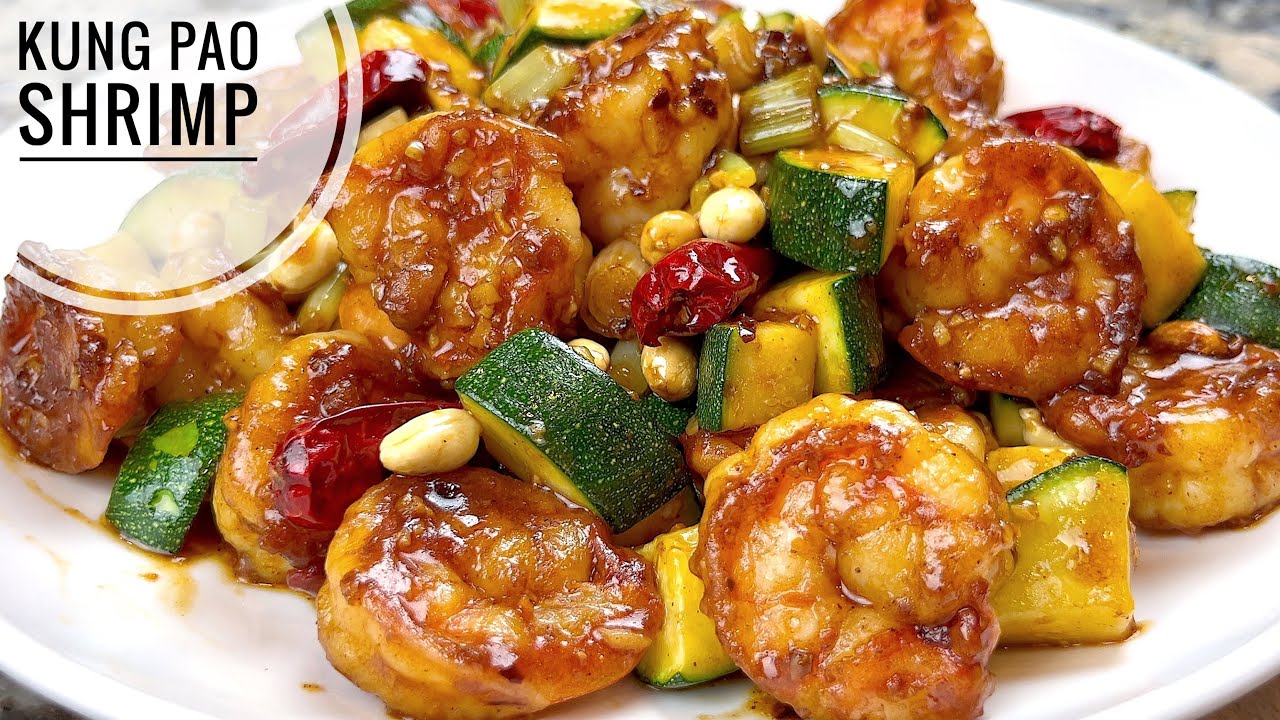
“Every takeout menu has Kung Pao Shrimp. Most restaurant versions are swimming in oil, loaded with sodium, and built on shrimp that spent ten minutes too long in a screaming-hot wok. The homemade version beats the restaurant version on every metric — and it's ready before delivery would even show up.”
Why This Recipe Works
Kung Pao Shrimp is a 27-minute dinner that somehow manages to fail in a hundred different ways. Rubbery shrimp. Watery sauce that slides off everything. Burnt chilies that make the whole dish taste like an ashtray. The recipe itself is not complicated — the failure modes all come from ignoring the physics of high-heat wok cooking.
The Moisture Problem
Shrimp are approximately 80% water by weight. When you drop wet shrimp into a hot wok, that water flash-evaporates and drops the pan temperature by 50 degrees in under a second. Instead of searing, the shrimp poach in their own steam, turning gray and elastic before the Maillard reaction ever has a chance to occur. The fix is aggressive drying — double-layered paper towels, firm pressure, and patience. The shrimp surface should look almost chalky before they hit the oil.
This is also why batch cooking matters. Four pounds of wet protein in a wok designed for two pounds of food means even dry shrimp start competing for surface contact and steam each other anyway. One extra batch, three extra minutes, incomparably better shrimp.
Sauce Architecture
The sauce in Kung Pao is a precision instrument: soy provides umami and salt, rice vinegar provides acid and brightness, honey provides sweetness and viscosity, sesame oil provides fragrance, and cornstarch provides the glossy body that makes everything cling to the shrimp instead of pooling at the bottom. Remove any one element and the sauce collapses into something flat or thin or both.
The cornstarch is the variable most people mismanage. It settles within minutes of being mixed, which is why you stir the sauce right before you pour it. More importantly, it needs direct contact with the high heat of the wok to activate — if you add it to a pan full of liquid, it blooms unevenly and you get lumps. Add it to a hot, mostly-dry pan where it can hit the surface directly, then toss immediately.
The Chili Question
Dried red chilies are not decoration. Toasted briefly in hot oil, they release capsaicin, fat-soluble aromatic compounds, and a deep earthy smokiness that no amount of fresh chili can replicate. The seeds are removed because they hold pure capsaicin with none of the flavor — the heat without the complexity. What you want is the chili's fragrance and moderate warmth, not a dish that tastes like a heat competition.
Toast them for exactly one minute. The moment they darken past deep red into black, the oils have burned and turned acrid. There is no saving a dish with burnt chili — the bitterness permeates everything. If this happens, start the aromatics over from scratch. It takes four minutes and it's worth it.
Peanuts Last, Always
The peanuts go in at the final toss for one reason: they are already cooked. Every extra second in the wok drives out their moisture and moves them from satisfying crunch toward stale softness. Their job in this dish is textural contrast — that crunch against the tender shrimp is what makes Kung Pao Kung Pao. Add them early and you've wasted them.
The same logic applies to the green onions. Raw, they add freshness and a mild sulfurous snap. Cooked, they wilt into nothing. Last toss, off the heat, done.
Why Home Beats Takeout
Restaurant Kung Pao is built for volume. The shrimp are often par-cooked ahead of service and finished to order, which means they've been through a wok twice. The sauce is batched in five-gallon quantities with sodium levels calibrated for people eating one dish every two weeks, not cooking it at home three nights a week. The oil usage is aggressive because oil is a flavor carrier and restaurants optimize for maximum impact per dish.
The home version built here cuts sodium by using low-sodium soy and reducing oil by half. It uses fresh ginger instead of powder. It lets the shrimp cook once, at the right temperature, for the right amount of time. The result is cleaner, lighter, and more complex — and it's done before the delivery app would even confirm your order.
Where Beginners Mess This Up
Before we start, read this. These are the 4 reasons your blazing kung pao shrimp (better than takeout in 27 minutes) will fail:
- 1
Not drying the shrimp before cooking: Wet shrimp steam instead of sear. The excess surface moisture turns your 600-degree wok into a braising vessel, and you get gray, rubbery shrimp instead of the pink, lightly charred exterior that carries the sauce. Pat dry with paper towels until the surface looks almost chalky.
- 2
Overcrowding the wok: Shrimp cook in 2 minutes per side. If you pile them all in at once, the pan temperature drops and they steam in their own liquid. Cook in batches if necessary — it takes an extra 3 minutes and is the difference between tender and rubbery.
- 3
Adding the sauce too early: The cornstarch in the sauce needs high, dry heat to activate. If you pour the sauce in before the shrimp and vegetables are properly cooked, you get a pasty coating instead of a glossy glaze. Get everything cooked first, then sauce.
- 4
Burning the dried chilies: Dried chilies go from fragrant to acrid in seconds. Toast them for exactly 1 minute over medium-high heat, stirring constantly. If they turn black, start over — burnt chilies make the entire dish taste bitter and there is no fixing it.
The Video Reference Library
Want to see it in action? Here are the exact videos we analyzed and combined to build this foolproof recipe translation:
The source video behind this recipe. Clear demonstration of the shrimp drying technique, batch-cooking approach, and exactly when to add the sauce for maximum gloss.
🛠️ Core Equipment
- Wok or large carbon steel skilletA wok's sloped walls and concentrated base heat create the high-temperature sear that gives this dish its signature smokiness. A flat skillet works but you lose the toss control and the heat distribution is uneven.
- Paper towelsNon-negotiable for drying the shrimp. You need to remove surface moisture before the shrimp hit the hot oil, or you're steaming instead of searing. One layer of towels is not enough — use a double layer and press firmly.
- Small prep bowlsWok cooking moves at speed. By the time the garlic is fragrant, you need the chilies ready. By the time the shrimp are pink, you need the sauce within arm's reach. Mise en place isn't a nice-to-have here — it's the technique.
- Wooden wok spatula or long-handled tongsYou need to toss continuously without burning your hands. A short spatula puts your arm dangerously close to a 600-degree surface. Long-handled tools give you leverage and a safe distance.
Blazing Kung Pao Shrimp (Better Than Takeout in 27 Minutes)
🛒 Ingredients
- ✦1.5 pounds large shrimp, peeled and deveined
- ✦3 tablespoons low-sodium soy sauce
- ✦2 tablespoons rice vinegar
- ✦1 tablespoon sesame oil
- ✦1 tablespoon honey
- ✦2 teaspoons cornstarch
- ✦1 teaspoon sriracha or chili paste
- ✦3 cloves garlic, minced
- ✦1 tablespoon fresh ginger, grated
- ✦2 medium red bell peppers, cut into 1-inch chunks
- ✦1 medium yellow onion, sliced into thick pieces
- ✦0.75 cup roasted unsalted peanuts
- ✦4 dried red chilies, halved lengthwise and seeded
- ✦3 green onions, cut into 1-inch pieces
- ✦2 tablespoons avocado oil or peanut oil
- ✦0.25 teaspoon red pepper flakes
- ✦1 teaspoon rice wine or white wine
- ✦Salt and black pepper to taste
👨🍳 Instructions
01Step 1
Combine soy sauce, rice vinegar, sesame oil, honey, cornstarch, and sriracha in a small bowl. Stir until the cornstarch is fully dissolved. Set aside within arm's reach of the stove.
02Step 2
Pat the shrimp completely dry with a double layer of paper towels, pressing firmly to remove all surface moisture.
03Step 3
Heat avocado oil in a large wok or skillet over medium-high heat until shimmering and just beginning to smoke, about 2 minutes.
04Step 4
Add minced garlic and grated ginger to the hot oil. Stir constantly for 30 seconds until fragrant but not browned.
05Step 5
Add the dried red chilies and toast for 1 minute, stirring frequently, until they deepen in color and release their aroma.
06Step 6
Add the shrimp in a single layer, working in batches if necessary to avoid overcrowding. Cook for 2 minutes per side until pink and opaque.
07Step 7
Push the shrimp to the side of the wok. Add red bell peppers and yellow onion to the empty space and cook over medium-high heat for 3-4 minutes until softened but still crisp.
08Step 8
Give the sauce mixture a final stir to re-incorporate the settled cornstarch, then pour it over everything in the wok.
09Step 9
Toss continuously for 2-3 minutes until the sauce thickens, turns glossy, and coats all the shrimp and vegetables evenly.
10Step 10
Add the roasted peanuts, green onion pieces, red pepper flakes, and rice wine. Toss gently to combine.
11Step 11
Taste and adjust seasoning with salt and black pepper.
12Step 12
Transfer to a serving platter and serve immediately over steamed rice, quinoa, or cauliflower rice.
Nutrition Per Serving
Estimates based on standard preparation. Adjustments alter macros.
🔄 Substitutions
Instead of Roasted unsalted peanuts...
Use Raw almonds or cashews
Almonds provide a similar crunch with more fiber. Cashews add a richer, creamier texture. Toast them in a dry pan for 3-4 minutes before adding — raw nuts lack the depth that makes peanuts work here.
Instead of Honey...
Use Monk fruit sweetener or coconut sugar
Monk fruit keeps the sauce nearly identical in taste while eliminating the glycemic impact. Coconut sugar adds a faint caramel note that works well with the soy base.
Instead of 3 tablespoons low-sodium soy sauce...
Use 2 tablespoons tamari or coconut aminos
Tamari is gluten-free and slightly less salty. Coconut aminos is lower sodium and adds subtle sweetness — reduce honey by half if using.
Instead of Red bell peppers...
Use Broccoli florets and snap peas
Higher fiber, more textural contrast, and a more nutritionally dense plate. Add broccoli 1 minute before snap peas — broccoli takes longer to soften to that ideal crisp-tender state.
🧊 Storage & Reheating
In the Fridge
Store in an airtight container for up to 2 days. The peanuts will soften — stir them in fresh when reheating if texture matters to you.
In the Freezer
Not recommended. Shrimp texture degrades significantly after freezing a second time and the sauce breaks on thaw.
Reheating Rules
Reheat in a wok or skillet over medium-high heat for 2-3 minutes, adding a tablespoon of water to loosen the sauce. Microwave turns shrimp rubbery — avoid.
❓ Frequently Asked Questions
Why are my shrimp rubbery?
Two causes: overcrowding the pan (shrimp steam instead of sear) or overcooking (shrimp need exactly 2 minutes per side — they keep cooking in residual heat after you pull them). Both are irreversible. The fix is preventing them.
Can I use frozen shrimp?
Yes, but thaw them completely in the fridge overnight, not under running water. Water-thawed shrimp retain extra moisture that defeats the drying step. After thawing, dry them even more aggressively than fresh.
How do I make it less spicy?
Remove the seeds from the dried chilies before toasting (the recipe already calls for this), reduce the sriracha to half a teaspoon, and omit the red pepper flakes entirely. The dish will still have warmth from the ginger and garlic without the heat building.
Can I make the sauce ahead of time?
Yes — mix everything except the cornstarch up to 24 hours ahead. Add the cornstarch immediately before cooking. Pre-mixed sauce with cornstarch sitting overnight will clump and won't dissolve cleanly.
What's the difference between Kung Pao and General Tso's?
Kung Pao uses whole dried chilies and peanuts for textural contrast and relies on vinegar for tang. General Tso's has a sweeter, heavier sauce with no nuts and typically uses battered, fried protein. They share the sweet-spicy framework but are architecturally different dishes.
Do I need a wok, or will a regular skillet work?
A large skillet works but you lose two things: the sloped walls that let you toss without spilling, and the concentrated base heat that produces wok hei — that faint smokiness that defines restaurant Chinese food. A cast iron skillet preheated aggressively gets you closer than a nonstick pan ever will.
The Science of
Blazing Kung Pao Shrimp (Better Than Takeout in 27 Minutes)
We turned everything on this page into a beautiful, flour-proof PDF cheat sheet. Print it out, stick it to your fridge, and never mess up your blazing kung pao shrimp (better than takeout in 27 minutes) again.
*We'll email you the high-res PDF instantly. No spam, just perfectly cooked meals.
AlmostChefs Editorial Team
We translate the internet's most popular cooking videos into foolproof, beginner-friendly written recipes. We analyze multiple methods, test them in our kitchen, and engineer a single "Master Recipe" that gives you the best possible result with the least possible stress.