Kung Pao Chicken (Velveted Chicken, Sichuan Peppercorn, Wok Technique)
Authentic Kung Pao Chicken with velveted thighs, numbing Sichuan peppercorns, blistered dried chilies, and a glossy wok-tossed sauce. No gloppy takeout shortcuts.

“Most Kung Pao Chicken you've eaten in America is a caricature — sweet, thick, vaguely spicy. The real dish from Sichuan province is drier, nuttier, and built around two sensations that don't exist in Western cooking: the clean heat of dried chilies fried in oil until their capsaicin blooms, and the tongue-numbing, lip-tingling buzz of Sichuan peppercorns. Neither sensation is loud. Together they're the point of the dish. This recipe doesn't compromise on either.”
Why This Recipe Works
Kung Pao Chicken is one of those dishes that exists in two completely separate forms — the American-Chinese version that most people have eaten, and the Sichuan original that the American version is loosely based on. Understanding the difference is not about gatekeeping. It's about understanding why the authentic technique produces a fundamentally better-textured, more interesting dish, even if it asks more of the cook.
Velveting is moisture retention, not just tenderness. When raw chicken goes directly into a screaming hot wok, the outer surface sears immediately — muscle proteins contract rapidly at high temperature, squeezing intracellular moisture outward. By the time the inside of a 3/4-inch piece reaches a safe temperature, the outside has already expelled much of its moisture and turned chewy. Velveting short-circuits this. The cornstarch in the marinade dissolves in the Shaoxing wine and soy sauce to form a thin, viscous coating around each piece of chicken. When that coated chicken hits the oil in the wok, the cornstarch gelatinizes almost instantly — between 140°F and 160°F — forming a physical barrier that prevents the muscle fibers from contracting as aggressively as they otherwise would. The water inside stays inside. The result is chicken that has a lightly charred exterior but remains moist through the center. You're essentially giving the chicken a thin protective shell that acts as an insulator during the most damaging phase of the cook.
The Shaoxing wine in the marinade contributes more than just moisture. Shaoxing is a fermented rice wine with a complex flavor profile that includes several amino acids produced during fermentation. These amino acids participate in Maillard reactions — the same browning chemistry responsible for the flavor of seared meat — producing flavor compounds that don't form when the chicken is marinated in plain soy sauce or water. There's a reason Chinese chefs reach for Shaoxing instinctively: it makes meat taste better when cooked at high heat.
Dried chilies must be fried in fat, not added raw or at the end. Capsaicin — the compound responsible for chili heat — and the aromatic compounds that give each chili variety its distinct fruity, smoky character are fat-soluble, not water-soluble. If you add dried chilies to a water-based sauce or toss them in at the end of cooking, the flavor compounds stay locked inside the chili and don't distribute through the dish. When you drop dried chilies into hot oil in a very hot carbon steel wok, the skin blisters within seconds. That blistering ruptures the cell walls of the chili, releasing the fat-soluble compounds into the oil. The oil then carries those compounds to every other ingredient it subsequently touches: the garlic, the ginger, the chicken, the sauce. This is why the oil turns red and fragrant within 30 seconds of the chilies hitting the pan. The entire dish is built on that infused oil — it's not just a spice delivery vehicle, it's the flavor base.
Sichuan peppercorns are not pepper. This matters because most cooks who have never worked with them treat them as a spicy garnish, use pre-ground powder from the spice shelf, and wonder why the dish tastes flat. Sichuan peppercorns are the dried husks of the prickly ash berry. They contain almost no capsaicin. Their primary bioactive compound is hydroxy-alpha-sanshool, which doesn't produce heat — it produces a tingling, numbing, electric sensation by activating low-threshold mechanoreceptors in the lips and tongue. These are the same nerve endings that respond to light touch and carbonation. The sensation is called ma in Chinese, and combined with the heat (la) of the dried chilies, produces what Sichuan cuisine calls ma la — numb-hot. This is not a subtle background note in authentic Kung Pao. It's the point of the dish. To achieve it, the peppercorns must be bought whole (hydroxy-alpha-sanshool oxidizes rapidly after grinding), toasted briefly in a dry pan to volatilize moisture and concentrate the aromatic oils, and ground immediately before use.
The wok order of operations is a heat management strategy. Stir-fry is a sequence of timed interventions, not a continuous sauté. Each ingredient in Kung Pao Chicken requires a specific amount of heat exposure and has a specific failure mode if it's added at the wrong time. The dried chilies go first because they need maximum heat to blister properly and because they need to infuse the oil before anything else. Garlic and ginger go second because they cook in under 60 seconds and burn easily — they go in only after the chili-infused oil has cooled slightly from the initial fry. The pre-velveted chicken goes third, already par-cooked, so it only needs 60-90 seconds of wok time to take on char and finish cooking through. The sauce goes in last and gets reduced aggressively. The peanuts and green onions go in at the very end, off or nearly off heat — they don't need cooking, just coating. Changing this order changes the dish. Garlic that goes in with the raw chilies burns. Peanuts that cook for more than 30 seconds in a hot wok lose their crunch. The sequence is not arbitrary.
Authentic versus American-Chinese Kung Pao. The American version that became ubiquitous in Chinese-American restaurants from the 1970s onward substituted bell peppers and water chestnuts for some of the original vegetables, eliminated Sichuan peppercorns entirely (they were actually banned from import into the United States from 1968 to 2005 due to concerns about citrus canker), and compensated for the lost complexity by making the sauce sweeter and thicker. The result is a recognizable dish that's very different in sensation. The original is drier, nuttier, and designed around the interplay of two specific sensations — heat and numbing — that don't exist in Western cuisine. Neither is objectively better. But understanding the difference tells you what to calibrate: if you want the American version, add more sauce and a handful of bell pepper. If you want the Sichuan original, don't skip the peppercorns and don't drown the chicken in sauce.
The peanuts are the one ingredient that appears in both versions without controversy. Roasted peanuts add fat, crunch, and a nuttiness that grounds the dish's more aggressive flavors. Add them at the end and only at the end — they're already cooked, and prolonged wok heat turns them mealy.
Where Beginners Mess This Up
Before we start, read this. These are the 4 reasons your kung pao chicken (velveted chicken, sichuan peppercorn, wok technique) will fail:
- 1
Chicken that sticks, tears, or turns rubbery: The velveting was skipped or the wok wasn't hot enough before the chicken went in. Velveting with cornstarch and Shaoxing wine coats each piece in a protective layer that holds moisture during the high-heat cook. If the wok isn't screaming hot, the chicken steams instead of sears and the coating gets gummy. Get the wok smoking before any food touches it.
- 2
Sauce that pools at the bottom instead of glazing the chicken: The sauce went in when the wok was too cool, or wasn't reduced long enough. Once the sauce hits the hot wok, it should reduce and cling within 30-45 seconds of tossing. If it's still liquid and thin after a minute, the heat is too low — increase it immediately and toss faster.
- 3
Chilies that taste acrid and bitter instead of fragrant: They burned. Dried chilies fry quickly — 20 to 30 seconds in hot oil is enough to blister them and bloom the capsaicin. After 45 seconds they cross into bitter territory. Watch them constantly and pull back the heat the moment they deepen in color. They should smell smoky and fragrant, not like scorched paper.
- 4
Sichuan peppercorns with no numbing effect: They're stale. Sichuan peppercorns lose their hydroxy-alpha-sanshool content — the compound responsible for the numbing sensation — within months of being ground. Buy them whole, toast them briefly, and grind fresh immediately before using. Pre-ground Sichuan pepper from the grocery shelf is nearly always inert.
The Video Reference Library
Want to see it in action? Here are the exact videos we analyzed and combined to build this foolproof recipe translation:
Weissman's breakdown of the velveting technique and wok order of operations. Excellent visual reference for what properly blistered dried chilies look like versus burned ones, and how the sauce should cling rather than pool.
The definitive home-cook guide to getting real wok hei without a commercial burner. Essential background on heat management before attempting any wok stir-fry.
The most Sichuan-accurate version available in English, with detailed explanation of the sauce balance and the role of Sichuan peppercorn versus dried chili heat.
🛠️ Core Equipment
- Carbon steel wok (14-inch)A carbon steel wok is the single most important piece of equipment for this recipe. It heats faster and to higher temperatures than any nonstick or stainless pan, and the shape concentrates heat at the bottom while the sloped sides give you room to toss. See the [carbon steel wok](/kitchen-gear/review/carbon-steel-wok) review for seasoning and care guidance.
- Wok spatula (metal)The long handle keeps your hand away from the extreme heat while the angled blade lets you scrape and toss against the wok's curved surface. A flat spatula designed for a skillet won't move food efficiently in a wok.
- Spider strainer or slotted spoonFor pulling velveted chicken from oil cleanly and quickly during the par-cook stage without carrying excess oil into the wok.
- Small bowl for sauce pre-mixKung Pao sauce must be pre-mixed before cooking starts. Stir-fry moves too fast to measure ingredients on the fly — by the time you've measured the second ingredient, the first has burned.
Kung Pao Chicken (Velveted Chicken, Sichuan Peppercorn, Wok Technique)
🛒 Ingredients
- ✦1.5 lbs boneless, skinless chicken thighs, cut into 3/4-inch pieces
- ✦1 tablespoon soy sauce (for marinade)
- ✦1 tablespoon Shaoxing wine
- ✦1 teaspoon cornstarch
- ✦1 teaspoon sesame oil
- ✦2 tablespoons vegetable oil (plus more for par-cooking)
- ✦8-10 dried Sichuan chilies (or dried arbol chilies)
- ✦1 teaspoon Sichuan peppercorns, toasted and coarsely ground
- ✦4 cloves garlic, minced
- ✦1 tablespoon fresh ginger, minced
- ✦2 green onions, cut into 1-inch pieces
- ✦1/2 cup roasted peanuts
- ✦2 tablespoons soy sauce (for sauce)
- ✦1 tablespoon rice vinegar
- ✦1 tablespoon hoisin sauce
- ✦1 teaspoon sugar
👨🍳 Instructions
01Step 1
Combine chicken pieces with soy sauce, Shaoxing wine, cornstarch, and sesame oil. Toss to coat and marinate at room temperature for at least 15 minutes.
02Step 2
In a small bowl, whisk together soy sauce, rice vinegar, hoisin sauce, and sugar. Set aside.
03Step 3
Toast Sichuan peppercorns in a dry pan over medium heat for 60-90 seconds until fragrant. Let cool, then coarsely grind in a spice grinder or with a mortar and pestle.
04Step 4
Heat wok over the highest flame your burner produces for 2 full minutes until smoking. Add 2 tablespoons vegetable oil and swirl to coat.
05Step 5
Add chicken in a single layer and let sear undisturbed for 60 seconds. Toss and cook another 60 seconds until barely cooked through and lightly charred at edges. Remove chicken from wok and set aside.
06Step 6
If the wok looks dry, add a splash more oil. Add dried chilies and Sichuan peppercorns. Stir-fry for 20-30 seconds until the chilies blister and the oil turns fragrant and red-tinged.
07Step 7
Add garlic and ginger. Stir-fry for 30 seconds until golden and fragrant.
08Step 8
Return chicken to the wok. Pour the sauce over everything. Toss constantly for 30-45 seconds until the sauce reduces and coats every piece of chicken with a glossy glaze.
09Step 9
Add green onions and peanuts. Toss twice to combine and remove from heat immediately.
10Step 10
Serve immediately over steamed rice. Finish with an extra pinch of ground Sichuan peppercorn at the table.
Nutrition Per Serving
Estimates based on standard preparation. Adjustments alter macros.
🔄 Substitutions
Instead of Chicken thighs...
Use Chicken breast or firm tofu
Breast works if you cut it smaller and don't overcook — pull it the moment it's opaque. Firm tofu pressed dry and cubed is an excellent vegetarian version; it holds up to the high heat.
Instead of Shaoxing wine...
Use Dry sherry
The closest available substitute in Western grocery stores. Do not substitute with cooking wine (too salty) or sake (different flavor profile).
Instead of Sichuan peppercorns...
Use Black pepper plus a small amount of lemon zest
This is an imperfect substitution — you'll get heat from the pepper but not the numbing sensation. Add a very small amount of lemon zest for a citrusy-tingly note that partially approximates the ma la effect.
Instead of Dried Sichuan chilies...
Use Dried arbol or guajillo chilies
Arbol chilies are close in heat level and texture. Guajillo are milder. Both will blister and infuse the oil; the flavor will be slightly different but the technique is identical.
🧊 Storage & Reheating
In the Fridge
Store in an airtight container for up to 3 days. The peanuts will soften in storage — this is expected. The flavor actually improves overnight as the sauce penetrates the chicken.
In the Freezer
Freeze for up to 2 months without the peanuts. Add fresh toasted peanuts when reheating. The sauce and chicken freeze well; peanuts do not.
Reheating Rules
Reheat in a hot skillet or wok over medium-high heat with a splash of water to loosen the sauce. Microwave reheating works but the chicken texture will be slightly softer. Add fresh green onion after reheating.
❓ Frequently Asked Questions
What is velveting and why does it matter?
Velveting is a Chinese technique in which protein is marinated with cornstarch, a small amount of liquid (Shaoxing wine, soy sauce, or egg white), and sometimes baking soda, then briefly par-cooked in oil or water before the main stir-fry. The cornstarch forms a gel coating that traps moisture in the meat during the high-heat cook. The result is chicken that stays tender and juicy inside while taking on char on the outside — the opposite of what happens when uncoated chicken hits a hot wok.
How is authentic Sichuan Kung Pao different from the American-Chinese version?
Authentic Kung Pao (宫保鸡丁, Gong Bao Ji Ding) is named for Ding Baozhen, a Qing dynasty governor of Sichuan. The original dish is drier, less saucy, and built around the dual-sensation of dried chili heat and Sichuan peppercorn numbing. American-Chinese versions typically omit Sichuan peppercorns entirely and compensate with a thick, sweet sauce (often thickened with excess cornstarch). The American version isn't bad — it's just a different dish.
Why do I need to fry the dried chilies first?
Capsaicin, the compound that makes chilies hot, and many of the flavor-active aromatic compounds in dried chilies are fat-soluble. Frying the chilies in hot oil before adding any other ingredients extracts and dissolves these compounds into the cooking oil, which then coats every ingredient that follows. Adding dried chilies at the end of cooking doesn't achieve the same effect — the heat infuses the oil, not just the individual chili pieces.
What is the numbing sensation from Sichuan peppercorns?
Sichuan peppercorns contain a compound called hydroxy-alpha-sanshool that activates low-threshold mechanoreceptors in your lips and tongue — the same receptors that respond to light touch and vibration. The result is a buzzing, tingling, almost electric sensation that Chinese food writers call ma (麻), meaning 'numb.' It's distinct from spicy heat (la) and not related to capsaicin at all. The combination of ma la — numbing and spicy — is considered the defining flavor of Sichuan cuisine.
Can I make this without a wok?
Yes, with limitations. A 12-inch cast iron skillet over the highest heat your burner produces will work. You won't get true wok hei (the smoky, slightly charred flavor that comes from extremely high heat and the volatilization of oil in the wok), but the dish will still be excellent. The key rules are the same: get the pan screaming hot before any food goes in, don't crowd the pan, and work quickly.
How do I keep the peanuts crunchy?
Add them in the final 30 seconds of cooking, not at the beginning. Pre-roasted peanuts are already cooked — they just need to be warmed through and coated in sauce. Prolonged heat in the wok will soften them. If you're concerned about texture, you can add peanuts off heat and use the residual warmth to coat them.
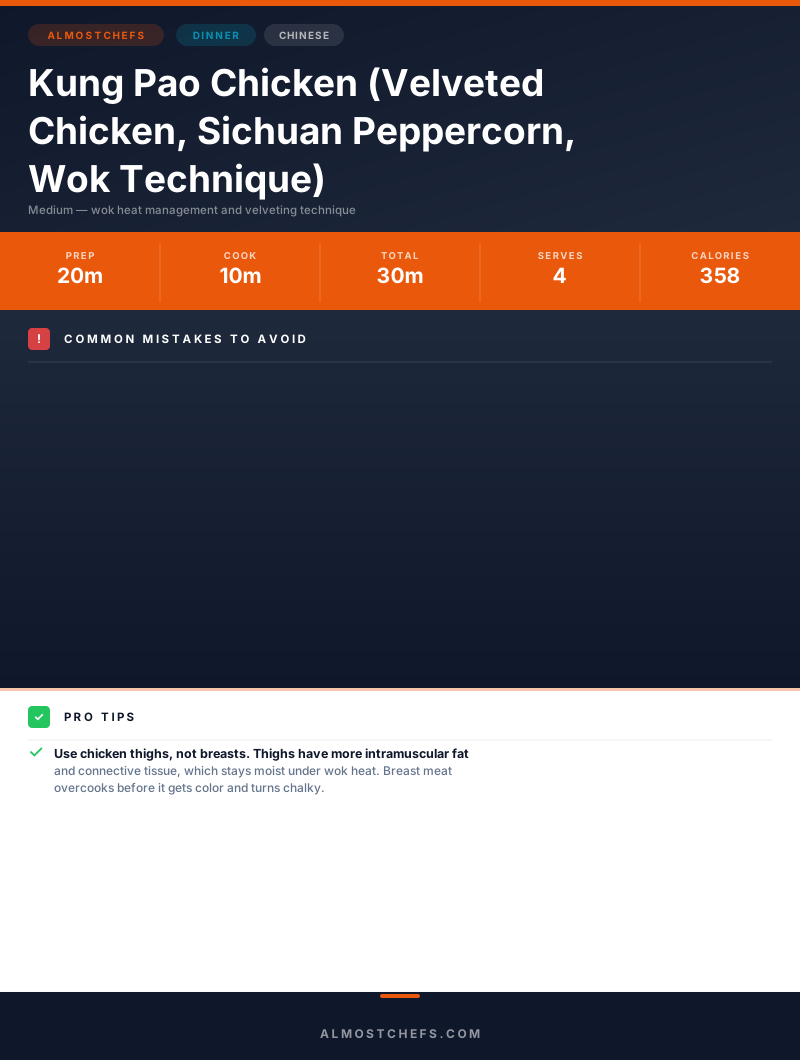
The Science of
Kung Pao Chicken (Velveted Chicken, Sichuan Peppercorn, Wok Technique)
We turned everything on this page into a beautiful, flour-proof PDF cheat sheet. Print it out, stick it to your fridge, and never mess up your kung pao chicken (velveted chicken, sichuan peppercorn, wok technique) again.
*We'll email you the high-res PDF instantly. No spam, just perfectly cooked meals.
AlmostChefs Editorial Team
We translate the internet's most popular cooking videos into foolproof, beginner-friendly written recipes. We analyze multiple methods, test them in our kitchen, and engineer a single "Master Recipe" that gives you the best possible result with the least possible stress.