Korean Vegetable Pancake — Yachaejeon (Potato Starch Crispy Method)
Yachaejeon — Korean vegetable pancake — built on a thin flour-potato starch batter packed with julienned vegetables and fried in oil until shatteringly crispy. The potato starch is the crunch variable. Serve immediately.

“Yachaejeon is the Korean savory pancake, and it belongs in a completely different category than any Western pancake concept. It's pan-fried in oil until the exterior is shatteringly crisp and the interior is tender-cooked vegetables held together by a thin, barely-there batter. The key is potato starch — it produces a crispier, more delicate crust than all-purpose flour alone. The key is hot oil. The key is not touching it until a crust forms. And the dipping sauce — soy, rice vinegar, sesame oil, and gochugaru — is the correct serving accompaniment, non-negotiable.”
Why This Recipe Works
Yachaejeon is a technique built around one variable — crispiness — and every element of the recipe serves that goal. Understanding what produces crispiness in a fried batter explains why potato starch, cold water, hot oil, and thin construction all matter.
Potato starch is the crispiness mechanism. All-purpose flour contains glutenin and gliadin proteins that, when hydrated, form gluten. Gluten produces a chewy, bread-like texture when fried — not the crispiness you want in a pancake. Potato starch is pure starch with no protein — when it fries in hot oil, it forms a thin, hard, brittle shell that shatters when bitten. This is the same principle behind Japanese tempura (which uses a low-gluten flour combined with cold water to minimize gluten formation) and Korean fried chicken's crunch. A pancake made with 100% all-purpose flour will be soft and chewy at the edges. A pancake made with a flour-potato starch combination will have a shatteringly crispy exterior.
Ice-cold water limits gluten development. Gluten forms when flour proteins are hydrated and manipulated. Temperature affects gluten development rate — cold water slows the hydration of gluten proteins, producing a less developed gluten network in the batter. Less gluten means less chewiness and more crispiness. This is the same logic behind using cold water for tempura batter and for pie crust. The batter should be mixed minimally — just enough to combine — and the cold temperature does the rest.
Oil management during cooking creates the crust. The pancake must go into hot oil — not warm oil, not oil that's just beginning to shimmer, but oil that produces an immediate, aggressive sizzle when the batter makes contact. The sizzle is oil evaporating the surface moisture of the batter simultaneously with frying the starch into a crust. If the oil isn't hot enough, the batter absorbs the oil and becomes greasy rather than developing a crust. Drizzling additional oil around the edges midway through cooking the nonstick skillet each side produces the characteristic crispy rim that distinguishes well-made jeon from a soft, flat version.
Thin construction is the cooking physics requirement. A thin pancake has a high surface-area-to-volume ratio — most of the pancake is close to the hot surface, allowing the heat to conduct through quickly. A thick pancake has the opposite problem: the interior takes longer to cook, which means the exterior overcooks before the inside is done. The vegetables should be julienned thin (1/8-inch matchsticks) for the same reason — thick pieces don't cook through in the 3-4 minutes the batter takes to form a crust. Press the pancake flat with a spatula after pouring to maintain even, consistent contact with the pan.
The dipping sauce is part of the dish, not an accompaniment. The soy-rice vinegar-sesame oil sauce provides the saltiness, acid, and umami that the pancake batter doesn't contain. The gochugaru adds background heat. Eating yachaejeon without the dipping sauce is like eating french fries without salt — the structure of the dish assumes the sauce.
Where Beginners Mess This Up
Before we start, read this. These are the 3 reasons your korean vegetable pancake — yachaejeon (potato starch crispy method) will fail:
- 1
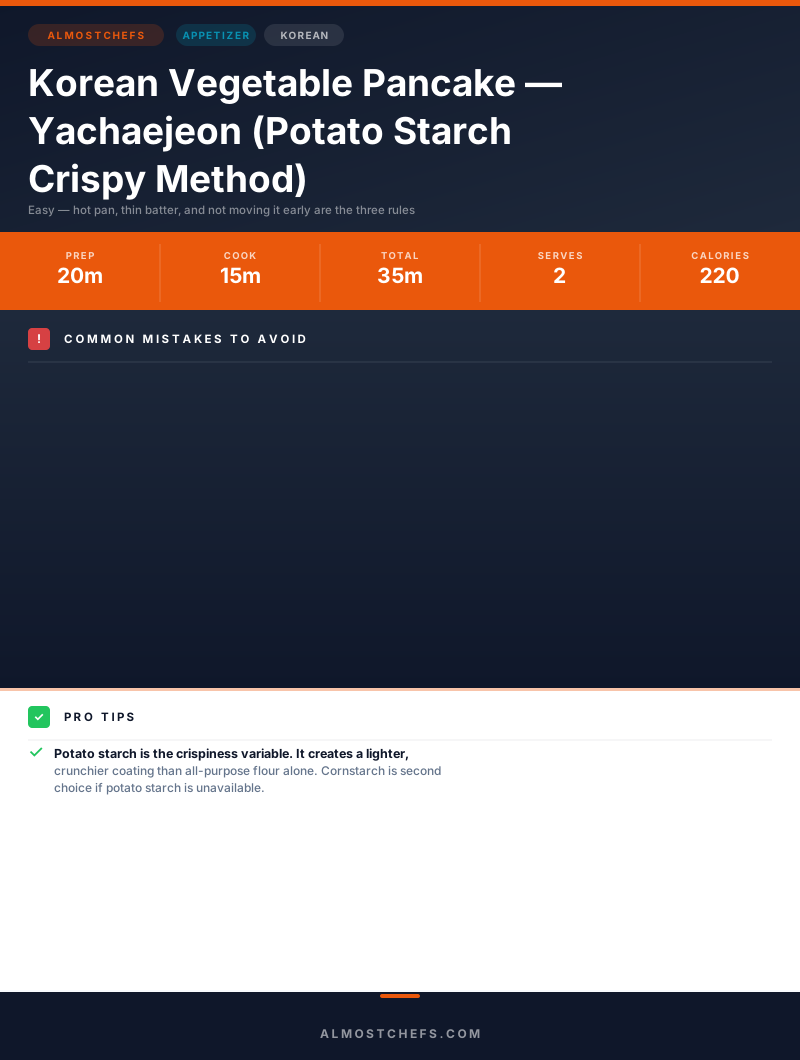
Pancake is soft and not crispy: Pan wasn't hot enough before adding batter, not enough oil, or potato starch was omitted. The pancake needs to go into hot oil — you should hear an immediate, aggressive sizzle. Add more oil around the edges partway through cooking. Potato starch is the crispiness variable; cornstarch is second choice.
- 2
Pancake falls apart when flipping: Flipped too early before the crust formed, or too much batter relative to vegetables. Wait until you can see the bottom edge is deeply golden and the batter has set. Test by lifting one edge with a spatula — if it's still raw batter on the bottom, it's not ready. The crust holds the pancake together.
- 3
Vegetables are raw or unevenly cooked: Vegetables were cut too thick, or the pancake was too thick. Julienne everything thin and uniform — 1/8-inch matchsticks. Press the pancake flat with a spatula during cooking to maximize contact. Thin and compressed cooks through evenly; thick and lumpy does not.
The Video Reference Library
Want to see it in action? Here are the exact videos we analyzed and combined to build this foolproof recipe translation:
The authoritative reference for Korean vegetable pancake. Maangchi demonstrates the batter ratio, vegetable preparation, the oil technique for crispy edges, and the dipping sauce formula.
Weissman's recreation with commentary on the potato starch variable and Western substitutes for traditional Korean ingredients.
Systematic comparison of different starch types (potato starch vs. cornstarch vs. rice flour) and their effects on crispiness.
🛠️ Core Equipment
- 12-inch nonstick skillet or well-seasoned cast ironLarge surface area for a single 8-9 inch pancake with room to maneuver. Nonstick prevents sticking; cast iron develops the best crust but requires sufficient oil.
- Mandoline or sharp chef's knifeFor julienning vegetables uniformly thin. Uniform thickness ensures even cooking. A mandoline produces consistent 1/8-inch matchsticks faster than knife work.
- Large flat spatula or plate for flippingYachaejeon is large and fragile at the flip point. A wide spatula supports the full diameter. Alternatively: slide onto a plate, place the pan over it, then invert the plate.
Korean Vegetable Pancake — Yachaejeon (Potato Starch Crispy Method)
🛒 Ingredients
- ✦1 cup all-purpose flour
- ✦1/2 cup potato starch (or cornstarch)
- ✦1 teaspoon salt
- ✦1 1/4 cups ice-cold water
- ✦1 large egg, beaten
- ✦4 scallions, cut into 2-inch pieces
- ✦1 medium carrot, julienned
- ✦1/2 medium zucchini, julienned
- ✦1/2 red bell pepper, thinly sliced
- ✦1/2 medium onion, thinly sliced
- ✦3 tablespoons vegetable oil for frying
- ✦--- Dipping Sauce ---
- ✦2 tablespoons soy sauce
- ✦1 tablespoon rice vinegar
- ✦1 teaspoon sesame oil
- ✦1/2 teaspoon gochugaru (Korean red pepper flakes)
- ✦1 teaspoon toasted sesame seeds
- ✦1/2 teaspoon sugar
👨🍳 Instructions
01Step 1
Whisk together flour, potato starch, and salt in a large bowl. Add ice-cold water and beaten egg. Stir until just combined. The batter should be thin — thinner than Western pancake batter.
02Step 2
Add scallions, carrot, zucchini, bell pepper, and onion to the batter. Fold gently to coat all vegetables evenly.
03Step 3
Make the dipping sauce: combine soy sauce, rice vinegar, sesame oil, gochugaru, sesame seeds, and sugar. Stir until sugar dissolves. Set aside.
04Step 4
Heat a large nonstick or cast iron skillet over medium-high heat. Add 1.5 tablespoons of oil and heat until shimmering. You should hear an immediate, aggressive sizzle when the batter hits the pan — if not, the pan isn't hot enough.
05Step 5
Pour about one-third of the batter into the pan, spreading into a thin, even circle about 8-9 inches across. Press the vegetables flat with the back of a spatula.
06Step 6
Cook for 3-4 minutes until the bottom is deeply golden. Drizzle the remaining oil around the edges of the pancake.
07Step 7
Flip the pancake using a wide spatula, or slide it onto a plate, invert the plate over the pan, and flip together. Cook another 3 minutes, pressing down firmly with the spatula.
08Step 8
Slide onto a cutting board, cut into wedges, and serve immediately with the dipping sauce.
Nutrition Per Serving
Estimates based on standard preparation. Adjustments alter macros.
🔄 Substitutions
Instead of Potato starch...
Use Cornstarch
Slightly less crispy but widely available. Same quantity.
Instead of Scallions...
Use Garlic chives (buchu)
Traditional Korean alternative. More pungent, slightly garlicky. Available at Korean markets.
Instead of All-purpose flour...
Use Korean pancake mix (buchimgaru)
Pre-seasoned and formulated for optimal crispiness. Reduce or eliminate the added salt.
Instead of Gochugaru...
Use Aleppo pepper or crushed red pepper
Less sweet and smoky than gochugaru but provides similar heat. Start with less — different heat levels.
Instead of Rice vinegar...
Use Apple cider vinegar
Slightly fruitier acidity. Works well in the dipping sauce.
🧊 Storage & Reheating
In the Fridge
Store leftovers in an airtight container for 1-2 days. Crispiness will be lost.
In the Freezer
Freeze cooked pancakes on a sheet pan first, then bag. Up to 1 month.
Reheating Rules
Hot skillet with a little oil to restore crispiness. Oven at 400°F for 5 minutes also works. Never microwave — produces rubbery texture.
❓ Frequently Asked Questions
What's the difference between pajeon and yachaejeon?
Pajeon (파전) is specifically a scallion pancake — 'pa' means scallion. Yachaejeon (야채전) means vegetable pancake and uses a variety of vegetables. The technique is the same; the vegetable composition differs.
Why is my Korean pancake not crispy?
Four common causes: too much batter (it should be thin, not thick), pan not hot enough (medium-high heat with oil hot before the batter goes in), not enough oil (these are pan-fried, not baked), or potato starch was omitted (it's the primary crunch factor). All four must be correct simultaneously.
Can I make these gluten-free?
Yes. Replace the all-purpose flour with rice flour and keep the potato starch. The texture is slightly different but still crispy. Many Korean pancake mixes are naturally gluten-free.
What vegetables can I use?
Almost anything that cooks quickly when sliced thin: mushrooms, sweet potato (shredded), perilla leaves, chili peppers, or spinach. Avoid watery vegetables like tomatoes or cucumber — they release moisture during cooking and prevent crisping.
Is this the same as a Chinese scallion pancake?
No — completely different technique. Chinese scallion pancakes use a dough that's rolled with oil to create flaky layers, like a flatbread. Korean jeon uses a liquid batter, like a fritter. The Chinese version is chewy and layered; the Korean version is crispy and tender.
What is gochugaru and can I skip it?
Gochugaru is Korean red pepper flakes — mildly spicy, slightly sweet, and smoky. It's not essential for the dipping sauce to function. Skip it for a milder sauce, or substitute any red pepper flakes for heat. The flavor won't be identical but the sauce will still work.
The Science of
Korean Vegetable Pancake — Yachaejeon (Potato Starch Crispy Method)
We turned everything on this page into a beautiful, flour-proof PDF cheat sheet. Print it out, stick it to your fridge, and never mess up your korean vegetable pancake — yachaejeon (potato starch crispy method) again.
*We'll email you the high-res PDF instantly. No spam, just perfectly cooked meals.
AlmostChefs Editorial Team
We translate the internet's most popular cooking videos into foolproof, beginner-friendly written recipes. We analyze multiple methods, test them in our kitchen, and engineer a single "Master Recipe" that gives you the best possible result with the least possible stress.