Korean Beef Bulgogi
Thinly sliced beef marinated in a sweet soy-pear sauce and grilled until caramelized. Served with rice, lettuce wraps, and banchan.
Why This Recipe Works
Bulgogi is not complicated. That's exactly why most people get it wrong.
The failure mode is consistent and predictable: home cooks treat it like a braise, pile the beef into a lukewarm pan, and then wonder why the result tastes steamed, grey, and vaguely sad. The science of this dish is binary — either you get the Maillard reaction or you don't. There is no middle ground. No partial credit. Either the surface of that beef hits a cooking surface at sufficient temperature to trigger the cascade of amino acid and reducing-sugar reactions that produces flavor complexity, or you have boiled meat in sweet soy sauce. Pick one.
Let's work through the mechanics so this never happens to you.
The Enzymatic Tenderizer
Asian pear does two jobs simultaneously. First, it contains proteolytic enzymes — specifically cysteine proteases — that cleave peptide bonds in the beef's myofibrillar proteins. This physically degrades the structural integrity of the muscle tissue, producing a tender result that no amount of physical pounding can fully replicate. Second, it contributes fructose and glucose, monosaccharides that participate aggressively in Maillard browning at lower temperatures than sucrose does. This is why bulgogi caramelizes faster and deeper than a simple soy-and-sugar marinade.
The time constraint matters here. The same enzymes that tenderize will continue breaking down protein structure past the point of palatability. Beyond four hours, you're not making tender beef — you're making mush with good flavor. Set a timer. Honor it.
The Marinade as a System
Each component earns its place or it doesn't belong in the bowl.
Soy sauce delivers sodium chloride for seasoning and glutamates for umami depth. Brown sugar adds sweetness and contributes to surface caramelization. Sesame oil is a finishing fat — volatile, aromatic, and chemically unstable under prolonged high heat, which is why it's in the marinade rather than the cooking fat. Garlic and ginger provide sulfur compounds and aromatic volatiles that amplify the savory profile. Mirin brings acidity and residual sweetness in a single ingredient. Black pepper contributes piperine, which enhances bioavailability of other flavor compounds and adds low-grade heat that registers as depth rather than spice.
This is not a recipe for improvisation. The ratios are calibrated. Doubling the sugar doesn't make it sweeter — it makes it burn before it cooks through.
Thin Slicing Is the Entire Point
Bulgogi translates literally as "fire meat." The name is a cooking instruction. Thin slices — ideally 1/8 inch or thinner — develop an enormous surface-area-to-volume ratio. This does two things: it reduces the thermal penetration time to seconds, and it maximizes the proportion of the meat's mass that undergoes Maillard browning. You are not eating a steak. You are eating caramelized surface crust with a minimal interior. That is the correct target.
The partial-freezing method exists because human hands and most home knives cannot reliably produce 1/8-inch slices from a soft, pliable ribeye. Thirty to forty-five minutes in the freezer produces a firmness that makes thin slicing mechanical rather than aspirational. If you have access to a Korean or Asian market with a butcher counter, ask them to slice it for you. They have a band saw. It will be perfect and take four seconds.
The Heat Problem
This is where most home attempts collapse. The cooking surface must be screaming hot. Not warm. Not medium-high. Screaming.
A cast iron skillet is the correct tool for stovetop cooking because it has the thermal mass to absorb a cold load of wet beef without dropping to a temperature that inhibits Maillard browning. Thin stainless pans and non-stick surfaces lose heat too rapidly when you add a batch of cold, marinade-coated beef. The result is a pan full of liquid, gently simmering beef, and despair.
Preheat the cast iron skillet for a minimum of five minutes over the highest available heat. When you add the beef, you should hear a violent, continuous sizzle — not a polite hiss. If you hear anything other than aggressive contact sound, remove the beef, let the pan reheat, and try again.
A grill pan with ridges works as a secondary option, particularly if you want light charring marks and improved fat drainage. The ridges create direct contact zones that reach higher local temperatures than a flat surface.
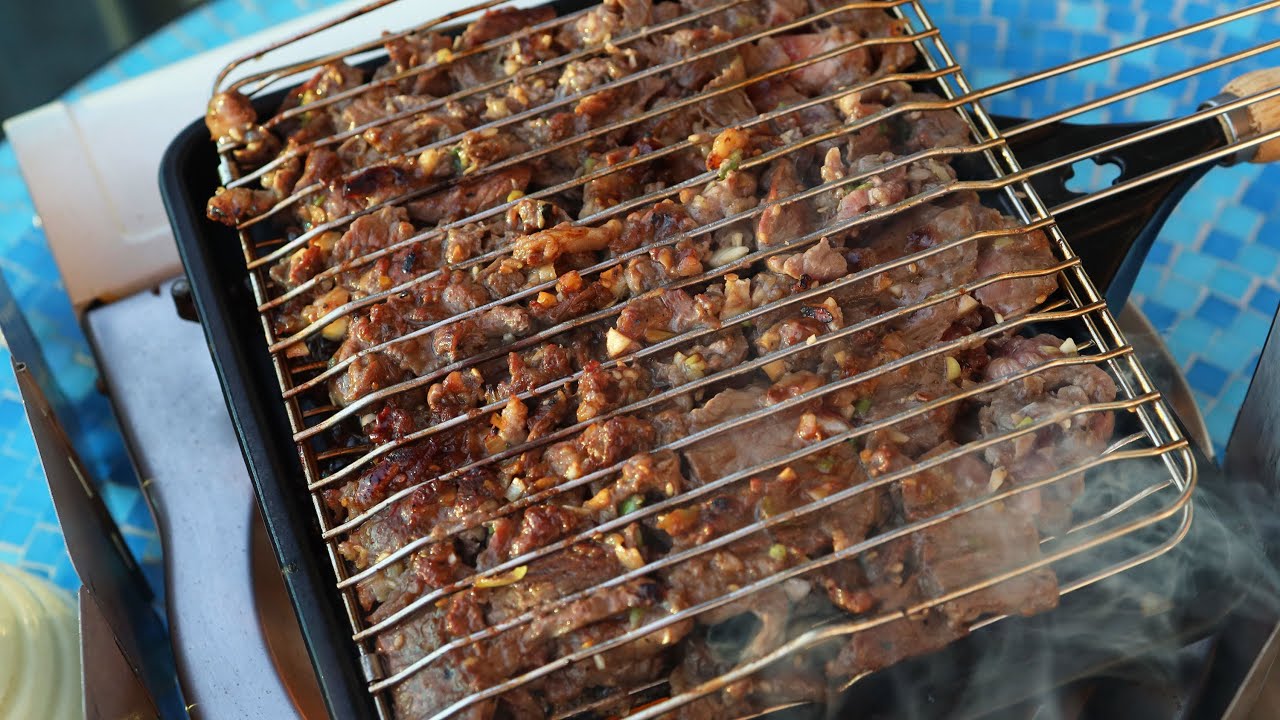
If you have access to an outdoor setup, a grill over charcoal or hardwood is the authentic method and the one that produces the smokiness associated with restaurant-quality bulgogi. The radiant heat from coals reaches temperatures no gas stove burner can approach, and the combustion byproducts deposit aromatic compounds on the meat surface that are not replicable indoors. If you have this option, use it.
Batch Discipline
Cook in small batches. This instruction appears in nearly every bulgogi recipe, and nearly every home cook ignores it. Here is the physics: adding too much cold beef to a hot pan drops the surface temperature below the Maillard threshold, and the moisture released from the marinade creates a steaming environment rather than a searing one. You can see this happening in real time — liquid pooling in the pan is diagnostic. If you see liquid, your batch is too large or your pan wasn't hot enough to begin with.
The correct batch size is a single layer of beef with visible pan surface between pieces. Cook for one to two minutes per side, maximum. The beef is done when the edges show visible caramelization and light char. Pull it immediately and start the next batch.
Serving Is Not Optional
Bulgogi without accompaniment is a waste of effort. The dish is designed to be eaten as a system: beef with rice, wrapped in butter lettuce, topped with kimchi, and finished with a dab of gochujang or ssamjang. The fat and protein of the beef, the starch of the rice, the fermented acid of the kimchi, and the capsaicin heat of the paste are not decorative — they are a functional flavor and texture matrix. Eating bulgogi alone over plain rice is like listening to a song with the low end removed. Technically correct. Fundamentally incomplete.
Korean Beef Bulgogi
🛒 Ingredients
- ✦2 lbs ribeye or sirloin, sliced 1/8 inch thin
- ✦1 Asian pear, peeled and grated (or 2 tablespoons pear juice)
- ✦1/4 cup soy sauce
- ✦2 tablespoons brown sugar
- ✦1 tablespoon sesame oil
- ✦4 cloves garlic, minced
- ✦1 tablespoon fresh ginger, grated
- ✦2 tablespoons mirin
- ✦1/2 teaspoon black pepper
- ✦1 small onion, thinly sliced
- ✦4 green onions, cut into 2-inch pieces
- ✦1 tablespoon vegetable oil for cooking
- ✦Toasted sesame seeds for garnish
- ✦Steamed rice for serving
- ✦Butter lettuce leaves for wraps
👨🍳 Instructions
01Step 1
If not pre-sliced, freeze the beef for 30-45 minutes until firm but not solid, then slice against the grain as thin as possible — 1/8 inch or thinner.
02Step 2
Combine grated Asian pear, soy sauce, brown sugar, sesame oil, garlic, ginger, mirin, and black pepper in a large bowl. Whisk until the sugar dissolves.
03Step 3
Add the sliced beef, onion, and green onions to the marinade. Toss to coat evenly. Cover and marinate for at least 30 minutes, up to 4 hours in the fridge.
04Step 4
Heat a grill, grill pan, or large cast-iron skillet to very high heat. You want it screaming hot — the beef should sizzle aggressively on contact.
05Step 5
Remove beef from marinade, letting excess drip off. Cook in a single layer in batches — about 1-2 minutes per side until caramelized and slightly charred.
06Step 6
Transfer to a serving platter. Garnish with toasted sesame seeds and remaining green onions.
07Step 7
Serve with steamed rice, butter lettuce leaves for wrapping, and your favorite banchan (kimchi, pickled radish, seasoned bean sprouts).
Nutrition Per Serving
Estimates based on standard preparation. Adjustments alter macros.
🔄 Substitutions
Instead of Ribeye...
Use Flank steak
Leaner, slightly chewier, much cheaper
Instead of Asian pear...
Use Kiwi (half amount)
More aggressive tenderizer — don't over-marinate
Instead of Soy sauce...
Use Coconut aminos
Lower sodium, soy-free, slightly sweeter
Instead of Brown sugar...
Use Honey
Slightly different caramelization, works well
Instead of Mirin...
Use Rice vinegar + sugar (1:1)
Approximates mirin's sweet acidity
🧊 Storage & Reheating
In the Fridge
Store cooked bulgogi in an airtight container for 3-4 days. Store uncooked marinated beef for up to 2 days.
In the Freezer
Freeze marinated raw beef flat in zip-lock bags for up to 3 months. Thaw in fridge and cook fresh. Can also freeze cooked bulgogi for 2 months.
Reheating Rules
Reheat in a hot skillet to restore the caramelized exterior. Microwave works for speed but won't have the same seared texture.
❓ Frequently Asked Questions
What's the best cut of beef for bulgogi?
Ribeye is the gold standard — well-marbled, tender, and flavorful. Sirloin is a good budget option. Korean markets sell pre-sliced bulgogi beef, which saves significant prep time. Avoid lean cuts like round.
Can I make bulgogi in a regular skillet?
Yes. Use a large cast-iron skillet on the highest heat. The key is to not crowd the pan — cook in small batches so the beef sears rather than steams. A grill pan with ridges also works well.
What are banchan?
Banchan are the small side dishes served with Korean meals. The most common are kimchi, pickled radish (danmuji), seasoned bean sprouts (sukju namul), and japchae (glass noodles). They're meant to complement the main dish and cleanse the palate.
How do I eat bulgogi?
There are several ways: over rice in a bowl, wrapped in lettuce leaves with rice and ssamjang (dipping sauce), or in a Korean taco. For lettuce wraps, place a piece of bulgogi on a butter lettuce leaf, add rice, kimchi, and a dab of gochujang.
Is bulgogi spicy?
Traditional bulgogi is sweet and savory, not spicy. The heat comes from the banchan and dipping sauces you serve alongside it, like gochujang (red pepper paste). You can add gochugaru (red pepper flakes) to the marinade for a spicy version.
Can I use this marinade for chicken or pork?
Absolutely. Chicken thighs work great — marinate and grill the same way. For pork (daeji bulgogi), use pork shoulder/belly and add gochujang to the marinade for the traditional spicy pork variation.
The Science of
Korean Beef Bulgogi
We turned everything on this page into a beautiful, flour-proof PDF cheat sheet. Print it out, stick it to your fridge, and never mess up your korean beef bulgogi again.
*We'll email you the high-res PDF instantly. No spam, just perfectly cooked meals.
AlmostChefs Editorial Team
We translate the internet's most popular cooking videos into foolproof, beginner-friendly written recipes. We analyze multiple methods, test them in our kitchen, and engineer a single "Master Recipe" that gives you the best possible result with the least possible stress.