Kongnamul Muchim (The Korean Bean Sprout Side Dish You'll Make Weekly)
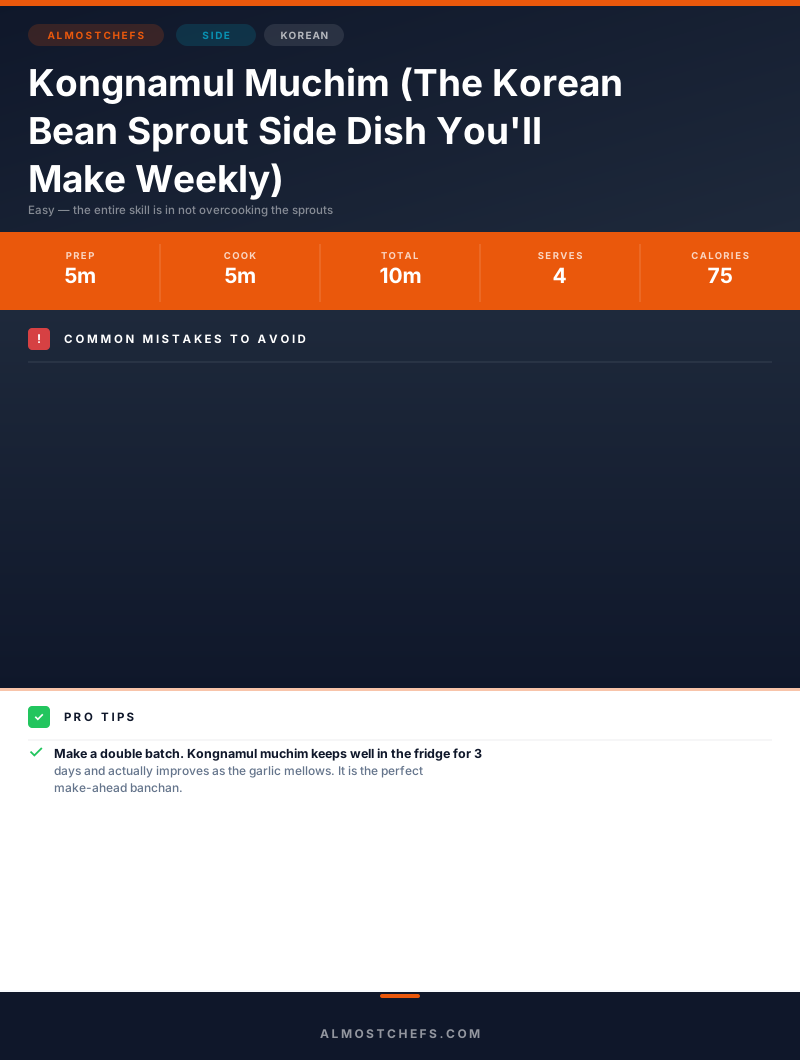
A classic Korean banchan of blanched soybean sprouts tossed with sesame oil, garlic, and scallions. Simple enough to make in 10 minutes, complex enough to anchor any Korean table. We break down the one blanching mistake that turns crisp sprouts into limp mush.

“Kongnamul muchim is on every Korean table, every day, in almost every household in Korea. It is also one of the most consistently ruined dishes in home kitchens outside of Korea. The sprouts get limp. The garlic turns sharp. The sesame oil gets buried. None of this is the recipe's fault — it is a blanching timing problem, and once you fix it, this becomes the side dish you make on autopilot every week.”
Why This Recipe Works
Kongnamul muchim is not complicated. It is a blanched vegetable dressed with sesame oil and garlic. A child can make it. And yet it is one of the most frequently botched dishes in Korean home cooking outside of Korea, for a reason that has nothing to do with skill and everything to do with one specific piece of information most recipes leave out: keep the lid on.
The Lipoxygenase Problem
Soybean sprouts contain an enzyme called lipoxygenase. When the sprouts are cut or cooked with access to oxygen — say, in an uncovered pot — this enzyme reacts with the air to produce a family of volatile compounds responsible for that raw, grassy, beany smell that makes foreigners wrinkle their nose at poorly made kongnamul. Korean grandmothers have known about this for generations without knowing the enzyme's name. They just say: put the lid on and do not look.
The fix requires exactly zero extra effort. You add the sprouts to boiling salted water, you put the lid on, you set a timer for three to four minutes, and you walk away. That is it. The steam environment excludes oxygen. The enzyme cannot fire. The sprouts come out clean, fresh, and slightly grassy in the best possible way — the way they smell in Korean restaurant banchan that you keep eating even though you already had enough rice.
Why the Timing Window Is So Narrow
Soybean sprouts are mostly water and protein, which means they have almost no thermal mass to buffer against overcooking. The window between perfectly crisp and unacceptably limp is about ninety seconds. At three minutes, the sprout bodies are tender but the tails still snap. At four and a half minutes, the entire sprout bends rather than breaks. At six minutes, you have warm bean water with accessories.
A fine-mesh sieve and immediate cold rinse are not optional — they are the mechanism that stops the cooking the moment the timer hits. Every second the sprouts sit in residual heat, they continue cooking. Rinse fast, shake hard, and spread them out if you have the counter space.
The Sesame Oil Rule
Toasted sesame oil is one of the most volatile, aroma-forward oils in any cuisine. Its characteristic nutty fragrance comes from pyrazines and furans — compounds that form during the toasting of sesame seeds and that evaporate rapidly at high temperatures. Add sesame oil to hot sprouts and you get thirty seconds of incredible smell followed by a flat, oily finish with none of the aroma that makes the dish worth eating.
This is why sesame oil goes in last, always, after the sprouts have been cooled and the other seasonings have been tossed through. The same rule applies to nearly every Korean namul. If your finished dish smells powerfully of sesame, you did it right. If it smells like nothing special, you added the oil too early.
The Banchan Philosophy
Kongnamul muchim exists inside a system. It is not designed to be eaten alone — it is designed to be one voice in a chorus of banchan that together cover the full range of flavor, texture, and nutrition that a Korean meal is built around. Its role is crunch and freshness, a counterpoint to the fermented intensity of kimchi and the rich depth of jjigae. That is why the seasoning is restrained: aggressive flavoring would make it compete with everything else on the table instead of complement it.
Make extra. It costs nothing and lasts three days in the fridge, improving as the garlic slowly mellows from sharp and raw to soft and integrated. It is the most reliable banchan in the Korean repertoire precisely because it asks almost nothing of you and delivers every single time.
Where Beginners Mess This Up
Before we start, read this. These are the 4 reasons your kongnamul muchim (the korean bean sprout side dish you'll make weekly) will fail:
- 1
Overcooking the sprouts: Soybean sprouts need exactly 3-4 minutes of blanching in boiling salted water — no more. Even 60 seconds over and the crisp snap that defines the dish is gone. You are left with soft, watery strands that pool liquid in the bowl and make everything else taste diluted.
- 2
Lifting the lid during blanching: Soybean sprouts contain a volatile compound that produces a beany, grassy off-smell when they cook with steam exposure mid-cook. The fix is simple: keep the lid on for the entire blanching period. Opening the pot once to check is enough to trigger the smell. Don't do it.
- 3
Dressing while hot: Adding sesame oil to hot sprouts causes the oil's aromatic compounds — the ones you paid for — to volatilize off immediately. The dish smells incredible for thirty seconds and then tastes flat. Always cool the sprouts to room temperature before dressing, or rinse with cold water first.
- 4
Using the wrong sprouts: Mung bean sprouts (the thin, translucent ones at every grocery store) are not soybean sprouts. Soybean sprouts are thicker, have a pronounced yellow head, and have a meatier texture that holds up to cooking. Mung bean sprouts turn to mush. Seek out soybean sprouts at Korean or Asian grocery stores.
🛠️ Core Equipment
- Medium saucepan with lidThe lid is not optional — it prevents the beany off-smell from developing during blanching. A tight-fitting lid is essential.
- Fine-mesh sieve or colanderFor draining and rinsing the sprouts quickly. Speed of cooling affects final texture. Cold running water stops the cooking instantly.
- Large mixing bowlThe sprouts need room to be tossed evenly without breaking. A cramped bowl leads to uneven seasoning — some bites too salty, some bland.
Kongnamul Muchim (The Korean Bean Sprout Side Dish You'll Make Weekly)
🛒 Ingredients
- ✦1 pound soybean sprouts (kongnamul)
- ✦1 teaspoon toasted sesame oil
- ✦1 teaspoon sesame seeds, toasted
- ✦2 cloves garlic, minced
- ✦2 scallions, thinly sliced
- ✦1 teaspoon soy sauce
- ✦1/2 teaspoon sea salt, plus more for blanching water
- ✦1/4 teaspoon gochugaru (Korean red pepper flakes), optional
👨🍳 Instructions
01Step 1
Rinse the soybean sprouts under cold water and drain. Pick out any black or brown hulls if desired.
02Step 2
Bring a medium saucepan of water to a rolling boil. Add a generous pinch of salt.
03Step 3
Add the sprouts to the boiling water, place the lid on immediately, and cook for 3-4 minutes. Do not lift the lid.
04Step 4
Drain through a fine-mesh sieve and rinse immediately under cold running water until the sprouts are fully cooled.
05Step 5
Transfer the cooled, drained sprouts to a large mixing bowl. Add garlic, scallions, soy sauce, salt, and gochugaru if using. Toss to combine.
06Step 6
Add sesame oil and sesame seeds last. Toss gently once more.
07Step 7
Taste and adjust salt. Serve at room temperature or refrigerate and serve cold.
Nutrition Per Serving
Estimates based on standard preparation. Adjustments alter macros.
🔄 Substitutions
Instead of Soybean sprouts...
Use Mung bean sprouts
Texture will be softer and less meaty. Reduce blanching time to 1-2 minutes. The flavor is milder — increase garlic and sesame oil slightly to compensate.
Instead of Gochugaru...
Use Crushed red pepper flakes
Hotter and sharper than gochugaru's fruity mild heat. Use half the amount and taste as you go.
Instead of Soy sauce...
Use Coconut aminos
Slightly sweeter and lower in sodium. Works well for those avoiding soy — though the sprouts themselves are soy, so this substitution is mainly for the seasoning component.
Instead of Toasted sesame oil...
Use Perilla oil
Earthy, grassy flavor distinct from sesame. Used in some regional Korean variations. Harder to find but worth trying if you can source it.
🧊 Storage & Reheating
In the Fridge
Store in an airtight container for up to 3 days. The flavor deepens as the garlic and sesame oil meld into the sprouts.
In the Freezer
Not recommended. The sprouts lose their texture completely when frozen and thawed.
Reheating Rules
Kongnamul muchim is a cold or room-temperature dish — no reheating needed. Remove from the fridge 10 minutes before serving to take the chill off.
❓ Frequently Asked Questions
Why do my soybean sprouts smell beany or grassy?
You lifted the lid during blanching. Soybean sprouts contain lipoxygenase, an enzyme that reacts with oxygen to produce a raw, grassy off-compound. Keeping the lid on prevents this by excluding air from the cooking environment. Once the smell develops, it does not cook off.
Can I use mung bean sprouts instead of soybean sprouts?
You can, but the dish will be different. Mung bean sprouts are thinner, softer, and milder. They work but lack the meaty bite that makes kongnamul muchim satisfying. If soybean sprouts are unavailable, reduce blanching time to 1-2 minutes and accept a softer result.
Do I have to add gochugaru?
No. The base recipe without gochugaru is called hayan kongnamul muchim — white bean sprout muchim. It is the version often served in doenjang jjigae restaurants and alongside plain rice porridge. The spicy version is more common at BBQ restaurants. Both are correct.
Why does my kongnamul muchim taste watery?
The sprouts were not drained thoroughly enough after blanching. After rinsing under cold water, shake the colander hard and let the sprouts sit for a minute before seasoning. Some cooks press gently with a clean towel. The dressing cannot cling to wet sprouts.
Is this dish actually good for gut health?
Yes, meaningfully so. Soybean sprouts are high in dietary fiber, which supports a healthy gut microbiome. They also contain significant amounts of folate and vitamin C, which are partially preserved by the brief blanching. The fermentation-friendly profile of the dish — often paired with kimchi — makes it a regular feature in Korean diets associated with gut health outcomes.
How long should I let it sit before serving?
At least 10 minutes. The garlic needs time to mellow and the sesame oil needs time to penetrate the sprouts. Made and served immediately, the garlic tastes sharp and raw. After 10-15 minutes at room temperature, the flavors integrate. After a night in the fridge, it is at its best.
The Science of
Kongnamul Muchim (The Korean Bean Sprout Side Dish You'll Make Weekly)
We turned everything on this page into a beautiful, flour-proof PDF cheat sheet. Print it out, stick it to your fridge, and never mess up your kongnamul muchim (the korean bean sprout side dish you'll make weekly) again.
*We'll email you the high-res PDF instantly. No spam, just perfectly cooked meals.
AlmostChefs Editorial Team
We translate the internet's most popular cooking videos into foolproof, beginner-friendly written recipes. We analyze multiple methods, test them in our kitchen, and engineer a single "Master Recipe" that gives you the best possible result with the least possible stress.