Kongnamul Guk (Bean Sprout Soup)
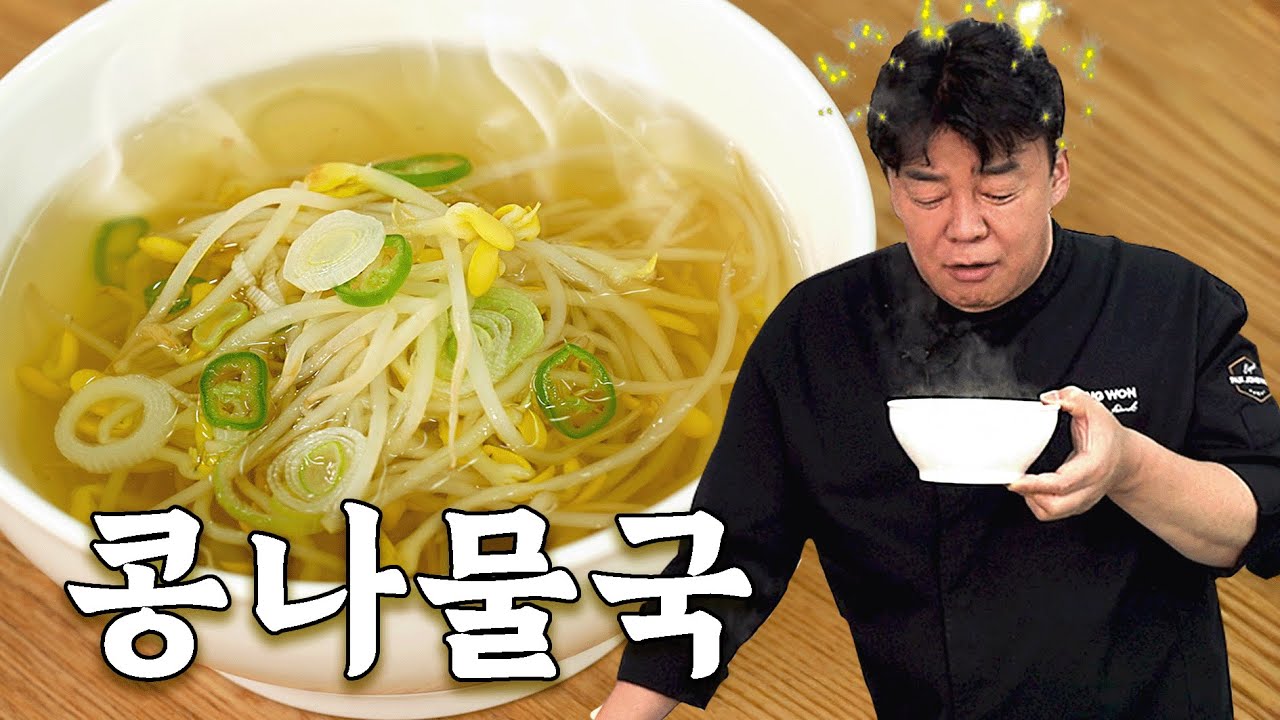
Clear, refreshing bean sprout soup with garlic and green onions. Korea's go-to hangover cure and the simplest soup in the Korean kitchen.
Why This Recipe Works
Most soups fail because cooks add too many things. Kongnamul guk is a corrective. Six ingredients, twenty minutes, sixty calories. The Korean culinary tradition did not arrive at this formula by accident — it arrived by eliminating everything that didn't need to be there and then refusing to apologize for the result. What remains is a soup that achieves something genuinely rare: it tastes like the absence of noise.
But "simple" does not mean "forgiving." There is exactly one technique in this recipe, and if you miss it, you will produce a bowl of warm, faintly fishy water that smells like low tide. The technique is the lid rule, and it is non-negotiable.
The Lipoxygenase Problem
Soybean sprouts contain lipoxygenase, an enzyme responsible for oxidizing polyunsaturated fatty acids into volatile aldehydes and ketones — the compounds responsible for the characteristic beany, rancid-adjacent odor that ruins poorly made kongnamul guk. When sprouts are exposed to air at temperatures between roughly 40°C and 80°C, lipoxygenase is maximally active. The broth heats up, the enzyme fires, the smell develops, and no amount of garlic or sesame oil will fix it.
The solution is thermal: get the sprouts through that temperature window as fast as possible, sealed. Cold water in a stockpot, lid on, high heat. Do not open the pot for ten minutes. The enzyme deactivates above 85°C. You are not being superstitious by following this rule — you are managing enzyme kinetics. Korean mothers who say "never lift the lid" are not passing down folk wisdom; they are describing the correct experimental protocol, without the jargon.
This is the most important thing you will read today about bean sprout soup. Print it out if necessary.
Soybean vs. Mung Bean: A Non-Trivial Distinction
The Korean word kongnamul refers specifically to soybean sprouts — Glycine max — with their thick, pale yellow heads and sturdy, fibrous stems. These are structurally and compositionally different from sukju, the mung bean sprouts (Vigna radiata) common in Western grocery stores. Mung bean sprouts are thinner, cook faster, and produce a more watery, less complex broth. They will work in an emergency, but they will not produce kongnamul guk. They will produce a lesser soup, and you should know that going in.
The asparagine content in soybean sprouts also differs. This matters because asparagine is the compound Korea's hangover-soup tradition is actually built on. The amino acid accelerates the liver's conversion of acetaldehyde — the toxic alcohol metabolite responsible for most hangover symptoms — into acetic acid, which the body clears easily. A 2009 study published in the Journal of Food Science confirmed elevated asparagine levels in Korean soybean sprouts specifically. The traditional haejangguk application is not mythology. It is nutritional biochemistry that predates the capacity to describe it as such.
The Broth Construction
There is no stock here. No dashi, no bone broth, no dried shiitake. The broth is built entirely from the sprouts themselves, the garlic, the fish sauce, and time. This works because soybean sprouts leach flavor into water during the ten-minute simmer — sugars, amino acids, trace minerals. What comes out of that stockpot is not flavored water; it is a light but genuine broth that carries the faint nuttiness of the bean with a clean, almost sweet finish.
Fish sauce provides glutamate — savory depth without the heaviness of meat. If you use soup soy sauce (guk-ganjang) instead, you are making the more traditional choice; guk-ganjang is lighter in color and less aggressively salty, and it doesn't shift the broth toward the amber it goes with regular fish sauce. Either is correct. Both are better than table salt, which adds sodium and nothing else.
Garlic goes in after the lid comes off. Not before — early garlic would bloom bitterness during the sealed high-heat phase. Three minutes of open simmering is enough to soften the raw edge while keeping the aromatics present and functional.
The Optional Egg
Crack a cold egg into the broth and stir gently for one minute. The egg disperses in long, silky threads — what the Chinese cooking tradition calls egg flower (蛋花), what Koreans call gyeran (계란). This adds 6 grams of protein and a richness that anchors the soup without making it heavy. It also makes the bowl look considerably more alive. The egg is listed as optional in this recipe, which is technically accurate and also, in practice, the wrong choice for most people.
Assembly and Service
Ladle the finished soup into bowls. Finish with sliced green onion and a drizzle of sesame oil. The sesame oil is not for heat — it goes on after the bowl is plated, never into the pot. Heat destroys sesame oil's toasted, nutty volatiles within seconds. Applied cold to a hot surface, it perfumes the broth without cooking away.
Eat immediately. Kongnamul guk does not improve with time. The sprouts soften, the broth mellows, the clarity dissipates. This is a soup designed to be made and consumed within fifteen minutes of each other. That is not a limitation. It is the point.
Korea's Morning-After Medicine
Every major city in Korea has haejangguk restaurants that open at midnight and close mid-morning. They exist to serve one population: people who drank too much soju and need to be functional again by 9 a.m. Kongnamul guk appears on every single one of those menus, alongside heavier bone broths and blood soups. It is the lightest option and, biochemically, one of the most effective.
The hot broth rehydrates. The salt and trace minerals replenish electrolytes lost to alcohol's diuretic effect. The asparagine in the soybean sprouts targets acetaldehyde directly. The soup is sixty calories and takes twenty minutes. There are pharmaceutical hangover products with worse evidence profiles that sell for forty dollars a bottle.
Baek Jong Won did not invent this soup. He documented why it works — specifically, he identified the lid rule as the single point of failure most home cooks miss. His five-million-view video on kongnamul guk is a lesson in why technique matters more than ingredients, and why Korean home cooking rewards attention over elaboration.
Make this soup. Follow the lid rule. Use soybean sprouts, not mung bean. Add the sesame oil after the bowl is plated. The rest takes care of itself.
Kongnamul Guk (Bean Sprout Soup)
🛒 Ingredients
- ✦6 oz soybean sprouts (kongnamul)
- ✦3 cups water
- ✦2 cloves garlic, minced
- ✦1 tablespoon fish sauce (or 1/2 teaspoon salt)
- ✦1 green onion, sliced
- ✦1 teaspoon sesame oil
- ✦1/2 teaspoon gochugaru (optional)
- ✦1 egg (optional)
👨🍳 Instructions
01Step 1
Place soybean sprouts and cold water in a pot. Cover with a lid.
02Step 2
Bring to a boil over high heat. Once boiling, reduce to medium and simmer for 10 minutes with the lid ON.
03Step 3
After 10 minutes, remove the lid. Add garlic, fish sauce, and gochugaru if using. Simmer for 3 more minutes.
04Step 4
Crack in an egg if desired and stir gently. Cook for 1 minute.
05Step 5
Ladle into bowls. Garnish with green onion and a drizzle of sesame oil.
Nutrition Per Serving
Estimates based on standard preparation. Adjustments alter macros.
🔄 Substitutions
Instead of Soybean sprouts...
Use Mung bean sprouts (sukju)
Thinner, cook faster (5 minutes), less robust soup — but acceptable
Instead of Fish sauce...
Use Soup soy sauce (guk-ganjang)
Traditional option — lighter colored and less salty than regular soy sauce
🧊 Storage & Reheating
In the Fridge
Store for 1-2 days. Sprouts soften over time.
In the Freezer
Not recommended.
Reheating Rules
Reheat gently in a pot. The sprouts should still have some crunch.
❓ Frequently Asked Questions
Why can't I lift the lid?
Soybean sprouts contain an enzyme (lipoxygenase) that produces a fishy, beany odor when exposed to air at certain temperatures. Keeping the lid on during the first 10 minutes of cooking allows the enzyme to fully deactivate. Once deactivated, you can safely remove the lid.
Why is bean sprout soup a hangover cure?
Korean soybean sprouts are rich in asparagine, an amino acid that helps the body process acetaldehyde — the toxic byproduct of alcohol that causes hangover symptoms. This isn't folk wisdom — it's been studied. The hot broth also rehydrates and the salt replenishes electrolytes.

The Science of
Kongnamul Guk (Bean Sprout Soup)
We turned everything on this page into a beautiful, flour-proof PDF cheat sheet. Print it out, stick it to your fridge, and never mess up your kongnamul guk (bean sprout soup) again.
*We'll email you the high-res PDF instantly. No spam, just perfectly cooked meals.
AlmostChefs Editorial Team
We translate the internet's most popular cooking videos into foolproof, beginner-friendly written recipes. We analyze multiple methods, test them in our kitchen, and engineer a single "Master Recipe" that gives you the best possible result with the least possible stress.