Kongjang Done Right (The Korean Black Soybean Banchan That Keeps for Weeks)
A classic Korean banchan of small black soybeans braised low and slow in sweetened soy sauce until each bean is glossy, tender, and deeply seasoned. We broke down the technique to nail the one thing everyone gets wrong: the glaze timing.

“Kongjang is one of those banchan dishes that looks deceptively simple — a handful of black beans in soy sauce — until you make it and the beans come out mushy, dry, or coated in crystallized sugar instead of that characteristic glossy, lacquered finish. The entire recipe hinges on two decisions: how long you soak the beans, and exactly when you stop reducing the glaze. Get those right and you have a banchan that sits in your fridge for two weeks and gets better every day.”
Why This Recipe Works
Kongjang is one of the most underestimated dishes in the Korean banchan repertoire. It looks like beans in soy sauce. It tastes like something that required actual skill — concentrated, sweet-savory, with a lacquered finish that signals patience and precision. The gap between those two impressions is the entire lesson of this recipe.
The Soak Is Infrastructure
Black soybeans are architecturally different from most legumes. Their outer skin is thicker and more resistant to water absorption than, say, a cannellini or a lentil. If you try to braise a dried, unsoaked black soybean, the skin ruptures from the pressure differential between the hard exterior and the softening interior before the bean has time to cook through evenly. The result is a pot of split, starchy, falling-apart beans that turn your glaze cloudy.
An overnight soak — six to eight hours minimum in cold water — lets the beans hydrate uniformly from skin to center. When they enter the braising liquid, every part of each bean is at the same moisture level, which means every part finishes cooking at the same time. The skin stays intact. The bean stays whole. The glaze has clean, separate surfaces to cling to.
There is no workaround that produces equivalent results. Quick-soak methods buy you most of the benefit in an hour, but the overnight version is noticeably superior. Plan ahead.
The Toasting Step Nobody Talks About
Two minutes of dry toasting in neutral oil before the braising liquid goes in is rarely mentioned in kongjang recipes, but it matters structurally. Brief contact with a hot, lightly oiled pan firms the outer protein layer of the soybean skin, creating a thin barrier that holds the bean together through the long, moist braise that follows. Think of it as building a shell before the weather hits.
Without it, you're sending the beans into hot liquid in their most permeable state. They absorb more liquid, faster, and are more prone to splitting at the skin. The toasting adds less than three minutes to the recipe and meaningfully improves the final texture.
The Glaze Endpoint
The most technically demanding moment in kongjang is the last five minutes. You've been simmering the beans for 25 minutes and they're tender. You've added the corn syrup and the liquid has visibly thickened. Now you're watching it reduce to the finish line — and the finish line is not where most people stop.
A thin, watery braising liquid is not kongjang. A sticky, sugar-seized crust is not kongjang. What you want is a glossy, smooth coating that clings to every bean individually and holds its shape when you lift the pan. The test: drag your silicone spatula through the beans in a slow line. The liquid should be thick enough that it takes three to four seconds to flow back in and cover the path. That's your window. Pull the pan off heat immediately.
The reason you use corn syrup or rice syrup rather than just additional sugar is that these long-chain sugars don't crystallize under normal reduction temperatures the way sucrose does. They are the structural ingredient in the glaze — the reason it stays smooth when it cools rather than turning granular.
Why This Banchan Gets Better With Age
Most food degrades in the fridge. Kongjang improves. The glaze continues to penetrate deeper into each bean over the first three days, and the soy and sugar compounds undergo mild fermentation that rounds out the flavor. By day four it tastes noticeably more complex than it did fresh out of the pan. This is not a happy accident — it's the design philosophy behind a category of preserved Korean side dishes meant to anchor a week of meals, not just one dinner.
Make more than you think you need. The fridge shelf life is two weeks. The willpower to not eat it all by day five is a separate problem.
Where Beginners Mess This Up
Before we start, read this. These are the 4 reasons your kongjang done right (the korean black soybean banchan that keeps for weeks) will fail:
- 1
Skipping or shortening the overnight soak: Dried black soybeans are dense. A minimum 6-8 hour soak is not optional — it's the difference between beans that stay firm and plump through the braise and beans that split open, releasing starch into the glaze and turning it cloudy and gummy. Quick-soaking in hot water for 1 hour is a workable shortcut but produces inferior texture.
- 2
Reducing the glaze too aggressively: The soy-sugar braising liquid reduces into the glossy coating that defines kongjang. The mistake is cranking the heat at the end to speed it up. High heat causes the sugar to caramelize unevenly and then seize into a sticky, crystallized crust instead of a smooth lacquer. Low and slow is the only way.
- 3
Adding sesame oil too early: Sesame oil is heat-sensitive — its aromatic compounds degrade and turn bitter at sustained high temperatures. Adding it at the start of cooking instead of off the heat as a finishing oil costs you most of its flavor. It goes in last, right before plating.
- 4
Not tasting for balance before finishing: The soy-to-sugar ratio needs adjustment based on your specific soy sauce brand. Some Korean soy sauces are significantly saltier than others. Taste the braising liquid at the halfway point and adjust. The final dish should be sweet first, savory second, with no sharp salt edge.
🛠️ Core Equipment
- Wide, shallow sauté pan or skilletSurface area accelerates even reduction of the braising liquid into a glaze. A tall saucepan traps steam and slows the process, making it harder to control the endpoint. Wider is better.
- Fine-mesh sieve or colanderFor draining the soaked beans thoroughly. Excess soaking water carries off-flavors from the bean skins. You want the beans dry before they hit the pan.
- Silicone spatula or wooden spoonFor the final stirring phase as the glaze tightens. A metal utensil can break the bean skins at this stage when the beans are at their most tender.
Kongjang Done Right (The Korean Black Soybean Banchan That Keeps for Weeks)
🛒 Ingredients
- ✦1.5 cups dried black soybeans (서리태 or 검정콩), soaked overnight in cold water
- ✦3 tablespoons regular Korean soy sauce (국간장 or jin ganjang)
- ✦2.5 tablespoons sugar
- ✦1 tablespoon corn syrup or honey (for glaze sheen)
- ✦1.5 cups water
- ✦1 tablespoon neutral oil (for initial toasting)
- ✦1.5 teaspoons toasted sesame oil
- ✦1 tablespoon toasted sesame seeds
- ✦Pinch of sea salt to taste
👨🍳 Instructions
01Step 1
Soak the black soybeans in cold water for at least 6-8 hours, or overnight. Drain and rinse well.
02Step 2
Heat neutral oil in a wide, shallow pan over medium heat. Add the drained soybeans and toast gently for 2-3 minutes, stirring constantly.
03Step 3
Add water, soy sauce, and sugar to the pan. Bring to a boil over medium-high heat, then reduce to a steady low simmer.
04Step 4
Simmer uncovered for 25-30 minutes, stirring occasionally, until the beans are just tender when pressed — cooked through but not falling apart.
05Step 5
Add the corn syrup or honey. Stir to incorporate. Continue simmering on low heat for another 10-15 minutes, stirring more frequently as the liquid thickens.
06Step 6
Taste and adjust. If too salty, add a small pinch of sugar. If too sweet, add a few drops of soy sauce. The balance should tip slightly sweet.
07Step 7
Remove from heat. Add sesame oil and toss gently to coat.
08Step 8
Transfer to a serving dish or airtight container. Scatter toasted sesame seeds over the top before serving.
Nutrition Per Serving
Estimates based on standard preparation. Adjustments alter macros.
🔄 Substitutions
Instead of Black soybeans...
Use Canned black soybeans (rinsed and drained)
Eliminates the overnight soak and reduces cook time to about 15-20 minutes total. Texture is slightly softer. A workable weeknight shortcut.
Instead of Korean soy sauce...
Use Japanese soy sauce (shoyu)
Slightly less salty and more mellow. You may need to increase quantity by about 20% to achieve the same depth. Tamari works for a gluten-free version.
Instead of Corn syrup...
Use Honey or rice syrup (물엿)
Rice syrup is the most traditional option and gives the best glaze sheen. Honey adds a subtle floral note. Regular corn syrup is neutral. All three work.
Instead of Sugar...
Use Brown sugar
Adds a deeper, molasses-tinged sweetness that reads slightly more complex. Use 2 tablespoons instead of 2.5 to account for the stronger flavor.
🧊 Storage & Reheating
In the Fridge
Store in an airtight container for up to 2 weeks. The glaze continues to absorb into the beans over time, intensifying the flavor significantly by day 3.
In the Freezer
Freeze in portions for up to 2 months. Thaw overnight in the fridge. The beans soften slightly after freezing but the flavor is unchanged.
Reheating Rules
Serve at room temperature straight from the fridge — no reheating needed. If you prefer warm, a brief 30-second microwave on low power is sufficient. Do not reheat on the stovetop; it will over-reduce the glaze.
❓ Frequently Asked Questions
What kind of black beans should I use for kongjang?
Korean black soybeans (검정콩 or 서리태) are traditional. They are different from the Latin American black beans used in Cuban or Mexican cooking — smaller, firmer, and with a different nutritional profile. You can find them at Korean grocery stores. In a pinch, small dried black beans from any grocery store work, but the flavor and texture will be slightly different.
Why are my beans splitting open during cooking?
The beans were not soaked long enough, or the heat was too high. Inadequate soaking means the beans hydrate unevenly during cooking — the outside softens while the center is still hard, causing the skin to split under pressure. Six to eight hours minimum in cold water is non-negotiable for dried beans.
The glaze crystallized and went crunchy instead of glossy. What happened?
The heat was too high during the final reduction. High heat forces the sugar past the glaze stage into caramelization and eventually crystallization. If this happens, add 2 tablespoons of water to the pan, reduce heat to the lowest setting, and stir continuously — the crystallized sugar will re-dissolve into the liquid and you can re-reduce it properly.
Can I make kongjang without soaking the beans overnight?
You can use a quick-soak method: cover the beans in water, bring to a boil for 2 minutes, turn off the heat, and let them sit for 1 hour before draining. This works but produces slightly softer, less defined beans compared to a proper overnight soak. Alternatively, canned black beans skip the soak entirely.
Is kongjang actually good for gut health?
Black soybeans are high in fiber (about 4g per serving) and contain resistant starch that feeds beneficial gut bacteria. They also have a lower glycemic impact than many other carbohydrates, which aligns with the blood sugar benefit listed in their nutritional profile. The small portion size typical of banchan serving also naturally limits the glycemic load.
How is kongjang different from other braised bean dishes?
The defining characteristic is the dry-glaze finish — unlike stewed beans that sit in sauce, kongjang beans are cooked until the liquid has almost entirely reduced into a thin, glossy lacquer coating each bean individually. This makes them pantry-stable for weeks and intensely flavored in small amounts. It is also always served cold or at room temperature, never hot.
The Science of
Kongjang Done Right (The Korean Black Soybean Banchan That Keeps for Weeks)
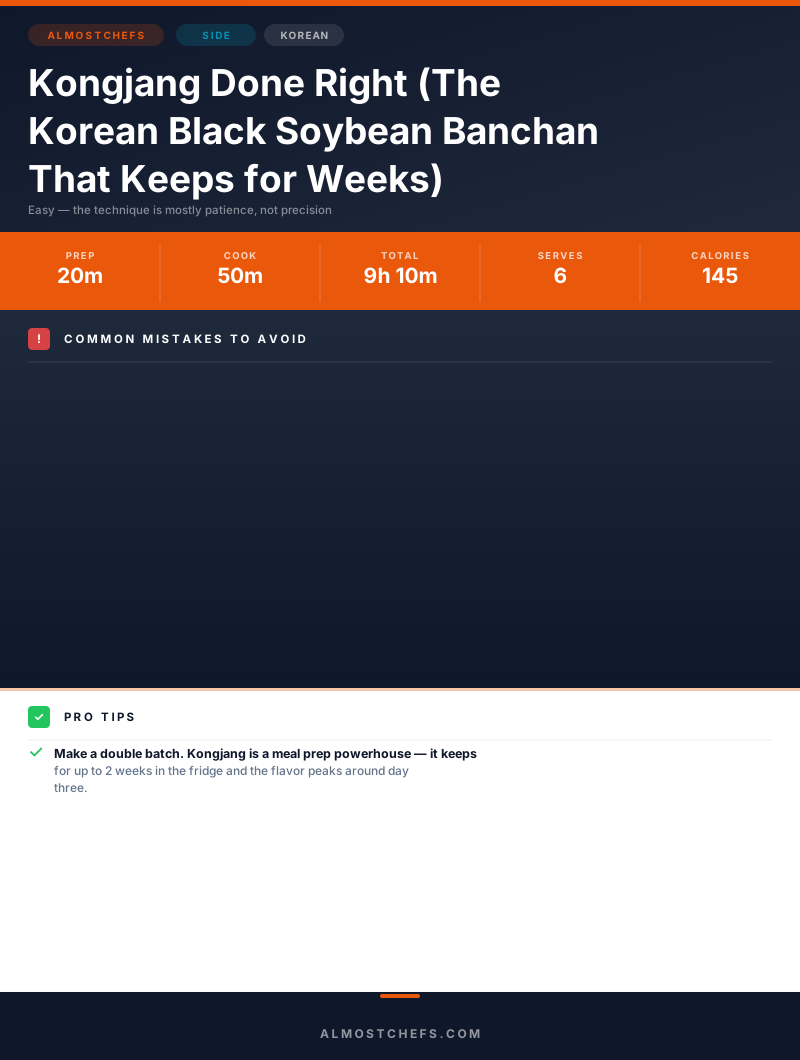
We turned everything on this page into a beautiful, flour-proof PDF cheat sheet. Print it out, stick it to your fridge, and never mess up your kongjang done right (the korean black soybean banchan that keeps for weeks) again.
*We'll email you the high-res PDF instantly. No spam, just perfectly cooked meals.
AlmostChefs Editorial Team
We translate the internet's most popular cooking videos into foolproof, beginner-friendly written recipes. We analyze multiple methods, test them in our kitchen, and engineer a single "Master Recipe" that gives you the best possible result with the least possible stress.